The great civilizations of Greece, Rome, and Egypt dominate the collective imagination, and the interested scholar can find shelf after shelf of books dedicated to these prominent and influential ancient empires. Yet countless other kingdoms and empires—rarely mentioned in the history books—rose, struggled, triumphed, and fell through the long march of the ages.
Here are four lesser-known civilizations that, though they are often overshadowed by more famous peoples, nevertheless shaped the world as we know it in important ways.
Hittite Empire
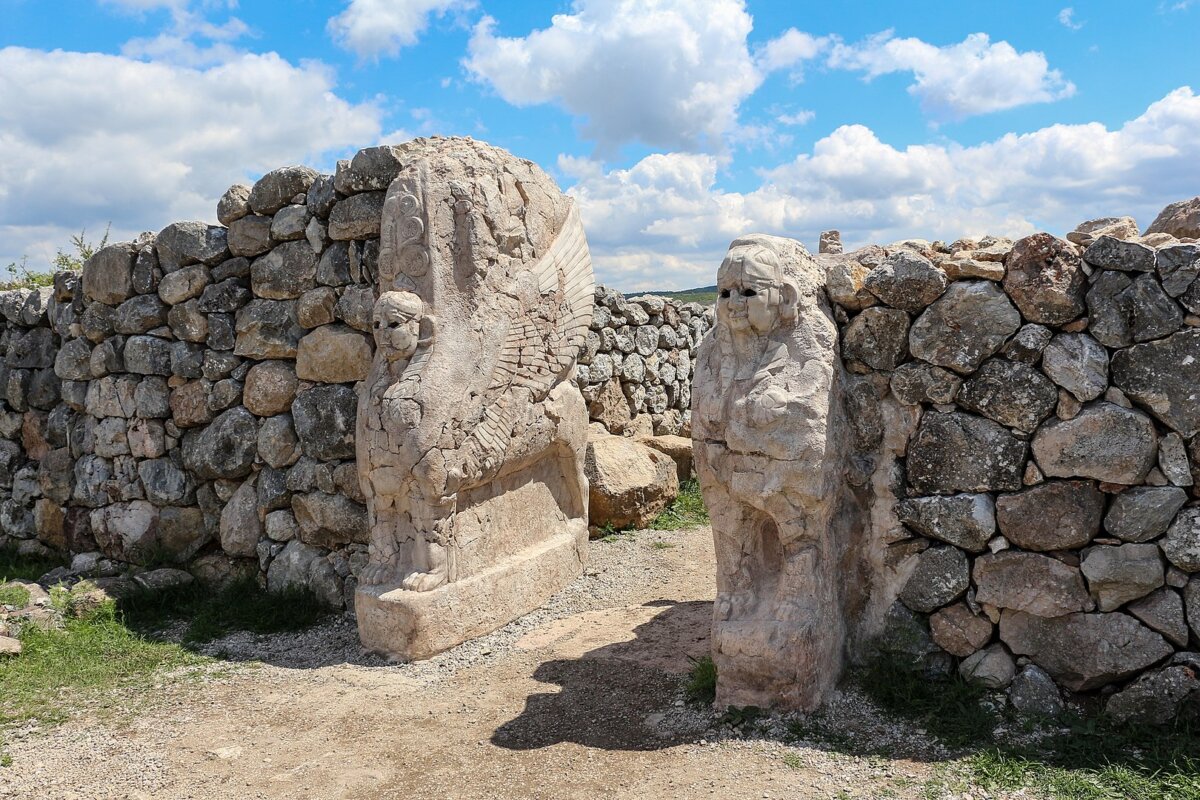
The Hittite Empire was a major ancient civilization that sprawled across Anatolia (a peninsula in modern-day Turkey) and, at its height, into northern Syria. The Hittite civilization appears from the haze of history around 1700 B.C. and is best-known from references in the Old Testament, in which they appear as foes of the Israelites. According to Genesis, they descended from Noah’s son Ham. The Hittites are also mentioned in the Amarna Letters, a collection of letters between Egypt and the ancient Near East dealing with diplomatic issues.
The Hittites’ original city was called Hattusa, and one of the empire’s founding figures was Hattusili I (meaning “Man from Hattusa”), who rebuilt the city and conquered surrounding territory. His grandson, Mursilli, continued his grandfather’s military feats by marching down the Euphrates River and conquering the Babylonian Amorite dynasty. Almost 200 years later during the second major phase of the Hittite civilization, known as the New Kingdom (1400 B.C.–1200 B.C.), the Hittites struggled with Egypt over control of Syria. The tension eventually resolved with a peace treaty, a mutual defense pact, and marriages between the Hittites and Egyptians.
Politically, the Hittite kingdom existed under a powerful monarch who acted as supreme judge, military leader, and religious head; the Hittites believed that when the king died, he became a god. Culturally and economically, the Hittites were an agrarian people. They helped launch the Iron Age by unearthing and working with the lodes of silver and iron that laced Anatolia.
Persian Empire
The Persians were the antagonists in ancient Greek historian Herodotus’s telling of the titanic clash between the ancient people of modern Iran and the Greek city states. By the time of the Greco-Persian Wars (roughly 500 B.C.–449 B.C.), Persia was already a vast, opulent empire, while Greece was still little more than a loose confederation of warring tribes, struggling to emerge as a major force in the Mediterranean world.
The conflict between these powers played a central role in the shaping of the ancient world, with the Greeks’ unlikely victory curtailing Persian power and establishing Greece as the region’s dominant collection of peoples.
Still, the Achaemenid Persian Empire endured long after these wars, just as it had existed since well before them. Cyrus the Great founded the empire in about 559 B.C. It was one of his successors just a few decades later, Darius I, who first sent forces to subdue the unruly Greeks on the borders of his empire, which extended from Macedonia in the east to the Aral Sea in the north and the Persian Gulf and Arabian Desert in the south. The Persians divided their territory into provinces (satrapies) governed by a satrap. They ruled conquered peoples with a relatively liberal hand.
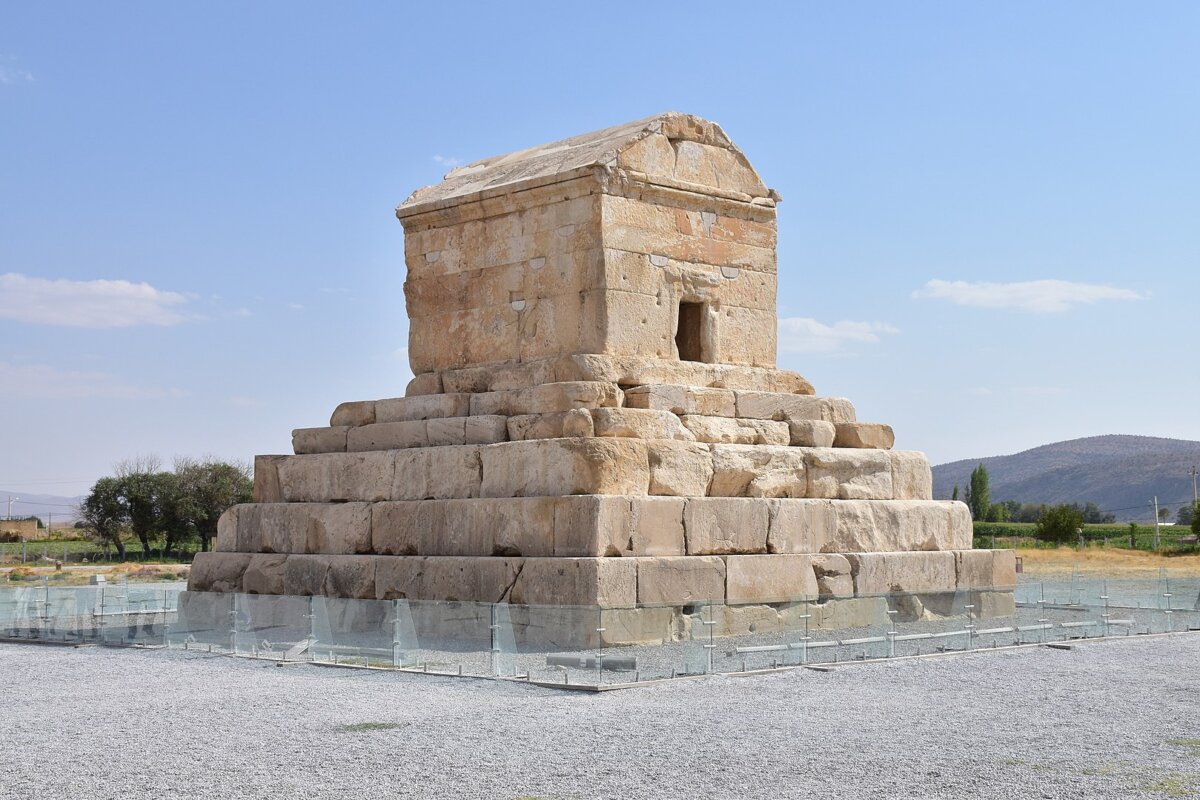
Over the centuries, however, the satraps began to build independent power bases and the military became a disorderly and motley combination of various peoples speaking different languages and using different weaponry. The empire was in decline and primed to fall when Alexander the Great swept onto the scene in 334 B.C. Still, the Persians left an enduring legacy and provided a blueprint for future empires, such as Alexander’s own and that of the Romans.
The Kingdom of Aksum
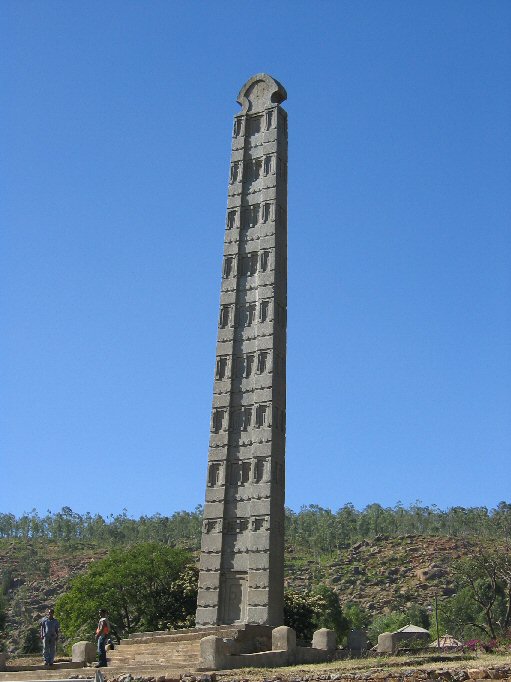
The Kingdom of Aksum emerged as a powerful African civilization in late antiquity and endured until the Middle Ages. At its height, it controlled Eritrea, modern-day Ethiopia, and parts of Yemen, Sudan, Somalia, and Saudi Arabia. Its location served it well during the glory days of the Roman Empire since it occupied a crossroads between Arabia, Africa, and Greco-Roman regions, giving it access to wealthy trade routes.
Aksum’s location and climate also provided its people with fertile soil useful for agriculture. The Kingdom of Aksum took full advantage of its profitable position and exported gold, ivory, tortoise shells, rhinoceros horns, frankincense, myrrh, emeralds, salt, animals, and slaves. The goods trickled out of Aksum along the web of trade routes, ending up in many distant lands, including India and China.
Aksum holds the distinction of being the first African nation to mint its own coins and the first sub-Saharan African state to officially embrace Christianity. A Christian Phoenician man named Frumentius became an adviser in the court of Aksum and tutor to the prince, Ezana. After Ezana became ruler, he declared Christianity the official state religion. The coins of his era were the first to feature a cross. The kingdom reached its zenith during the third to fifth centuries, but it eventually fell concurrently with the rise of Islam in the seventh century–but not before it had passed Christianity on to the rest of sub-Saharan Africa.
Khmer Empire
Among the more recent empires of the East, the Khmer civilization stands out as an influential entity in the political and artistic history of mainland Southeast Asia. At its peak of glory, the Indian-influenced empire stretched across parts of Cambodia, Laos, Vietnam, and Thailand, with many splendid cities featuring advanced hydraulic engineering.
In A.D. 802, Cambodian prince Jayavarman II declared Khmer’s independence from the Indianized state called Java, located in modern Indonesia, and gave himself the humble titles of “God-King” and “World-Ruler.” The kingdom that Jayavarman established proceeded to control a group of smaller states and was on its way to becoming an empire. One of Jayavarman’s successors, Yasovarman I, who reigned from the late ninth to early 10th centuries, set up the capital that would become Angkor, one of the world’s greatest archeological sites.
Other notable Khmer rulers included Rajendravarman II, who ruled during the mid-10th century and inaugurated a prosperous period that lasted almost 100 years. Suryavarman I, who ruled from the beginning to the middle of the 11th century, expanded the empire into modern-day Thailand and added about 30 cities to the Khmer crown.
Suryavarman II extended Khmer control even further, enacted religious reform, and erected the Temple of Angkor Wat. Originally built in 1150 for the god Vishnu and likely as an observatory, the Temple of Angkor Wat evolved into a Buddhist structure by the end of the 1100s. It remains the largest religious monument in the world.
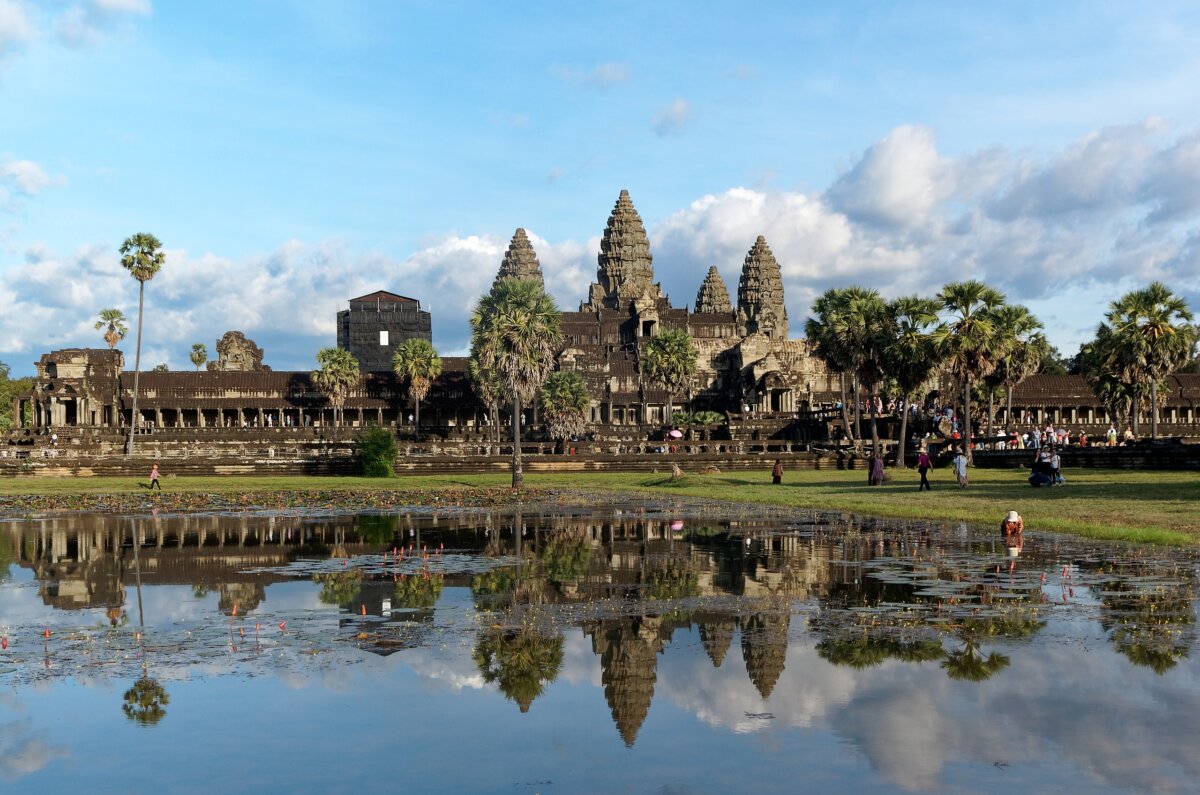
The Khmer Empire reached its peak under Jayavarman VII, during the late 12th and early 13th centuries. Jayavarman ruled for 30 years and was noted for his royal architectural and cultural projects. The Khmer Empire’s adoption of Buddhism led to cultural exchanges with Sri Lanka, India, and China, as well as the spread of Buddhist ideas and art throughout Southeast Asia.
Despite its vigor, the Khmer Empire eventually fell to invaders in 1431, following the path that all empires eventually must embrace. Its civilization vanished, and their monuments have mostly been absorbed into the dust and sands of the earth. Yet our world looks the way it does in part because of the unseen influence of forgotten empires—like the people of Hattusa, Persia, Aksum, and Khmer.
What arts and culture topics would you like us to cover? Please email ideas or feedback to features@epochtimes.nyc