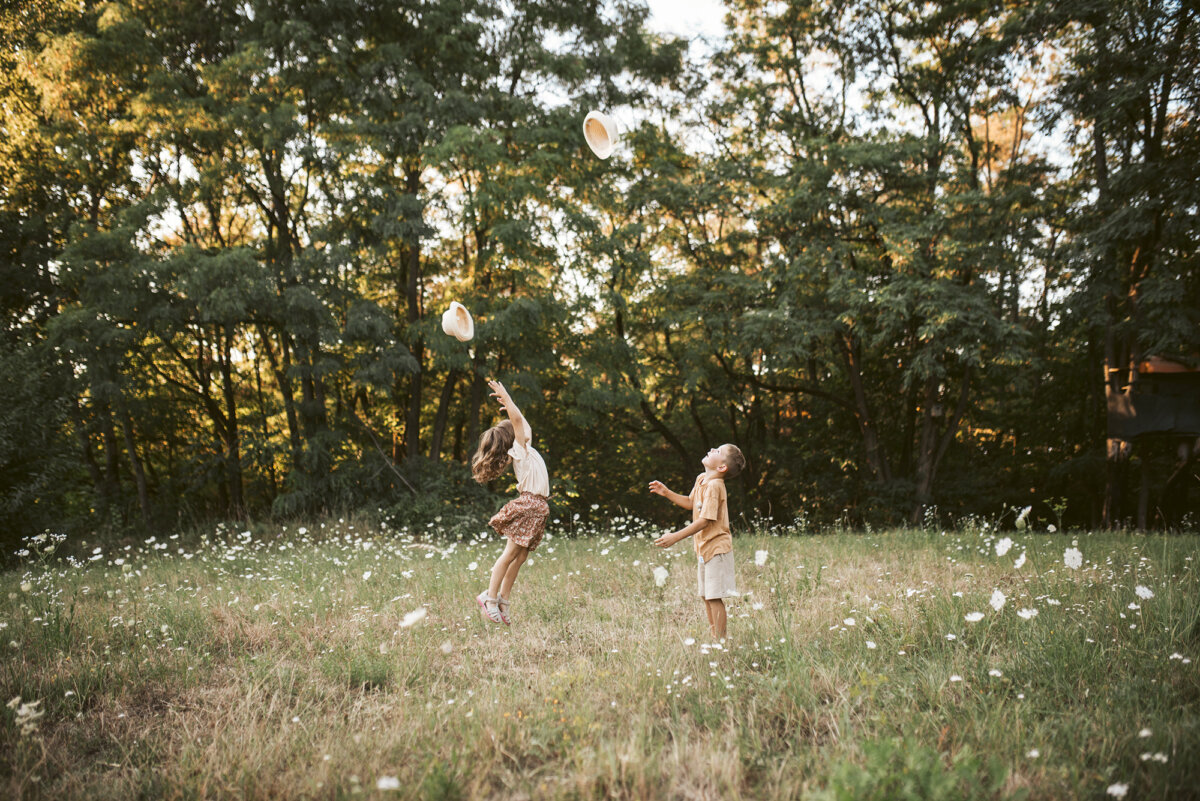
Instilling a love for nature in children from a young age is one of the best gifts you can give them. But it’s a gift that’s becoming rarer and rarer. A 2015 report from the University of Michigan Institute for Social Research unearthed a troubling statistic: The average American child spends just seven minutes per day in unstructured outdoor play. That marks a 50 percent decrease in just 20 years.
This is concerning for many reasons.
“At the very moment that the bond is breaking between the young and the natural world, a growing body of research links our mental, physical, and spiritual health directly to our association with nature—in positive ways,” Richard Louv wrote in his book “Last Child in the Woods: Saving Our Children From Nature-Deficit Disorder.”
Time spent in nature has been associated with better mental health, boosted creativity and focus, stronger immune systems, better heart health, improved sleep, and more physical exercise. Kids who spend time outside are happier, smarter, and less anxious than children who spend more time inside. Writing for Child Mind Institute, Danielle Cohen noted that outdoor play boosts children’s confidence, imaginative abilities, and incentives for physical exercise.
Beyond these physical benefits, children receive something intangible, yet equally—or perhaps more—important: a sense of the world’s basic, fundamental order. Familiarity with nature and a love for wild things ground children in the realities that undergird human civilization.
Children who spend a lot of time in nature intuitively understand how the physical world works and have more finely tuned senses. They have a visceral encounter with the soft sweep of grass, hear the tinkling of birdsong and the flow of water, and feel the hard, rough surfaces of rocks and bark and bare earth. These elemental things are our sources of life and the raw materials of the healthy imagination.
Let’s Go Outside
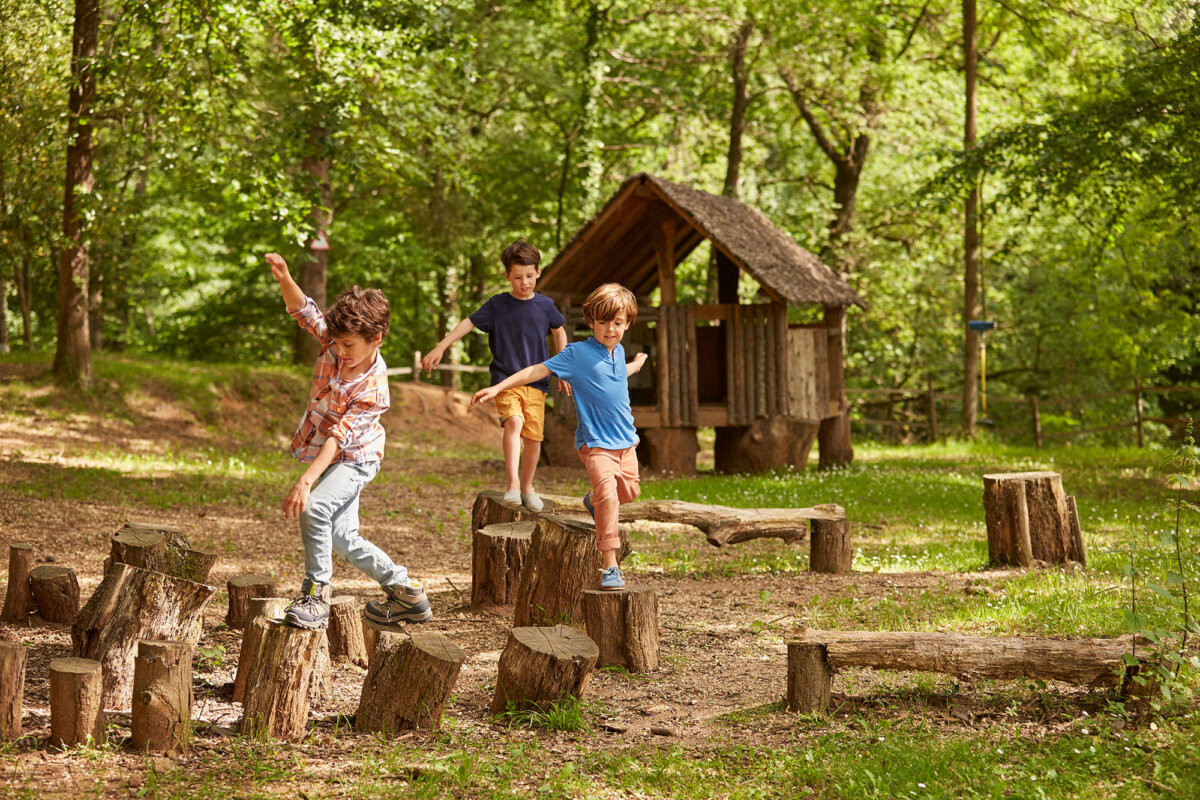
A simple and fun way to get kids back in contact with the natural world is nature walks. A nature walk is a slow-paced exploratory stroll through a natural environment, where kids are encouraged to notice, appreciate, discover, and collect things from nature.
Nature walks take many forms. The key is to foster attentiveness, appreciation, learning, curiosity, and wonder. A simple model is to grab a field guide to local flora and fauna and head out on a nearby trail. Parent and child can identify as many species as possible together.
A “noticing” nature walk is particularly beneficial for training children to make full use of their senses, to patiently and attentively absorb the world around them. In a noticing nature walk, the adult should ask the child questions as they meander. What do you see? What do you smell? How would you describe the smell? What do you hear? What do you feel?
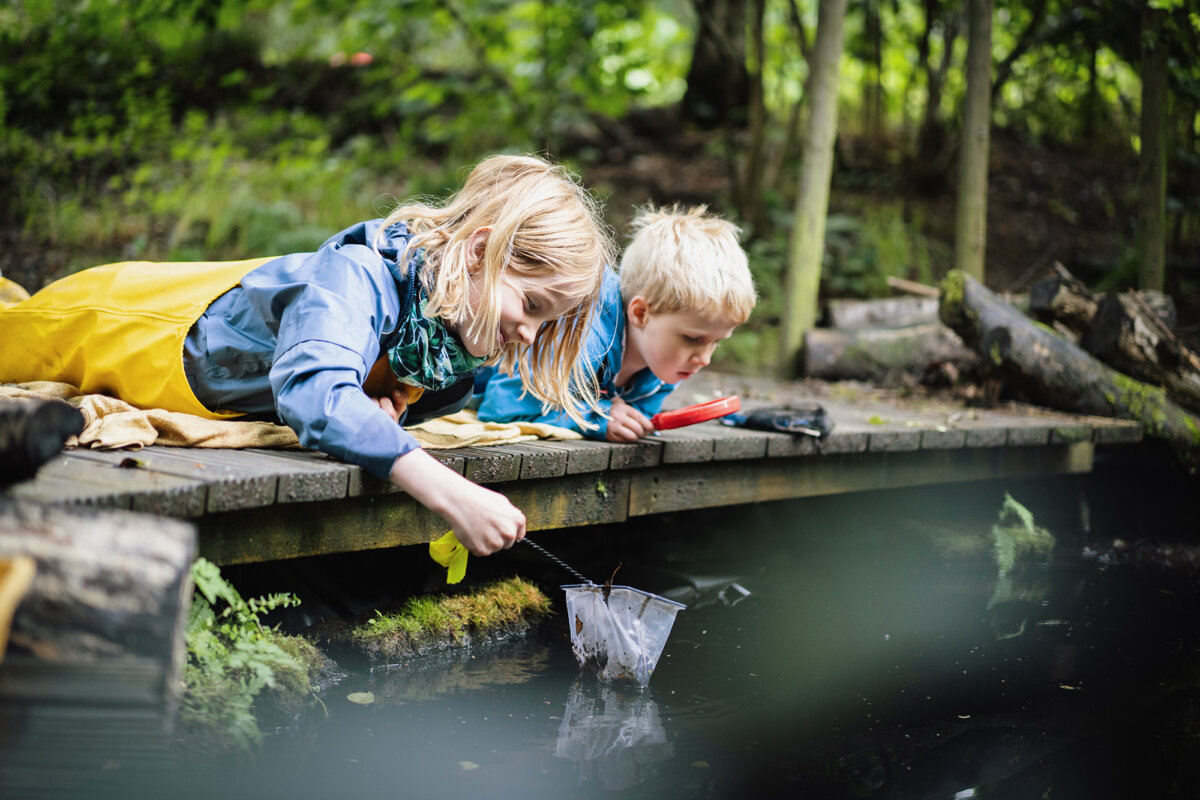
For children who need a little more direction or competition to feel motivated, a nature scavenger hunt is a good option. Having a specific list of items to find or collect can inject more excitement into the experience.
Nature walks flow organically into at-home activities. Items collected on a nature walk could be used in an art project or nature diorama. If you collected various specimens, children can document them and make a display afterward. Collecting pond water on a nature walk provides an opportunity for further study of the microorganisms and bugs in it at home, under a magnifying glass or even a microscope. Writing a reflection or drawing a picture or a map related to the nature walk encourages children to understand their experiences.
A Refuge Amid Life’s Hustle and Bustle
Vibrant experiences in nature are the basis for some beautiful memories.
“We have such a brief opportunity to pass on to our children our love for this Earth, and to tell our stories,” Louv wrote. “These are the moments when the world is made whole. In my children’s memories, the adventures we’ve had together in nature will always exist.”
In addition to building beautiful memories, nature walks help build beautiful futures. Developing a taste for the outdoors serves children well throughout life. In nature, they will find beauty and peace that they can return to as a refuge when life gets difficult. As they grow, they can learn to follow the example of the agrarian writer Wendell Berry, who wrote:
When despair for the world grows in me …
I go and lie down where the wood drake
rests in his beauty on the water, and the great heron feeds.
I come into the peace of wild things
who do not tax their lives with forethought
of grief. I come into the presence of still water.
And I feel above me the day-blind stars
waiting with their light. For a time
I rest in the grace of the world, and am free.
This kind of meditative, restorative relationship with nature doesn’t develop spontaneously. With so many modern distractions, it’s easy for children to seek peace or comfort in gadgets, food, and entertainment. But these things don’t have the healing power—for body and soul—that nature does. That’s why introducing children to the outdoors through repeated positive experiences is a great gift. It’s the beginning of a lifelong love affair with creation.