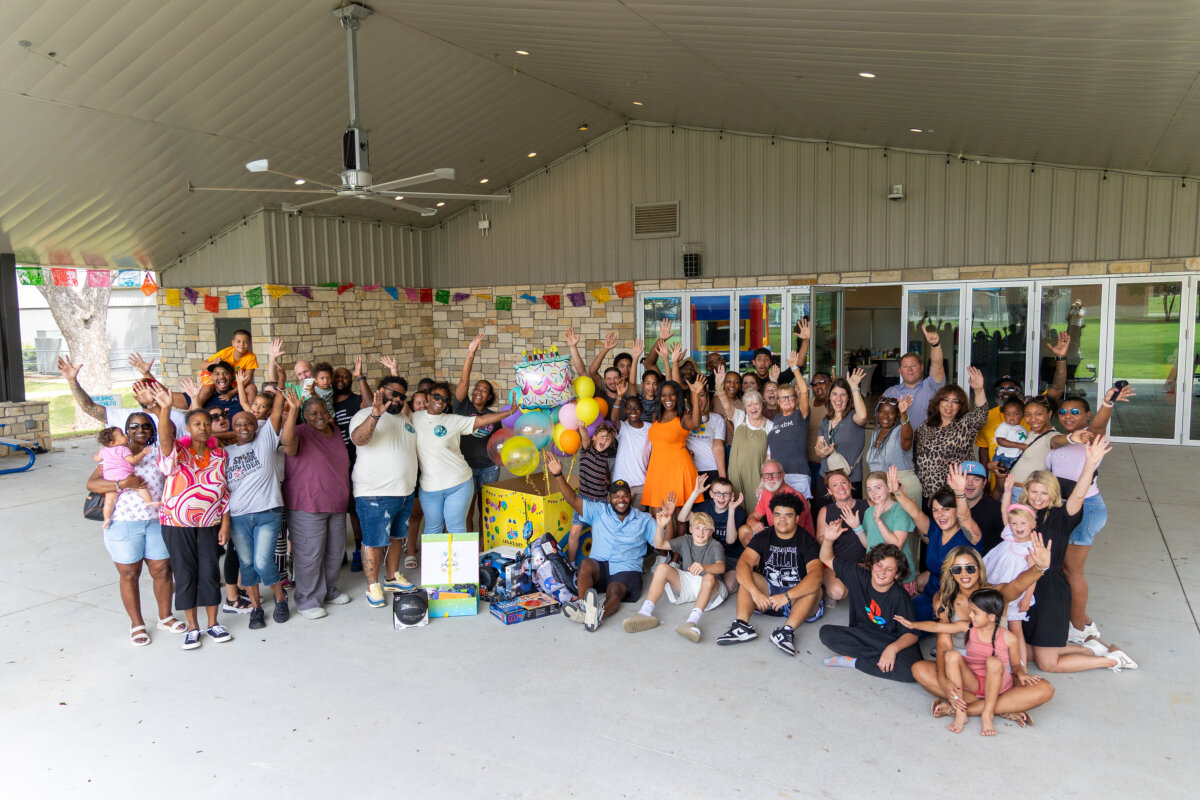
Imagine throwing a birthday party for your child, and no one shows up.
It’s devastating for the child and heartbreaking for the parents.
Sadly, this is sometimes the scenario for parents of special needs children. But thanks to a couple who understands, instead of empty birthday parties, many have become incredible celebrations.
Laila’s Gift is a nonprofit founded by Shari Bailey and Michael Nash, parents of fraternal twin girls, Laila and Lana. While Lana is healthy, Laila was diagnosed with Jacobsen syndrome, a rare genetic disease. She is nonverbal, suffers from seizures, and has a feeding tube. Those with Jacobsen syndrome have a usual life expectancy of 2 years old.
That makes birthdays very special. So Bailey and Nash travel the country in an effort to help every child with special needs have a memorable birthday.
The journey that got them to this point is a story in itself. Stops along the way include an invention and a new method of communication for children.
Laila has beaten the odds. She is now 11 years old after enduring eight surgeries before she was 4 months old. Because she doesn’t speak, her twin sister discovered an interesting way of communicating with her when the girls were 6 years old. Bailey shared the amazing story: “Lana grabbed some paper and some crayons, and she started writing a story. She went to the restroom. When she came back, she noticed Layla had picked up her crayon, crawled over to her paper, and started scribbling on the paper.”
Laila had drawn a Christmas tree.
This revelation led to Lana’s creation of the “imagination book,” which features five stories without pictures. Its purpose? It encourages a child to fill in the blanks with images. Bailey said it inspires creativity. “There are no right or wrong pictures,” she said. “It’s what you feel based on the story.”
This led to Zigglebee, which connects children through art and technology using Lana’s idea as a model.
A short video shows the power of art, starting with two children waiting for a school bus but not speaking. The next day, one of them draws in the imagination book and shares it with the other child. It serves as a spark for conversation and friendship, and the two are seen talking. Zigglebee offers imagination books through its website, designed to get children to communicate using art and creativity.
Although Laila was communicating more, the specter of a short life expectancy hung over their little girl. Every birthday had to be a real celebration. The family realized that they weren’t alone in this situation.
“We took our personal model of celebrating every birthday like it could be the last with Laila, and really making it a big deal, and then we realized we weren’t the only family dealing with that, so we decided to make it a nonprofit,” Bailey said. “So our nonprofit throws free celebrations for children with special needs and disabilities, and we just went national [last] year.”
Although those birthday parties are for the children, they uplift those around them. “We’re excited about the impact and the knowledge sharing that we’re providing to the community, but also the support. We’re providing not just for a child, but also the caregivers and their siblings, which is a big part of this,” Bailey said.
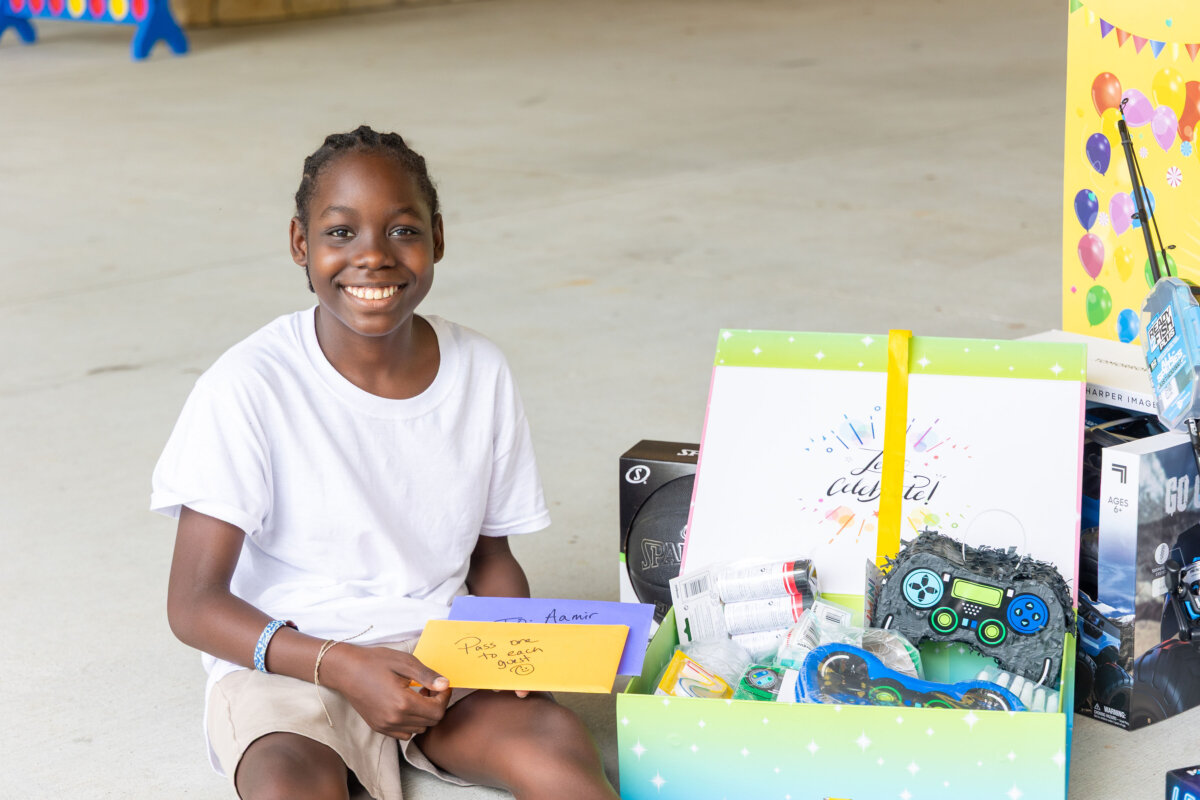
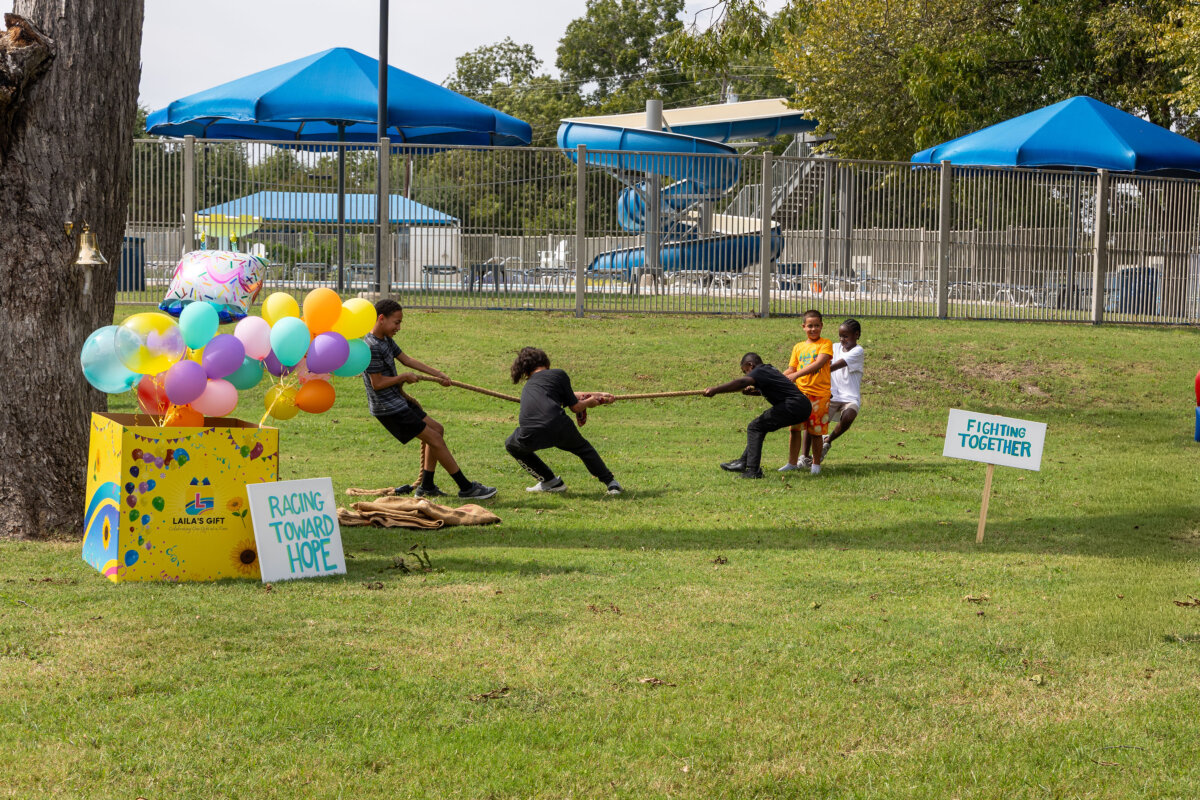
The group arrives with a “celebration box”—which is 30 feet by 30 feet by 30 feet—on a tractor trailer. It includes party favors, personalized items for the child, and everything for a great celebration. Nash said it’s like Publishers Clearing House showing up at the door, except to throw a huge birthday party that can include more people than your average kid’s celebration.
“We just got off the phone with the mom for the pre-celebration call for this Saturday. They’re expecting 110 people,” he said.
How does the group get so many people to attend? If the celebration is in a public place, invitations go out from their mailing list. If the party is at a private home, it works with local volunteer groups in addition to inviting friends and family.
Bailey said watching these birthday celebrations can get emotional.
“We’ve had kids who are double digits, eating cake for the first time at the celebration,” she said. “We’ve had parents say this is the first time anyone’s ever showed up, because they’ve tried having birthday parties and no one shows up. It’s really sad.
“One mom just asked people to send gifts to the house, because there are no children that want to even be around her child to celebrate them. And I’m telling you, in every celebration we have, I cry.”
______
Wristband Tracker
Bailey and Nash had another big challenge that they share with other caregivers of special needs kids—knowing where they are 24/7. They developed a wristband called InfoMate that is basically a tracker. If a child should wander off or somehow get lost, the bracelet contains personal and medical information along with a location. And it’s not just for kids; caregivers of Alzheimer’s patients also make use of them.
Correction: A previous version of this article misstated the life expectancy for children with Jacobsen syndrome. The Epoch Times regrets the error.