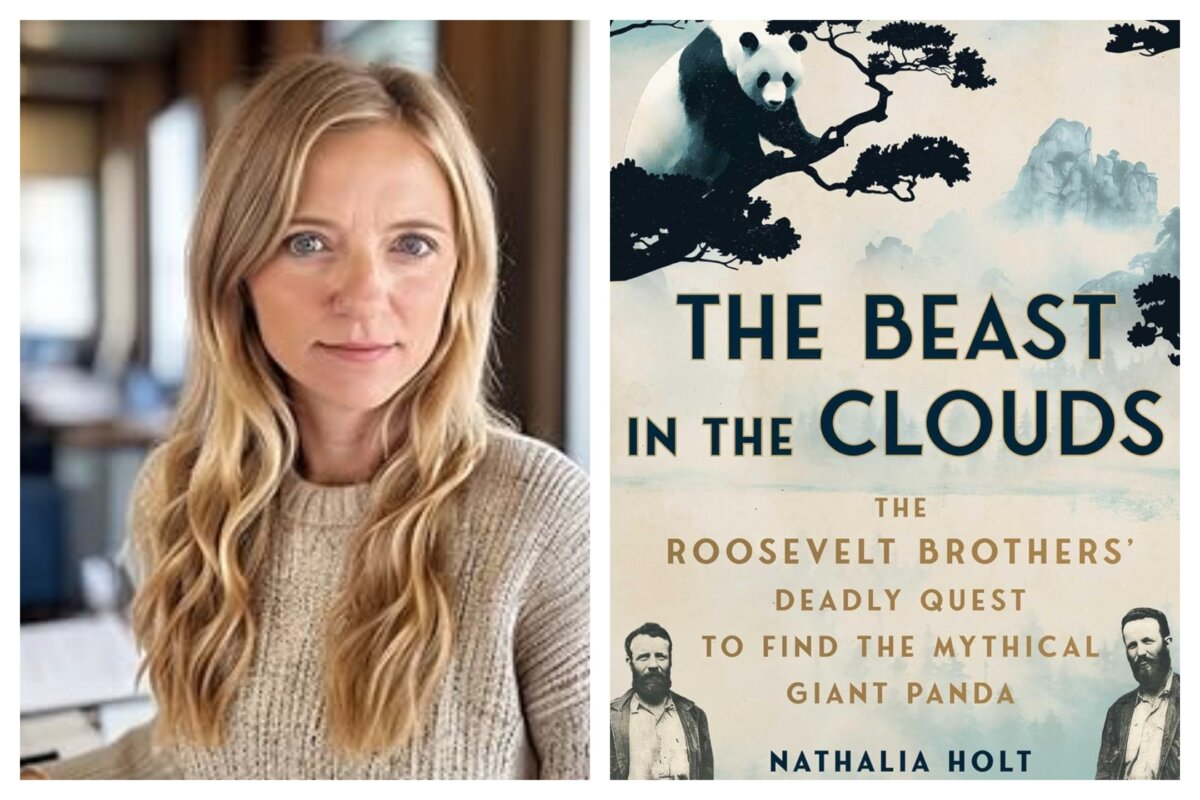
In the five Indiana Jones movies, the intrepid archaeologist thrilled us with his adrenaline-infused pursuit of ancient relics and famous artifacts of antiquity. In 1929, two men undertook a real-life adventure into the Himalayan mountains in search of a different kind of treasure.
The men shared the same surname, and both sought to make their own mark on history apart from their father, former President Theodore Roosevelt. Like their world-famous father, Ted and Kermit Roosevelt loved hunting and exploring, and they thought their ticket to recognition as world-class explorers would be in capturing the one large mammal no other expedition in the world ever had: the giant panda bear.
In her captivating book “The Beast in the Clouds: the Roosevelt Brothers’ Deadly Quest to Find the Giant Panda,” author Nathalia Holt captured the multitude of challenges, physical dangers, and emotional hardships the Roosevelt expedition endured. She documented their trek that crossed China and Tibet searching for the mystical black and white bear. The panda was considered mythical because little tangible scientific evidence existed that such a creature was real.
Months into their world-famous expedition, even the Roosevelts fought gnawing doubts that pandas were real, especially after talking with central Asian natives along their 1,000-mile route who claimed never to have seen a panda. Eventually, the men got their wish when it came to capturing a panda, but it came with a steep price: unintended consequences that would leave their lives forever changed.
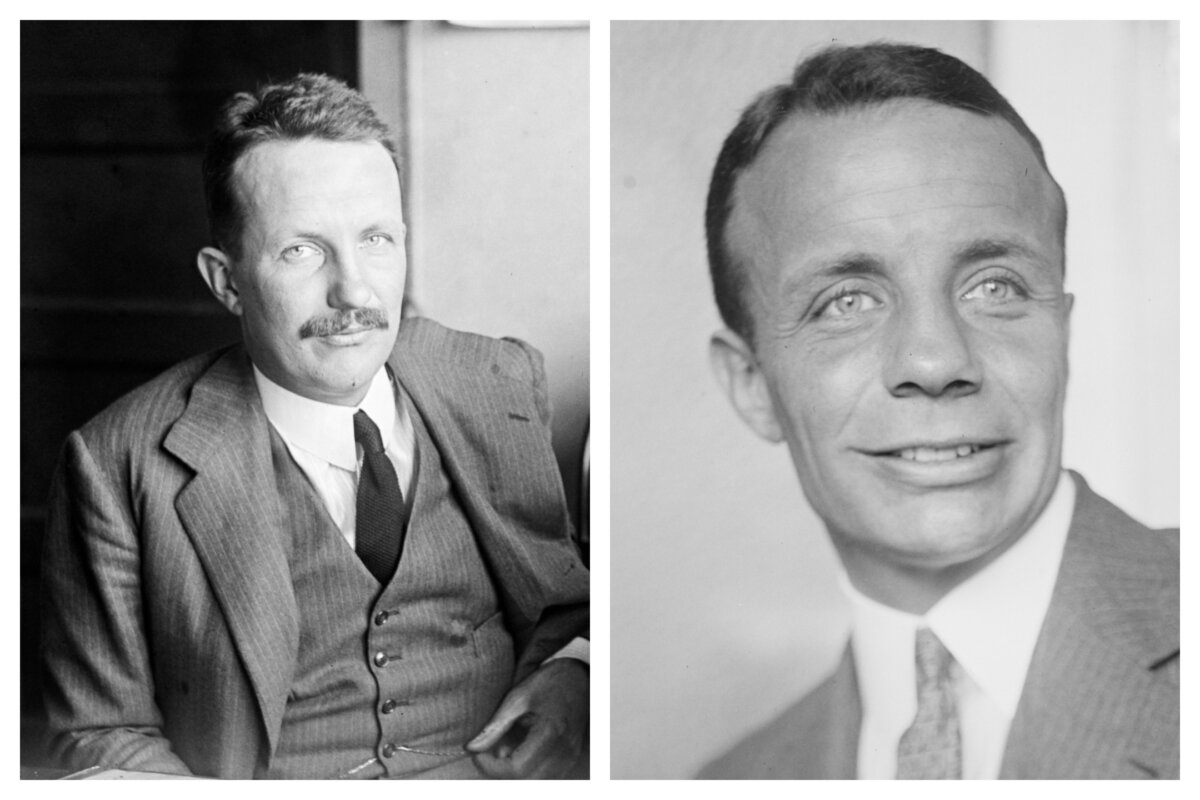
Like Father, Like Sons
When Ted and Kermit were youngsters, they would play a game called bear hunt in the family’s large Oyster Bay home on Long Island. The senior Roosevelt would hide quietly on the premises in a closet or behind a bathtub or shower curtain. When the boys discovered him, he would roar like a bear and tackle his sons as they all giggled on the floor.
As adults, the Roosevelt brothers struggled to establish their own identities separate from their beloved father. They unexpectedly got their wish just weeks into the expedition when meeting a member of the royal Tibetan family in Muli. The author notes the Roosevelts learned firsthand that their family’s wealth and influence meant nothing where they were trekking. Their host didn’t know who President Roosevelt was, nor did he care.
“In Muli, the explorers were reborn, able to taste life without the burdens of the past,” Holt wrote.
The People You’ll Meet
Accompanying Ted and Kermit on their panda search were Jack Young, a 19-year-old fluent in Chinese and other languages; Herbert Stevens, a biologist and the true scientist of the team; and Suydam Cutting, a native New Yorker who thirsted for travel and adventure.
Holt’s impressive research puts readers into the weathered boots of the Roosevelts as they encountered blizzards, altitude sickness, oxygen deprivation, continuous days of rain, fevers and illness, and near starvation when the mules carrying their food supplies wandered off in the night.
She also describes several fascinating personal encounters the expedition met with: Tibetan monks who provided them food and shelter after they almost froze to death in the mountains, Tibetan bandits numbering in the hundreds, and the mysterious Yi people of southern China whom the group was warned repeatedly to avoid. Interestingly, it was while employing a Yi hunting party as guides that Ted and Kermit, at the beginning of monsoon season, encountered their first and only panda.
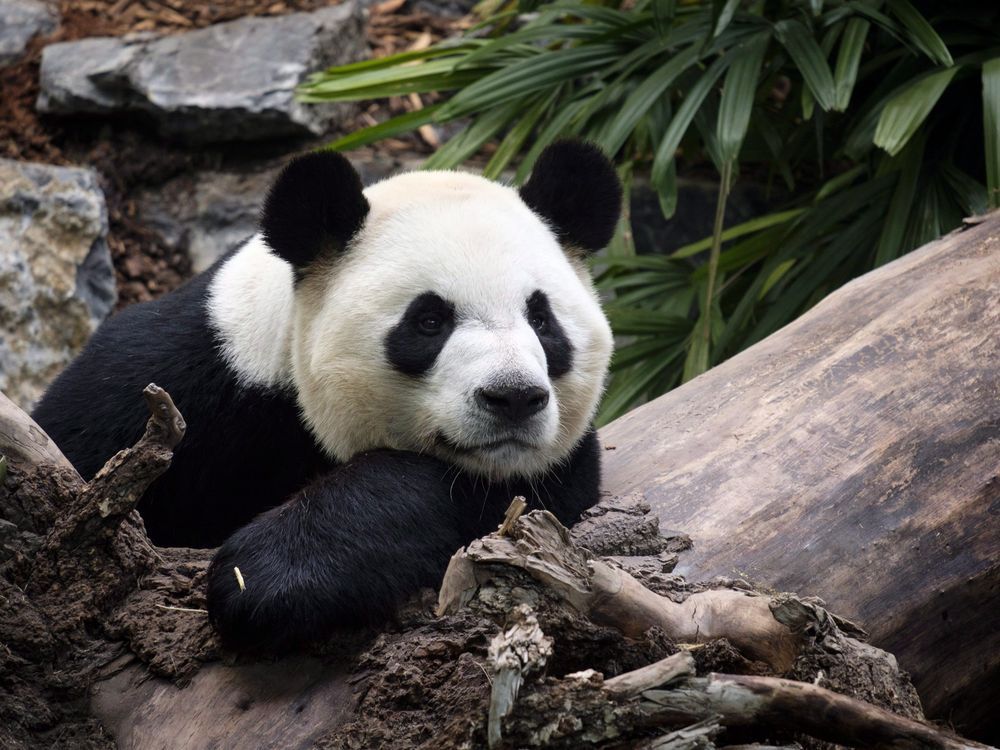
At some point on the expedition, Ted and Kermit had decided that when a panda was sighted, the brothers would shoot it together. When the panda was finally located, Ted and Kermit fired simultaneously at its outline before killing it minutes later.
The author said the incident left the Roosevelt brothers emotionally paralyzed because they had expected their prey to possess the same aggressive behavior as brown and black bears. What they encountered instead was a docile, gentle creature. “A dark shadow had fallen across their lives the moment the two brothers simultaneously pulled their triggers.”
Post-Panda Hunt
One year after the Himalayan trip, Kermit dedicated himself to the animals he had once hunted. He took an executive position with the New York Zoological Society and five years later became president of the Audubon Society.
Ted also left adventuring and began editing books upon his return from the expedition. In 1935, he accepted a job as a publishing executive, writing several books of his own until the outbreak of World War II.
Holt does an admirable job of combining biography, history, nature, and the environment in a narrative that reads like an action-adventure story.
Knowing what we do about pandas today, some readers may find themselves rooting against the Roosevelts, but as the author notes, because of poaching and deforestation, pandas have suffered more in modern history than they did a century ago when they were the mythical beast in the clouds.
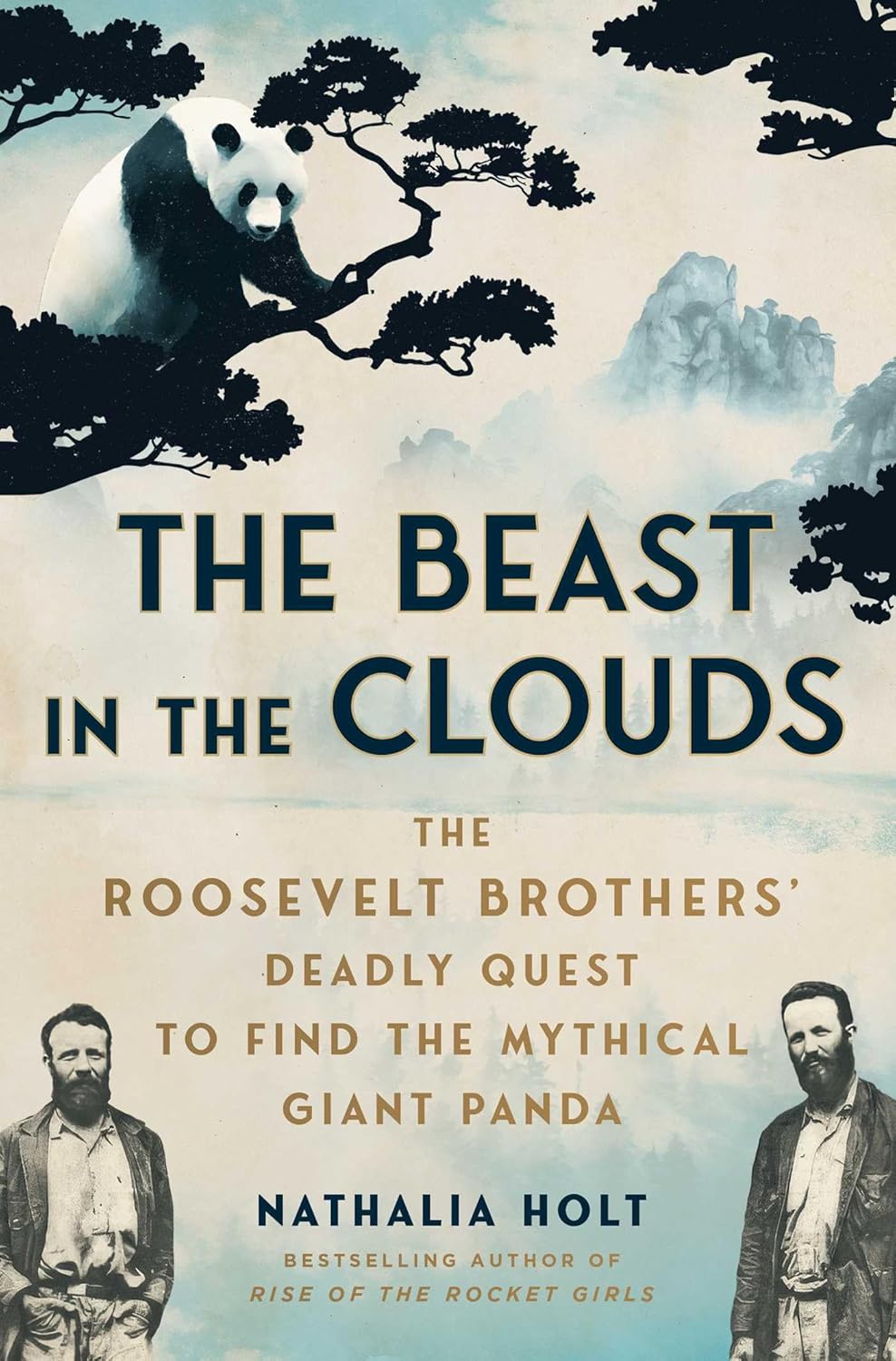
The Beast in the Clouds: The Roosevelt Brothers’ Deadly Quest to Find the Giant Panda
By Nathalia Holt
Atria/One Signal Publishers, July 1, 2025
Hardback: 288 pages
What arts and culture topics would you like us to cover? Please email ideas or feedback to features@epochtimes.nyc