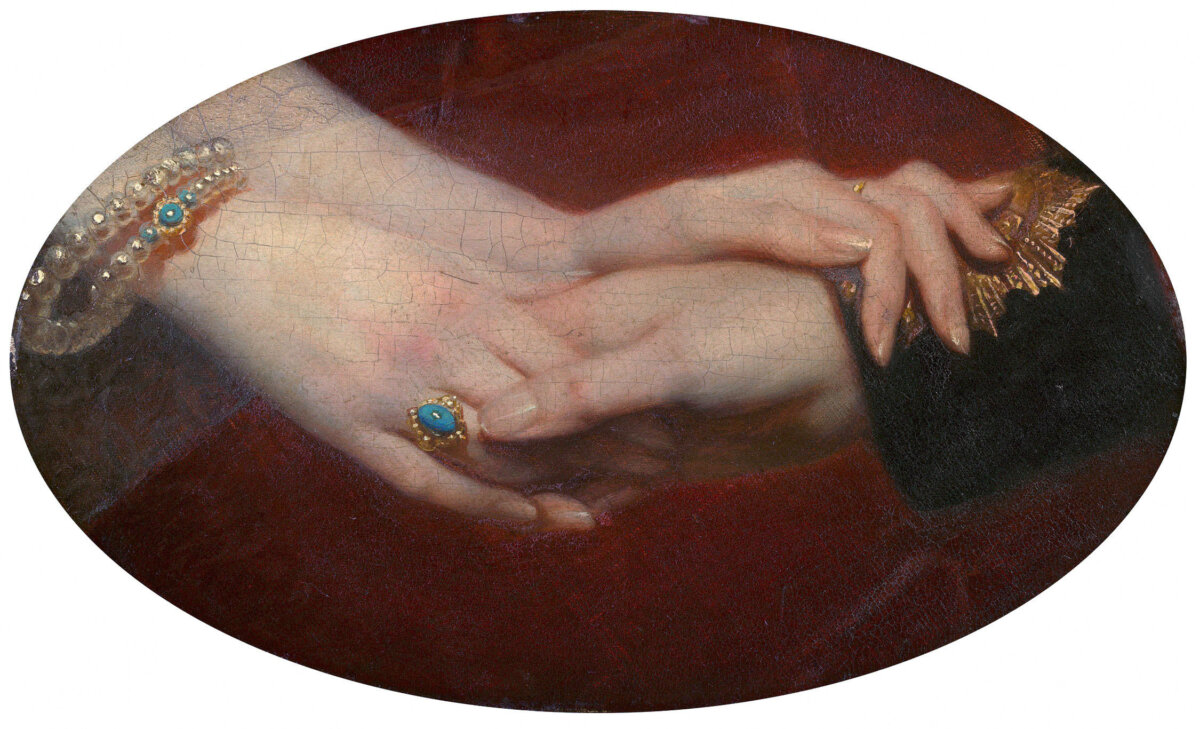
Isn’t every engagement and wedding ring a story waiting to be told—of love, of the times, and of the people who wore it? From simple ancient bands to today’s radiant settings, these pieces have done more than dazzle; they reflect the passions, promises, and aesthetics of the eras that shaped them.
Late Bronze Age
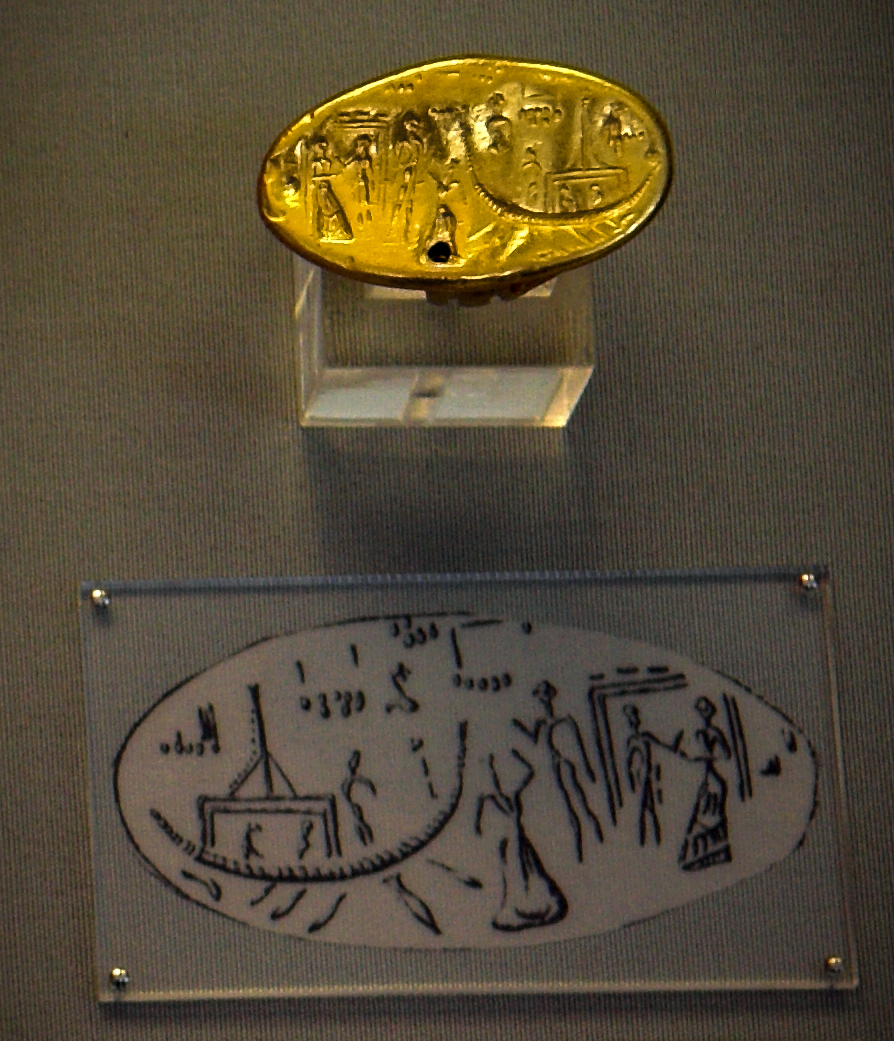
This Late Bronze Age gold signet ring comes from the Mycenaean period, which spans roughly 1600 to 1100 B.C. During this time, the Greek mainland experienced wealth and cultural growth. Artisans thrived and produced everything from everyday pottery to luxury items such as carved gems, jewelry, vases in precious metals, and delicate glass ornaments. Trade flourished as the Mycenaeans imported copper, tin, gold, and ivory while exporting olive oil, wine, and pottery.
The ring appears to depict a seaside trading scene, suggesting it likely functioned as a seal for documents and commercial transactions. At the same time, it would have displayed the wearer’s status, signaling wealth and prestige while possibly hinting at bonds of love or family. The couples are shown alongside a ship, adding a more personal dimension to the imagery. Although the Mycenaeans were not known to wear rings to signify betrothal or marriage, these figures are often interpreted as symbols of lovesickness or heartache.
‘Hands Clasped in Faith’
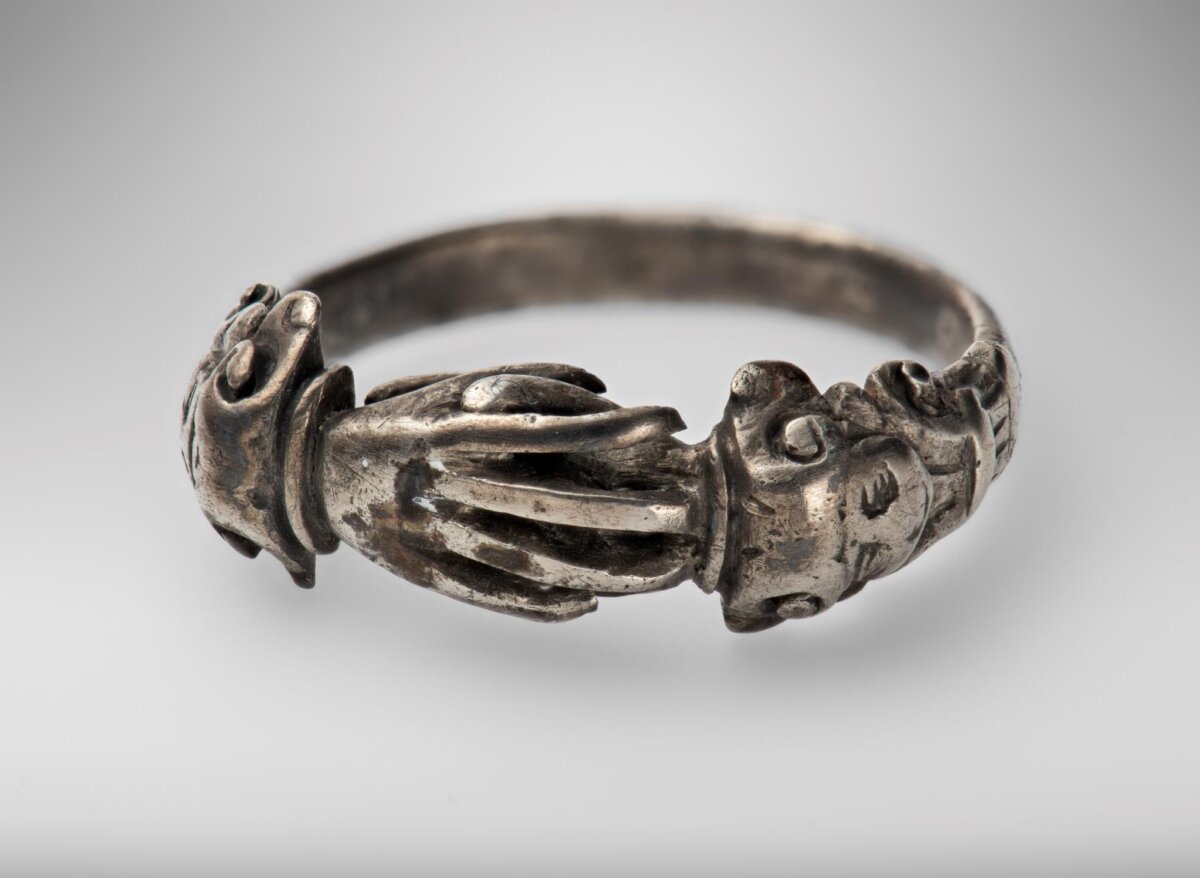
This Italian fede ring comes from a long tradition of engagement and wedding jewelry in the late medieval and early modern periods. Its name, “fede,” comes from the Italian “mani in fede,” meaning “hands clasped in faith.” These rings marked the union of two people and were a clear sign of commitment. The clasped-hands symbol comes from ancient Rome, where it represented agreement and loyalty. This design was widely used for betrothal and wedding rings across Western Europe during the medieval and Renaissance eras. Its popularity endured well into the 20th century.
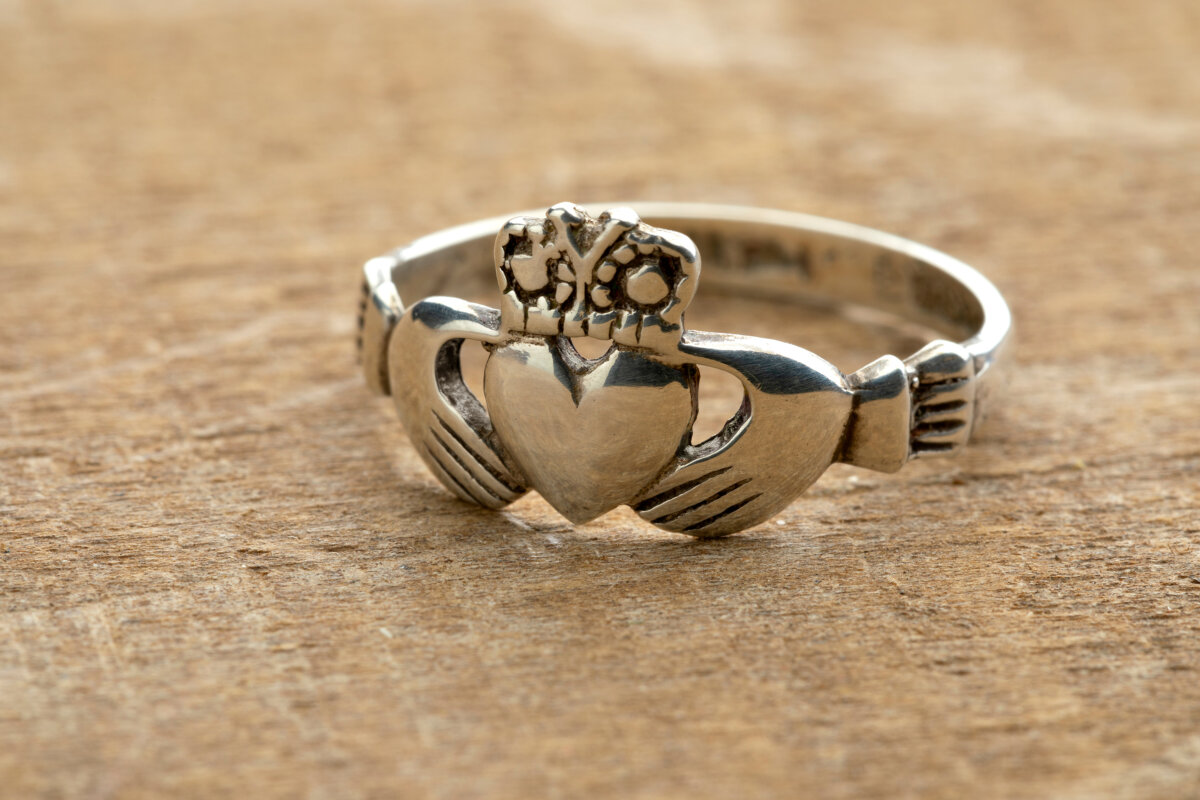
While traditional fede rings show two hands clasped, some became more elaborate over time. During the Renaissance, the hands might hold a heart, symbolizing love, or be topped with a crown for loyalty. This later inspired the Claddagh ring.
Other versions included short inscriptions, called posies, on the inside, like “Two hands, one heart, Till death us part.”
Private Notes of Devotion
This gold posy ring from post-medieval England carries a short engraved message, usually showing love, devotion, or loyalty. These rings were often given as love tokens or wedding bands, with the words acting like a private note between the giver and wearer. Affordable and simple, posy rings were popular across social classes and focused more on the message than decoration.
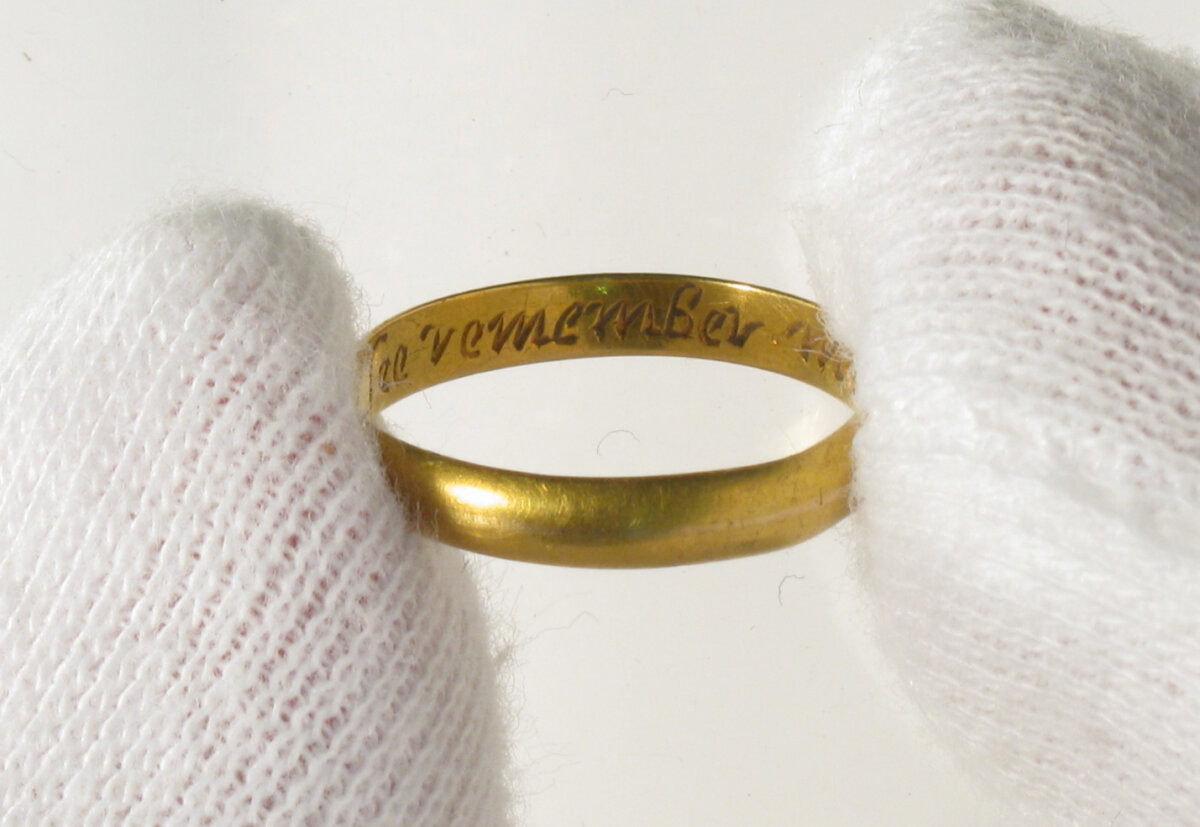
Surviving examples show about 40 different ways people expressed devotion, from poetry to moral reminders. Common inscriptions include: “Amor vincit omnia” (“Love conquers all”), “Remember the giver,” “The Love of thee is life to me,” “True love is endless,” “Live and Love Happy,” and “The ring is round & hath no end so is my love for thy.”
Posy rings were modest gold or silver bands that put the focus on the inscription. Some had small decorations, like twisted bands or engraved edges, but the words were always the main attraction. The engraving required care to keep the message legible on a narrow band. These rings were part of a larger European trend where small objects, like rings or lockets, carried personal messages and showed how even tiny gestures could hold deep emotional meaning.
Victorian Sentiments
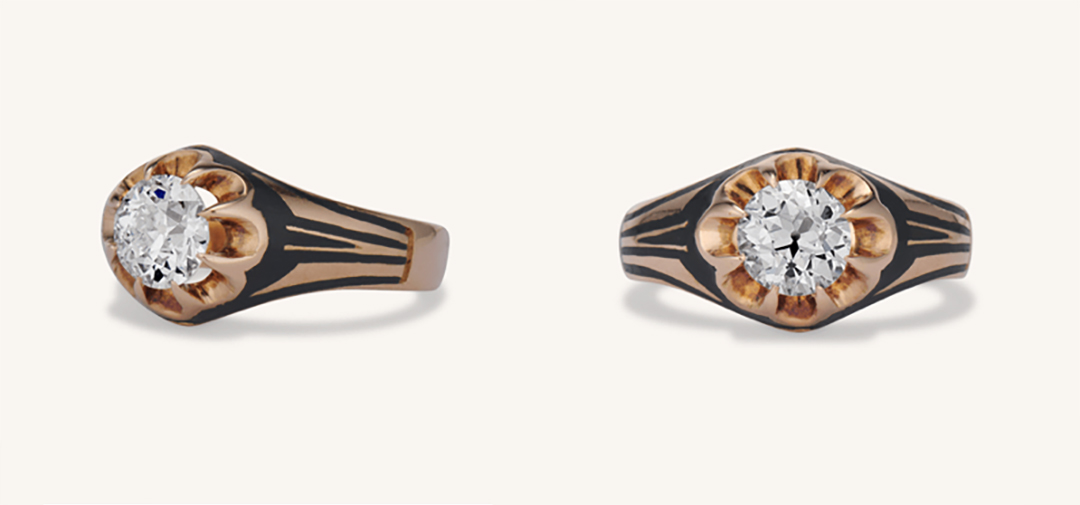
Victorian-era rings reflected a deep appreciation for symbolism and sentimentality. This stunning ring, crafted during the period, features an old European-cut diamond set in a belcher-style mounting with enamel details. The setting is prized for its elegant, flower-like appearance.
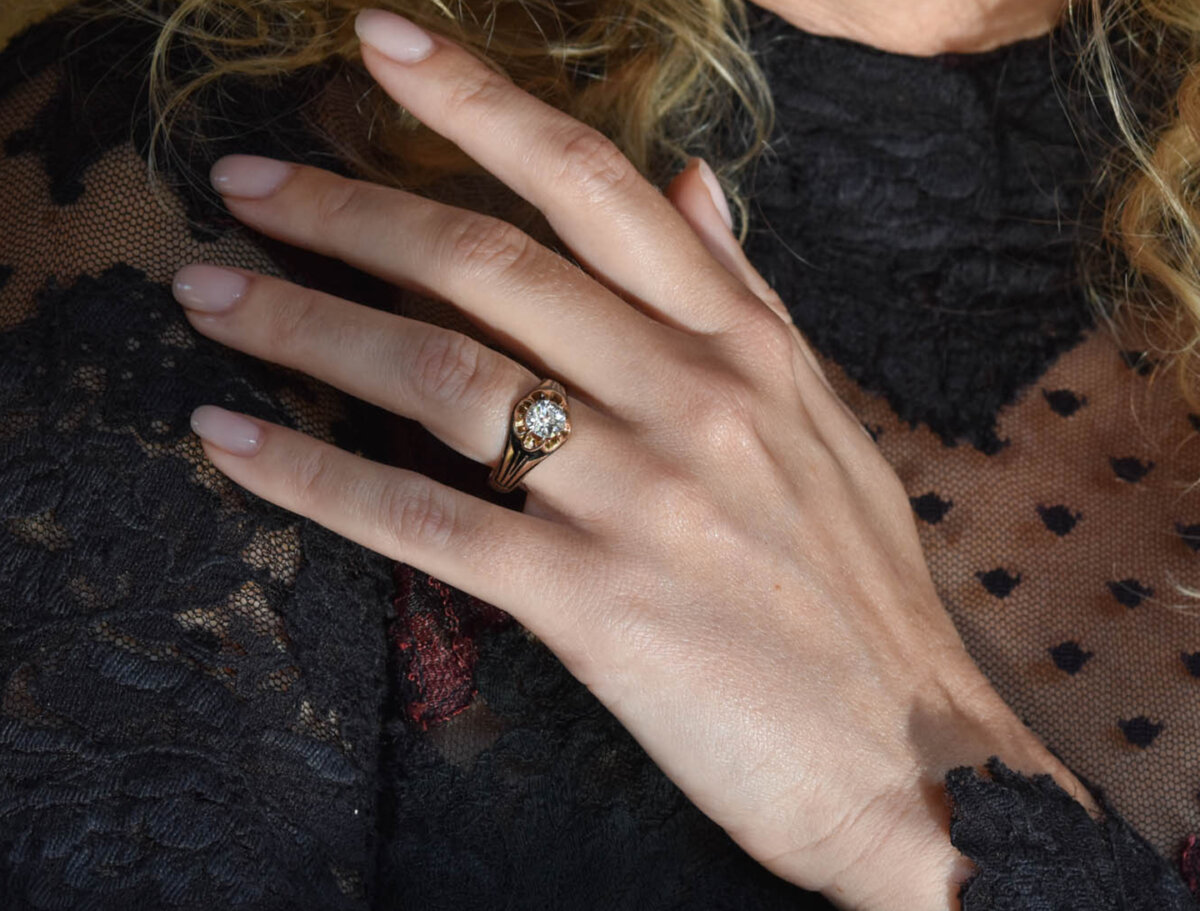
Victorian jewelry is easy to recognize by its motifs, which often include flowers, birds, hearts, bows, and other nature-inspired designs. Among the most iconic pieces from this era was Queen Victoria’s engagement ring, which carried deep personal and symbolic meaning. It was designed as a serpent with emerald, ruby, and diamond jewels, representing eternal love. After diamonds were discovered in South Africa, rings became bigger and more elaborate, often with old-mine cuts and clusters. By the 19th century, diamonds had become a symbol of love and engagement, making rings like this a key part of romantic traditions.
Edwardian ‘Belle Epoque’
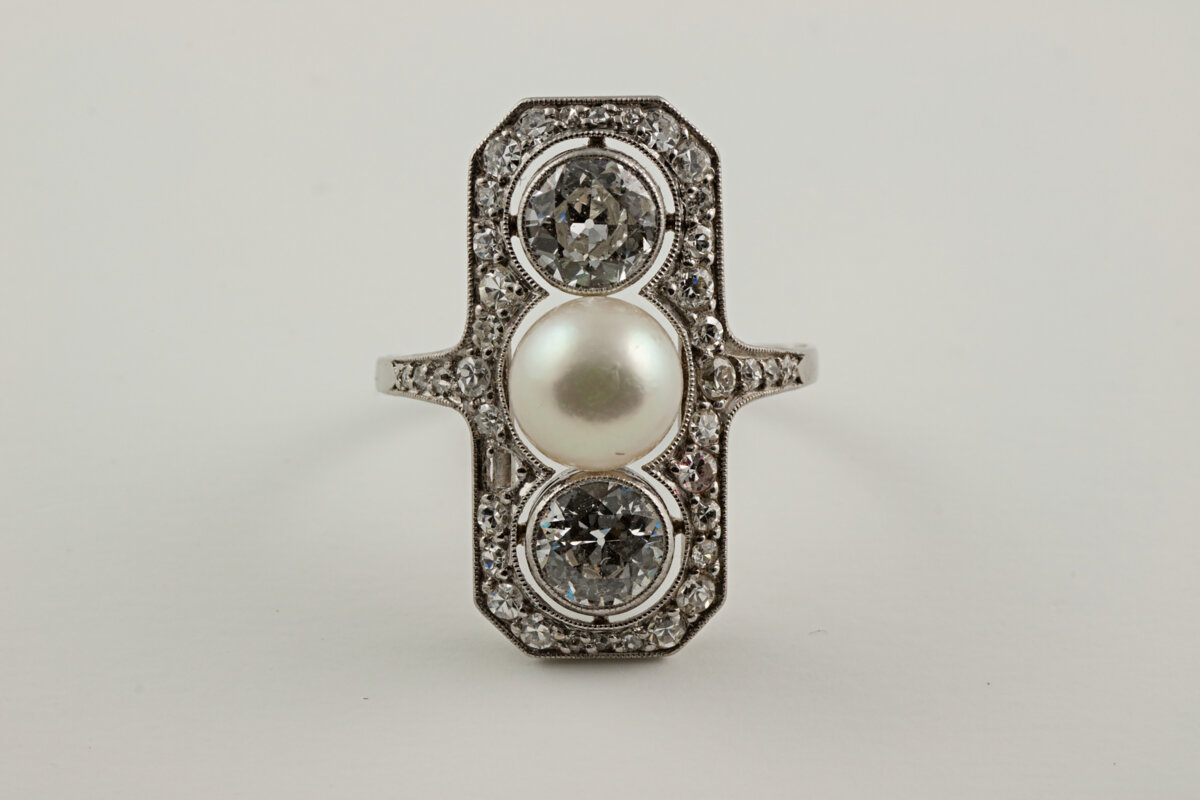
Edwardian rings capture the elegance and refinement of early 20th-century craftsmanship. Emerging during the reign of King Edward VII, these rings were almost always crafted in platinum. The metal is prized for its strength and its ability to hold intricate openwork that appears light and airy on the finger. Jewelers of the period mastered new tools, including the oxy-acetylene torch, which allowed them to create delicate patterns of garlands, ribbons, and flowers with astonishing precision.
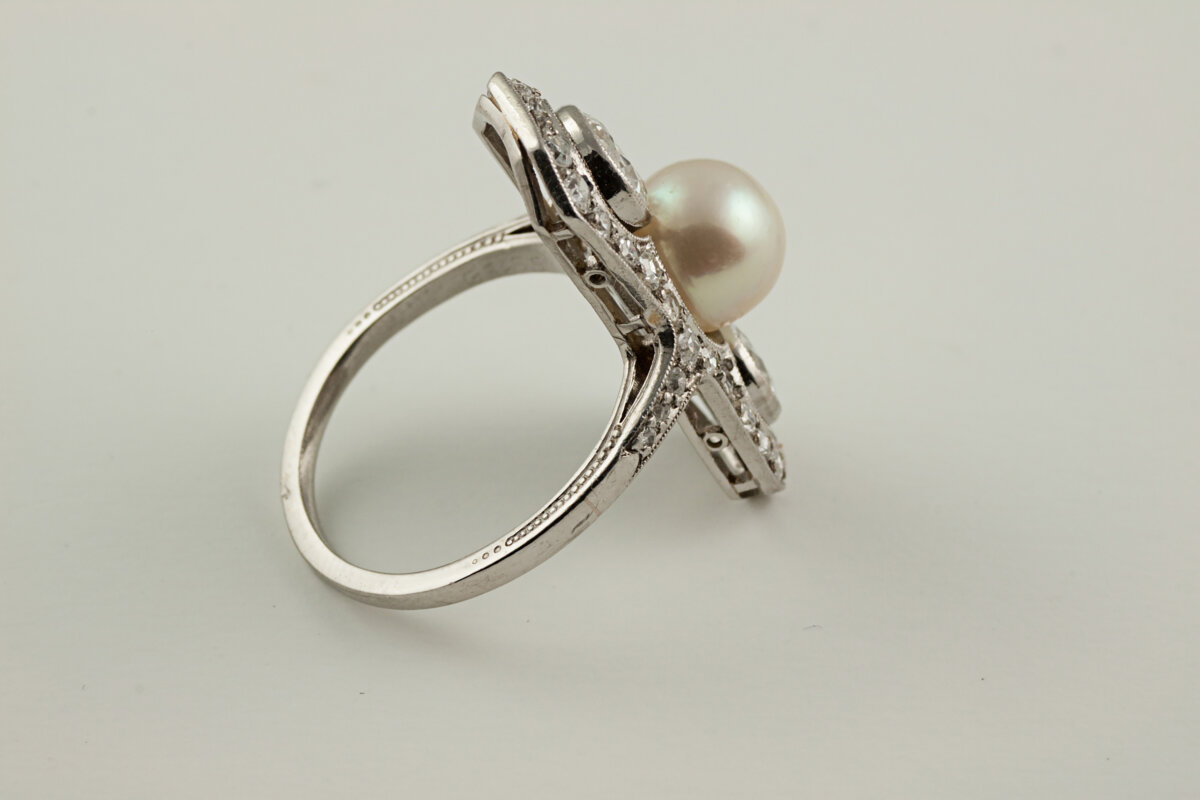
Symmetry and proportion were essential to the design, and many rings were enhanced with subtle enamel accents that added color without overwhelming the delicate metalwork. Pearls and diamonds were often paired (as seen here), and pierced under-gallery details allowed light to pass through the stones, giving them a sparkling, almost ethereal quality. Finely detailed and unmistakably feminine, Edwardian rings have a graceful charm that stands in sharp contrast to the bold, geometric energy of later Art Deco designs.
Today, they remain highly prized by collectors and admired by jewelry lovers for their artistry, sophistication, and timeless elegance.
Cartier, King of Jewelers
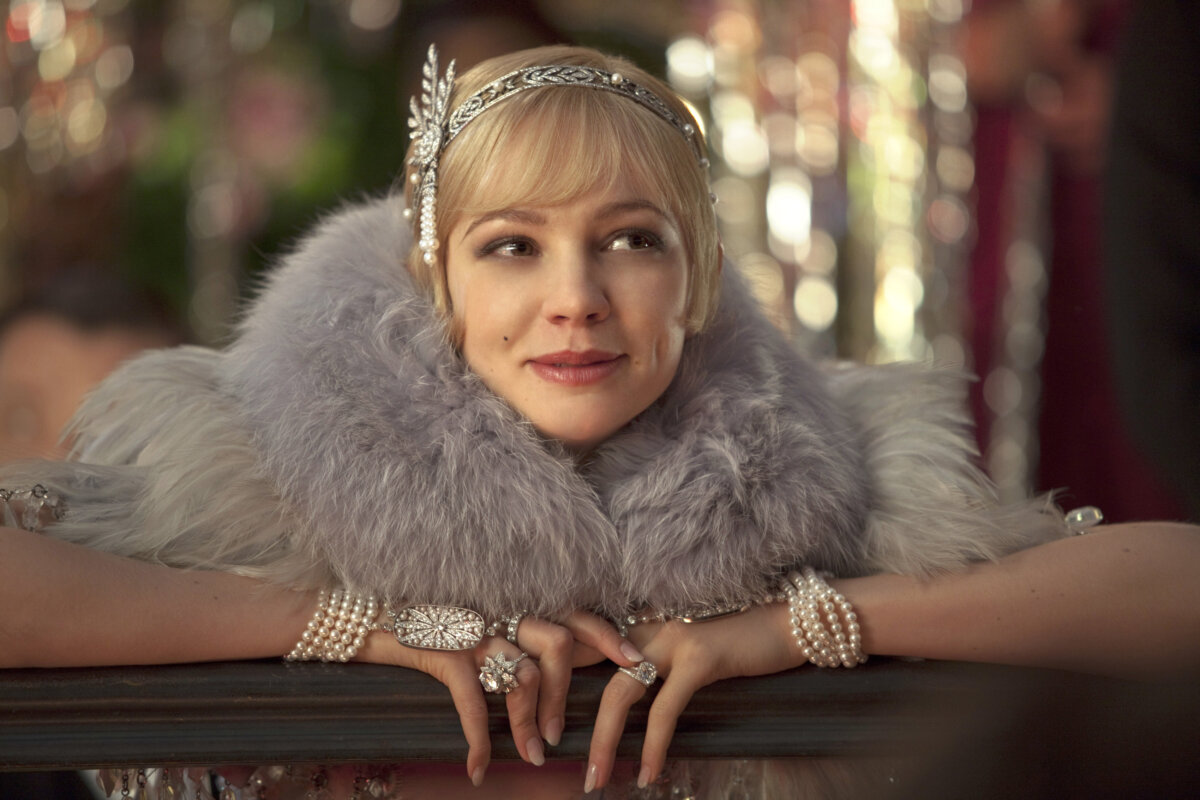
F. Scott Fitzgerald’s “The Great Gatsby” helped popularize the glamorous style of Art Deco rings. Engagement and wedding bands from this period had bold symmetry and often included elongated “baguette” diamonds, reflecting the optimism and glamour of the Jazz Age. The 2013 film adaptation reinforces this idea, as Daisy Buchanan wears a halo engagement ring with Art Deco-inspired lines. Jewelry historians note that these rings show how the 1920s embraced postwar optimism.
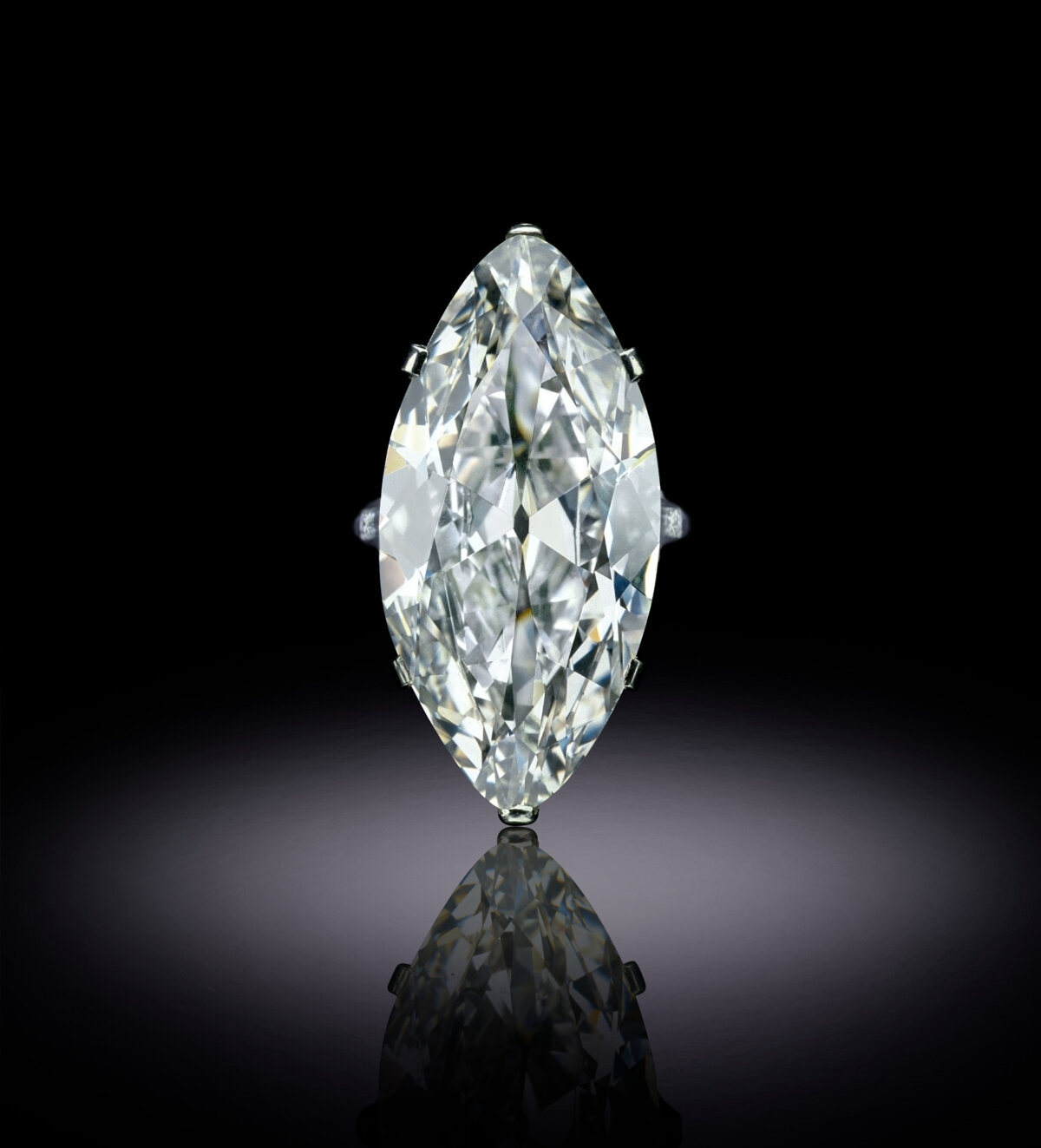
This Marquis Diamond Ring dates to the interwar years and showcases the clean lines and geometric forms typical of the style. Crafted in platinum by Cartier, it features a striking 28.3-carat marquise-cut diamond, and set in a garland motif. The ring’s band and undercarriage showcase four triangular-cut, eight baguette-cut, and 60 round brilliant-cut diamonds.
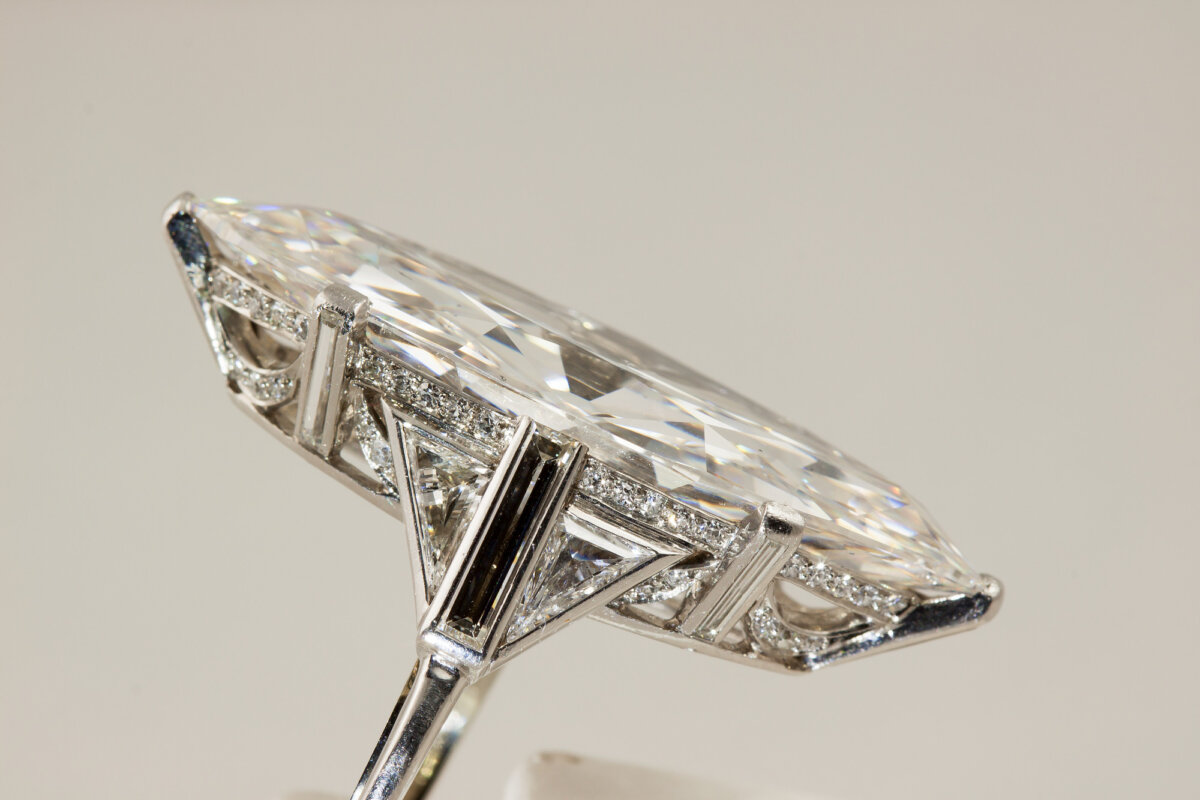
In 1964, Adelaide Riggs, daughter of socialite Marjorie Merriweather Post, donated the ring to the Smithsonian National Museum of Natural History. It remains a celebrated example of Jazz Age-elegance and design.
What arts and culture topics would you like us to cover? Please email ideas or feedback to features@epochtimes.nyc