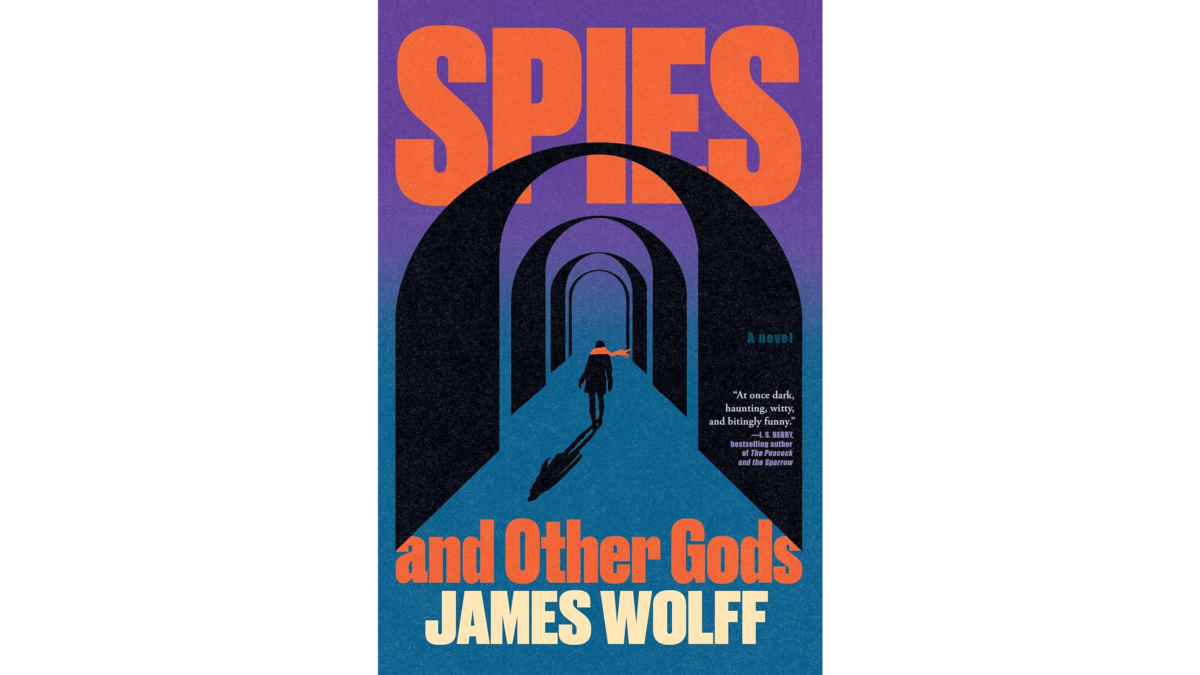
Spy novels are hit or miss, and currently they seem to be more miss than hit. The genre has become dominated less by plot and character development and more by how many explosions and gunshots can be force fit into a chapter. But sometimes, there comes along a spy novel that is rich in both plot and character development. James Wolff’s new “Spies and Other Gods” is that spy novel.
Aphra, an inquisitive researcher, Zaki, a hapless dentist. Sir William is an aged and soon-to-retire British intelligence director and Susan, a 42-year career low-level intelligence employee. And a host of intertwining and important characters coalesce to create a story that rivals some of the best spy novels, or any mystery novel, I’ve ever read.
The book is broken into three large sections (three acts, if you will). It’s not narrated by a person. The narrator is sort of the “spirit” of spying—a seeming entity that guides the reader through the story, worries about its subjects and the ensuing results, explains the necessity for difficult and even compromising decisions, and attempts to justify those decisions in the name of self-preservation. It’s an intriguing and at times humorous device that often demonstrates bewilderment followed closely by explanatory clarity, a sort of, “You see, that’s why that weird thing had to be done.”
Perfectly Fitting Pieces
The book begins with the arrival of Aphra at the London headquarters of British intelligence. She has been sent to investigate an anonymous complaint about a specific case. She is an outsider, representing a Parliamentary oversight committee that has been created to rein in the intelligence community’s rather cavalier methods.
The narrator—or “spirit” of spying—does not approve of this infiltration. Susan, despite her long career as a forgettable employee in a forgettable position, feels a sense of duty to protect a community that hardly knows she exists. Sir William, the face of British intelligence, feels the same dutiful sense. The cat and mouse game that transpires in the long first section leads perfectly to the second game (and the book’s second section).
Pieces begin to fall into place in a way which may lead the reader to almost empathize with the self-preservation-minded narrator. Clumsiness, hubris, and chance create the puzzle that begins to piece itself together. But none of these three reasons feel forced. They feel quite natural, in fact. A person’s pride, a sense of duty, or boredom lead to inquiry; lingering questions that lead to more questions—these are just some of the motivations behind a cascade of decisions that lead to a flurry of both fortunate and unfortunate results. That is part and parcel of the beauty of this book. There are numerous conclusions separate from the primary storyline, yet each contributes pivotally to the ultimate conclusion.
Memorable Characters and a Satisfying End
Regarding those separate conclusions, the individual storylines are carefully crafted so that the reader does indeed care about what happens to the people. These are no throwaway narratives. An emotional connection forms whether the reader winds up despising or caring for a specific character.
Wolff has created numerous multidimensional characters. There are no cardboard cutouts, thus no throwaway characters. This effect is achieved primarily through his evident gift for dialogue. Words are not wasted, so it behooves readers to maintain their focus throughout. But the task is none too difficult.
Most importantly, the payoff—section three—is very gratifying. Certainly things do not pan out how the reader would want exactly, especially if they are seeking an “all’s well that ends well” conclusion. But no spy novel worth its salt should ever result in an overall happy ending. That would not be espionage.
Hard decisions have to be made, and they are often made by the powerful, prideful, and hubristic. Sometimes the preservation of an entity comes before the preservation of individuals. This doesn’t mean the ending is depressing or will leave the reader wanting. I argue it is quite the opposite. I sat for a while and wondered at the ending—those multiple endings—and felt that the book in its entirety stuck the landing.
Wolff—a pseudonym for the former British intelligence officer—has, at least in my book, pulled a “John le Carré” in which the story satisfies with its necessary fictional rectitude, while also accurately portraying humans too prideful to admit their errors, as long as self-preservation is achieved.
“Spies and Other Gods” is a must-read for the summer and may indeed be my favorite book of 2026. It is certainly one of my favorite spy novels from any year.
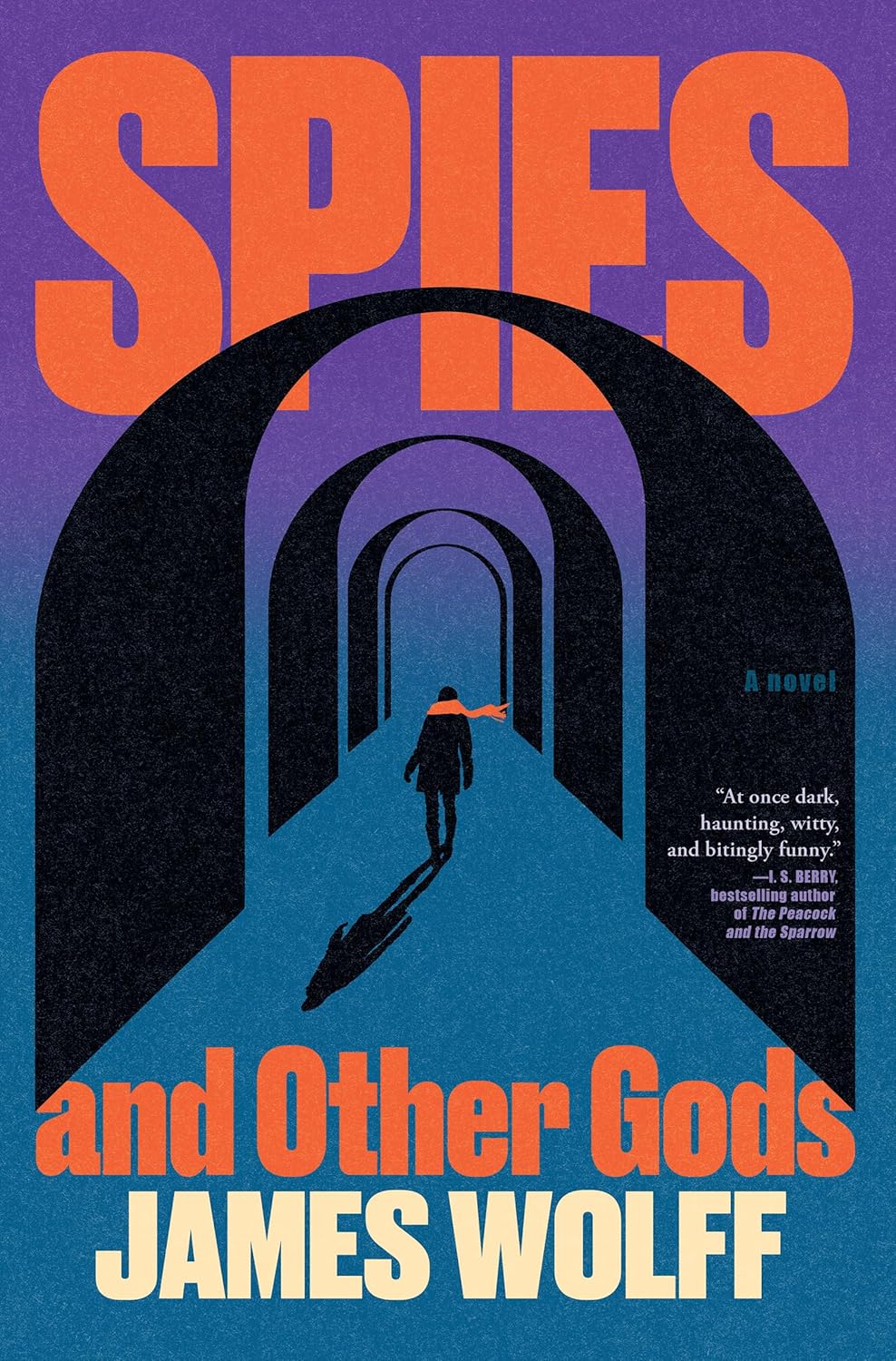
‘Spies and Other Gods’
By James Wolff
Atlantic Crime: April 14, 2026
Hardcover, 272 pages
What arts and culture topics would you like us to cover? Please email ideas or feedback to features@epochtimes.nyc.