



In 2004, the first class of students entered the accredited degree program of the American College of the Building Arts (ACBA), based in Charleston, South Carolina. The National Trust for Historic Preservation’s 1968 Whitehill Report inspired the creation of this unique academic institution.
The report revealed that the plummeting numbers of those studying traditional craftsmanship would soon endanger America’s architectural heritage. ACBA’s training program expanded to include the design and construction of new works of architecture inspired by classical aesthetics. There were also programs to preserve historic architecture.
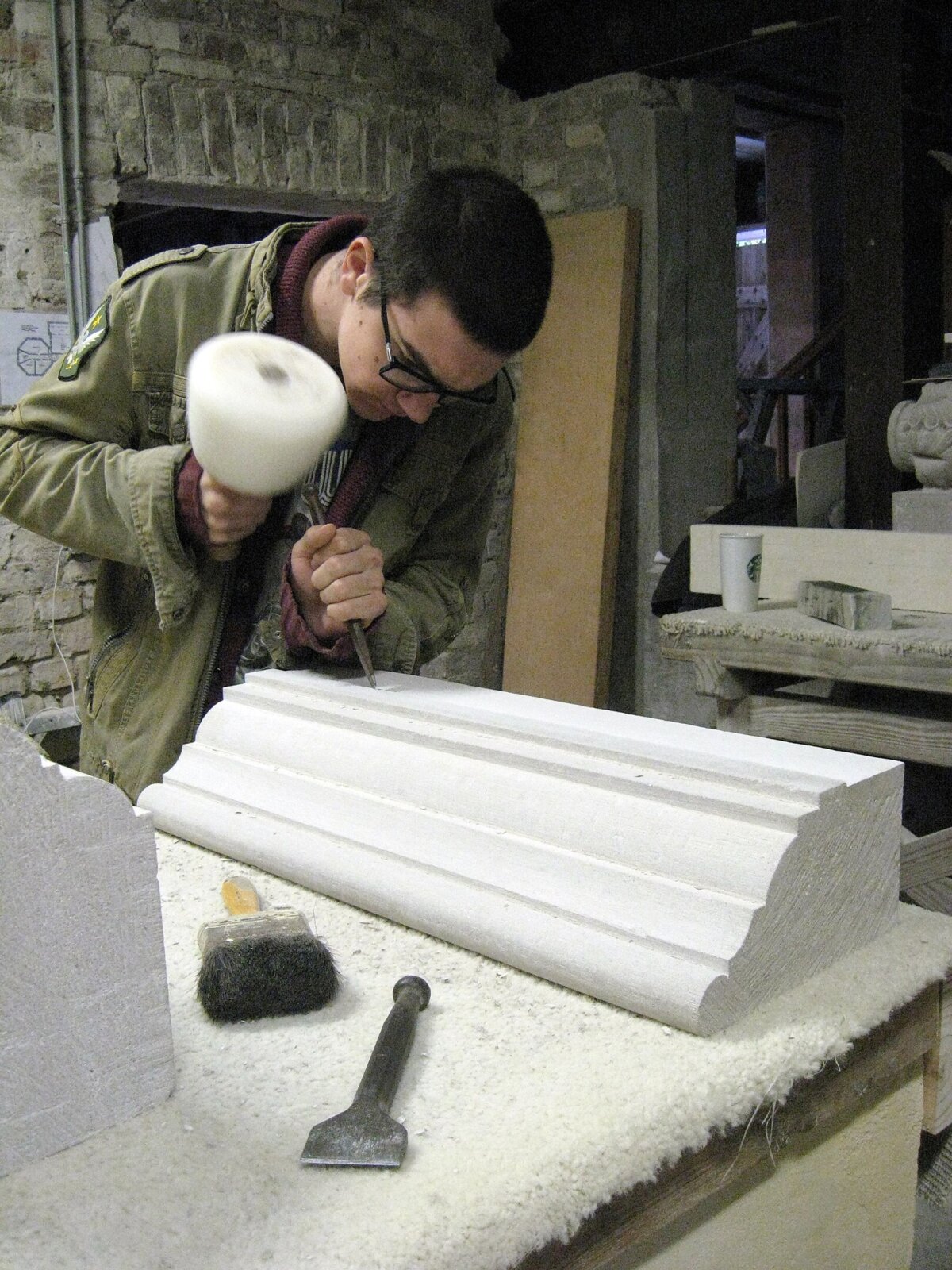
Preservation
In just two decades, the Whitehill Report’s dire prediction became a reality. In 1989, the Category 5 Hurricane Hugo hit the South Carolina coast. Damage in Charleston County was so severe that over 15,000 homes were either destroyed or uninhabitable pending extensive repairs.
Efforts to restore the great southern city’s many fine works of historical architecture were stymied by a lack of traditional craftsmen. America had too few—and too much available work—for the task at hand. While immediate needs were fortunately met by hiring European craftsmen, a longer-term solution was required.

The Historic Charleston Foundation began organizing introductory summer courses in traditional craftsmanship for high school students in 1992. The next crucial step was the establishment of relationships between local preservationists and architect John Paul Huguley.
School of Building Arts
At the time, Huguley was a newcomer to the architectural world. His studies in architecture, historic preservation, and structural engineering at the University of Virginia were only completed in 1997. Largely interested in working on historic architecture, he briefly worked with the London architectural restoration firm, Alan Baxter and Associates.
Huguley’s vision first became a reality with the founding of the ACBA’s predecessor, the School of Building Arts, in 1999. Located in the early 19th-century Old Charleston Jail, the school’s course of study had two main focal points. One was preservation and restoration. The other was the applied skills of particular building crafts.
Both focal points naturally stressed the real-world side of architecture rather than the principles of large-scale original designs. Gaps in the school’s curriculum were soon recognized and led to a reorganization which transformed it into the ACBA.
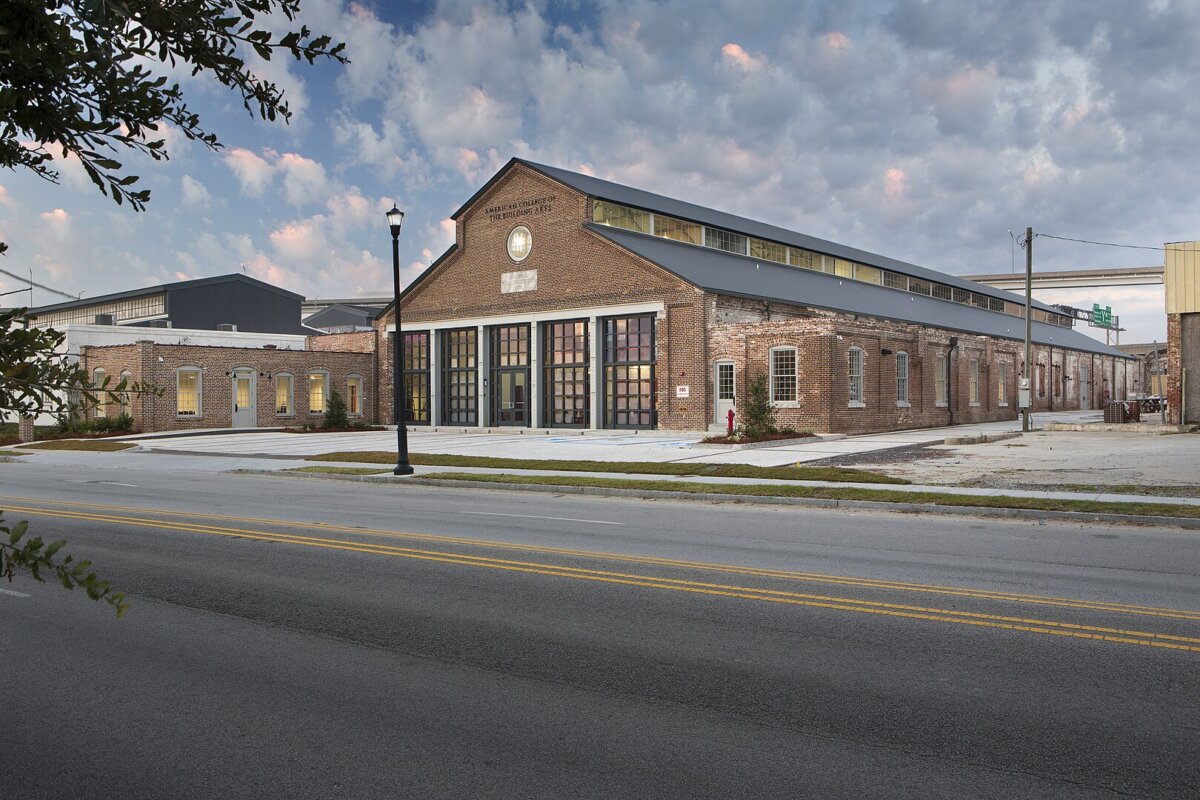
Inspired by France’s Compagnons du Devoir, a still existing guild dating from the Middle Ages, the ACBA added in required courses in the liberal arts so that students could understand the broader cultural context of the crafts. Courses on the business side of their future profession, such as as accounting and project management, better qualified and prepared students for employment by architectural and building firms.
The changes also qualified the ACBA to gain state and later national accreditation for granting of academic degrees.
A final major change was the addition of a new specialization: classical architecture and design. Prior to its addition, students were trained to make original contributions only in particular areas of building. For instance, plasterers were trained in the decorative aspects of new plaster work. With the addition of classical architecture and design, the ACBA began training students to design entirely new architectural works on the basis of classic stylistic principles.
Craft Specialties
Bringing tradition into the present as a living reality is not limited to the classical architecture and design specialization. It pervades every area of study.
Each of the craft specializations—stone carving (architectural stone), timber framing, blacksmithing, plaster, and carpentry—includes study of methods that date back centuries. But this is not to be gratuitously old-fashioned. Familiarity with these methods allows for a better understanding of these crafts. Often enough, they are also still the best way to maximize aesthetic excellence and structural soundness.

When modern tools and modern methods can be used to more easily attain the same standards, they are fully embraced. The ACBA’s introductory overview of its timber framing course states that students are taught how to mix traditional joinery with modern fasteners for best results. Chisels and laptop computers also play key roles.
Traditional craftsmanship is not a matter of “low tech” (a hand saw) versus “high tech” (an electric saw). It is a matter of a craftsman making a wooden door or a plaster ceiling by hand, with a careful focus on details of beauty and quality.
Restorations
As is to be expected, students, graduates, and professors of the ACBA have contributed to numerous restoration projects. Among the most important have been the ironwork of the U.S. Capitol Building’s dome and stonework at England’s Lincoln Cathedral.
In Charleston itself, their work is now ubiquitous. It can be seen at Hutchinson House, Faber House, the Second Presbyterian Church, Fort Sumter, and the iron fencing around the city’s Washington Park.
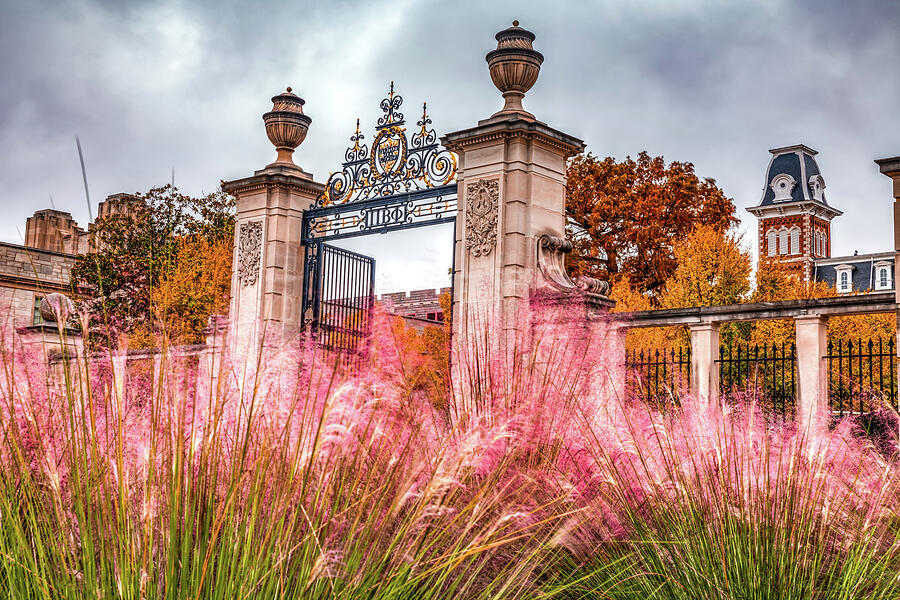
New works, if rarely of major importance taken individually, are collectively having a transformative effect. Notable examples include the Sally Reahard Visitor Center at the Drayton Hall estate and the University of Arkansas’s Centennial Gate.
The ACBA’s influence on the local area is keenly felt with seemingly minor touches to frequently used buildings. In Charleston, for example, new bus stops designed in the city’s traditional local style make for a more beautiful and pleasing atmosphere that heightens overall quality of life.
The ACBA’s application of timeless aesthetics to ordinary structures perfectly demonstrate how the ACBA is helping to bring beauty into everyday life.
What arts and culture topics would you like us to cover? Please email ideas or feedback to features@epochtimes.nyc
