



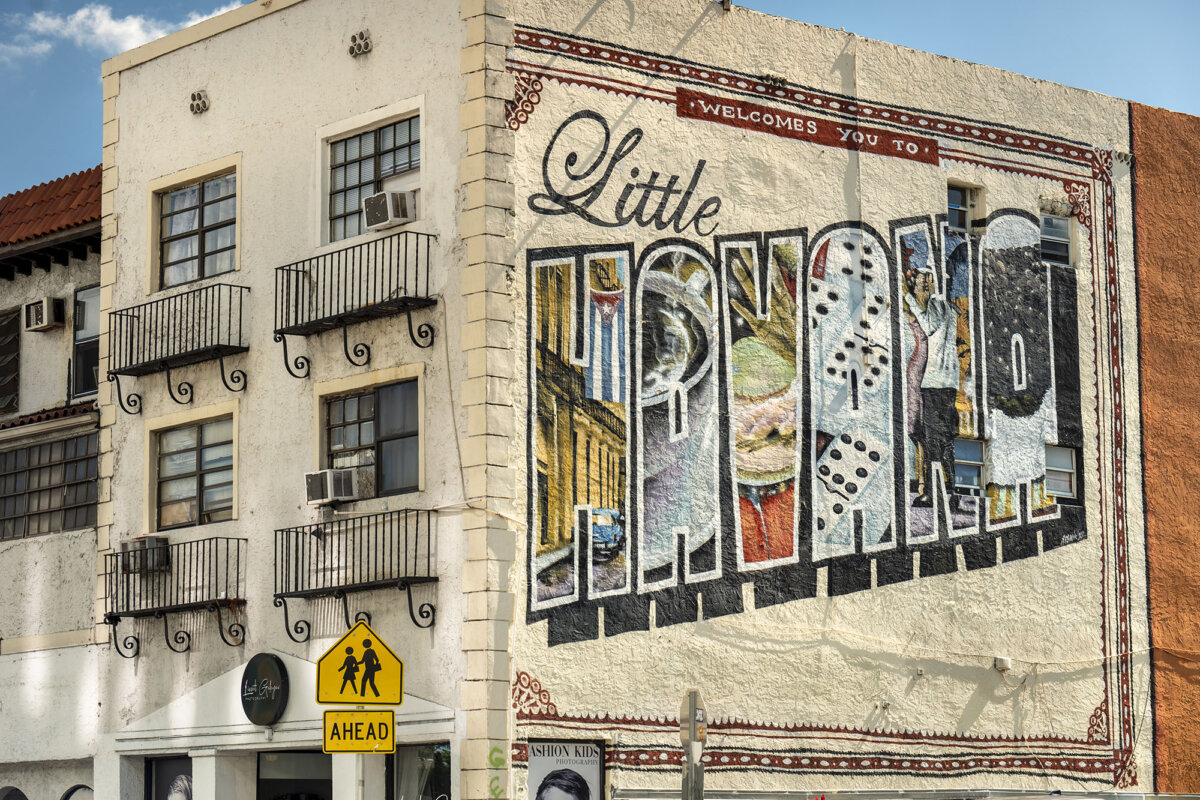
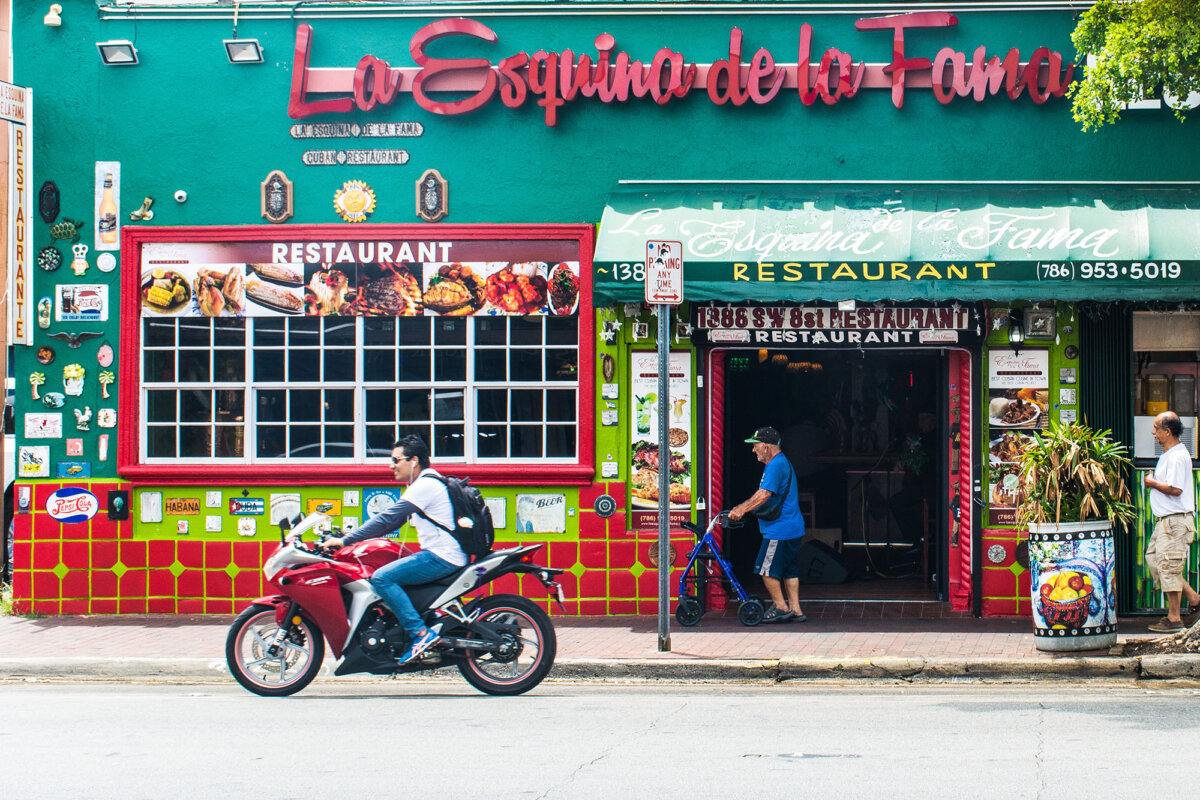
Little Havana hums. Energy surges down Calle Ocho, the Miami neighborhood’s primary artery. Salsa and rumba sound up and down the street, the music making its way from the stages out the open fronts of the clubs, compelling some to dance on the sidewalks.
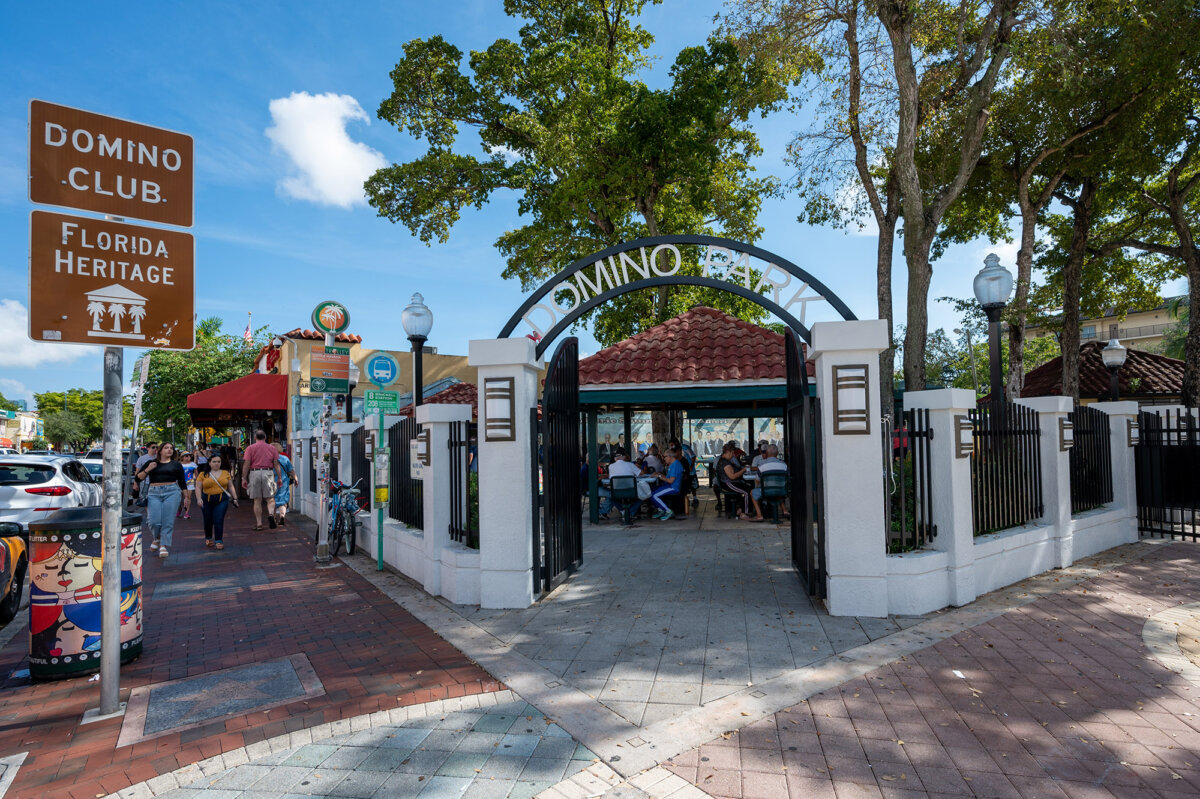
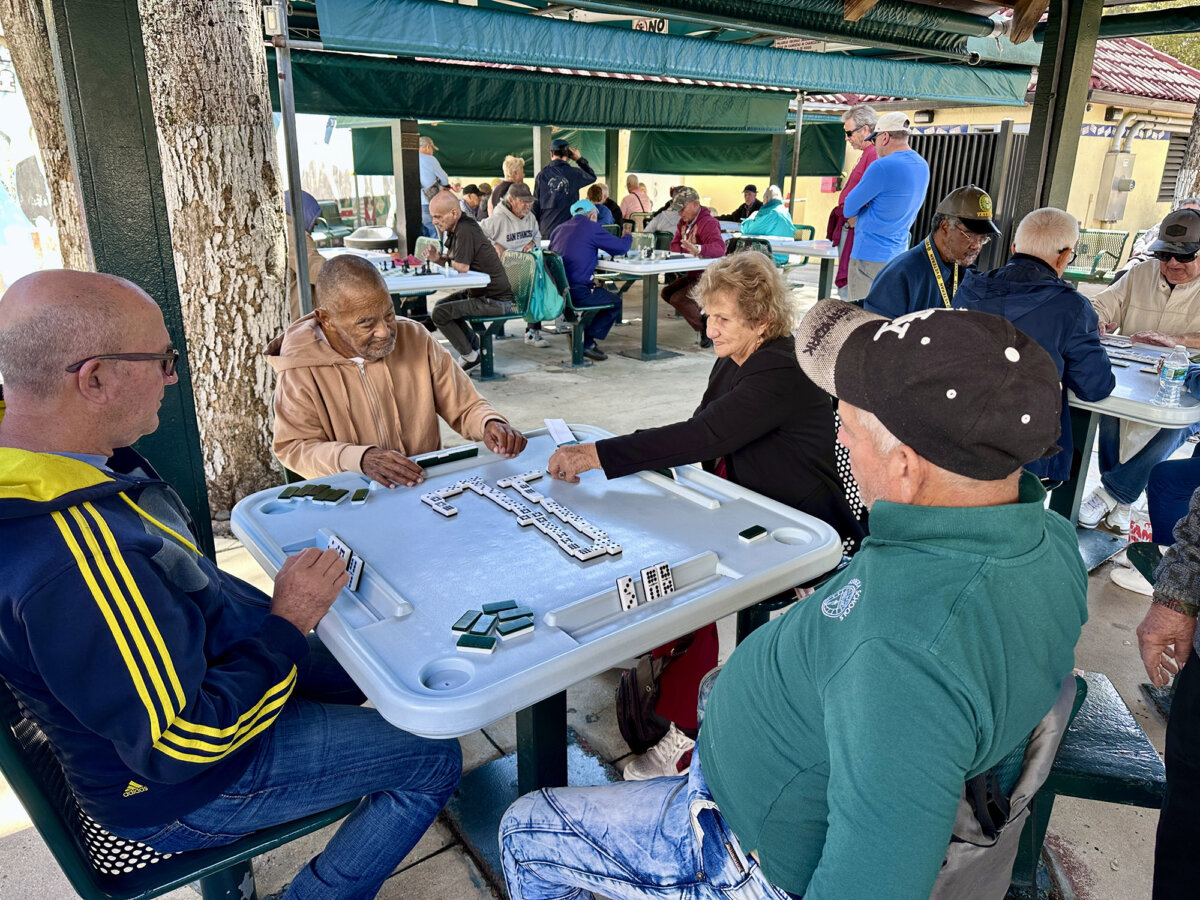
The vibrations are strongest at Domino Park, the absolute core of La Pequeña Habana. It’s formally known as Máximo Gómez Park, and if you come at midday, every table will be full of zealous and devoted domino players. The clack of the tiles is constant, overwhelmed only by the animated—and mostly amiable—patter of passionate competition.
I wasn’t here to play dominoes or even tap my toes. The primary purpose of this Saturday afternoon excursion was to eat. Stepping out of my ride-share and skirting around a rooster clucking down a side street, I swung through Domino Park before meeting my guide with Miami Culinary Tours, Arlene.
“This is the heart of Little Havana,” she said, before laying out a schedule that included sweet, savory, and caffeinated. “I run on Cuban coffee,” she explained, before leading our small group of amateur gourmands down the Calle. Most of my fellow diners on the tour were from freezing-cold states like Minnesota and Wisconsin, trading an especially severe polar blast for the South Florida sun.
The Heart of Havana
This part of Miami became primarily Cuban in the late 1950s and early 1960s, with people settling here after fleeing communism and the regime of Fidel Castro. “They thought this was just a layover,” Arlene said over her shoulder. “History tells us otherwise.”
Many of the refugees, she explained, were highly trained professionals, and some were sent to work in parts of the United States that needed their skills. Her father, a civil engineer, arrived in 1961 and was invited to live and work in Mississippi. In 1962, her mother spent 30 hours at sea crossing to Florida, then went to Buffalo to finish her dentist certification.
Arlene herself was born in a rather unlikely place: small-town Maine, while her mother was visiting her sister and brother-in-law. Both were physicians and remained the only doctors in that little community until their retirement. Arlene eventually made her way back to Miami and now lives near the beach—and leads super-delicious tours.
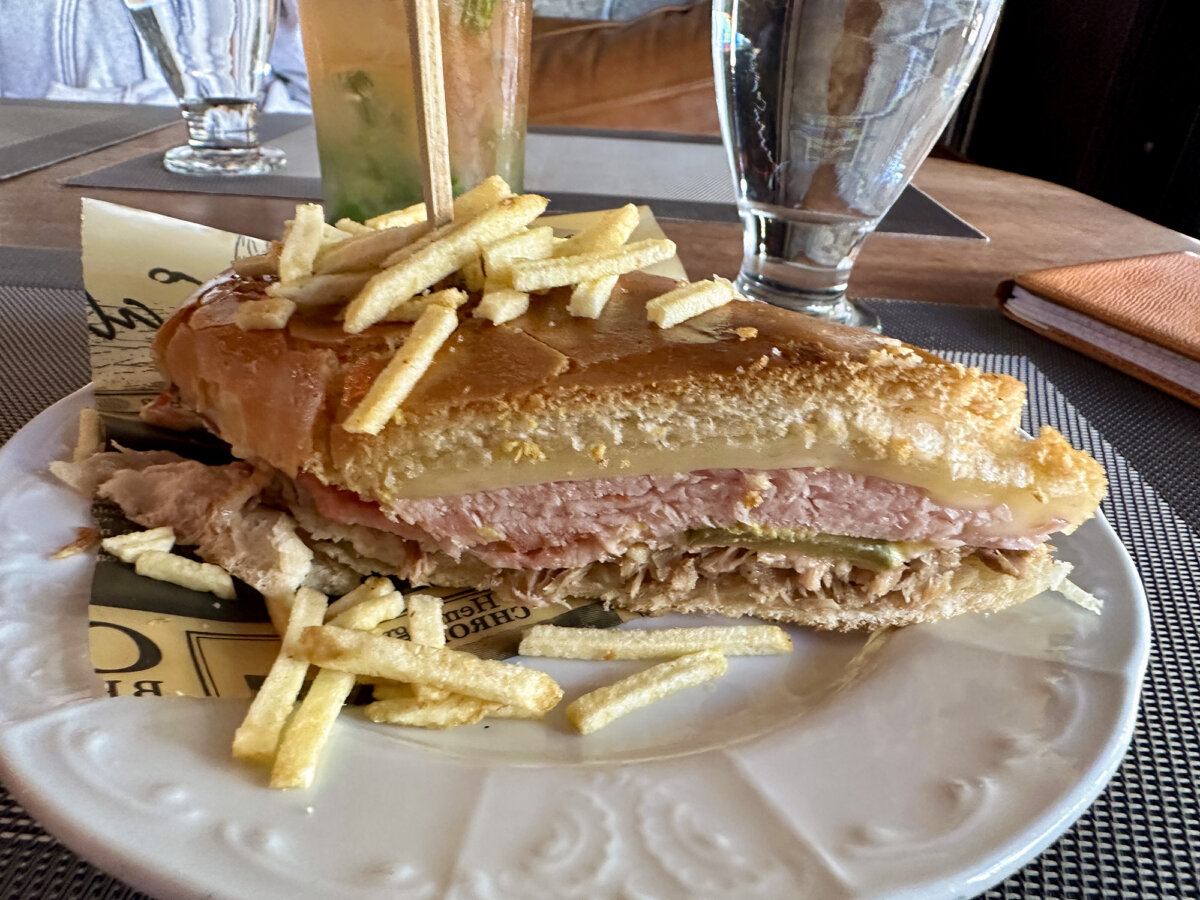
The star of the show, as we moved from shop to shop, was—of course—the Cubano.
“The original Cuban sandwich was just pork and bread,” Arlene explained, adding that other elements weren’t added until the recipe migrated to Florida. This one, served up in generous portions at a musical, sit-down restaurant called Sala’o, had pork, ham, cheese, and mustard laid onto a super-soft bun. (The songs from the stage tempted me to return later in the week, when they were offering salsa dance lessons.)
But there was more—lots more, including empanadas at a hole-in-the-wall called El Cristo. Served with a side of cilantro sauce, they were crusty on the outside, hearty and rich, and nicely spiced on the inside. “Cumin is our key ingredient,” Arlene shared.
Popular as a fast-serve option across plenty of parts of Latin America, other empanada spots lined the street. They included one with a walk-through window. It’s convenient to grab a quick, satisfying lunch during a quick break from work or en route to other destinations.
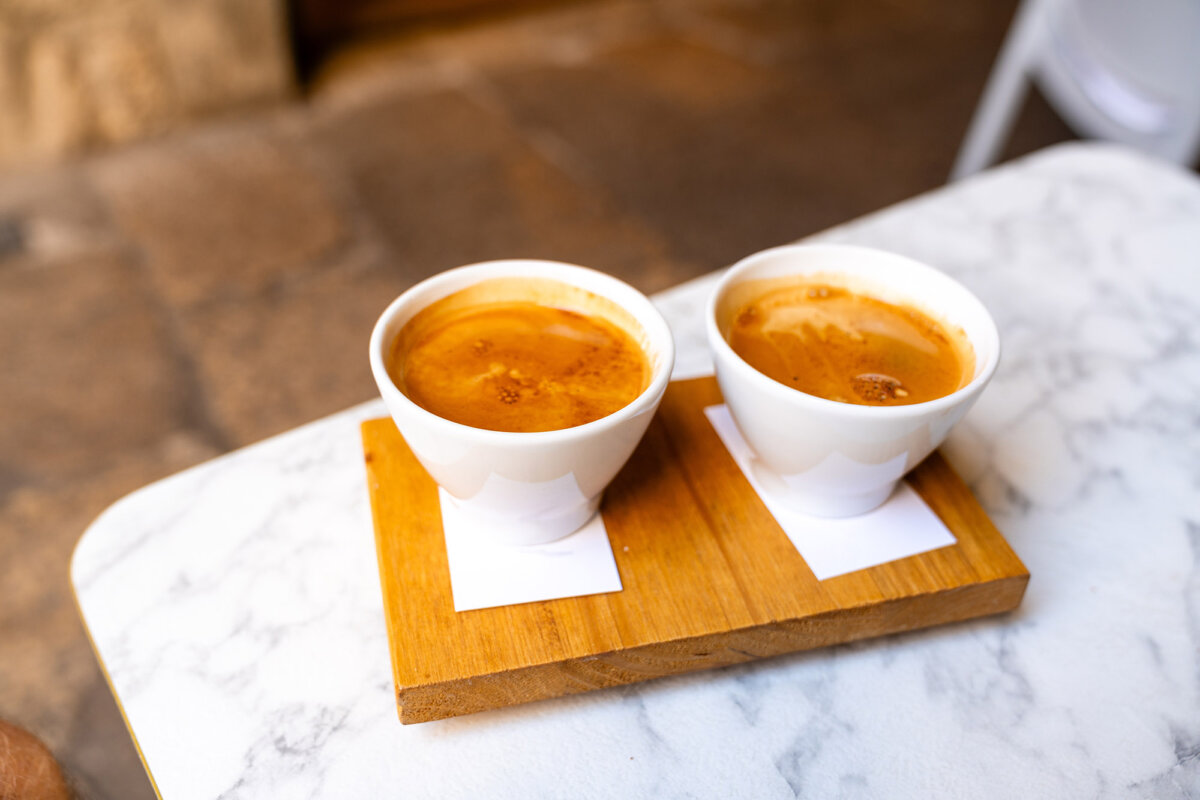
We had strong, full-bodied Cuban coffee, dark roasted and infused with plenty of sugar. We tried a fruity, flaky pastry, as well as churros, which, Arlene admitted, originated in Spain—but Cubans like them, too. I also tried a cup of sugarcane juice, the cane hand-fed through a machine by an older woman standing right in front of us. Even one sip was enough to make my teeth hurt.
Rooster Spirit
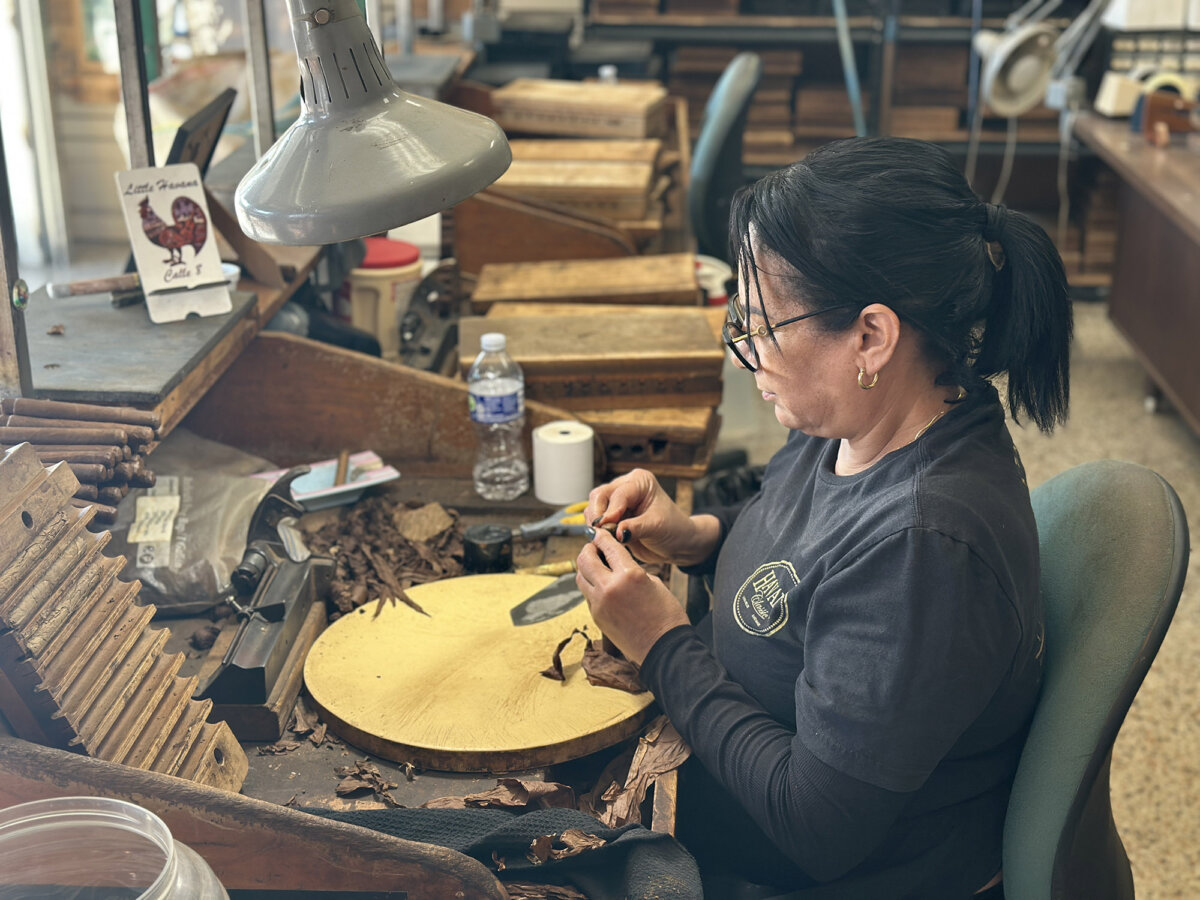
Fully sated—in fact, rather full—I was rather pleased to hear that the final bit of the tour would mostly focus on culture and history. We spent a little time in a cigar factory, watching a woman hand-roll one. A guide inside shared that she can make around 200 in a single day, a meticulous process that can take years to master.
Next, we stopped at a monument topped by a flame reminiscent of the one that burns at the grave of John F. Kennedy at Arlington National Cemetery. It’s devoted to those who served in the disastrous Bay of Pigs invasion in April 1961. “The flame, they say, will burn until Cuba is free,” said Arlene.
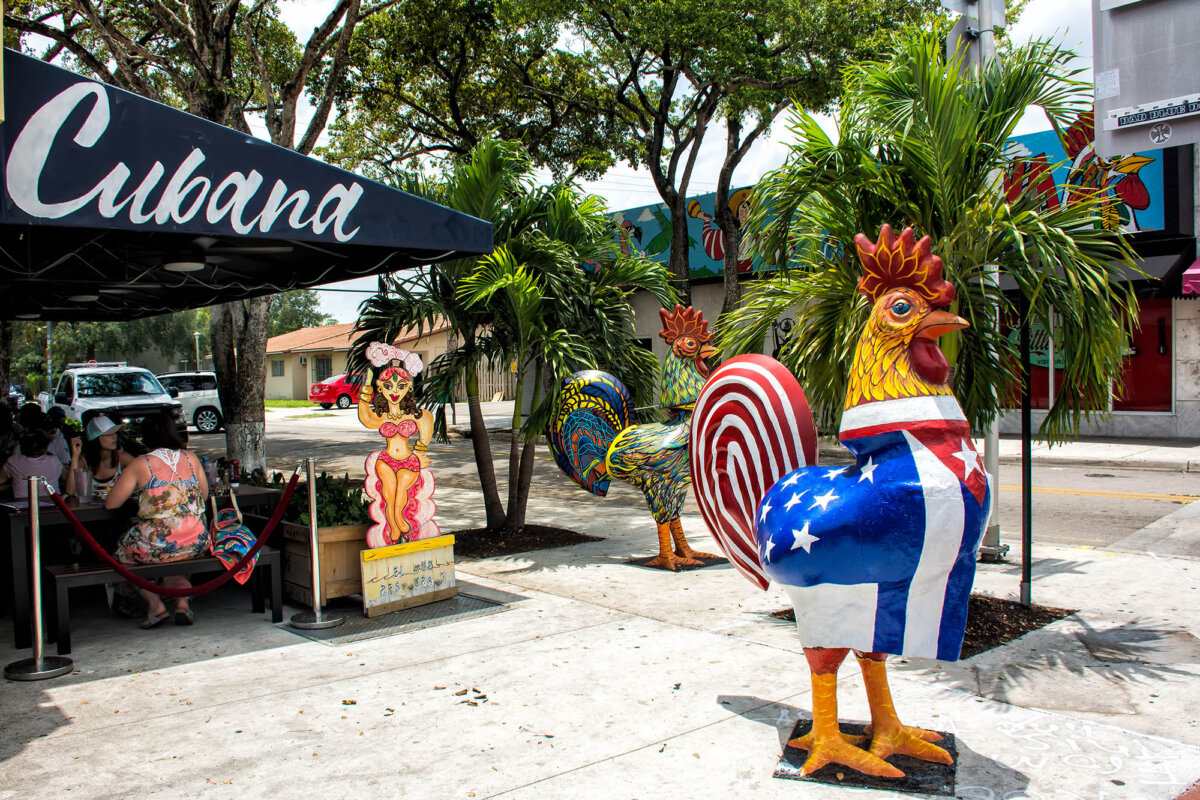
Finally, we ducked down a little lane that looked like it led, well, nowhere. I was surprised as Rooster Alley opened up into a courtyard filled with classic cars from the 1950s, carefully maintained and reminiscent of those that still serve as taxis and touring automobiles in the Cuban capital.
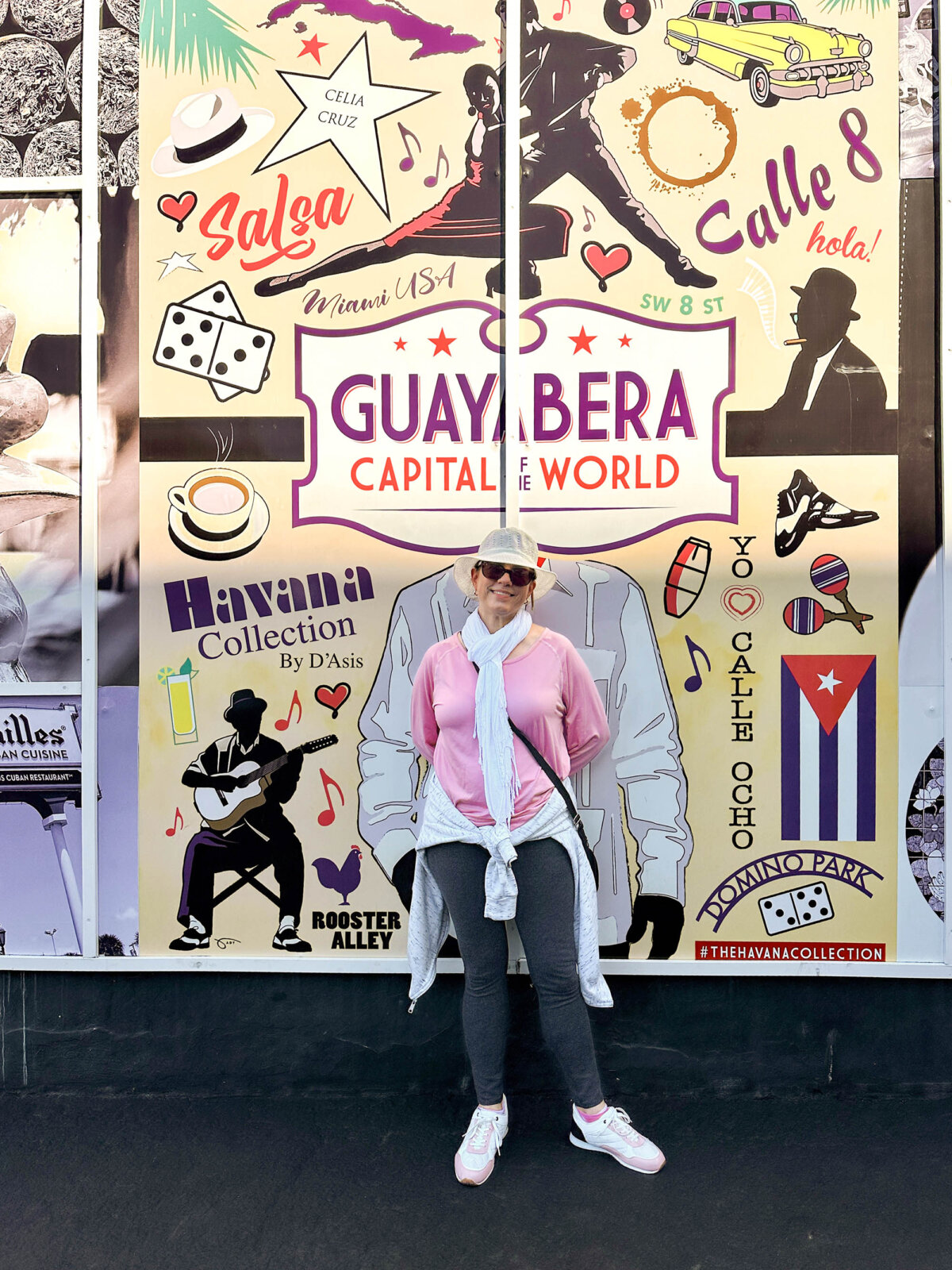
A number of colorful murals lined the walls. One declared Miami the guayabera capital of the world. (The classic, lightweight shirt was sold in the shop just in front.) Another declared Patria y Vida—“homeland and life”—a popular rallying cry for Cuban exiles.
The rooster figured prominently throughout, which Arlene noted is entirely appropriate. Roosters are a symbol of the Cuban people, including all of her family—engineers, dentists, and village doctors—who toiled to establish themselves in the United States. “Roosters are hardworking; they wake up early,” she said. “And if you knock them down? They always get back up.”
_______________
If You Go
Fly: Miami International Airport (MIA) is extremely well-connected to the rest of the United States. As a hub for American Airlines, nonstop flights land here from Des Moines to Dubai.
Where to stay: Yes, touring Little Havana is fun, but if you’re taking a vacation to Miami, you’ll probably want to stay near the sea. Eden Roc Miami Beach is a legend. Designed by an architect whose catchphrase was “too much is never enough,” his Italian Renaissance design attracted some of Hollywood’s biggest celebrities, as well as heads of state. Everyone from Harry Belafonte to Frank Sinatra performed here. Today, suites are spacious, many with sweeping views of both the Atlantic and Intracoastal Waterway. Guests enjoy three pools, just steps from the beachfront boardwalk.
Getting around: Miami has a surprisingly functional public transit system that includes buses, elevated trains, and tourist trolleys, the latter operating free of charge. (One runs right down Calle Ocho in Little Havana.) Hot tip: an integrated day pass on the transit system costs just around $5.
Take note: After your time in Little Havana, head to the Bayside Marketplace, which is filled with waterside shops, restaurants, and docks lined with boats—including water taxis that provide an entertaining ride across Biscayne Bay to South Beach. Along the way, you’ll get a unique perspective on Miami’s glassy skyline and departing cruise ships, as well as the high-priced homes on the Venetian Islands and Fisher Island. Go just before dinnertime, and enjoy golden hour on the water.
