



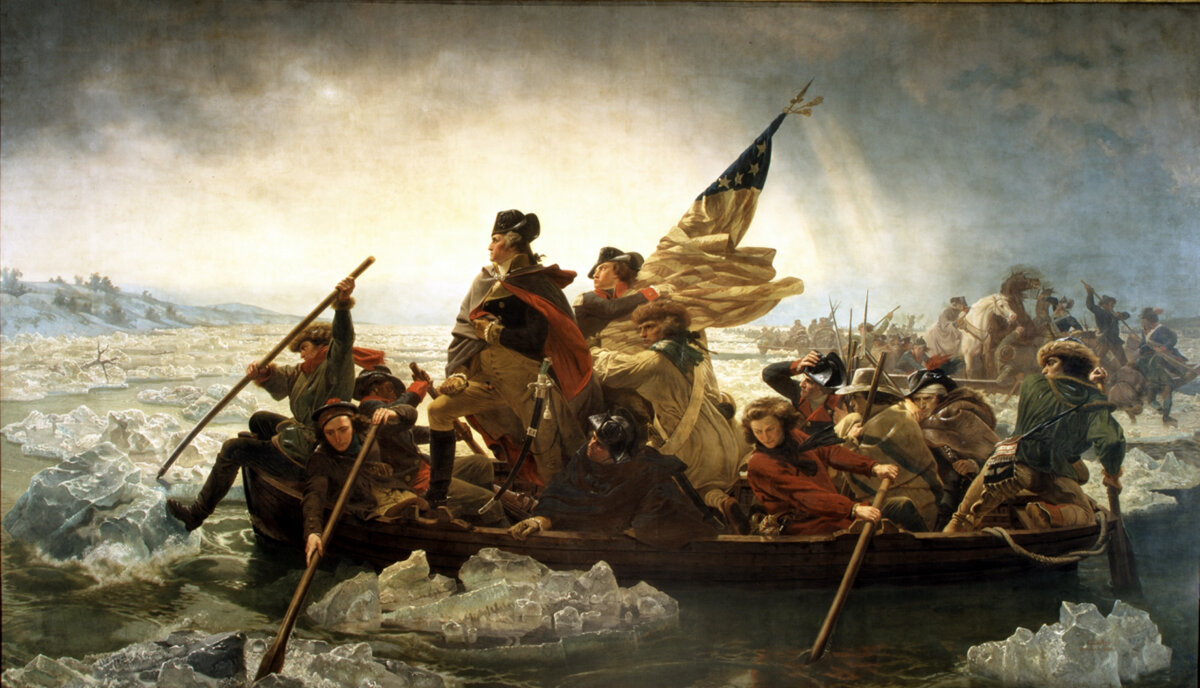
Driving snow and sleet cut through the cold night air on Dec. 25, 1776, slashing Gen. George Washington and his bedraggled troops as they silently crossed the Delaware River. New England watermen from Col. John Glover’s Marblehead regiment expertly navigated the treacherous river, easily identifiable in their short blue seaman’s jackets, tarred pants, and woolen caps. This was the third time Grover had come to Washington’s rescue.
Though Washington had other pressing matters on his mind that night, he undoubtedly could recall the first time Glover had helped him. Over a year prior, the apprentice shoemaker-turned-ship owner had offered his fishing schooner for service as the Continental Army’s first authorized warship.
One fishing schooner stood against the mightiest fleet in the world.
Glover’s Hannah
At the start of the American Revolution, the British Royal Navy’s fleet of about 270 ships practically owned the sea. British ships faced little military opposition from the colonists as they carried munitions, soldiers, and much-needed supplies to the war front. In the summer of 1776 alone, 130 ships transported over 20,000 British troops to colonial America.
In fall 1775, Washington, the newly appointed general of America’s Continental Army, knew the stakes better than most. While British cargo ships regularly restocked enemy troops and threatened coastal towns, American supplies and munitions grew thinner by the day. The War for Independence couldn’t be won by land alone.
Into the crisis stepped Col. Glover of Marblehead, Massachusetts. At his suggestion, Washington used his authority as commander in chief of the Continental Army to charter private vessels to target British supply ships. The first ship he authorized was the Hannah, Glover’s fishing schooner. On Sept. 2, 1775, Washington gave command of the Hannah to Capt. Nicholson Broughton, writing:
“You are to proceed as Commander of said schooner, immediately on a cruise against such vessels as may be found on the high seas or elsewhere … in the service of the Ministerial army, and to take and seize all such vessels, laden with soldiers, arms, ammunitions, or provisions, for or from said army.”
Within a week, the Hannah—manned by soldiers from Glover’s regiment of experienced Marblehead seamen—successfully apprehended the British supply ship Unity. This was the first enemy vessel captured by an American vessel in the Revolutionary War and marked the humble beginnings of what became known as “Washington’s Navy,” an ad-hoc fleet operated by the Continental Army before the formal national navy existed.
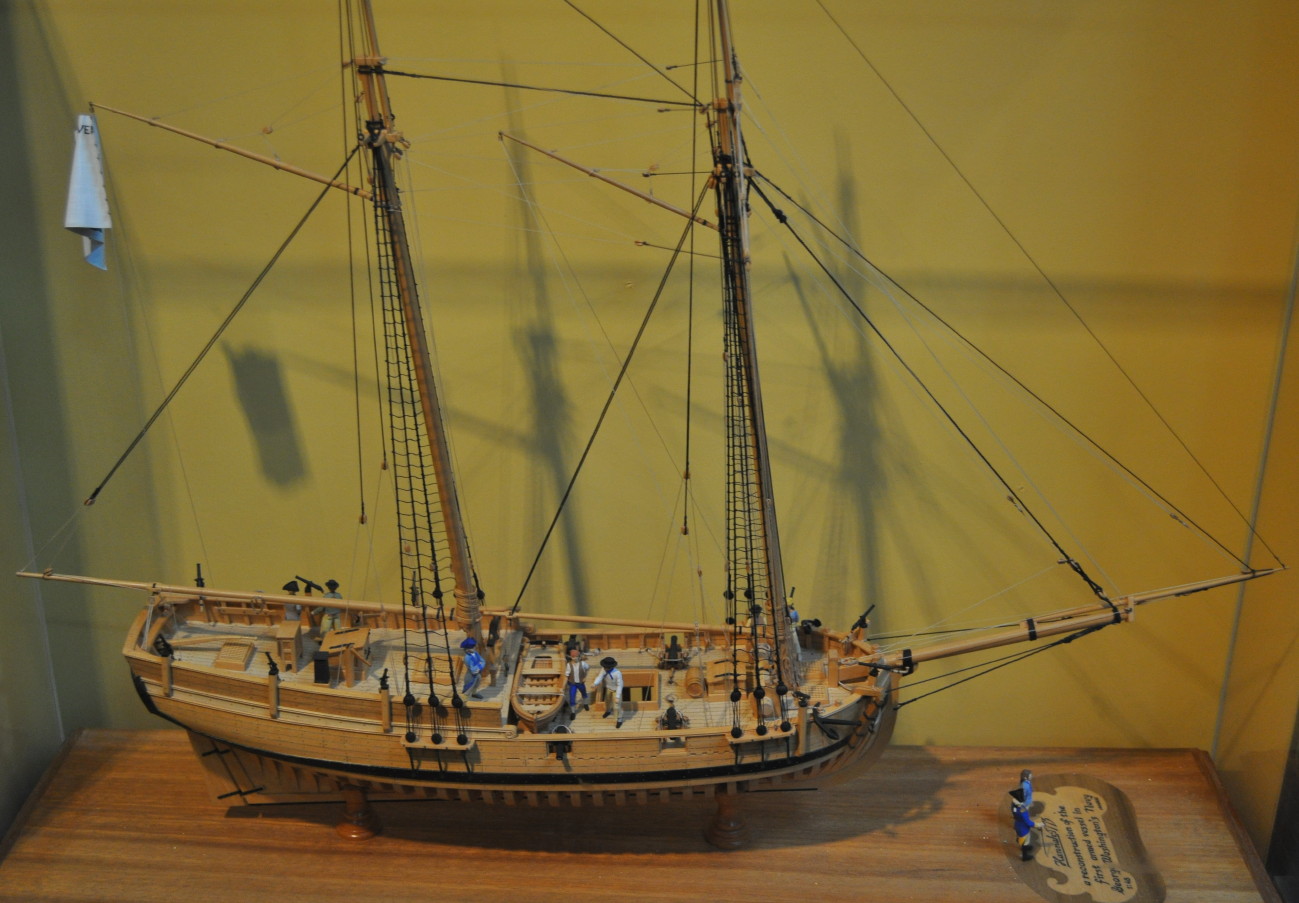 A model of the USS Hannah, which owner and captain John Glover named after his wife. (sturmvogel 66/CC BY-SA 3.0)
As owner of the Hannah and leader of a regiment of seasoned sailors, Glover helped Washington turn to maritime expertise at a desperate moment.
The Continental Navy
Washington wasn’t the only one who knew the colonists needed a navy. Delegates from the Assembly of Rhode Island brought the matter to the Continental Congress on Oct. 3, declaring that “the building and equipping of an American fleet, as soon as possible, would greatly and essentially conduce to the preservation of the lives, liberty, and property of the good people of these colonies.”
Despite the strategic implications, Congress’s reply was mixed. “It is the maddest idea in the world to think of building an American fleet,” said Maryland delegate Samuel Chase, according to an account by John Adams. Delegates argued about logistics, cost, lack of capacity, and their fear of retaliation from the Royal Navy.
Necessity forced them to reconsider when news came of two British cargo vessels carrying arms and munitions to Canada. On Oct. 5, Congress sent word to Washington: Perhaps he could simply lease private ships to intercept British cargo vessels, and Congress could compensate the shipowners for any losses. On Oct. 13, Washington’s reply came via post: He was already doing that.
Surprised, the delegates returned to the debate table, but Washington and Glover’s proactive action had effectively reframed the issue. Before the day was out on Oct. 13, 1775, Congress officially authorized the outfitting of two armed vessels, to be under the direct command of the Congress. Soon after, Congress appointed sea captain Esek Hopkins as the federal fleet’s commander in chief and authorized its vessels to attack any British warship or transport. Thus, the Continental Navy was born.
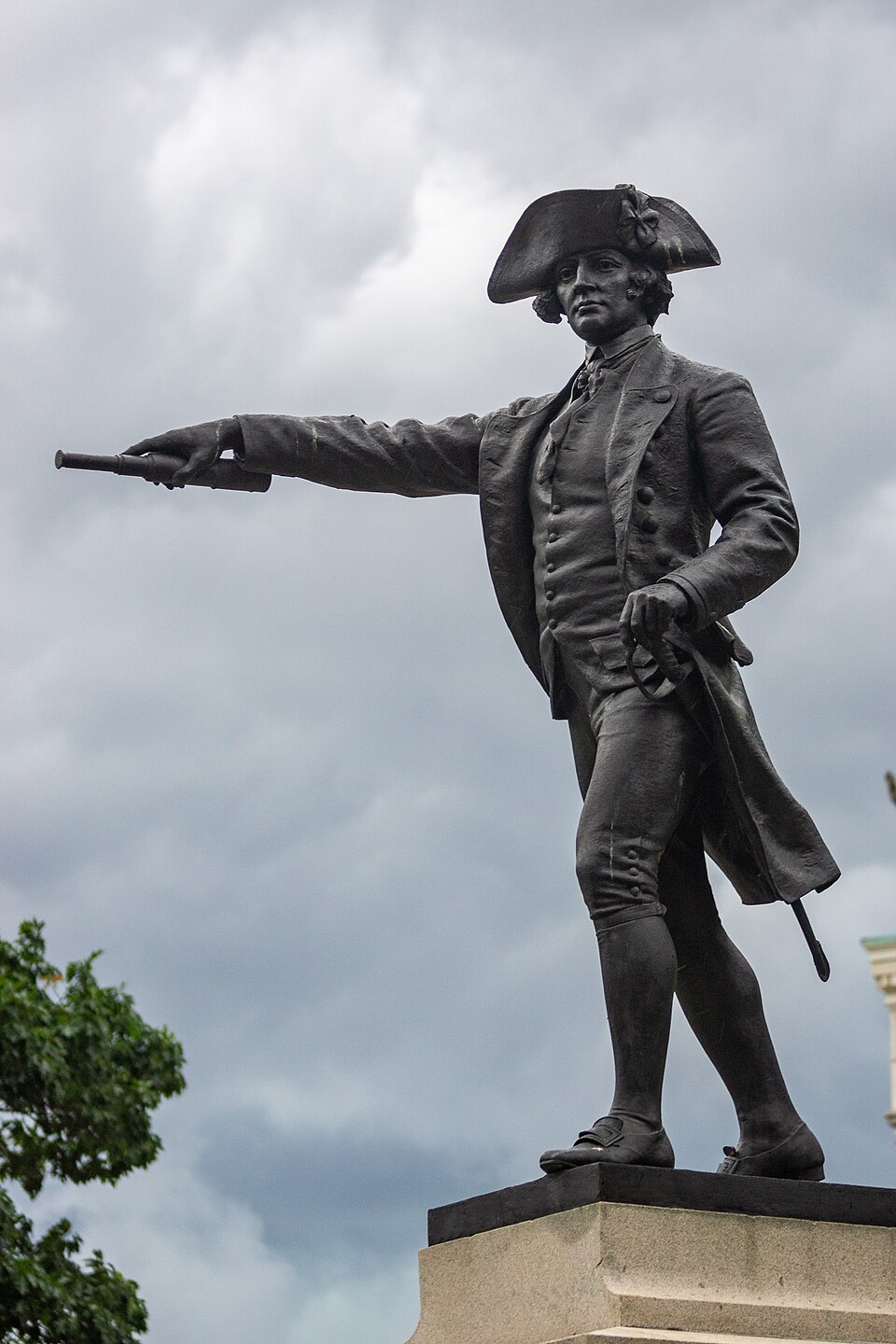 This monument to Esek Hopkins, 1891, was installed in Hopkins Square in Providence, R.I. (kzirkel/CC BY-SA 4.0)
During the American Revolution, the Continental Navy grew to include some 50 ships. About 20 warships were active at the height of its strength. Francis Hopkinson, a New Jersey signer of the Declaration of Independence, designed the navy’s flag. John Adams drafted its Articles of War. Courageous naval officers like John Paul Jones and John Barry—each remembered today as a “Father of the American Navy”—brought credibility and honor to the enterprise through their daring exploits at sea.
The Continental Navy played a crucial role during the American Revolution, and has even been credited with inspiring France to form an alliance with the American colonies. But when the war ended in 1783, Congress was faced with the monumental task of footing the bill. Unable to pay for the expenses of maintaining a standing naval force, it dissolved the Continental Navy. The naval officers and seamen were dismissed, and the ships were sold to help pay war debts.
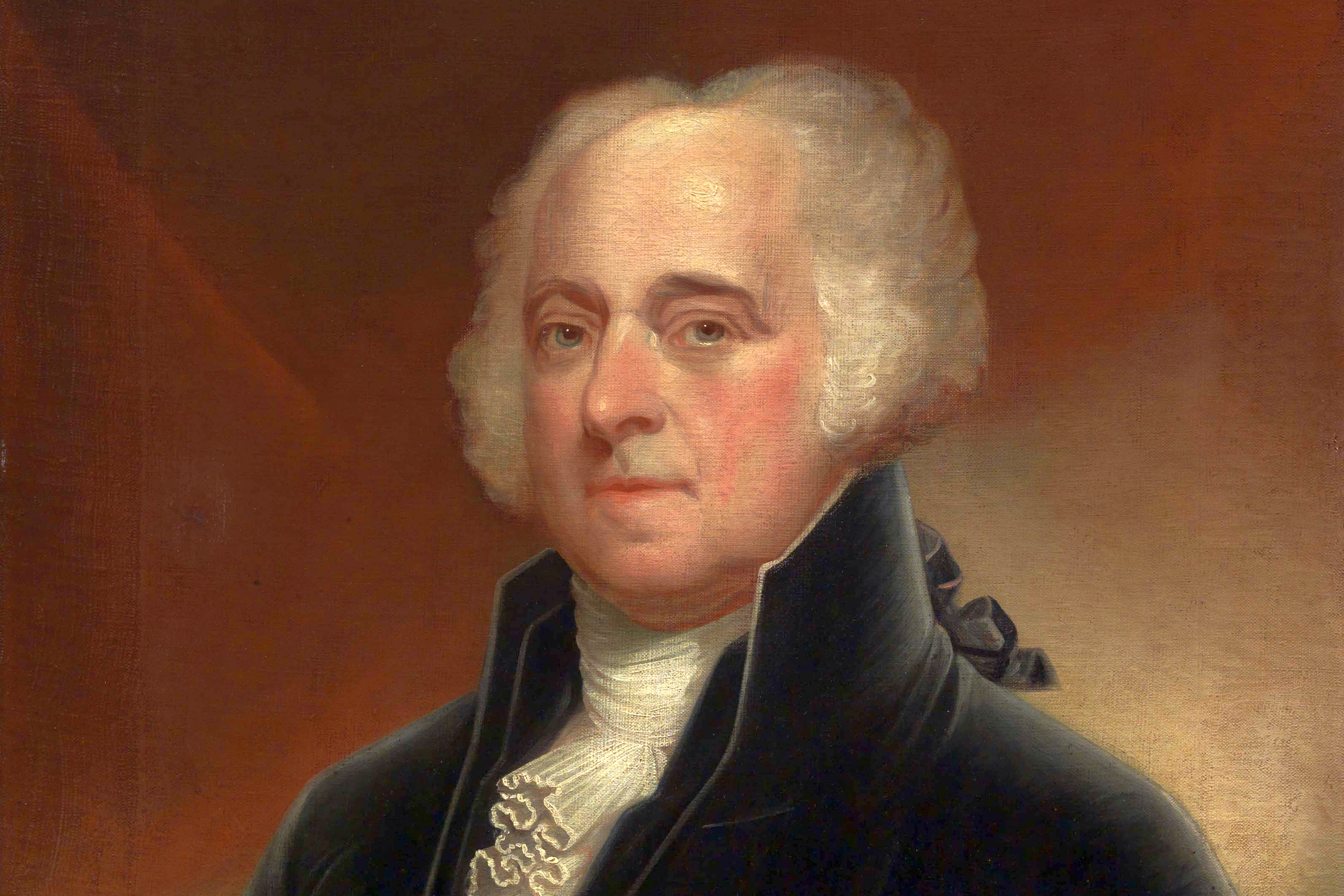 A portrait of John Adams. Adams was appointed the first U.S. ambassador. National Portrait Gallery, Smithsonian Institution. (Public Domain)
A Fleet Reborn
For over a decade, American seas lay quiet—until the threat of Barbary pirates prompted Congress to pass the Navy Act of 1794, reinstating a national naval force. This time, the construction of six new vessels was authorized. Three years later, President John Adams—who had argued for the navy at those early Continental Congress meetings—established the Department of the Navy.
Today, the U.S. Navy boasts over 292 battle force ships, approximately 2,500 aircraft, and roughly 345,000 active-duty sailors (plus about 57,000 in the Selected Reserve and over 210,000 civilian employees) stationed around the world. It remains absolutely essential for national security and preserving American freedom of the seas and skies. For over 250 years, the United States hasn’t gone a day without having a naval ship on the water.
It all started with the brave men of the American Revolution—Col. John Glover, the crew of the Hannah, and countless others—who stepped into the breach when the nation needed them most.
What arts and culture topics would you like us to cover? Please email ideas or feedback to features@epochtimes.nyc
