



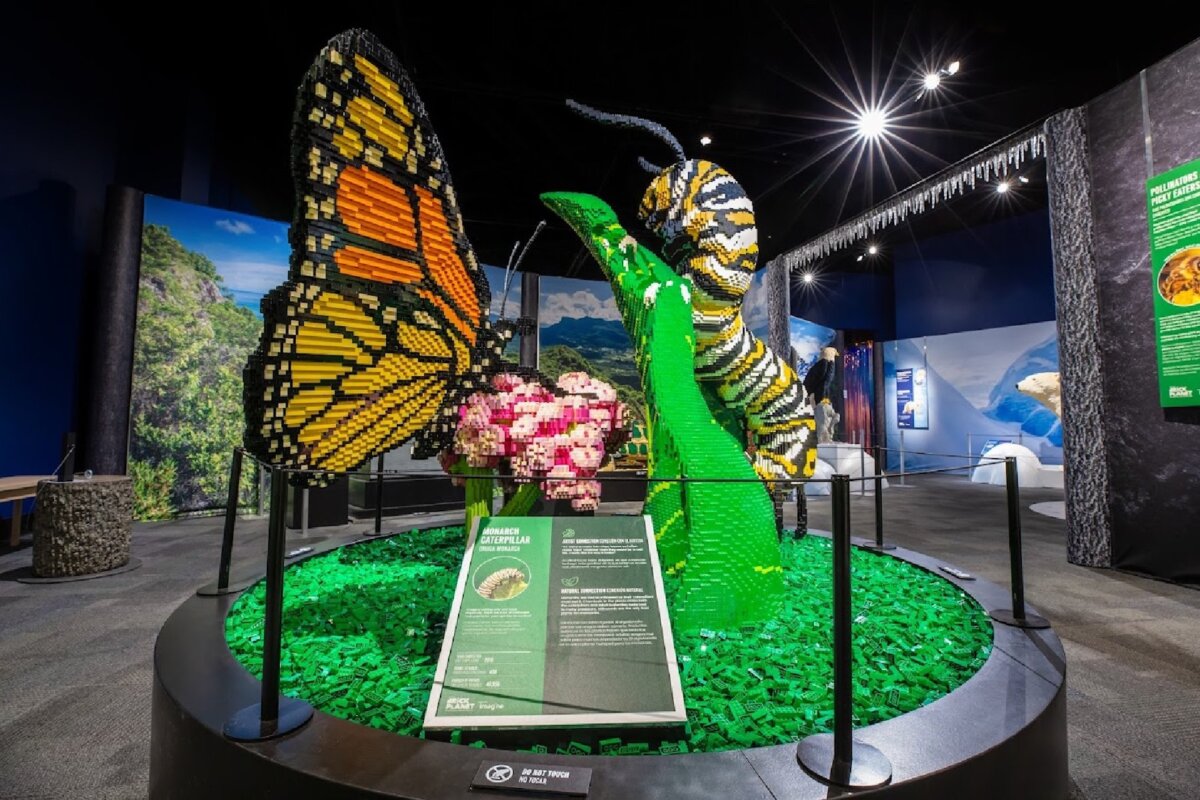
If you happen to be reading this in Denver, go straight to the Lego exhibit at the Denver Museum of Nature and Science. The exhibit closes soon, but it will move to New Mexico next year, and you might want to start making plans now. This is Lego like you’ve never seen it before—1.5 million pieces crafted into life-size animals and naturescapes. Lego lovers, art lovers, adults, and kids all will be wowed.
“Brick Planet: A Magical Journey Made With LEGO Bricks” is a wondrous exhibit by New York City-based artist Sean Kenney that provides an immersive tour of our planet’s diverse ecosystems. From the Arctic tundra to Africa’s savanna, the jaw-dropping nature and animal sculptures (some life-size, some oversize) are painstakingly built entirely from the beloved plastic bricks parents know so well.
“The exhibit blends art, science and imagination in a way that appeals to so many more people than just LEGO enthusiasts,” said Kelsi Cowan, the museum’s program coordinator and educator. “Travelers who’ve been to somewhere like Africa or the Arctic will see those landscapes in a completely different way.”
The exhibit tells a unique story about nature and biodiversity through different landscapes—”Polar Brrrricks,” “Savanna Crossing,” “A Walk in the Woods,” “Our Planet,” “Our Own Backyard,” “Connect in the City,” and “Ocean Odyssey,” plus a “Meet the Artist” display—all brought to life beautifully through Lego art.
And if you’re fascinated by feats of engineering, the sheer structure of the sculpted pieces is incredible. Kenney developed it in partnership with creative company Imagine and Canada’s Science North, a popular hands-on attraction. Then the Denver museum incorporated its own distinctive stamp.
“We do things a little special with our temporary exhibits,” Cowan said. “We enhance them and make them completely unique. For ‘Brick Planet,’ we teamed with Kenney on ways to make the show resonate specifically with Colorado visitors.”
The result? Think a brickified version of local scenes, from mountain lakes to the unmistakable burnt-orange formations of Red Rocks.
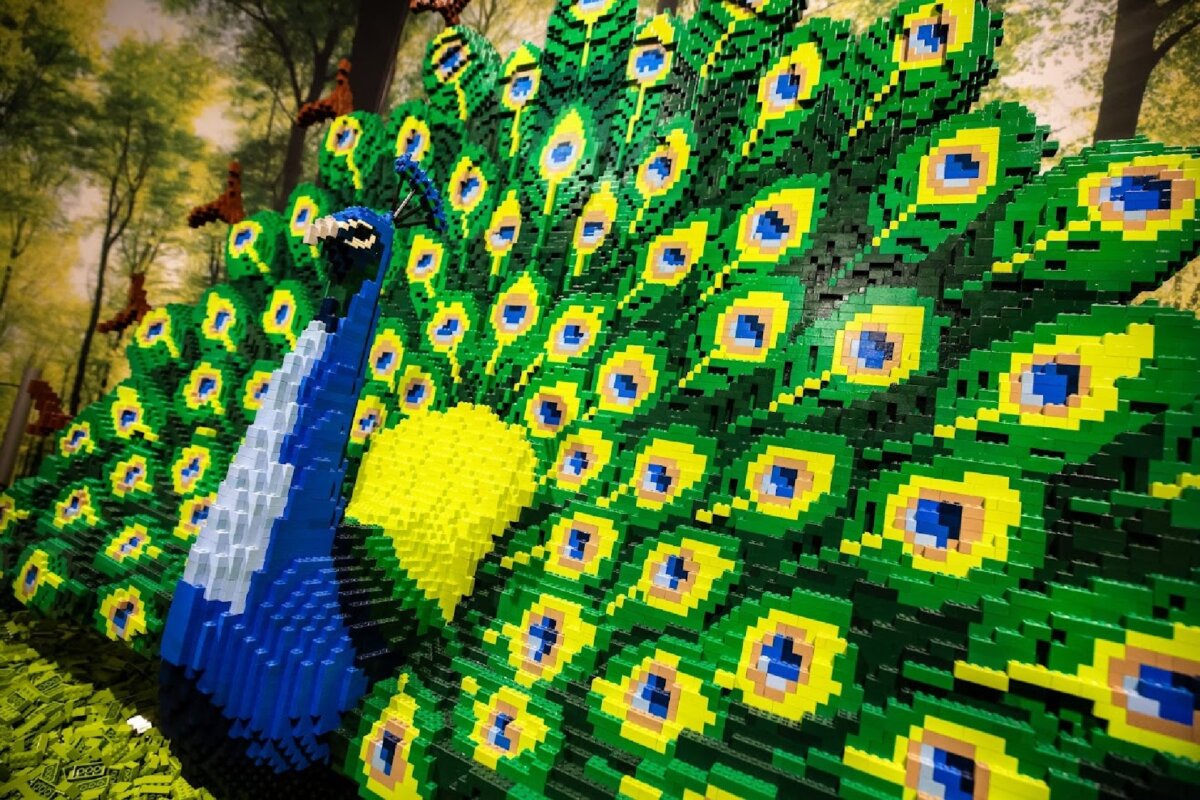
“Brick Planet” unfolds through eight galleries, beginning with a whimsical Lego self-portrait of artist Kenney and his luminescent Lego Magic Bike, then travels through the different ecosystems. In the “Our Planet” gallery, a Galápagos tortoise, a peacock, and a monarch butterfly perched on milkweed showcase Lego bricks’ vibrant and colorful interpretation of nature.
“Walk in the Woods” plunges visitors into a bustling deciduous forest of snakes, mice, spiders, and deer. In “Savanna Crossing,” you’ll see wildebeest, zebra, and Kenney’s sobering celebration of the “Disappearing Rhino,” a powerful reminder of what the planet stands to lose.
But ask Cowan which sculpture stops people cold in their tracks, and she doesn’t hesitate.
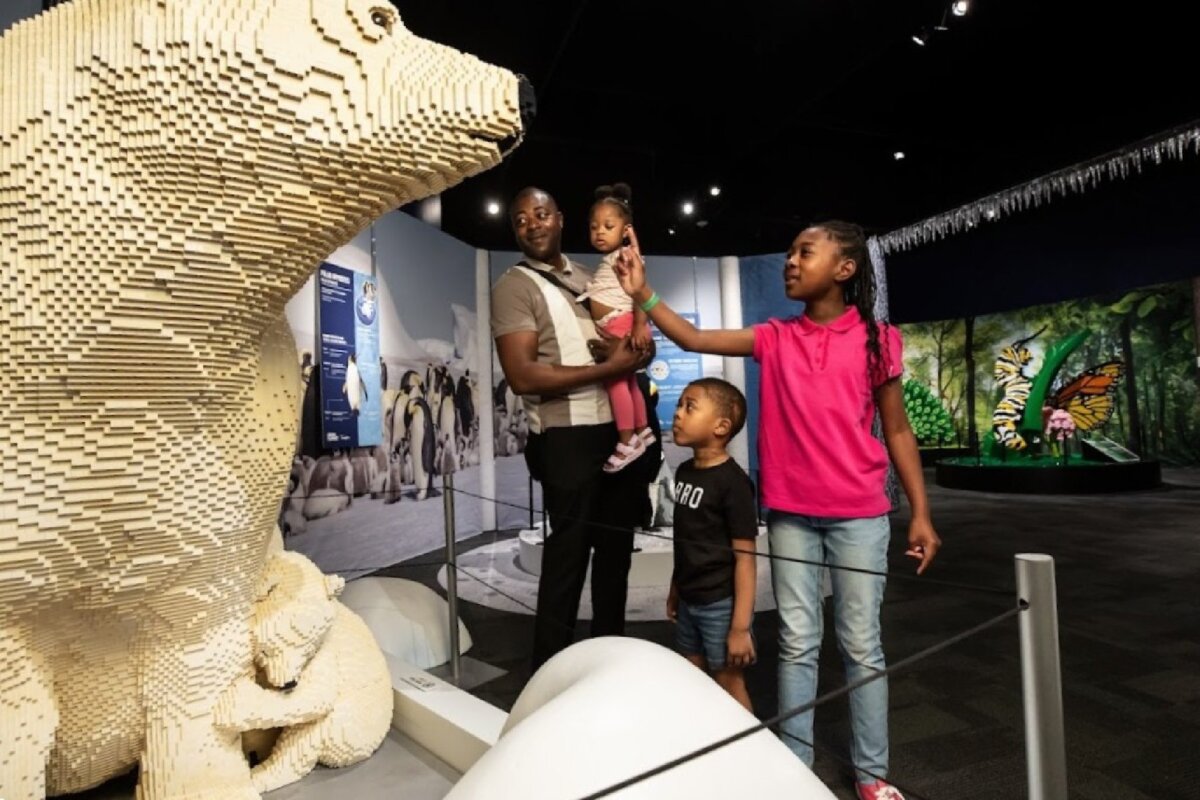
“It’s the mother polar bear and her cubs,” she said. “It’s the largest piece in the exhibit by far, requiring the most bricks and hours to assemble.”
And it is, indeed, the exhibit’s awesome pièce de résistance and most remarkable feature.
“One cub is cuddling against the mother for warmth and it just exudes emotion,” Cowan said. “You feel like you’re there in the Arctic.”
As an added touch, atmospheric soundscapes add to the effect, wrapping visitors in the ambient hush of the cold polar world as they stand in awe before the towering structure.
Look closely and you’ll see Kenney’s signature brick, literally.
“One of my favorite hidden gems is that on most of his sculptures, Sean has hidden his signature somewhere,” Cowan said. “It’s an ‘I-Spy’ opportunity that gets people looking much more closely. He also uses unusual pieces, not just the cube and rectangular LEGO bricks everyone knows. Spotting those unexpected shapes scattered throughout is absolutely fascinating.”
The exhibit also offers hands-on opportunities to get creative with Lego bricks with guided prompts.
In “Ocean Odyssey,” visitors are challenged to build coral. In “Our Backyard,” it’s garden flowers, and in “Savanna Crossing,” a safari sketchbook invites you to draw what you see rather than just snap a photo.
Even the museum’s scientists got involved in the exhibit, which incorporates specimens and research about symbiosis, inspired by the relationship between the different animals depicted in bricks, such as how zebras and wildebeest survive together in Africa’s savanna.
“The call to action is for visitors to look for forms of symbiosis outside the museum after they leave and to think about how species coexist in the world around them,” Cowan said.
“Our Own Backyard,” the final gallery, brings that message home with sculptures of pollinators and gardens designed to connect the global context of the exhibit to the green spaces we experience outside our own front door.
“It’s really about the natural world as an incredible source of inspiration and blending that with science and art,” Cowan said. “The key message is that our planet is something worth paying attention to and protecting.”
When You Go
“Brick Planet: A Magical Journey Made With LEGO Bricks” next moves to the Western Heritage Museum at New Mexico Junior College in Hobbs, New Mexico, from May 30 to Sept. 6, 2027: NMJC.edu/museum.
Nicola Bridges is a freelance writer. To read features by other Creators Syndicate writers and cartoonists, visit the Creators Syndicate website at www.Creators.com. Copyright 2026 Creators.com
Dear Readers: We would love to hear from you. What topics would you like to read about? Please send your feedback and tips to features@epochtimes.nyc.
