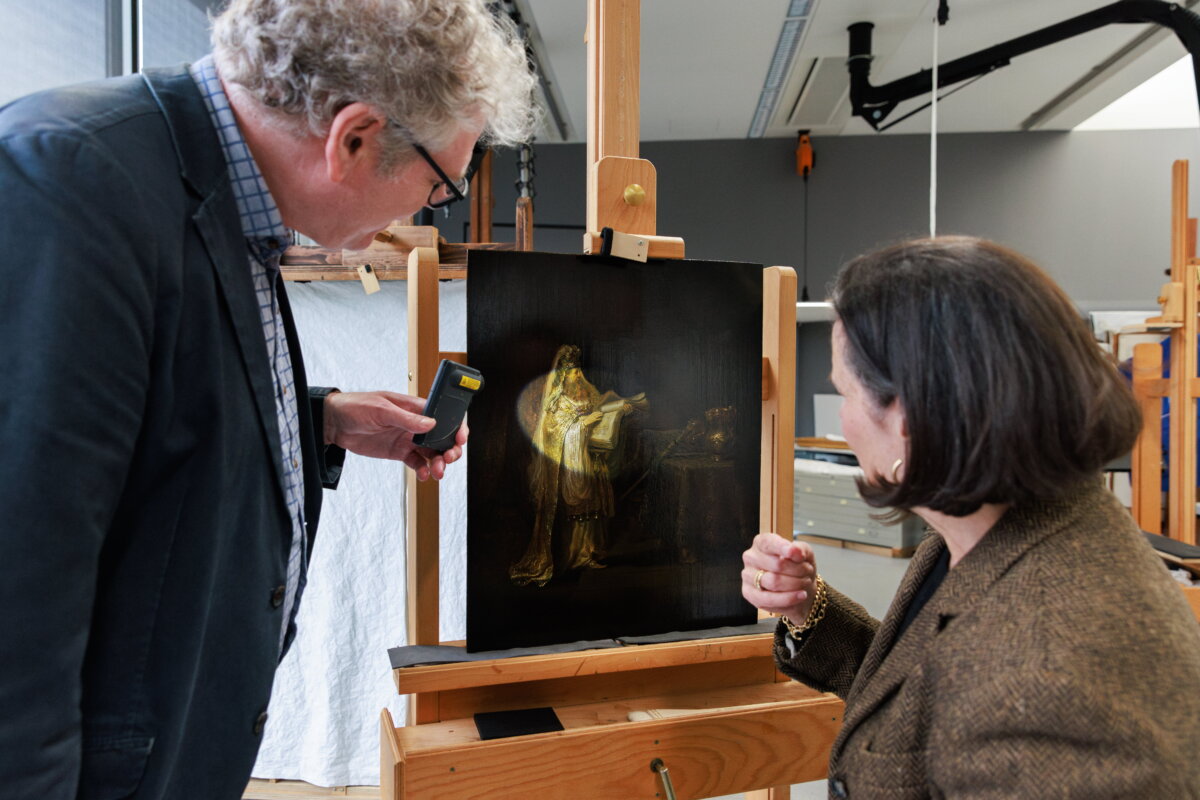
Every art expert dreams of authenticating an old master painting. Remarkably, researchers at the Rijksmuseum in Amsterdam just had this once-in-a-lifetime honor.
In 1960, art experts removed “Vision of Zacharias in the Temple” from Rembrandt’s oeuvre. An anonymous art collector then acquired the work in 1961, and its whereabouts remained unknown. More than 65 years later, on March 2, 2026, the Rijksmuseum announced the painting was indeed by the Dutch master.
“We always hope to find a new Rembrandt, but this happens rarely,” Rijksmuseum director Taco Dibbits told The Associated Press.
The museum’s researchers spent the last two years analyzing the work and comparing it with paintings that Rembrandt created around the same time. They observed similarities in the paint pigments, painting techniques, and compositional changes. They also used dendrochronological analysis (dating the wood) pinpointing the panel painting to 1633.
According to “The Oxford Companion to Art,” most artists in 17th-century Holland painted “people or things around them.” But Rembrandt’s commissions around 1633 were mostly religious and allegorical themes—subjects he’d paint throughout his lifetime.
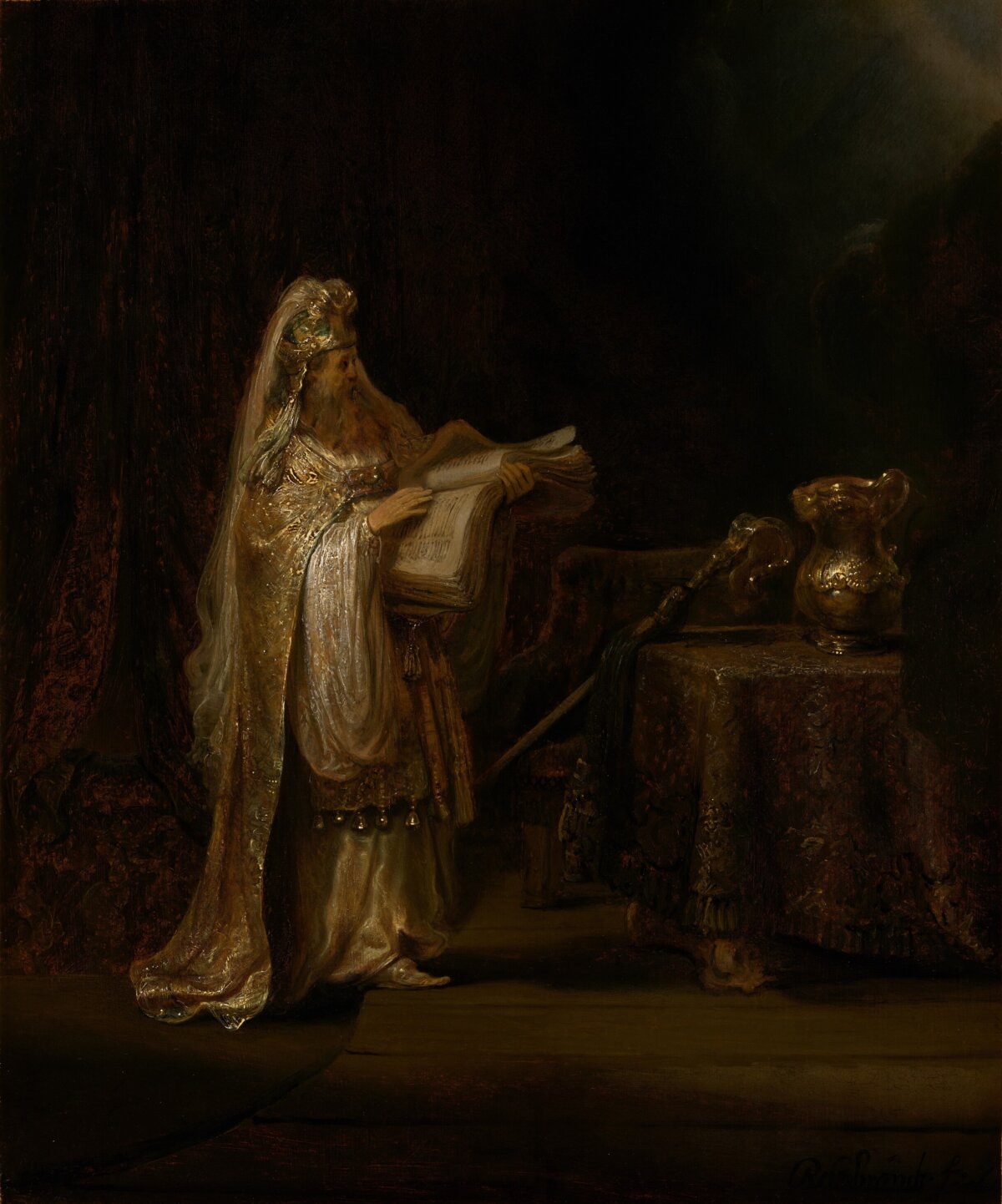
The Rijkmuseum’s experts noted that “Vision of Zacharias in the Temple” aligned with the quality and style of the biblical commissions that the then 27 year-old Rembrandt painted around the same time, including “Simeon’s Song of Praise,” “Daniel and Cyrus Before the Idol Bel,” and “Jeremiah Lamenting the Destruction of Jerusalem.”
‘Vision of Zacharias in the Temple’
Rembrandt excelled at rendering emphatic figures and light using a muted paint palette of deep browns, rich ochres, and glowing umbers.
“Vision of Zacharias in the Temple” exemplifies that. Dibbits said: “This is a scene from the Bible—so this is where [Rembrandt’s] real love is—and it’s a very moving moment that he depicts.”
Rembrandt depicted priest Zacharias ministering in splendiferous regalia at the altar of incense when the Angel Gabriel appeared and proclaimed that the elderly priest and his wife, Elisabeth, would conceive. Zacharias’s incredulous wide-eyed stare and stance says it all. Having been unable to conceive for decades, the couple had given up on parenthood. Now, he was being told he would father John the Baptist.
Rembrandt rendered Angel Gabriel as a divine light falling on Zacharias.
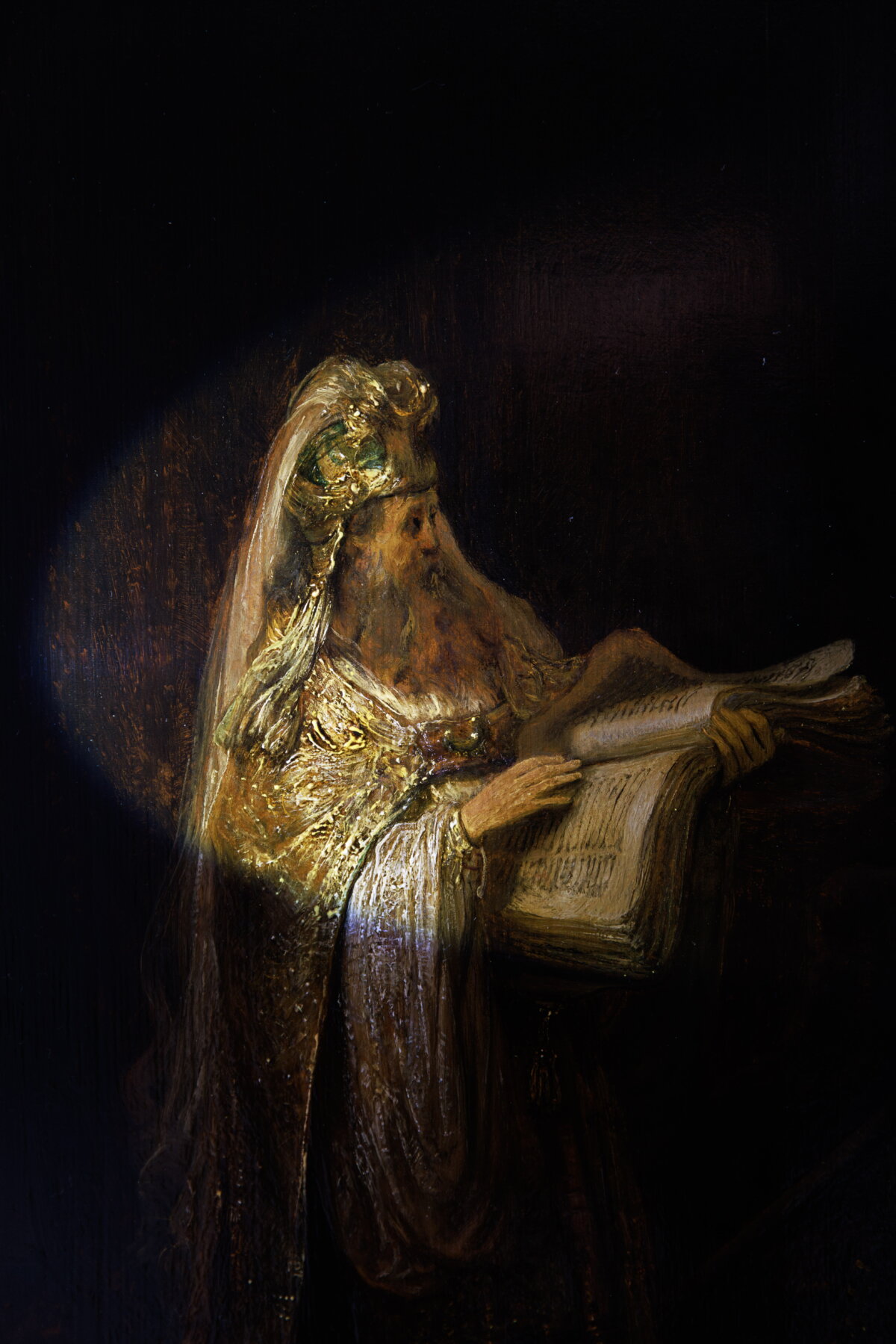
“[The painting] is a beautiful example of the unique way Rembrandt depicts stories,” Dibbits said. It also showcases how Rembrandt conveyed, in his own words, “the greatest inner emotion” through motion and gestures.
“Vision of Zacharias in the Temple” is now on long-term loan to the Rijksmuseum, where it can finally be viewed among peers—and acknowledged as a Rembrandt.
To find out more, visit Rijksmuseum.nl
What arts and culture topics would you like us to cover? Please email ideas or feedback to features@epochtimes.nyc