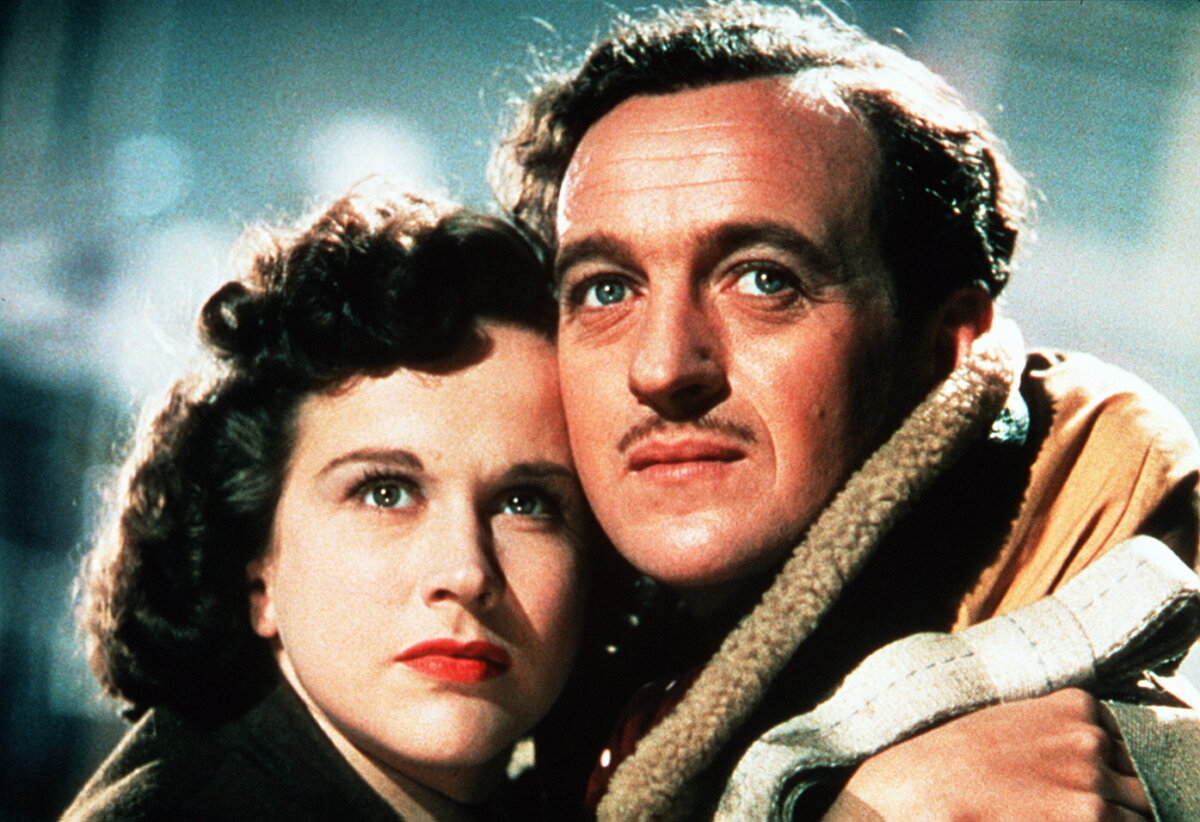
NR | 1h 44m | Fantasy, Romance, War | 1946
Some films arrive like ordinary entertainment, while a handful drift down from somewhere much higher. They carry the sense that the stories once touched the heavens as easily as they land down here on the earth.
Michael Powell and Emeric Pressburger produced “A Matter of Life and Death” in 1946, just after World War II had ended, when the entire globe was trying to remember how peace felt. This unique story allows life, death, love, and cosmic bureaucracy to mingle without ever losing its warmth or sense of play.
Powell and Pressburger already held a reputation as imaginative architects of British cinema. Their partnership had produced films that mixed national character with visual daring. This included the sweeping historical portrait “The Life and Death of Colonel Blimp” (1943) and the curious spiritual wanderings of “A Canterbury Tale” (1944).
Both films carried an instinct for mythmaking that turned everyday people into figures within a larger moral universe. In “A Matter of Life and Death,” that instinct expands upward into something celestial. The film imagines a universe where Heaven functions with its own bureaucracy and rules.
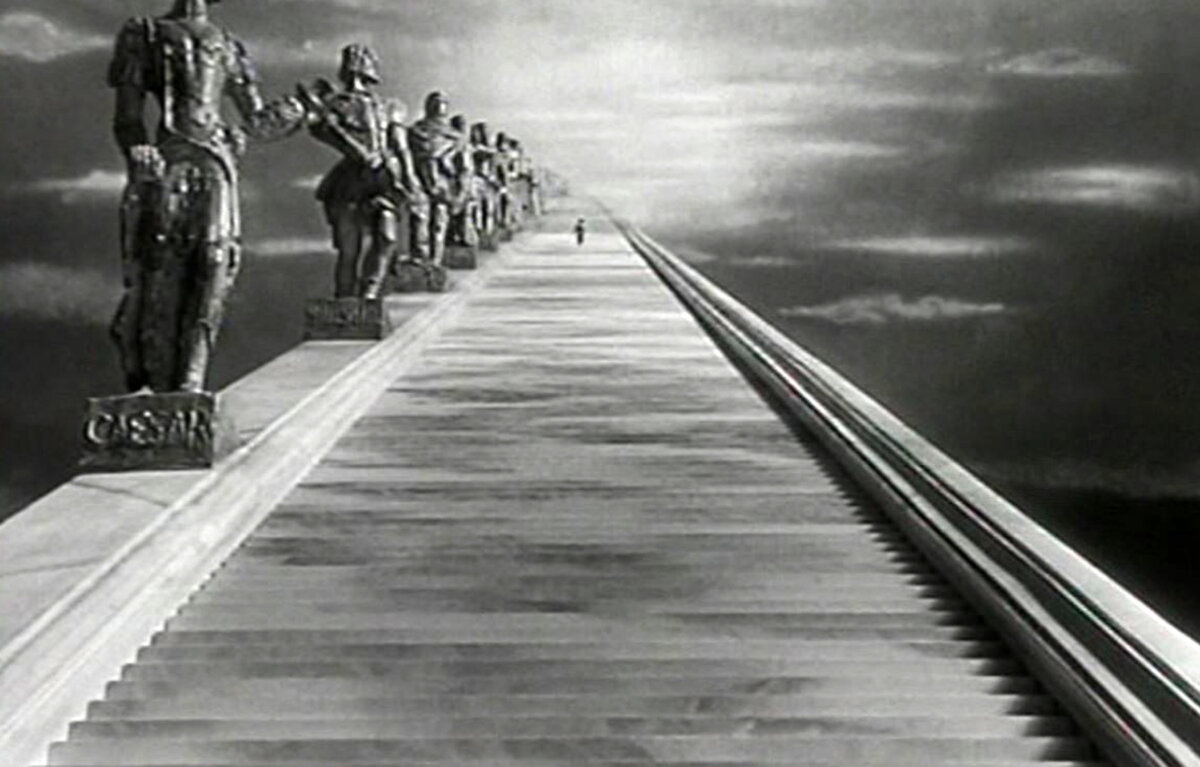
The filmmakers approached the idea with a visual scheme that can startle even the modern viewer. Earth bursts with Technicolor vitality; Heaven appears in a cool monochrome that resembles carved stone with occasional illuminated fogbanks.
That decision reverses expectations in a sly way because life on Earth looks vibrant and intoxicating while the afterlife appears austere and orderly, like a massive archive waiting to process the souls of the departed.
Missed by the Afterlife
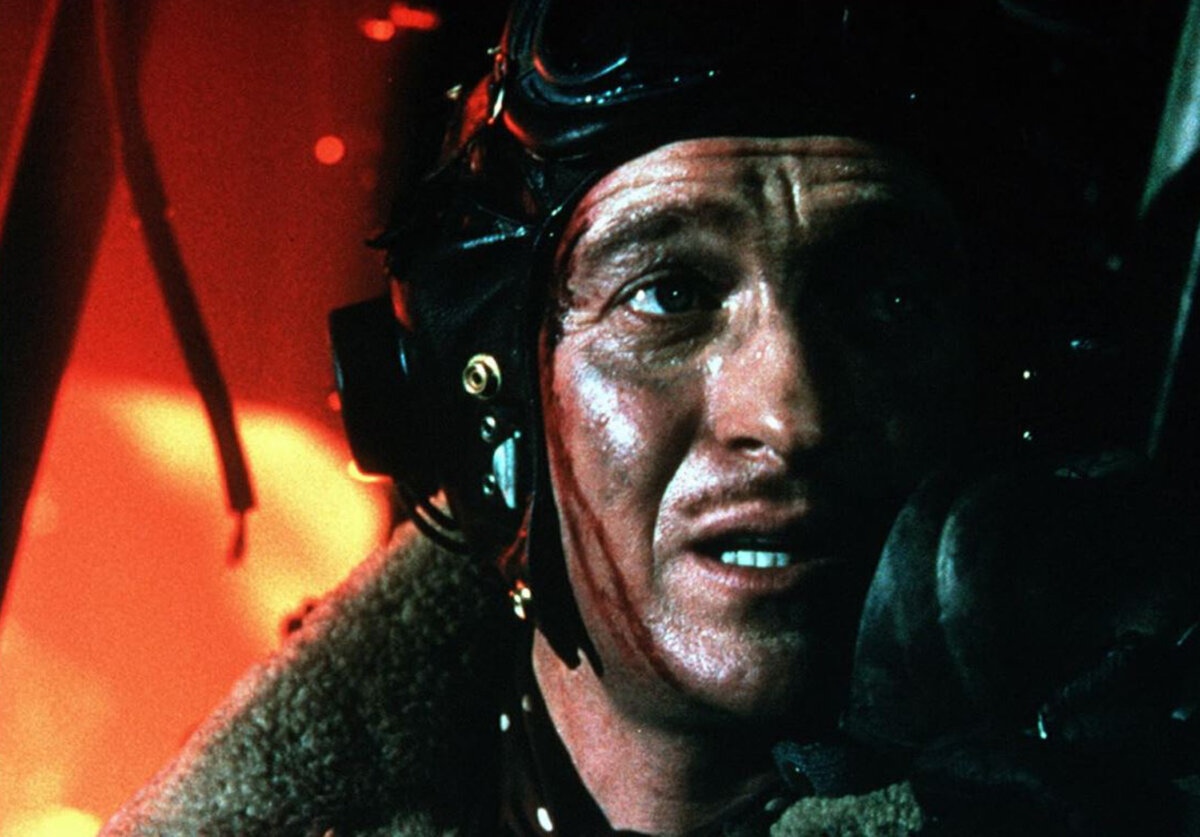
The film opens with a sweeping cosmic prologue. The screen glides past stars and nebulae before suddenly drifting down toward a burning Europe during the final months of the war.
RAF pilot Peter Carter (David Niven) is barely piloting a damaged bomber home to England after a raid over Germany. His crew escapes by parachute while Peter faces the grim truth that his own chute has already been destroyed.
During his final radio call, he reaches an American operator, June (Kim Hunter), stationed along the English coast. Their conversation lasts only minutes, yet something unusual happens during those last exchanges. Peter speaks with the calm humor of a man already preparing to die, while June listens from the other end of the line as flames creep through the aircraft.
Peter finally bails out. Against all logic, he somehow survives the fall and wakes up on a beach the next morning. He discovers that June lives nearby, and the two meet face to face in a moment that feels almost unreal to both of them.
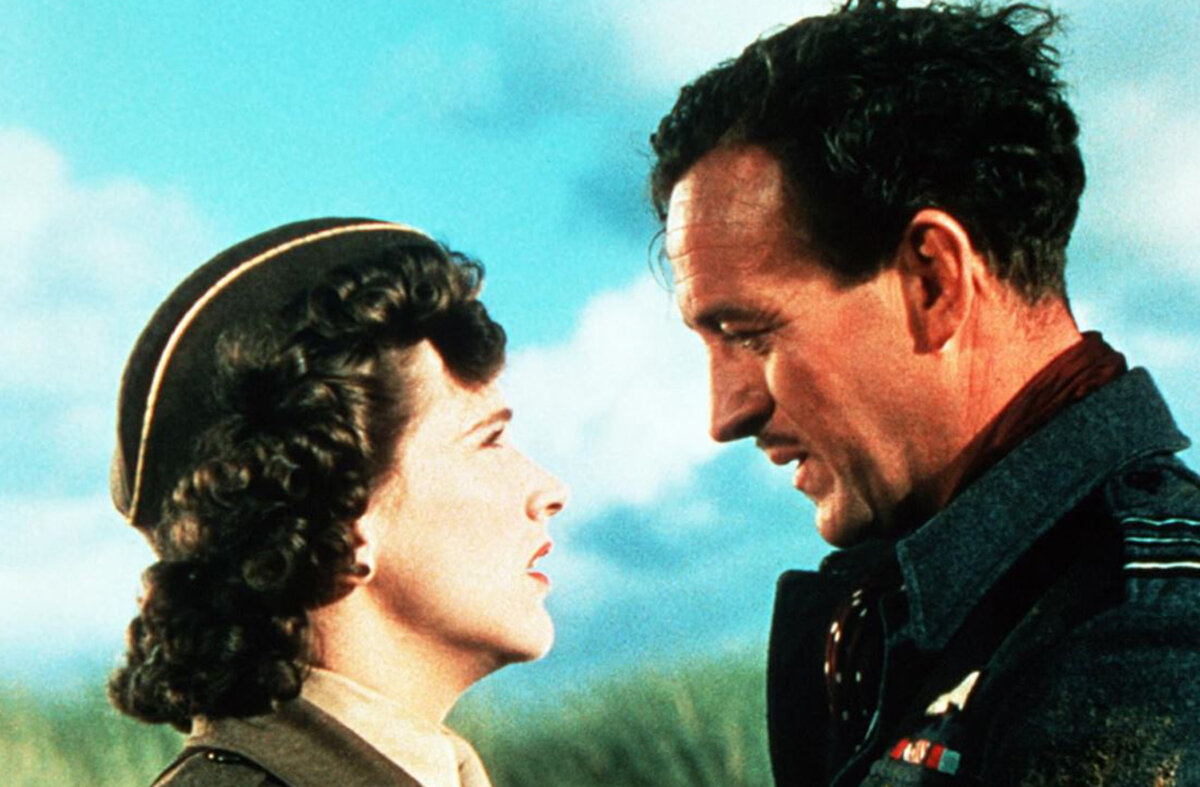
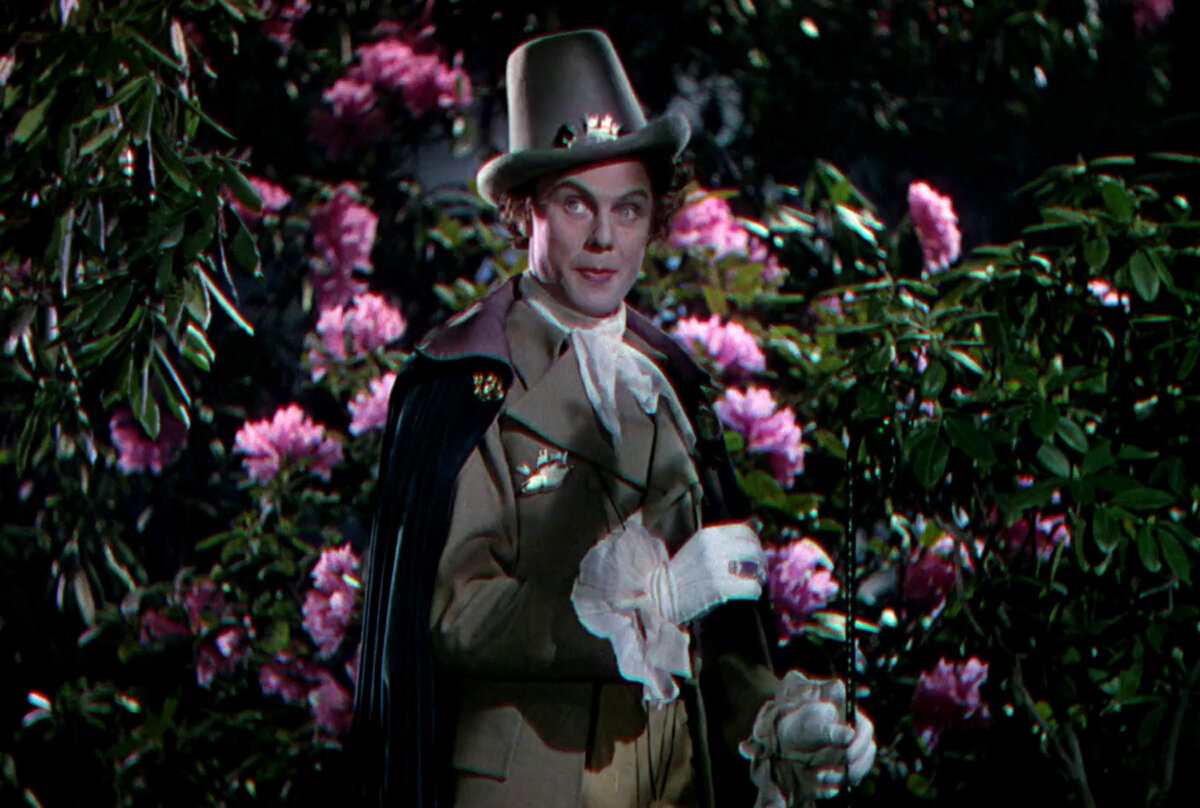
As their connection grows, a strange development unfolds. A celestial official named Conductor 71 (a very game Marius Goring) arrives with news that a mistake occurred during Peter’s fall through the fog. The heavenly authorities expected his arrival in the afterlife, yet Peter slipped past unnoticed.
Peter begins to suffer from troubling visions, and his friend Dr. Frank Reeves (Roger Livesey) studies the situation with growing concern. Meanwhile, Heaven prepares to correct its accounting error. What follows places Peter between two worlds, one filled with living people who want him to stay, and another governed by a celestial court that insists the universe must balance its books.
A Technicolor Dream
Powell and Pressburger shot this picture with a sense of play that verges on mischievous. One moment in particular shows Conductor 71 stepping from the monochrome realm into the colors of Earth, his lapel flower shifting hue as he crosses the boundary. Tricks like that required patience and ingenuity back in 1946, long before any sort of digital shortcuts existed.
The production design carries the same sense of imagination. For instance, the enormous stairway connecting the two worlds looks like a monumental escalator carrying souls toward eternity, while the celestial court resembles a gigantic amphitheater suspended somewhere beyond time.
Powell and Pressburger loved filling their films with visual surprises, and this one overflows with them. Many of the film’s scenes carry the playful curiosity of filmmakers who were testing how far cinema could stretch.
The performances keep the fantasy human. Niven delivers charm and wit even while describing the impossible, which allows viewers to follow him willingly into the story’s strange territory. Hunter brings a delicate sincerity that sells the whirlwind romance, while Livesey gives the story a thoughtful presence that keeps its medical aspects believable.
The masterful wild card here is Goring, whose character floats through the film like a mischievous guide from another century as a former French aristocrat. Goring turns every appearance into a small comic event, gliding between elegance and playful arrogance.
The film itself had an unusual origin. Britain’s Ministry of Information suggested the project during the closing months of the war, hoping to encourage goodwill between Britain and the United States.
That specific political aim hides comfortably beneath the story’s romantic fantasy. The relationship between Peter and June places a British officer and an American radio operator at the center of the tale.
In the end, Powell and Pressburger pull off something rare. A fantasy about heavenly life leaves you thinking more about the pleasures of being alive.
“A Matter of Life and Death” still feels like a small miracle of imagination and craft. Perhaps that will forever remain true. In any event, Powell and Pressburger managed to turn a cosmic paperwork error into one of the most charming fantasy romances ever placed on film.
“A Matter of Life and Death” is available on YouTube and Plex.
‘A Matter of Life and Death’
Director: Michael Powell, Emeric Pressburger
Starring: David Niven, Kim Hunter, Roger Livesey
Not Rated
Running Time: 1 hour, 44 minutes
Release Date: Dec. 15, 1946
Rated: 5 stars out of 5
What arts and culture topics would you like us to cover? Please email ideas or feedback to features@epochtimes.nyc