All the world’s a stage,
And all the men and women merely players;
They have their exits and their entrances;
And one man in his time plays many parts.
This quote is one of William Shakespeare’s most famous lines from his play “As You Like It.” Though this line can be taken seriously, it also shows the pantomime of life and how, whether we realize it or not, we partake in this pantomime every day.
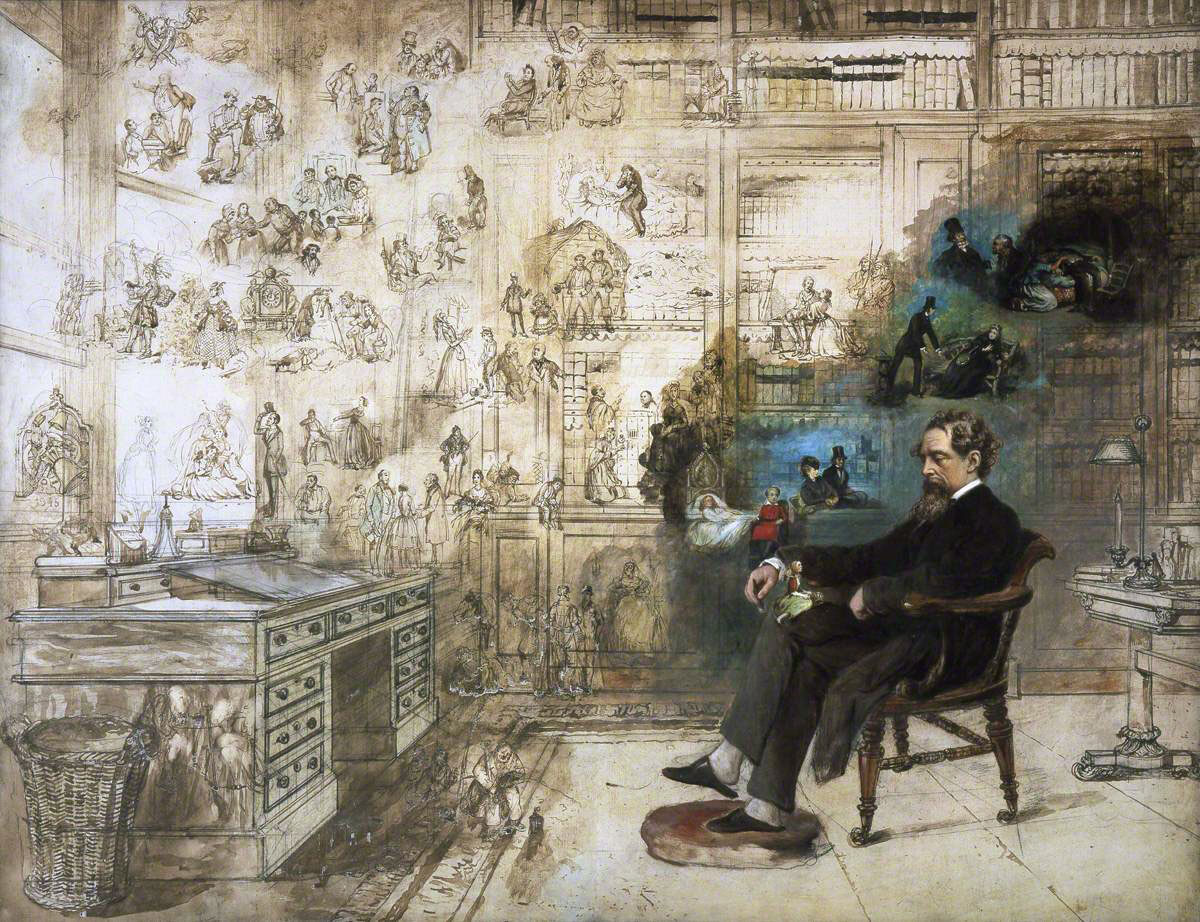
Charles Dickens, in his short story “The Pantomime of Life,” suggests that a pantomime may be just what we need. Through pantomime, we not only understand humanity better but also find the comedy in life.
Dickens puts it perfectly in the beginning of his story: “A pantomime is to us, a mirror of life … and that this very circumstance is the secret cause of [our] amusement and delight.” Thus, we love pantomime because it is life.
‘A Mirror of Life’
Dickens then inspects different pantomime characters. He addresses the rich, elderly gentleman walking through a particular scene. This stately, proud gentleman, with a round tummy and a smile upon his face, suddenly slips, sending the audience into a fit of laughter.
From this, Dickens directs our attention to real life. Near a bank, stock exchange, or other financial setting, similarly, one of the rich men falls—”the more suddenly, and the nearer the zenith of his pride and riches, the better.” A crowd of jeering, laughing people quickly surrounds him, showing the situation to be “the pantomime to the very letter.”
From the rich man, Dickens turns to the pantomime’s pantaloon and clown characters. The pantaloon, he explains, is the “treacherous, worldly-minded old villain, constantly enticing his younger companion, the clown, into acts of fraud or petty larceny, and generally standing aside to watch the result of the enterprise.” Should the clown succeed in his acts of fraud and larceny, the pantaloon gladly reaps the reward, but if the clown fails, he disavows the clown immediately.
Dickens points out those in real life who obviously resemble the clown, who attempt to partake in the petty benefits of fraud and larceny. Meanwhile, behind this individual, is usually one (the pantaloon) “who to this day [is] making such comical and ineffectual attempts to be young and dissolute, that all beholders are like to die with laughter.”
Dickens draws on more characters, showing how real life supplies clowns, pantaloons, and rich gentlemen in their respective scenes and acts. Silly, clumsy ensemble characters in pantaloons—those who always bump or crash into things during a scene—are easily spotted in daily life. We often resemble characters ourselves, which is one reason we laugh so heartily at them.
Through this short story, Dickens demonstrates the comedic side of life, as well as the benefit of reading and studying literature and art. Through these, we come to better understand humanity by seeing it via a different perspective.
As we gaze into this “mirror of life,” we see with humility and a laugh that perhaps we needn’t take ourselves too seriously. Though we all have our destinies, none of us escapes human folly and playing our roles in the pantomime of life. We must laugh because it is life and because it is, indeed, very funny.
What arts and culture topics would you like us to cover? Please email ideas or feedback to features@epochtimes.nyc