



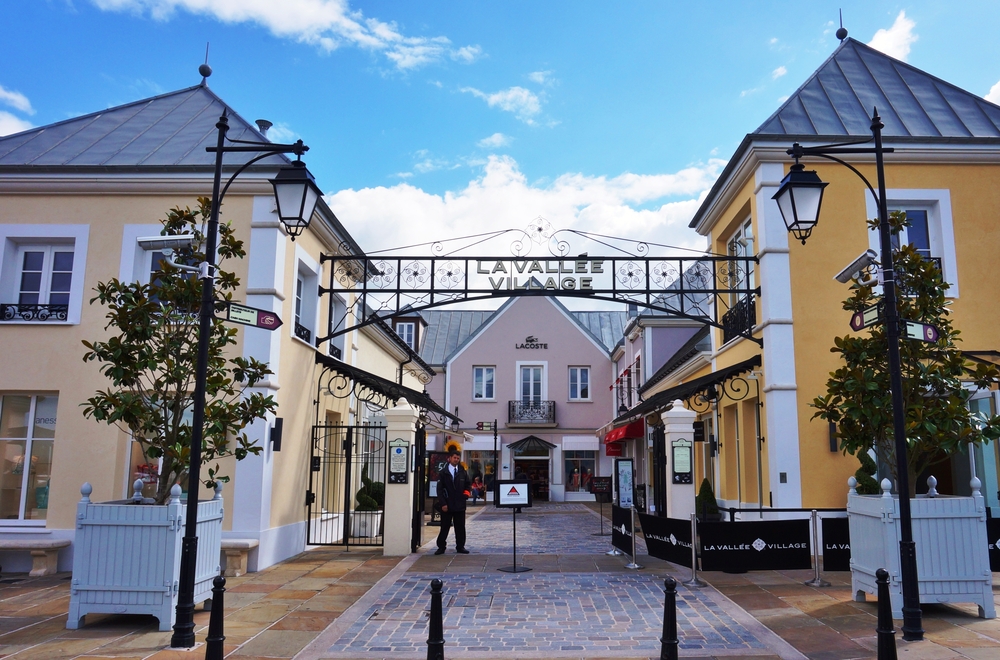
In 1853, Prefect Georges-Eugéne Haussmann of France’s Department of the Seine initiated one of history’s most massive and brilliant urban rebuilding projects—the renovation of Paris. This renovation was a masterpiece of French classicism.
Over half of the city as it now stands was completed under his direction and considerably more was based on his planning. Its impact on Parisian and world architecture is almost impossible to exaggerate.
Today that example continues to inspire architectural projects that are renovating and expanding Paris and its suburbs. Among these are Le Plessis-Robinson and the suburbs Marne-lá-Vallée and Seine-et-Marne, two of the great success stories of contemporary urban renewal.
Both neighborhoods are based on the principles of New Classicism, a revival of traditional architectural styles, and New Urbanism, which applies traditional principles of urban development to the realities of contemporary life. Le Plessis-Robinson is one of the great success stories of contemporary urban renewal; Marne-lá-Vallée is France’s premier example of New Classicist and New Urbanist architecture.
Le Plessis-Robinson
Located towards the southwest of Paris, Le Plessis-Robinson is a politically distinct but still urban “commune,” an official term for a French town or city with its own government. While most locations where New Classicist and New Urbanist architecture predominate were first built in those styles, Le Plessis-Robinson has a very different story.
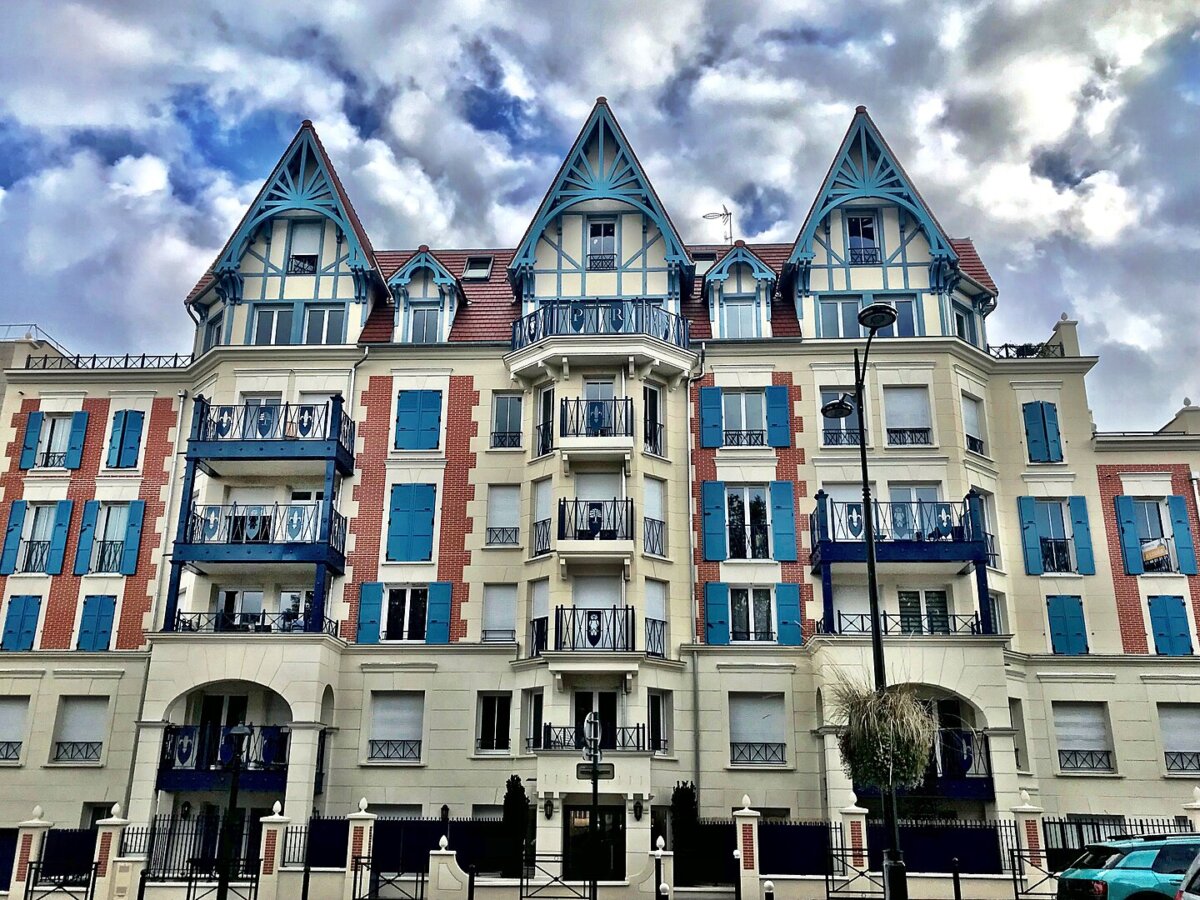
First founded over 1,000 years ago, Le Plessis-Robinson had a nondescript history until the 20th century. In the 1940s and 1950s, the local communist government-built modern style apartments that were in complete disrepair by the 1990s. Along with negative public opinion, the apartments’ façades were at odds with the rest of Paris.
By 1989, the development plan of the commune was complete. But literally and figuratively, the area was also collapsing. Many commercial properties were vacant, poverty was widespread, buildings were decaying, and the local government was nearly bankrupt. Impersonal utilitarian buildings contributed to low quality of life.
Philippe Pemezec was elected mayor of Le Plessis-Robinson in 1989. He knew that both aesthetic and structural reconstruction were needed to revitalize the commune. He soon entrusted the project to François Spoerry, France’s preeminent New Classicist architect. Spoerry was best known for the Mediterranean seaside town of Port Grimaud.
But Spoerry passed away in 1999, just four years after developers finally took an interest in Le Plessis-Robinson. His assistant Xavier Bohl then took over the project. Further contributions have been made by other New Classist and New Urbanist architects, including Jean-Christophe Paul, Manuel Silva, and Marc and Nada Breitman. The Breitmans specialized in public housing. In addition, Pemezec has assured continuity on the project by serving as mayor of Le Plessis-Robinson for 31 of the past 35 years.

Coeur de Ville
Over those decades, parts of the commune had largely been renovated—when not demolished and rebuilt. The primary inspiration has been Haussmann’s classicism, with some incorporation of other traditional styles.
Le Plessis-Robinson’s Coeur de Ville area—largely the work of Spoerry—is perhaps the most exemplary of French classicism. While buildings that extend for entire blocks aren’t always symmetrical from end to end, their individual sections are marked by classical symmetry.
Straight lines dominate, though in a common French departure from the Classic style, the fronts of some buildings curve around traffic circles. Rounded arches cover roads and walkways. Sober basic designs are often joined to flamboyant coloration. Tall, steeply sloping and sometimes inwardly curving roofs provide a traditional French touch.
In other parts of the commune, the French Renaissance style, a mixture of classicist and Gothic elements, has a vibrant presence. Among the most notable structures is the Villa Maintenon, whose steep gabled roofs and half-timbered upper story façades literally top off a largely classicist structure with an incorporation of Gothic aesthetics. Similar combinations can be seen in much of the Plessis-Capitales section of the commune.
At the other end of the stylistic spectrum, La Maison des Arts is a model of New Classicist architecture (inspired by the Italian Renaissance). A reddish dome is modeled on the masterpiece Filippo Brunelleschi designed for Florence’s cathedral.
Thanks in no small part to this aesthetic and architectural renewal, Le Plessis-Robinson had been more broadly transformed into a culturally vibrant, economically successful, clean and safe urban area.
Marne-lá-Vallé and Seine-et-Marne
About 30 miles to the northeast, the towns of Marne-lá-Vallée and Seine-et-Marne have used the same principles with similar success. On the road from Marne to Seine, there are 27 towns. The sheer size of the area has assured that these towns are architecturally mixed. More than a few magnificent, centuries-old buildings can be found within the area. So can examples of utilitarian architectural sterility concerned purely with function and indifferent to aesthetics.
But New Classicism and New Urbanism have played an important role in the (largely new) development of these areas in recent decades—particularly the 10 communes of Seine-et-Marne’s “borough,” Val d’Europe.
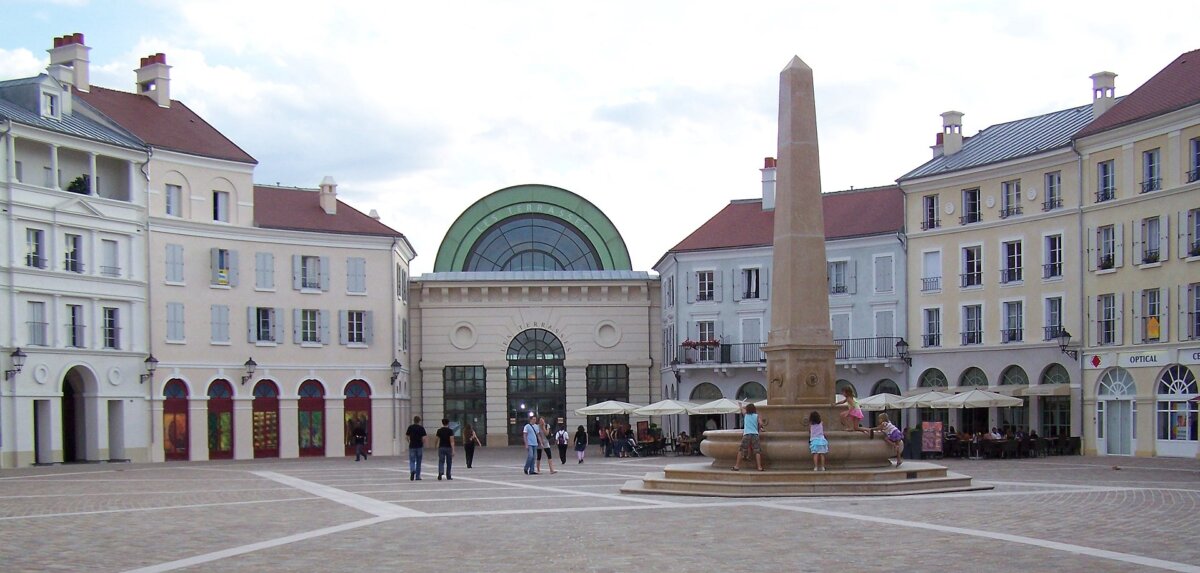
Ironically, the area within Val d’Europe has one of the highest concentrations of new structures reminiscent of Haussmann’s style centers. Tuscany Square (Place de Toscane) is a shining example. The nearby Hotel L’Elysee exemplifies the same style.
Other new or planned buildings are grounded in the Palladian tradition’s largely minimalist and unadorned interpretation of classicism.. This includes Victoria Park and the Quatier de-Parc.
Among the most unique buildings is the Val d’Europe Mall. With a rounded arch glass ceiling and extensive use of iron for columns and railings, it’s largely inspired by the work of Gustave Eiffel. The structure recalls buildings created for Paris’s 1878 Universal Exposition, particularly the Palace of Industry (Palais de l’Industrie) and the Machine Gallery (Galerie des Machines).
A success story in every way, the Val d’Europe sector has also become a major center of the French business world.
With Le Plessis-Robinson, and Marne-lá-Vallée and Seine-et-Marne, France’s classicist tradition has demonstrated its ability to mesh with contemporary life at the country’s social, cultural, and political center. The two communities add to the continuing development which began almost two centuries ago of one of the world’s greatest cities.
What arts and culture topics would you like us to cover? Please email ideas or feedback to features@epochtimes.nyc
