



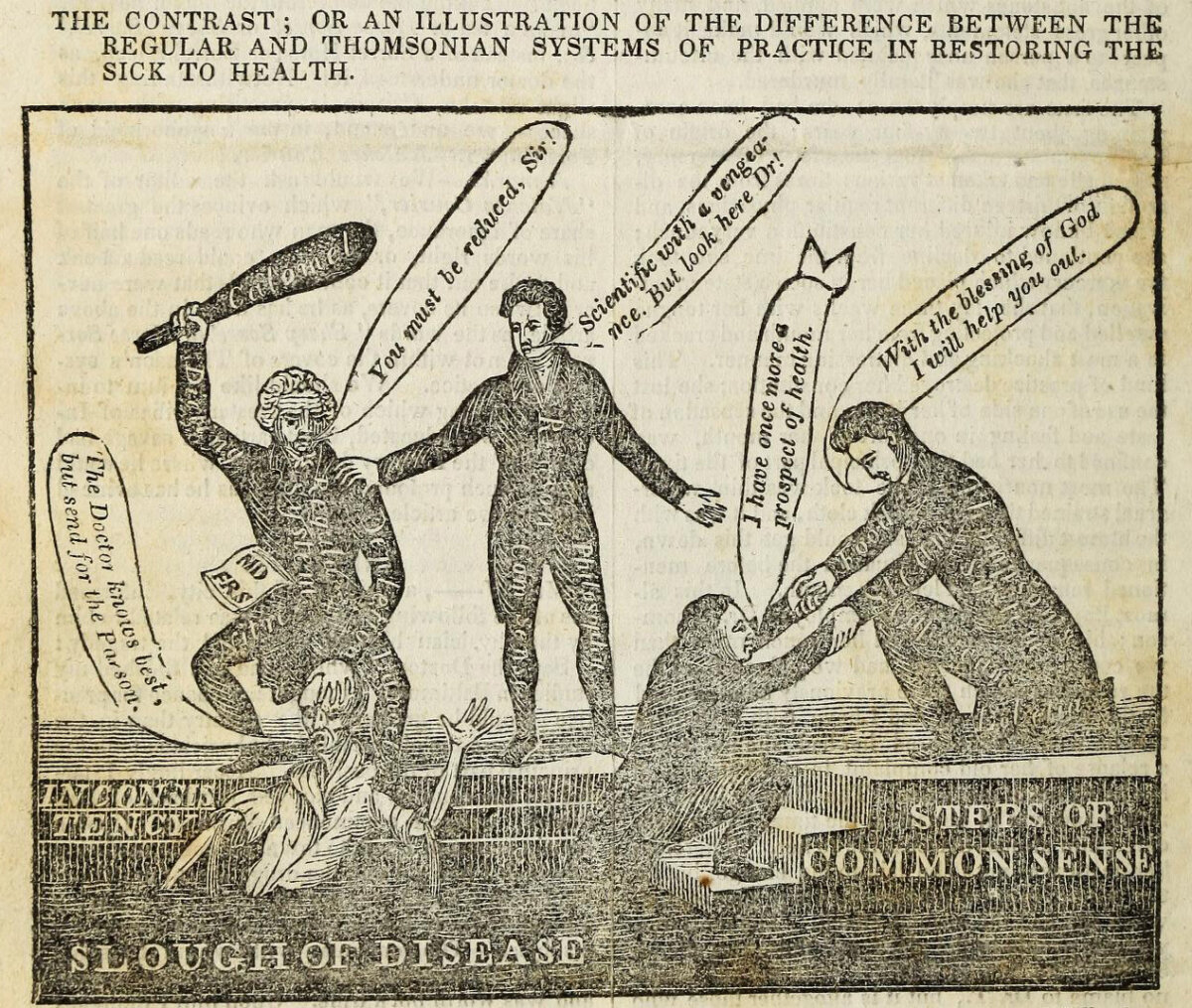
In the 1830s, somewhere down south or out west, a child wakes burning with fever. The roads are rough, and even if the nearest physician could be reached, the family might not have the money to pay him. So they reach for what they have: a cupboard of herbs gathered from nearby woods and a thick medical book from the shelf.
For generations of Americans, that book was as necessary as any tool on the farm.
Is There a Doctor in the House?
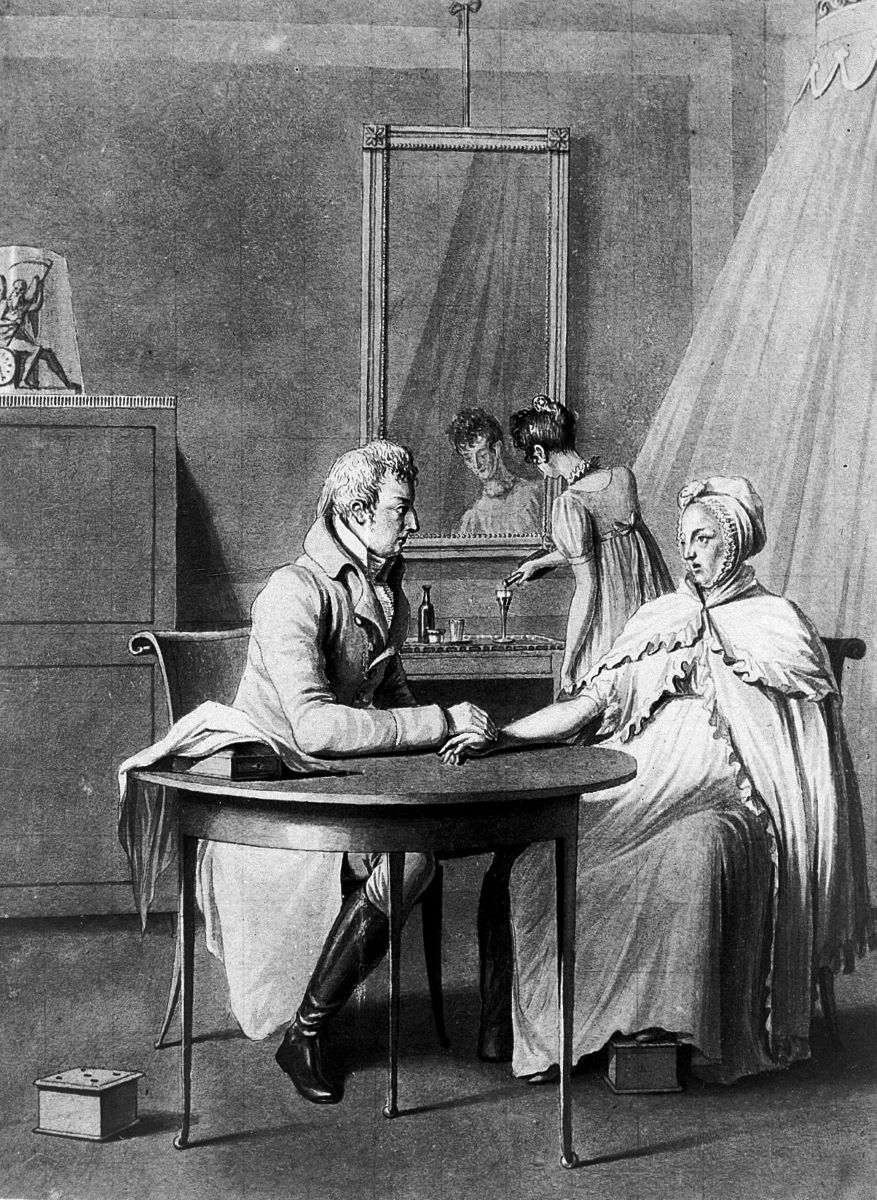
One of the earliest works on household medicine appeared in Williamsburg, Virginia, in 1734. John Tennent’s “Every Man His Own Doctor; or, The Poor Planter’s Physician” promised “plain and easy means” of treating common illnesses at little expense.
Tennent stressed remedies suited to the American climate and medicines found close to home. Though only about 60 pages, the book went through repeated editions, including one printed by Benjamin Franklin.
Then, for decades, little followed. Through the colonial period and the Revolution years, Americans leaned on British works like William Buchan’s “Domestic Medicine” and John Wesley’s “Primitive Physick.” The demand was there. But what had yet to emerge was a body of domestic medical literature tailored specifically to American conditions. That began to change as the 18th century closed. In 1793, Henry Wilkins published “The Family Adviser; or, A Plain and Modern Practice of Physic,” which he described as intended for private families and adapted to “the diseases of America.”
By the early 19th century, such manuals had grown ambitious. Written for families, travelers, and people far from physicians, they covered everything from symptoms and surgery to medicinal plants and accidents, in language laypeople could follow. What started as a modest handbook was becoming a people’s encyclopedia.
A Poor Man’s Author
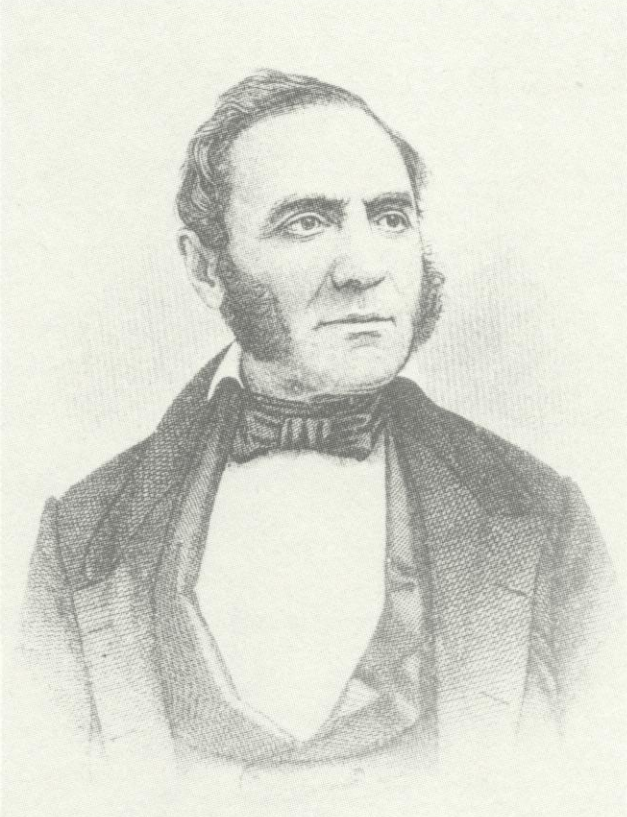
Then came John C. Gunn.
Published in Knoxville, Tennessee in 1830, Gunn’s “Domestic Medicine; or, Poor Man’s Friend in the Hours of Affliction, Pain and Sickness” was not the first book to invoke a populist spirit. In fact, no single innovation set Gunn’s book apart from earlier manuals of household medicine; these displayed the same basic features. Gunn did combine those features unusually well, though. Of the many books in this genre, his was the most successful American manual of the 19th century.
Where previous manuals were either British imports, or simply Americanized European medicine, Gunn wrote and marketed his book expressly for families in the Southern and Western states, to a rural population spreading across the frontier. Furthermore, while previous manuals had emphasized plain language and accessibility, Gunn’s book appealed to their self-reliance and pushed the anti-establishment element further than his predecessors. The medical profession, he contended, was essentially a racket where authorities used Latin terms to astonish and deceive their patients for monetary gain. “Big words and high-sounding phrases are not superior wisdom,” he wrote, and “three-fourths” of medical practices “imposed upon the common people, amounts to nothing but fudge and mummery.”
Once shorn of unnecessary theories and cumbersome language, though, “any person of common sense can understand this great ‘secret of medicine.’” The author proved his own point, offering creative remedies when resources were lacking. Need a catheter in the backwoods? Fear not. Drawing on experience, Gunn wrote, “I have frequently drawn the water off by a common goose quill.”
In another part, he cites the biblical Book of Tobit, where its eponymous figure is cured of blindness with fish gall. This is “neither ridiculous nor improbable,” Gunn said, citing a case where he himself cured a woman’s blindness with an equally dubious substance. When a “Miss Hudson of Knox county” came to him with the affliction, he applied none other than “clean hog’s lard” to the surface of the eye using a “fine camel-hair pencil.”
If these remedies seem preposterous to a hospital culture with MRI scanners, ventilators, and ultrasound systems, it was wondrous knowledge for poor families in isolated rural settings.
One indication of the book’s value is that, though many copies still exist, there seem to be hardly any pristine ones. An 1837 edition, currently available from the Antiquarian Booksellers’ Association of America, describes “surface tears, warping, … stains, … a spine break,” and “penciled scrawling,” among other defilements. This was a book that people used–frequently.
Also surprising for a modern audience is how often moral, religious, and even nationalistic reflections intrude into the topic of healing. Several times, Gunn references “the great Father of the Universe,” who, among other beneficent acts, “has clothed our soil with means, powerful means, of curing our diseases.” Whatever one needed, the native continent could provide.
Importing expensive foreign drugs was, to him, as foolish as importing bricks and timber to build American houses.
Gunn catalogues how to identify and use plants local to Tennessee and surrounding regions: chamomile to revive the appetite and relieve stomach cramps and poplar bark for indigestion. While not all of this herbal advice has been proven accurate, much of it remains reasonable.

Ironically, Gunn’s most dated advice often came from the established medicine he otherwise criticized. Despite disapproving of mystifying jargon, he was still a trained doctor who swallowed the pills of his flawed educational system, recommending dangerous practices such as bleeding and purging for acute illnesses.
A Doctor Shelved
Gunn’s “Domestic Medicine” remained in print for almost 100 years and went through more than 200 editions. Fast forward to today, and the book has been largely forgotten. If it is remembered at all, it is through passing references in literary classics like Mark Twain’s “Adventures of Huckleberry Finn” or John Steinbeck’s “East of Eden.” The doctor may have left the house, but the broken spines and stained pages he left behind show how often families once sent for him.
What arts and culture topics would you like us to cover? Please email ideas or feedback to features@epochtimes.nyc.
