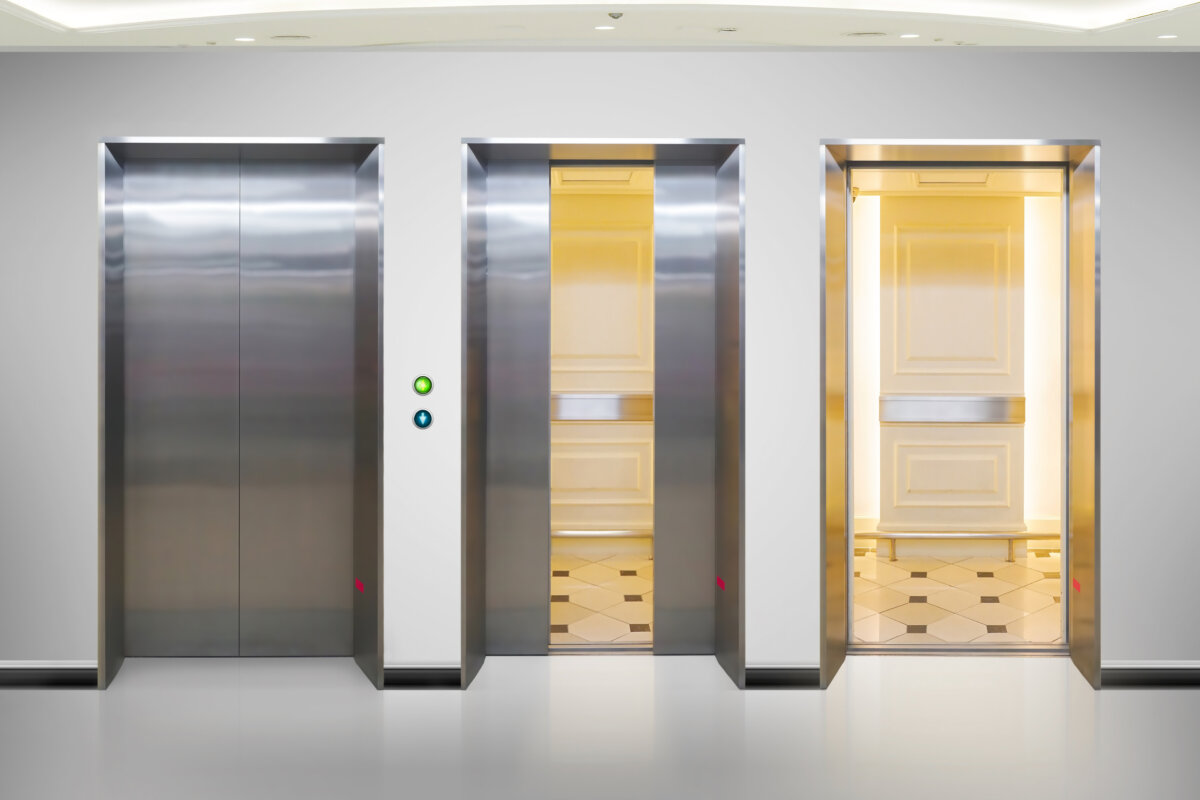
Various types of elevators have been used since the Roman Empire. However, safety regulations didn’t come about until the 1850s.
In 1887, Alexander Miles made elevators much safer when he invented doors that closed without an operator. Previous elevators used counter-weights. Although elevator doors are now electric, most still use the basic concepts formulated in Miles’s 1887 patent.
Miles was born on May 18, 1838 in Pickaway County, Ohio, to Michael and Mary Miles. Miles spent his childhood in Ohio but then moved to Waukesha, Wisconsin, as a young adult. There, he made a living as a barber.
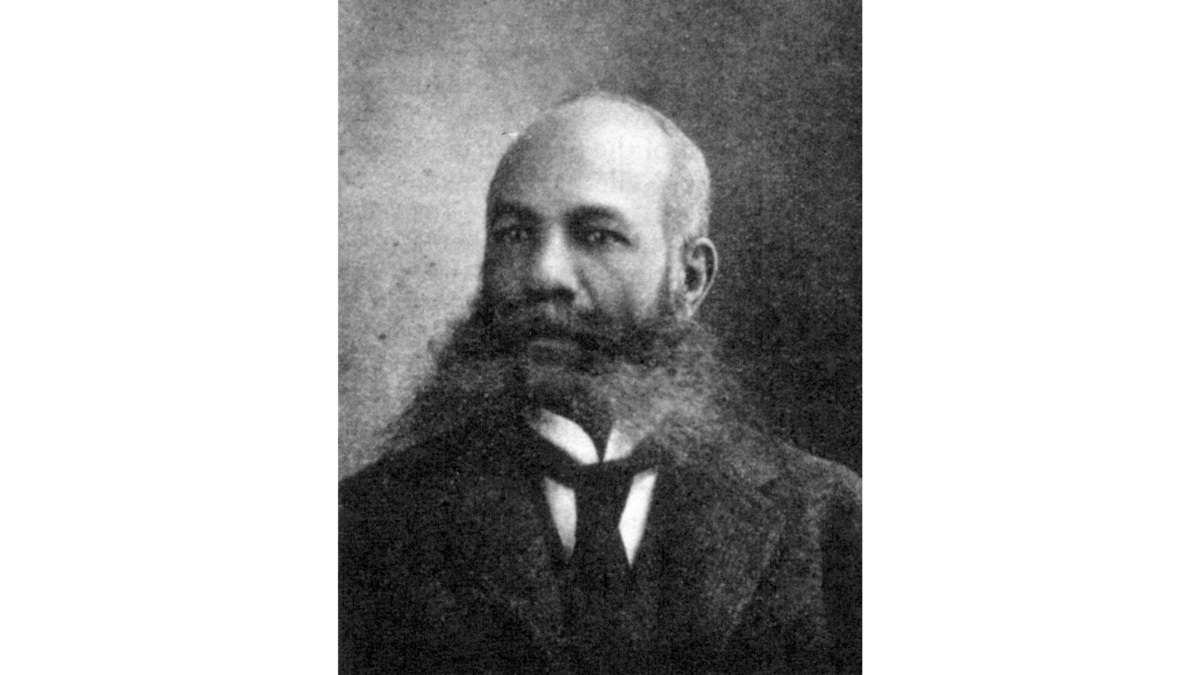
While working as a barber, Miles soon got innovative in his trade. He started coming up with hair product creations that would help beautify hair like the “Tunisian Hair Dressing.” By 1871, he moved on to developing hair cleaning products with a patent for “Improvement in Compounds for Cleansing the Hair.” He received another patent for his “Hair Tonic” in 1883.
In 1876, Miles and his dressmaker wife, Candace, moved to Duluth, Minnesota, after they had Grace, their first daughter. There, he continued working as a barber; by the early 1880s, he owned and operated one of the most successful barber shops in the city. He then opened up a barber shop inside the newly-built, four-story St. Louis Hotel.
Even as his barber shop and products made him prosperous, Miles looked for new business opportunities. He opened up a real estate office and joined the Duluth Chamber of Commerce. By 1884, Miles and his wife had built six rental houses in the city and a three-story commercial building dubbed the “Miles Block.”
Elevator Defect
While working in Miles Block and his barber shop inside the hotel, Miles became concerned about how buildings’ elevators operated. In 1874, John Meaker had received a patent for the world’s first automatic elevator door system. However, the one flaw was that the doors still had to be opened and closed by the elevator operator or the passengers.
Due to human negligence, accidents sometimes occurred when the elevator’s shaft or cage doors were left open. Some people fell down the elevator shaft and were severely injured or died. After working around elevators for several years, the issue of elevator doors left open hit home for Miles.
One day, Miles was riding an elevator with his young daughter when he noticed a door was left open. Some accounts say his daughter fell down the shaft of the elevator, but she survived.
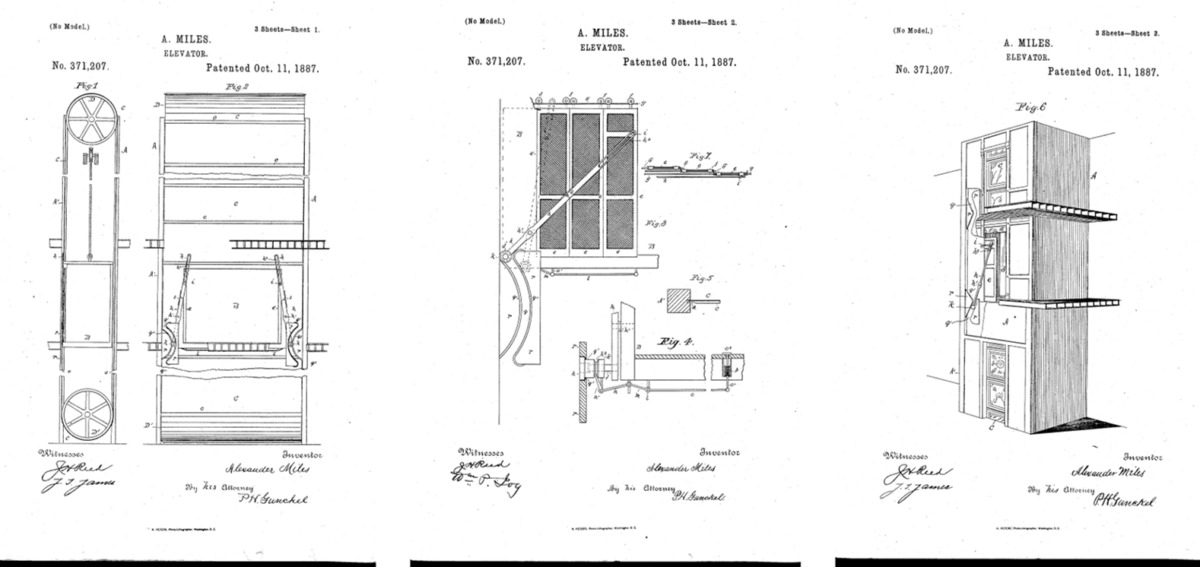
The story might have been anecdotal, but he was determined to find a solution. He quickly got to work drafting diagrams for his invention and submitting a patent.
Automatic Shaft Opening
Miles’s patent stated:
“The objects of the invention are, first, to provide mechanism operating automatically to close the shaft openings above and below the elevator-cage, and so preclude the possibility of danger by reason of such openings being left unclosed through negligence; and, second, devices operating automatically by the movement of the cage to open and close the cage doors when set by an operator to be in engagement at any desired floor.”
The device consisted of a belt and drums that would open the shaft doors only when the elevator cage stopped at the desired level. The elevator cage doors themselves then opened and closed through a series of levers and rollers.
Miles made a small fortune from his device. He his family moved to Chicago, Illinois in 1899, where he founded The United Brotherhood life insurance company, then to Seattle in 1903.
Miles passed away in 1918, and he was posthumously inducted into the National Inventors Hall of Fame in 2007.
What arts and culture topics would you like us to cover? Please email ideas or feedback to features@epochtimes.nyc