



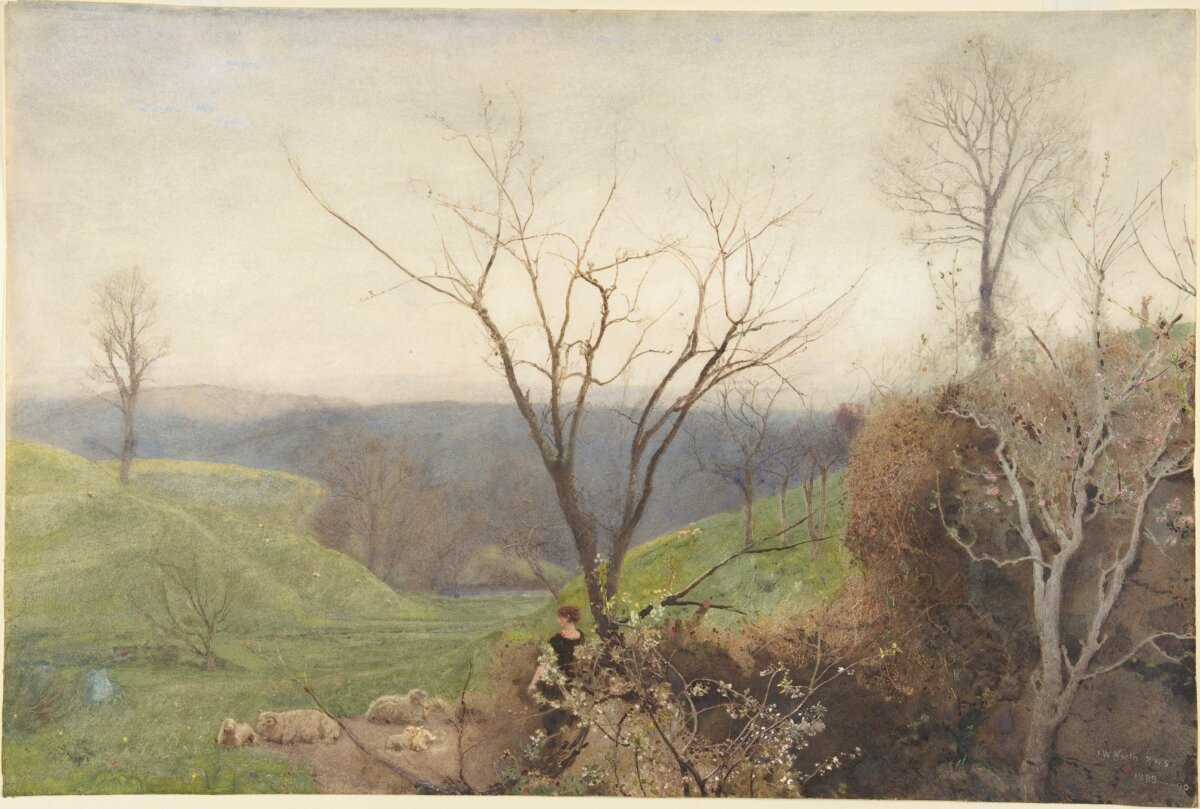
In 1864, poet Folliott Sandford Pierpoint (1835–1917) took a springtime stroll along the English countryside—an outing that ultimately produced the traditional hymn “For the Beauty of the Earth.” The gentle song praises the divine beauty of the natural world, and it began as a poem over 150 years ago before its magnetism turned it into a historic hymn.
The song was first used during communion in churches, and later became a treasured meditation for those who find spiritual rejuvenation by immersing themselves in natural landscapes.
Divinity Within All Creation
For the wonder of each hour
Of the day and of the night,
Hill and vale and tree and flower,
Sun and moon and stars of light.
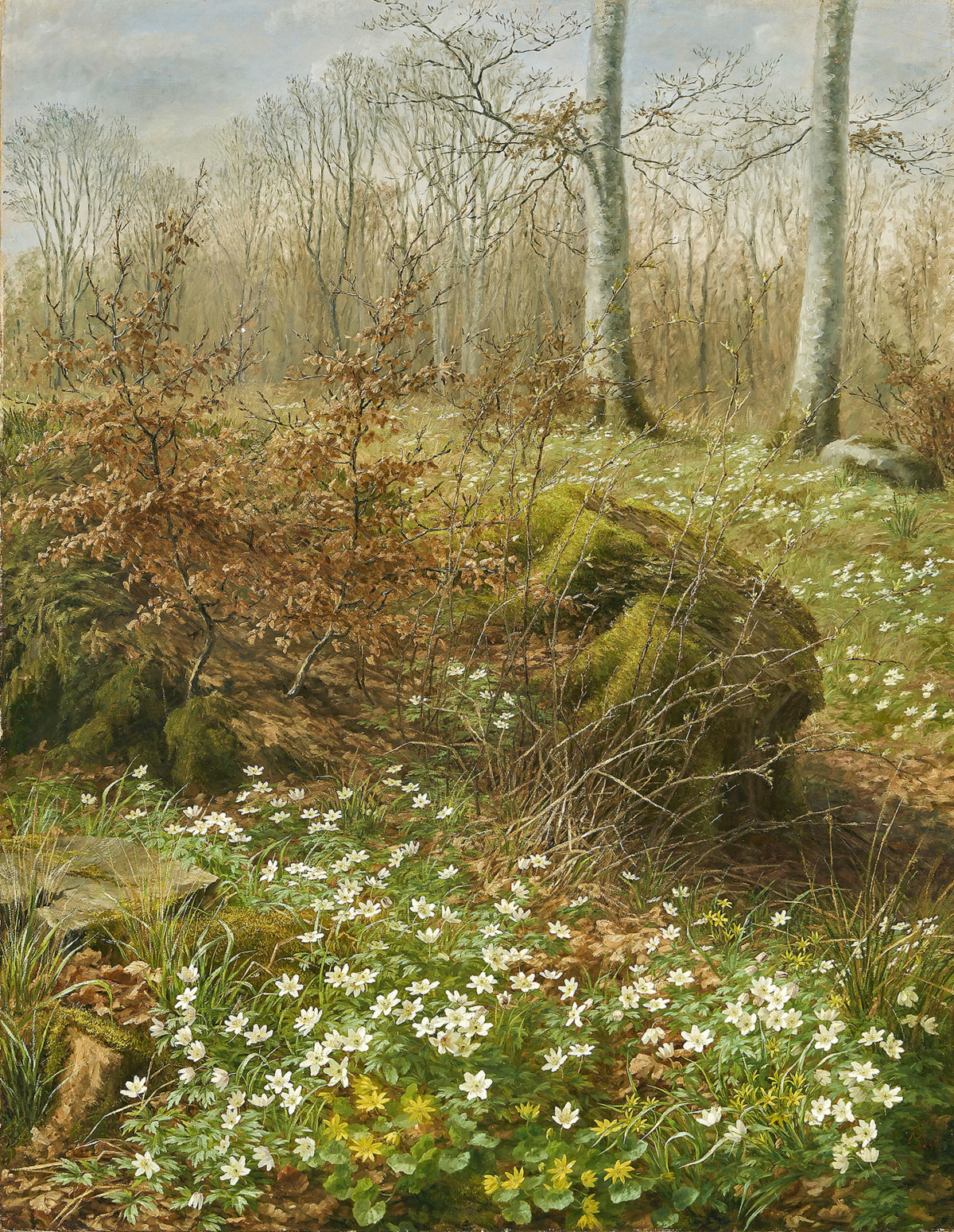
When Pierpoint traversed the quiet, sprawling terrain of Bath, England one spring morning, he came upon a hillside brimming with freshly bloomed flowers. The waking sun cast a glow on trees coming back to life. The vast blue sky enveloped the 29-year-old poet, and he became divinely inspired.
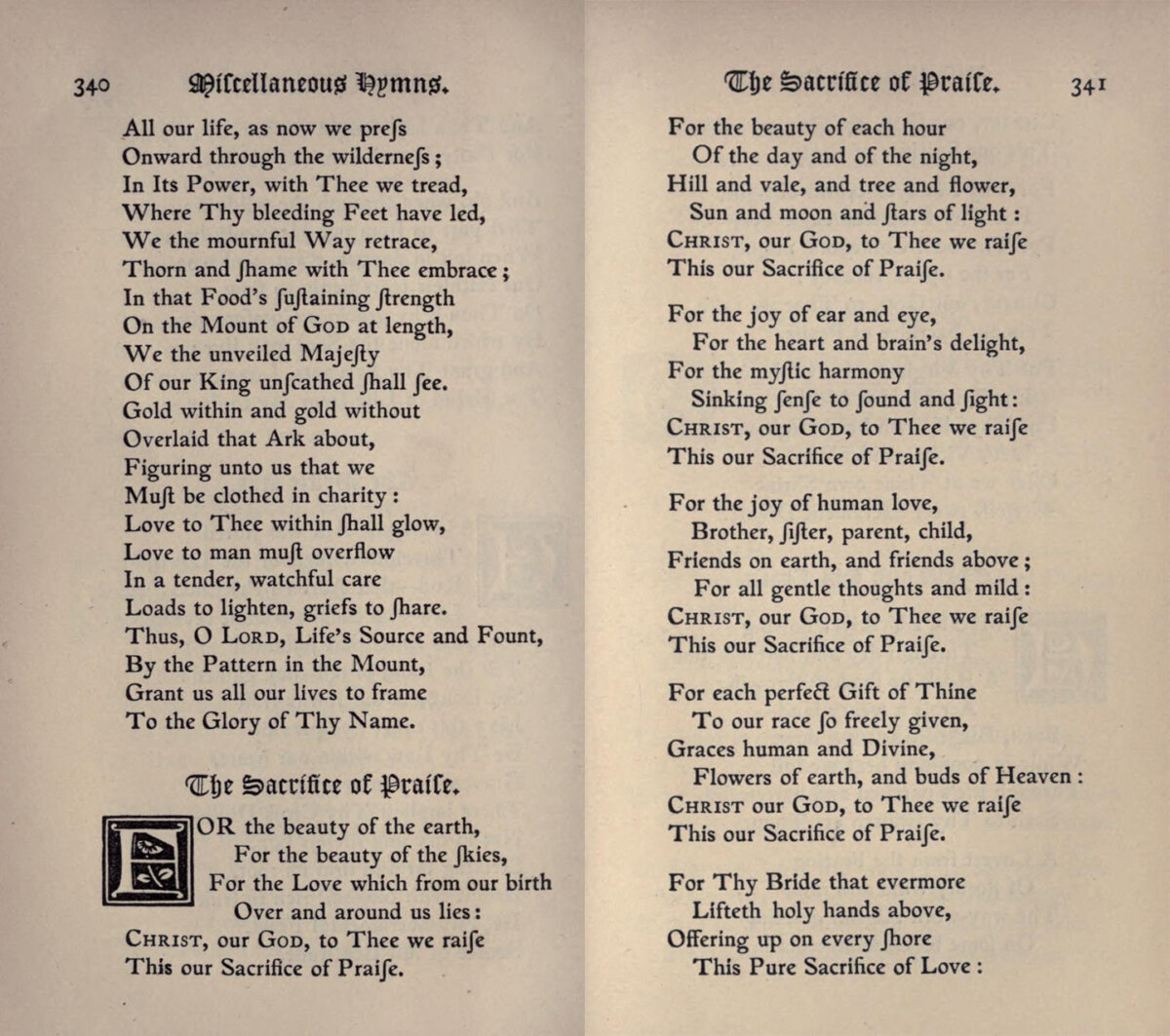
The original version of “For the Beauty of the Earth” was titled “The Sacrifice of Praise.” First published in the “Lyra Eucharistica,” the hymn-poem featured eight stanzas of poetry celebrating abundance and spiritual fulfillment found in nature, but newer variations streamlined the hymn and kept four to six essential stanzas.
Pierpoint not only shows appreciation for the beauty of the natural world through his lyrics—from the warmth of the sun to the vibrant colors of a hillside in bloom—but he also gives thanks for his fellow man and the divinity within all creation.
“It moves beyond mere appreciation of the natural world to encompass human relationships, the church, and ultimately, Christ himself,” notes HymnCharts of the all-encompassing spiritual song.
Renditions over the years have attracted a variety of worshippers and those who find spiritual connection in nature. While the song has taken on different forms, its universal message unites listeners who are lifted by it.
HymnCharts explains: “These variations mean that the version one congregation knows and loves might be quite different from what’s sung in a neighboring church. Yet somehow, these differences have only served to make the hymn more accessible to a broader range of worshippers.”
A Popular Holiday Hymn
In Pierpoint’s time, it was common for poems to be paired with melodies from other works. A hymn written by German composer Conrad Kocher almost 30 years before the stirring poem would eventually become inextricably linked to it. The 1838 Kocher hymn, “Faithful Savior, We Are Here,” was transformed in 1861 by William Henry Monk when he paired it with lyrics to a song called “As with Gladness Men of Old” by William Chatterton Dix.
Over 20 years later, in 1884, “For the Beauty of the Earth” was published alongside the melody to the Dix song for the first time in “Hymns of Praise with Tunes,” and it would go on to become its defining variation.
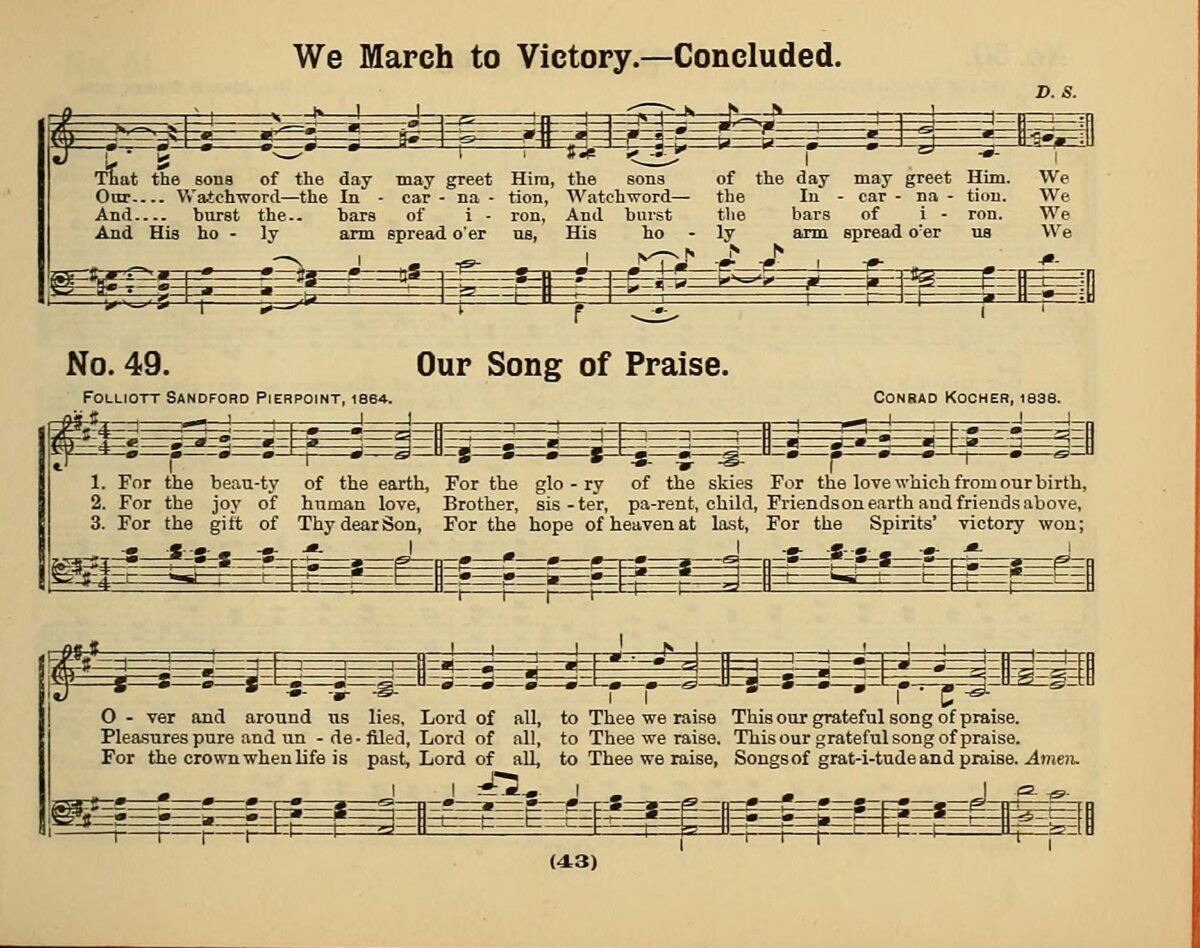
Over the years, “For the Beauty of the Earth” has been published in over 450 hymnals for various denominations. It is often sung during the Thanksgiving season due to its focus on gratitude and abundance. The song was also included in one of the most influential hymn books of all time, “Hymns Ancient and Modern,” beginning in the early part of the 20th century.
Over time the joyous tune became a part of Western culture, appearing in the 1994 film adaptation of the classic novel, “Little Women,” by Louisa May Alcott. The song plays during a scene when characters Meg March and John Brooke tie the knot.
Born From Spiritual Reflection
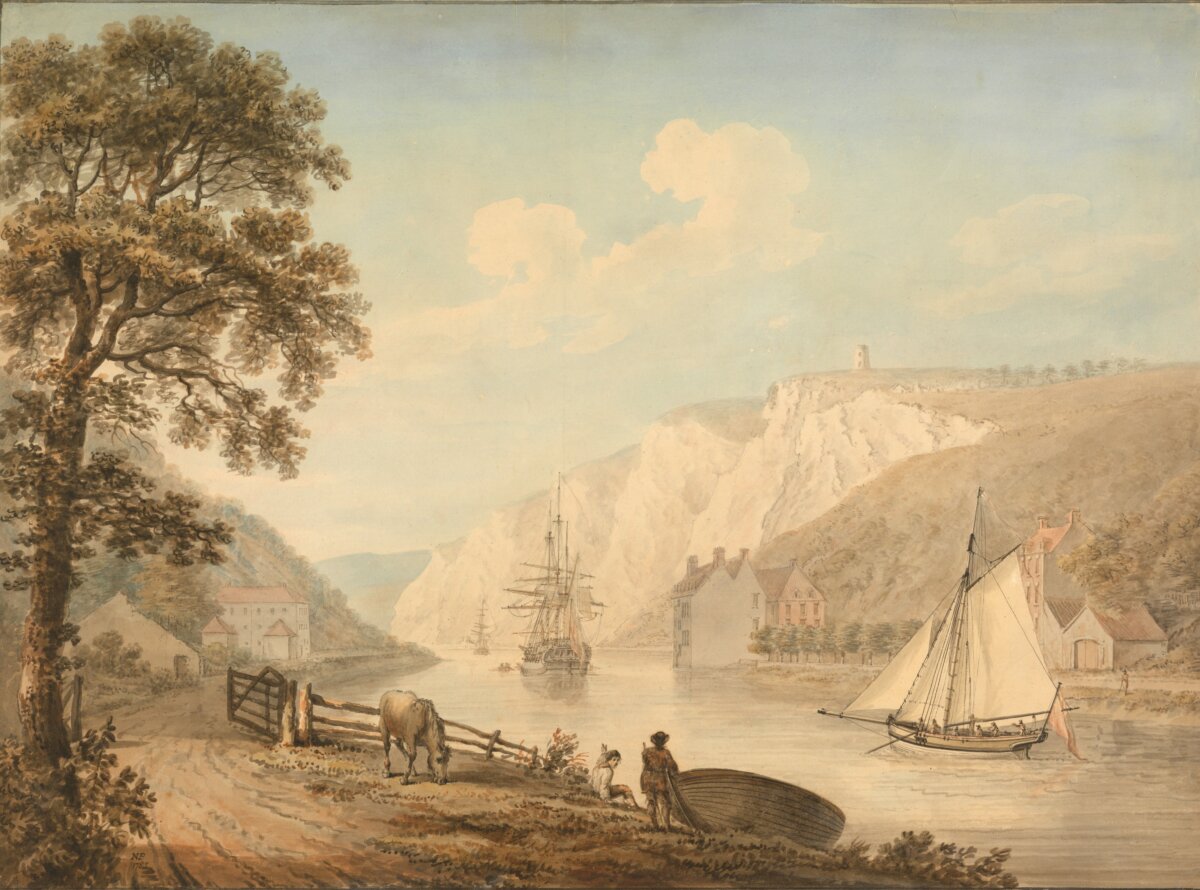
As Pierpoint meandered through the English countryside that day and made his way “around the winding Avon River,” notes online music database Hymnary, he took in the “peaceful beauty surrounding him” and was “inspired to reflect on God’s gifts to his people in creation and in the church.”
For the beauty of the earth,
For the glory of the skies,
For the love which from our birth
Over and around us lies.
Pierpoint’s inspiration in the mid-1800s continues to inspire individuals in praise around the world today.
What arts and culture topics would you like us to cover? Please email ideas or feedback to features@epochtimes.nyc
