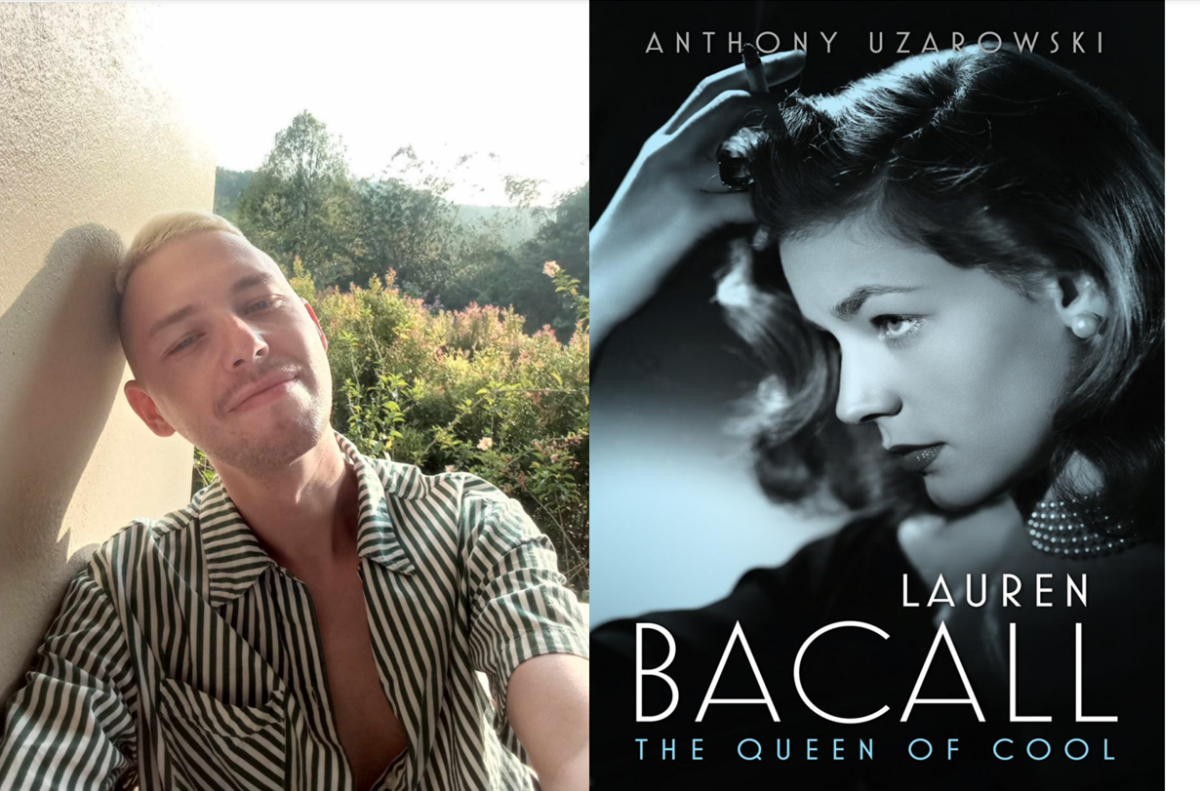
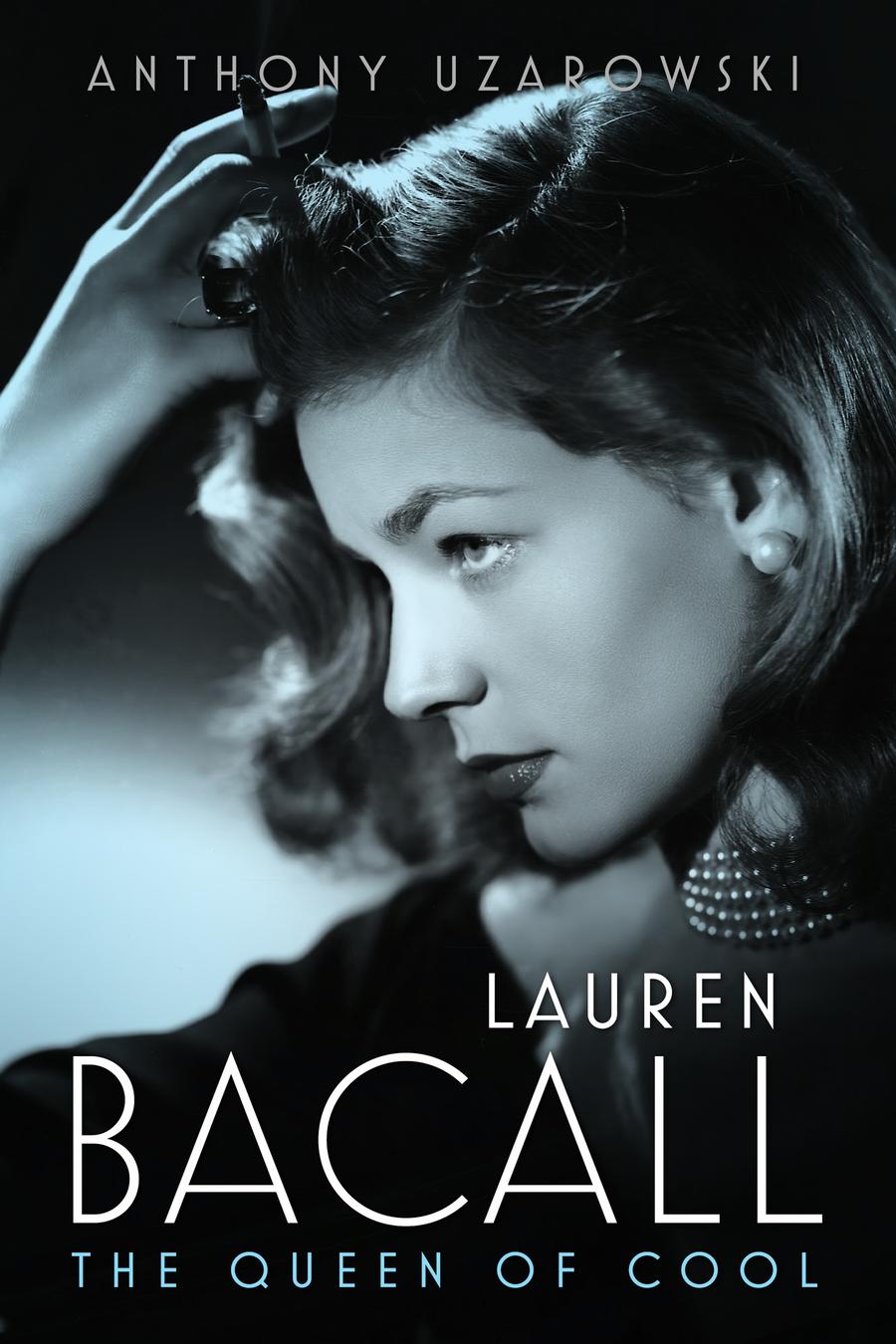
When Lauren Bacall made her film debut in the 1944 drama “To Have and Have Not,” she created a sensation with her sultry beauty and insouciant persona. Anthony Uzarowski’s new biography on Bacall, “Lauren Bacall: The Queen of Cool,” traces her meteoric rise to stardom and the remarkable career trajectory that followed.
Born Betty Joan Persky in 1924, in the Bronx, New York, her parents divorced when she was 8. A star-struck teenager, she was enrolled in Manhattan’s American Academy of Dramatic Arts; she took her mother’s maiden name of Bacal, adding the extra “L” because people constantly mispronounced it.
She snagged bit parts in a pair of flop shows, but had more luck at modeling. At 17, she appeared in photo shoots for Harper’s Bazaar that caught the attention of several Hollywood power players. Bacall signed a contract with ace director Howard Hawks, who arranged for her to star in the Warner Bros. release of “To Have and Have Not,” inspired by an Ernest Hemingway story.
A New Star
Uzarowski details how the nervous 19-year-old (now renamed Lauren Bacall) required intense rehearsals to capture her character’s hard-boiled confidence. Helping Bacall’s debut was her leading man, Humphrey Bogart, and their reel-life romance quickly became a real-life relationship. Bogart, who was 25 years Bacall’s senior, divorced his third wife (actress Mayo Methot) to marry Bacall.
Bacall’s screen debut was a critical and commercial smash. Hawks then cast her and Bogart in “The Big Sleep,” where they enacted another sizzling on-screen pairing. The couple married in May 1945 during the period between the release of their two films.
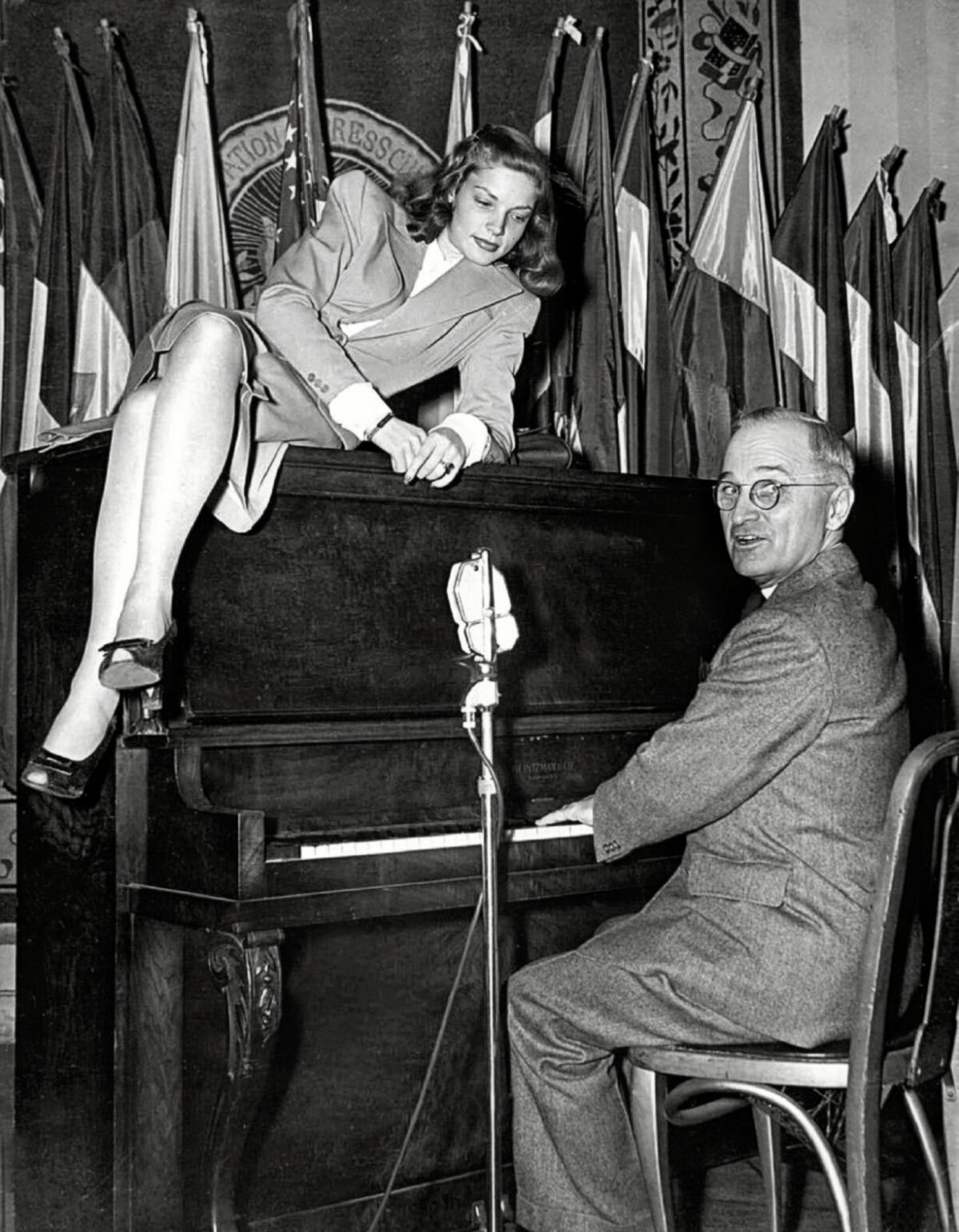
But Bacall quickly developed problems. She was badly miscast as an English aristocrat in “Confidential Agent” (1945) and received cruel reviews. Because of the film’s failure, Bacall became mistrustful of the projects that the studio offered and rejected most of them. As a result, her career momentum briefly stalled.
After “The Big Sleep” was released in 1946, she co-starred with Bogart in “Dark Passage” (1947) and “Key Largo” (1948). Bacall finished her Warner Bros. contract in “Young Man With a Horn” (1950) opposite Kirk Douglas and “Bright Leaf” (1950) with Gary Cooper.
Her performances in these later films were fine, but never reached the excitement level of “To Have and Have Not.” She became better known as Bogart’s wife rather than a star in her own right.
Career Reinventions
Uzarowski charts Bacall’s career revitalization in the 1950s, when she displayed a flair for light comedy in “How to Marry a Millionaire” (1953) and “Designing Woman” (1957). She gave a sophisticated edge to pulpy melodramas including “The Cobweb” (1955) and “Written on the Wind” (1956).
Bacall teamed once more with Bogart in a live television production of “The Petrified Forest” in 1955. Oddly, the book neglects to mention “Bold Venture,” a syndicated radio drama series the couple starred in from 1951 to 1952.
After Bogart’s death from esophageal cancer in January 1957, Bacall’s career started to slow. “The Gift of Love” (1958) and “North West Frontier” (1959) were her last starring film roles before she relocated to New York City to pursue the Broadway stardom that eluded her earlier.
Bacall’s first Broadway show, the comedy “Goodbye, Charlie” (1959), closed after three months. She married actor Jason Robards, but his volatile personality and heavy drinking made their union difficult and they divorced in 1969.
Bacall finally secured Broadway success with the farce “Cactus Flower” (1965). She followed this with the musical “Applause” (1970), based on the film classic “All About Eve.” Bacall won a Tony Award for “Applause” and won a second Tony for another musical, “Woman of the Year” (1981).
Late Career Success
For the latter part of her career, Bacall’s films primarily consisted of scene-stealing supporting parts in all-star productions, ranging from Sidney Lumet’s “Murder on the Orient Express” (1974) and Lars von Trier’s “Dogville” (2003).
The misguided thriller “The Fan” (1981) was notable as her only starring role during this period. A series of campy TV commercials for High Point coffee showed her self-deprecating humor in spoofing her screen persona.
Bacall scored her most substantial late-career role as the difficult mother in “The Mirror Has Two Faces” (1996), starring opposite director Barbra Streisand. She earned an Academy Award nomination as Best Supporting Actress, which she lost to Juliette Binoche for “The English Patient.” The French actress stated Bacall deserved the award during her acceptance speech, and Academy eventually celebrated her with an honorary Oscar in 2009.
Uzarowski diplomatically touches on Bacall’s off-screen personality, with anecdotes painting her as both warm and rude, depending on who was telling the tale. Bacall was cognizant of the unkind gossip; she told Merv Griffin in a 1987 interview, “I don’t agree with the notion that strong women are bitches. I mean, I know I’m not a bitch. I know that Katie Hepburn is not a bitch. I know that in life, particularly if you’re a woman alone, you develop a kind of veneer that protects you.”
Fans of Golden Age Hollywood will enjoy Uzarowski’s wonderful tribute to an indefatigable spirit whose perseverance and longevity created a memorable canon of memorable performances.
‘Lauren Bacall: The Queen of Cool’
By Anthony Uzarowski
University Press of Mississippi: Jan. 5, 2026
Hardcover, 192 pages
What arts and culture topics would you like us to cover? Please email ideas or feedback to features@epochtimes.nyc