



SKOKIE, Ill.—When director and choreographer Jerome Robbins first came up with the idea of modernizing Shakespeare’s “Romeo and Juliet” for a stage musical, he envisioned a conflict between Jews and Catholics on Manhattan’s Lower East Side. He enlisted Arthur Laurents to write the book, Leonard Bernstein to compose the music, and Stephen Sondheim to write the lyrics. The project was called off, though, when that creative team realized that the plot felt too similar to other plays like “Abie’s Irish Rose.”
From Concept to Contemporary Resonance
The venture lay dormant until 1955, when those creative talents came upon a newspaper headline about Hispanic and white teenage gang violence in Los Angeles and Spanish Harlem. They then changed the rival groups to white vs. Puerto Rican, shifted the setting to the streets of New York, and renamed the show “West Side Story.”
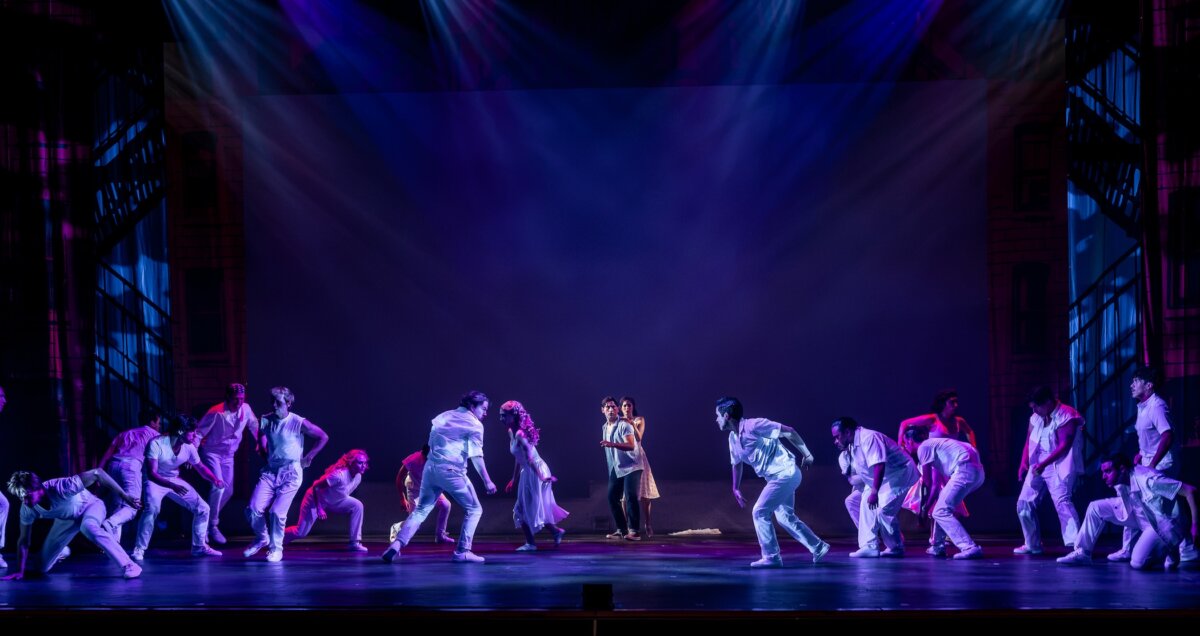
Now the show, which premiered on Broadway in 1957, is a dazzling and faithful revival at Music Theater Works in Skokie, Illinois. It begins with an introductory overture that drops away, leaving the stage in a quiet vacuum as we hear the sound of synchronized finger-snapping Jets who strut their stuff on an empty city street to establish their claim for what they consider their turf.
Like Shakespeare’s “Romeo and Juliet,” star-crossed lovers are caught in the middle of a blood feud between two opposing groups. The difference, though, is that in “Romeo and Juliet,” Shakespeare never explains why the families are fighting. In his play, it is simply called an “ancient grudge.” By leaving the original hatred ambiguous, the conflict becomes a metaphor for any senseless struggle, leaving the audience unaware of who is divided and why, so they can’t choose the right side.
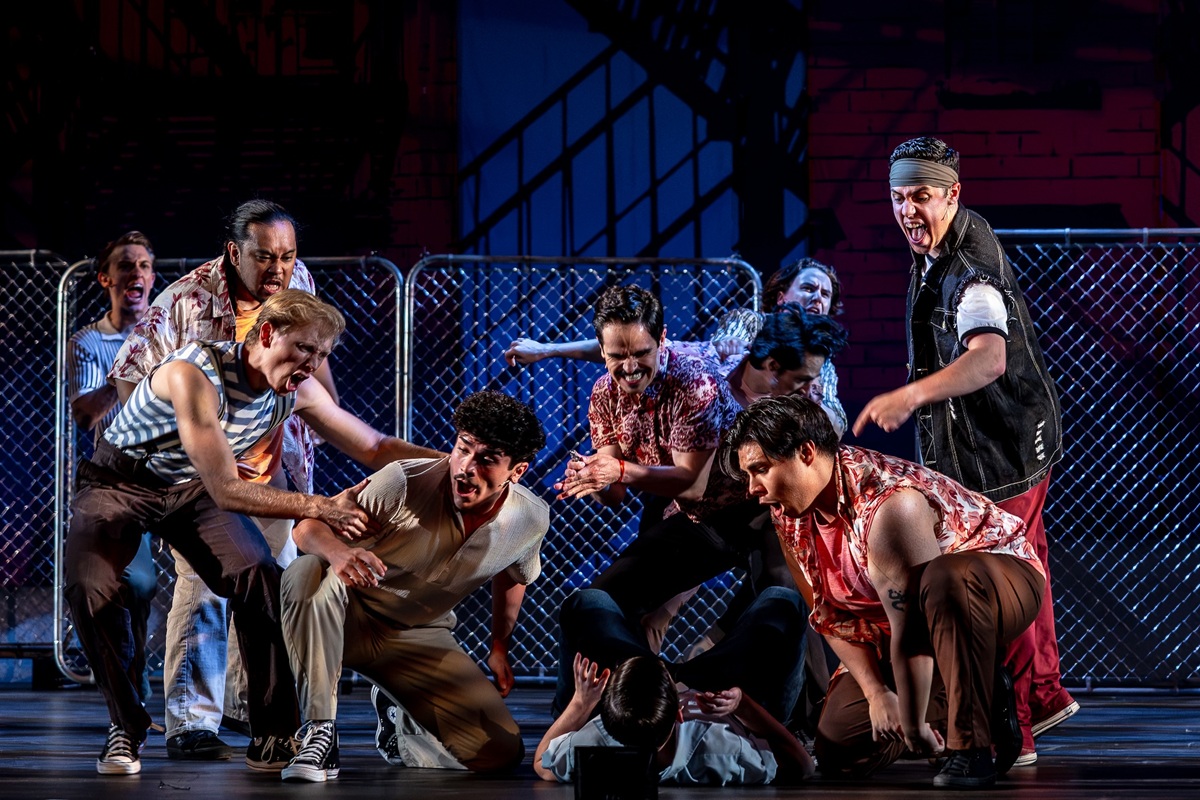
In “West Side Story,” the romantic tragedy’s message explores the danger that differences in backgrounds and language can create. When the show opened more than six decades ago, the brutal clash between the gangs was shocking. It may not be as startling to our contemporary age, when violence and ongoing hostility is documented in news headlines and available on our mobile phones with just a swipe of the finger.
Yet Sasha Gerritson’s direction captures the energy that electrifies the show, and Bob Knuth’s set of multi-level scaffolding creates the feel of lonely city streets. The choreography by Clayton Cross follows Robbins’s distinctive dance style, and the 24-member orchestra delivers Bernstein’s rich score, using American jazz for the Jets and Latin rhythms for the Sharks to perfection.
Stellar Performances and High-Powered Choreography
The show’s evocative songbook has become part of America’s musical landscape. “Tonight” is a romantic anthem that defines the tragic core of the lovers’ story. The song “America,” in which Anita praises America’s economic freedom while Rosalia laments prejudice, is a witty Latin dance number that well captures the immigrant’s duality.
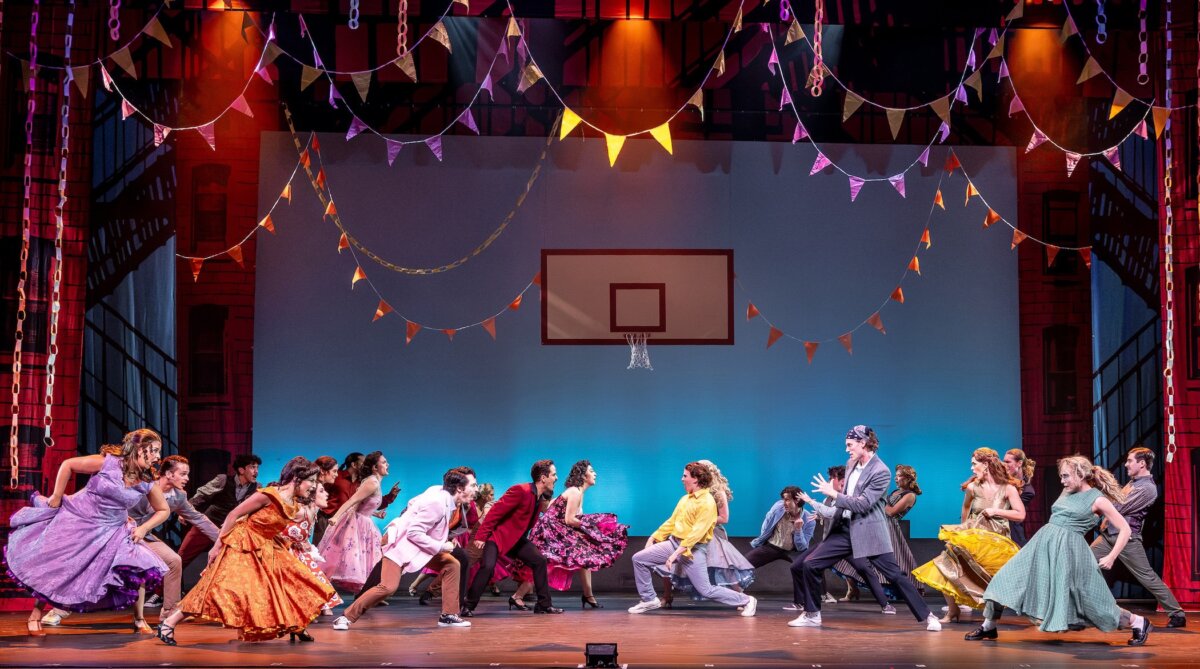
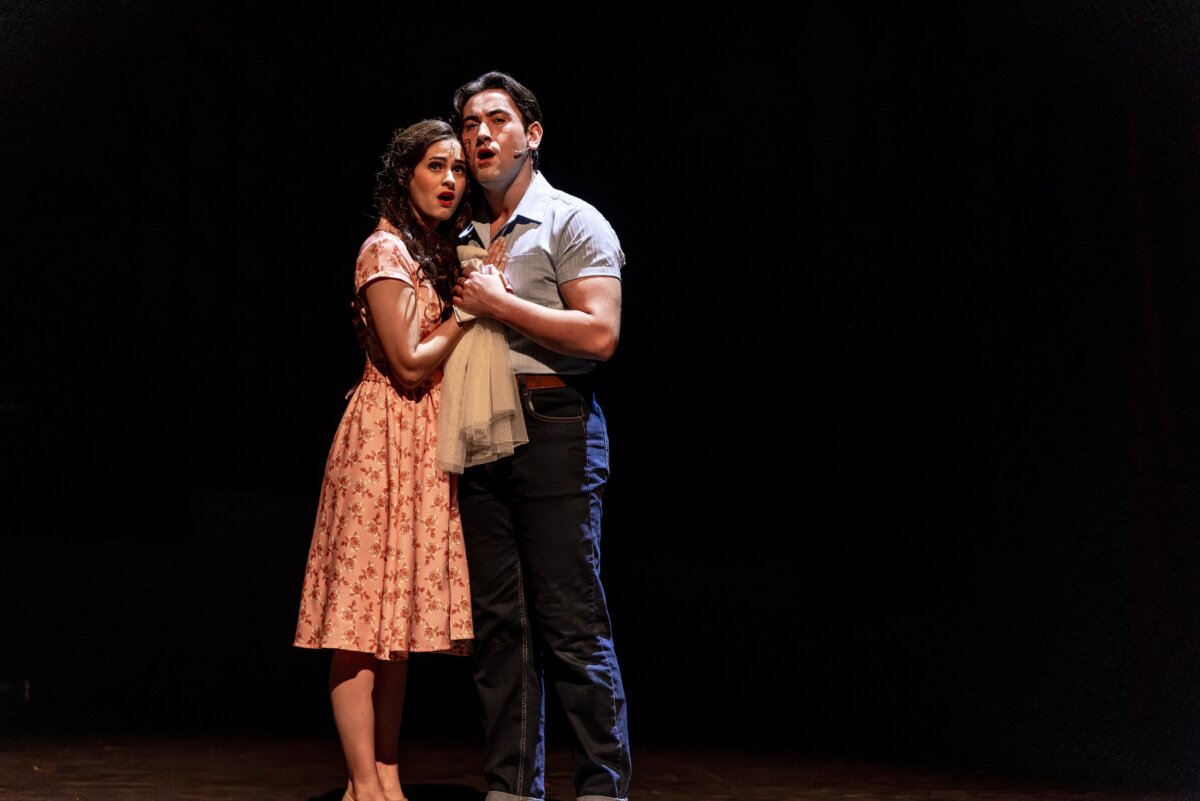
The challenges in this show are exceedingly demanding for the ensemble and actors. Performers must belt out complex vocal harmonies and dance up a storm with aggressive energy and athleticism. Music Theater Works has a terrific cast that meets all the requirements, with standout performances by Luke Nowakowski, captivating as Tony, especially when he sings “Maria,” and again when he is joined by Isabella Ruano as Maria.
There is a palpable chemistry between the duo that rivets our attention as they sing about a place for them in “Somewhere.” In addition, other standout performances include Connor Ripperger as a cool Riff, Pauleth Jauregui as a feisty Anita, and Emmanuel Ramirez as a machismo Bernardo.
This isn’t a show that belongs to a particular time. It comes across as contemporary because of its depiction of the violence that continues to affect people of different backgrounds today.
“West Side Story” is an unforgettable show. It not only has memorable songs but also revolutionized musical theater by using dance as a core narrative tool. This romantic American masterpiece is not to be missed.
“West Side Story”
George Van Dusen Theatre
North Shore Center for the Performing Arts
9501 Skokie Blvd., Skokie, Ill.
Tickets: 847-673-6300 or visit MusicTheaterWorks.com
Runs: Two hours, 30 minutes (one intermission)
Closes: Aug. 30, 2026
What arts and culture topics would you like us to cover? Please email ideas or feedback to features@epochtimes.nyc
