




The tragedy that unfolded on Sept. 11, 2001 shocked the world; hundreds of ordinary Americans’ lives were taken and their families affected.
Yet the disaster revealed a tenacity of human spirit: Hidden heroism emerged, and the public joined hands in a show of unity. Thirteen years later, on May 15, 2014, at the dedication of the 9/11 Memorial Museum in Lower Manhattan, the New York Philharmonic performed Aaron Copland’s “Fanfare for the Common Man”—a tribute written to ordinary people facing times of trouble.
Copland’s Fanfare
Aaron Copland’s fanfare was commissioned by Eugene Goossens, conductor of the Cincinnati Symphony. After the United States entered World War II, Goossens wished to make “stirring and significant contributions to the war effort” by asking American composers to write patriotic fanfares. Eventually receiving 18 short pieces, each were performed in a concert during the 1942–1943 Cincinnati Symphony season. The most popular among them was Copland’s “Fanfare for the Common Man.”
Copland’s piece was intended to capture the soul of American values. He considered titles such as “Fanfare for the Spirit of Democracy” and “Fanfare for Four Freedoms” (freedom of speech and religion, and freedom from want and fear), before finally settling on “Fanfare for the Common Man.”
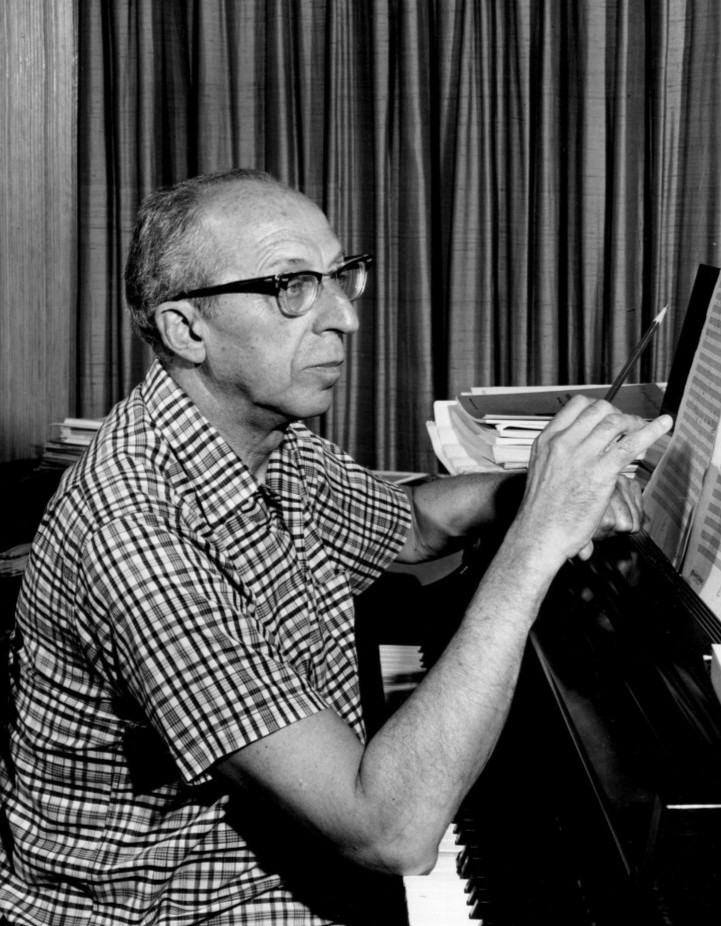 Aaron Copland in 1962. (Public Domain)
The phrase “common man” came from a speech by Franklin D. Roosevelt’s vice-president, Henry A. Wallace. Wallace’s speech illustrated a broader wartime vision of democracy versus fascism. He announced the emergence of an educated, politically participating individual who has the ability to shape his own future.
After hearing the vice president on the radio, Copland drew inspiration from the rhetoric and decided on a homage to the people unintentionally absorbed into the war effort.
From its premiere on March 12, 1943, the piece’s message and melodies grew in recognition, stirring the hearts of people. The orchestration is remarkably simple and only asks for brass and percussion instruments. Yet from the sparse instrumentation, a powerful pathos emerges that inspires courage and hope.
Powerful Instruments, Powerful Meaning
Today’s recording is with the New York Philharmonic conducted by James Levine as part of a concert program. (Listen)
The fanfare begins with low beats from the percussion. They create an uncertain backdrop, a feeling of oppressive weight. Then three trumpets enter, playing in unison (0:33); the brilliant timbre of the higher brass begins a soaring melody. One by one, various other brass instruments join in—first French horns (1:03), then trombones and tubas (2:00)—supporting and growing the sound into a powerful brass chorus. It is the rallying of sound, the unity of voices.
Twenty-five years after the 9/11 attacks, the Fanfare for the Common Man serves as a hymn to the sacrifices and bravery of the people unintentionally caught amidst conflict and war. It reminds us of both the solemnity of the occasion, the disaster, as well as the greatness of character that lies hidden in the “common” person—a strength and grit that emerges when faced with times of trouble and need.
What arts and culture topics would you like us to cover? Please email ideas or feedback to features@epochtimes.nyc.
