



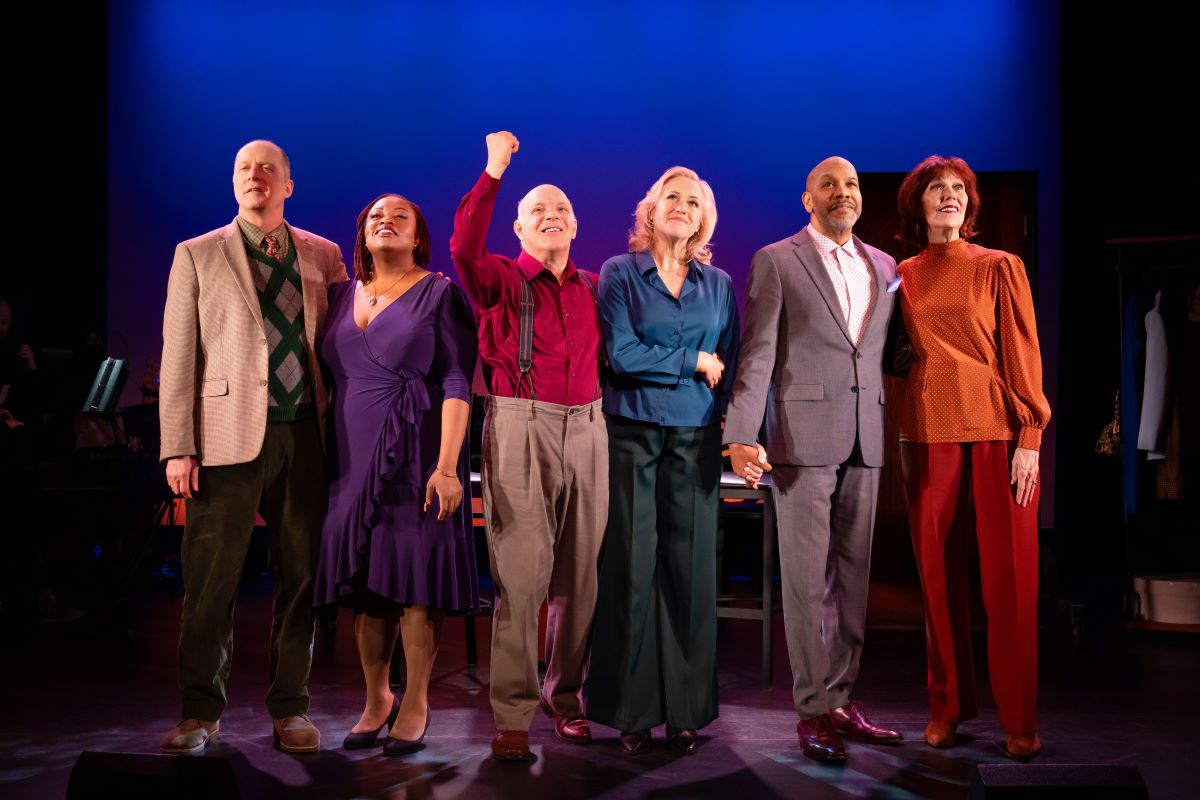
NEW YORK—Now in their seventh decade of collaboration, lyricist Richard Maltby Jr. and composer David Shire have unveiled their latest effort, the off-Broadway revue “About Time,” The final part of a trilogy which began in 1976 with “Starting Here, Starting Now” and continued with “Closer Than Ever” in 1989.
Directed by Maltby and featuring a very capable cast of six (Allyson Kaye Daniel, Darius de Haas, Daniel Jenkins, Eddie Korbich, Sally Wilfert, Lynne Wintersteller), “About Time” offers an entertaining and thought-provoking collection of songs and skits on people who have reached the third act of life. The company is aided in their efforts by Musical Director Deniz Cordell and Assistant Musical Director Annie Pasqua on a pair of Steinway pianos, with Scott Chaurette providing additional assistance on bass.
As the show begins, a veteran theatrical songwriter (Korbich) struggles with a creative block; he wonders if the life-affirming songs for which he is known can resonate in today. Determined to write something deeply profound, his efforts are interrupted by the rest of the company. With their guidance, he begins instead to craft a musical revue about the concept of time as it applies to those of a certain age. The question then becomes: What exactly does this idea entail?

One of the key elements of the show is its ability to seamlessly mix humor with reality. When a hard-charging executive is about to leave for an important meeting with a client, he can’t find his car keys; in “Free,” three couples happily plan the next stage of their lives now that their children have left the nest, only to have the children announce they want to move back home for financial reasons. This number also takes a gentle swipe at current economic conditions; today earning enough to live on your own is not as easy as it was even a generation earlier. Other sequences that depict changing times include a man asking his kindergarten-aged grandson for help saving information to the cloud.
Nowhere does this concept of generational difference come more into focus than in “What Do I Tell The Children?” where de Hass, in one of the standout performances of the show, wonders if the advice he received from his grandfather will resonate for his own children.
The premise of having much to offer is also explored in the quietly touching “(All I Want to Do Is Go) Dancing” where Wilfert, backed by Daniel and Wintersteller, recounts her younger days on the dance floor. Nostalgia also plays a role in “Little Susan Lawrence” where, thanks to an old photo album, a woman (Wilfret) finds herself remembering her first crush.
Of course, there are times when sometimes the past should simply remain in the past as when a man runs into an old flame who seems to have no memory of their time together or when a wife, mother, and apparent pillar of her community is haunted by a long-ago tryst she cannot forget.
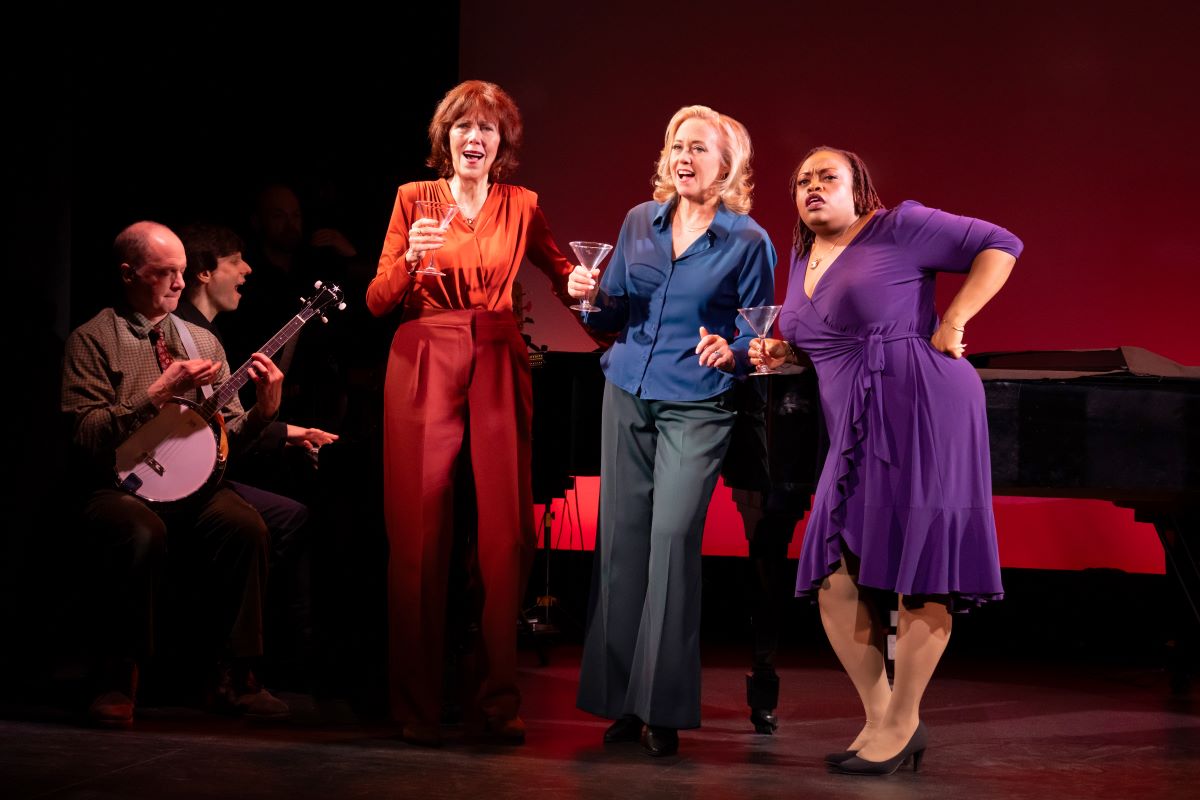
One point the show keeps returning to is the idea that just because someone gets older doesn’t mean they’re ready for the trash heap. Daniel, Wilfred, and Wintersteller deliciously prove this point in “Over-Ripe Fruit,” as they seductively vamp their way across the stage showing exactly what older women have to offer.
A different factor of ageism is explored in “Manhattan Skyline,” which tells the story of four creative people who became stars in their respective fields and who now face the challenge of remaining relevant as they contend with dozens of young hopefuls looking for their own chance to shine.
“About Time” demonstrates what life can offer and the bits of wisdom that can be passed on to those who will someday face their own third acts. Thanks to the efforts of all involved and led by a musical theater team in their own third act yet still at the top of their game, the entire experience makes for some delightful entertainment.
‘About Time’
Marjorie S. Deane Little Theater
10 W. 64th St., New York
Tickets: 212-912-2618 or AboutTimeMusical.com
Running Time: 2 hours, 15 minutes (one intermission)
Closes: April 5, 2026
What arts and culture topics would you like us to cover? Please email ideas or feedback to features@epochtimes.nyc
