



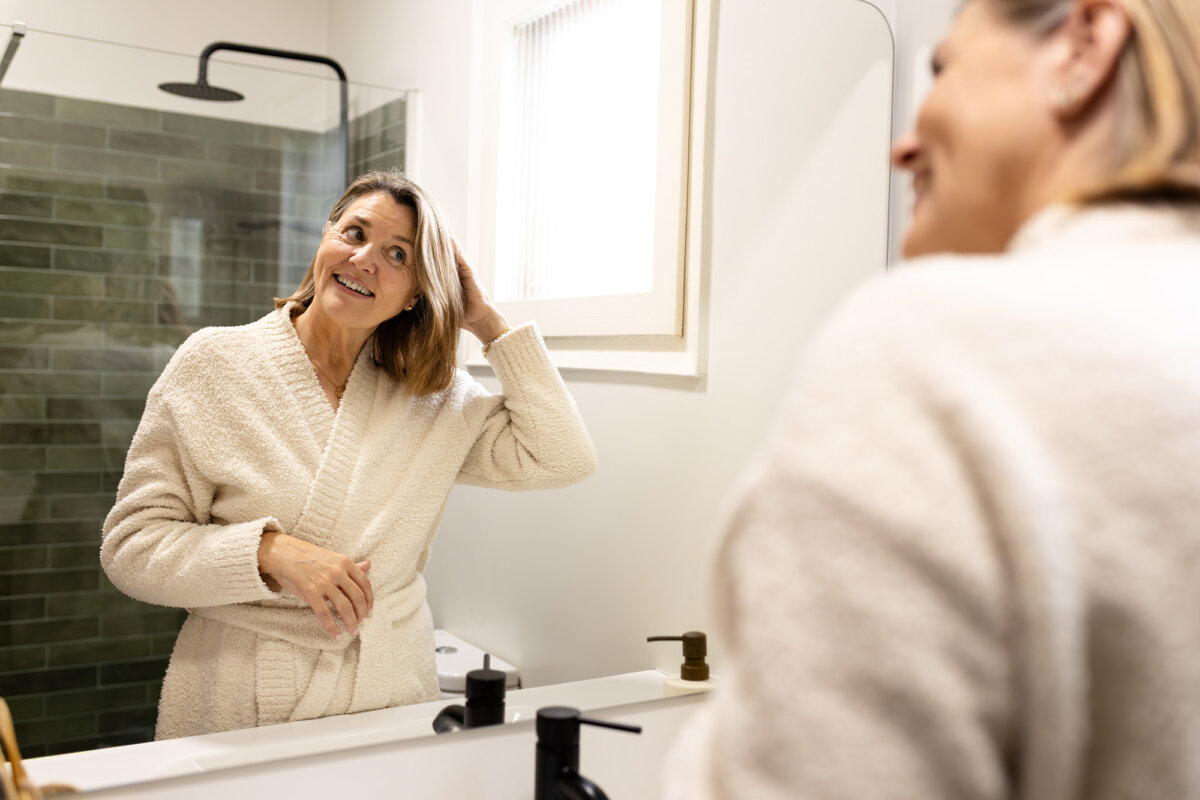
Bathrooms bookend the beginning and end of each day. They are a make-or-break space when it comes to aging in place, alone or with family. It’s never too early to start planning—particularly now, as properties adapted for senior living can increase property value.
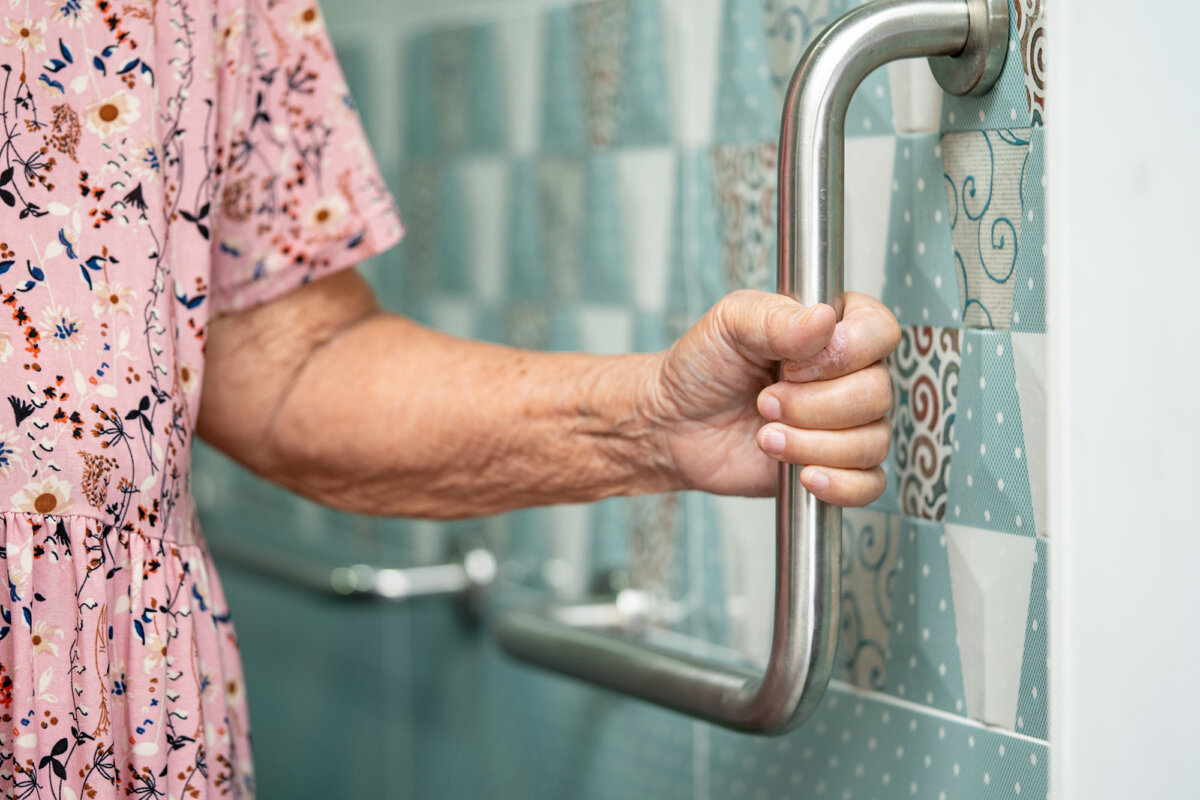
One of the most useful additions during the next bathroom renovation is to add blocking behind the walls to mount grab bars—not only in the shower and tub areas, but also by the toilet, door, sink, and any long walls where a handhold may come in handy. For a temporary aid, install suction cup grab bars on the nonporous surfaces of the shower or bathtub. Use a stud finder to anchor grab bars to the studs behind the drywall. Choose decorative grab bars to add an aesthetic touch, as well as safety.
Essential Access
Make sure that any bathroom doorknob can be unlocked from the outside in case of emergency. A lever handle is best for aging and arthritic hands. If a whole new lockset isn’t in the budget, there are ergonomic knob covers that add handy “wings” to a round doorknob, slip-over plastic levers, and other inexpensive, low-impact adaptors that make opening doors easier.
Doors that open outward are more accessible but may not be practical. Pocket doors are another option. Widening a bathroom doorway to a 32-inch minimum—the Americans with Disabilities Act recommends 36 inches—allows for easy wheelchair and walker use. If you don’t want to modify the door, consider acquiring a narrow, tight turning radius wheelchair designed for smaller doorways.
Other Room Enhancements
High-contrast colors are easier to see for those with diminishing eyesight. This can look like navy blue paint against a white shower edge, or a light countertop against a dark bathroom vanity. It can also be as simple as adding a burgundy slip-resistant mat against a light-colored tub.
Take the opportunity when renovating to place electrical outlets higher, or use an electrical outlet extender so seniors don’t need to bend as far. Consider adding a bathroom panic button or a waterproof cordless phone, and create a dedicated waterproof space to keep a mobile phone near at hand.
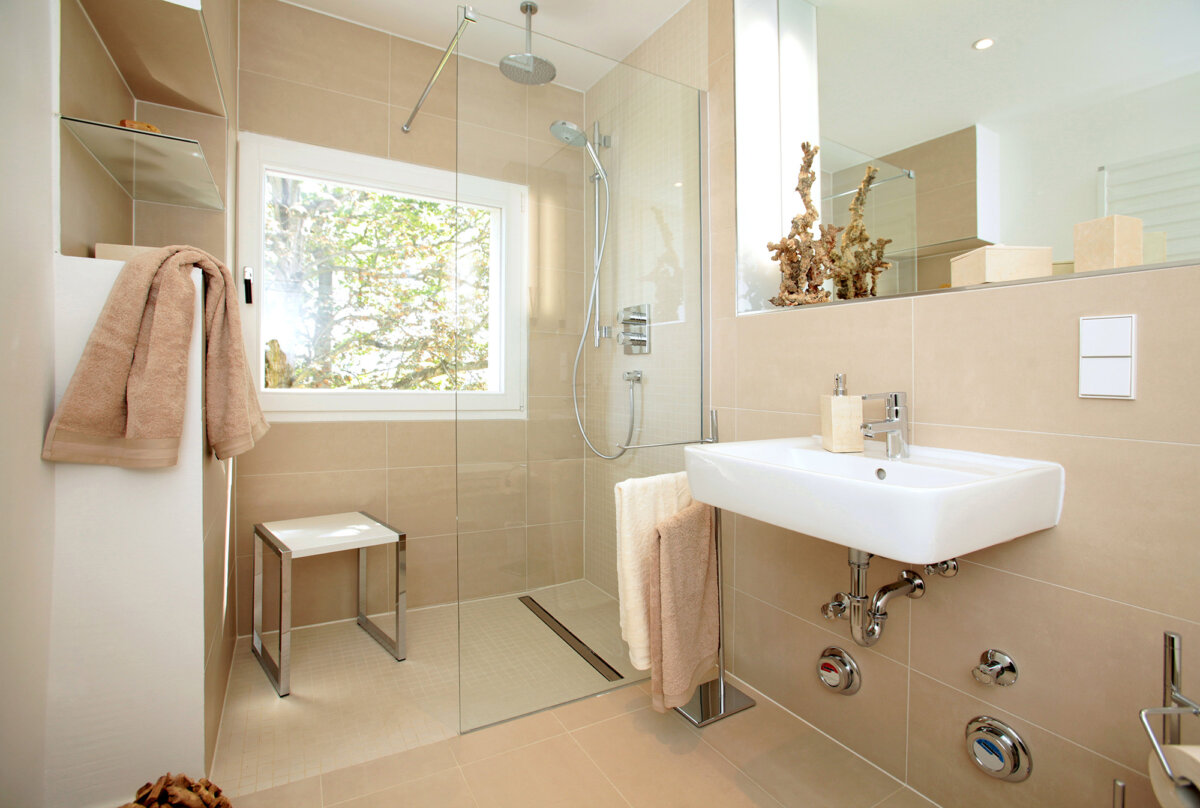
If possible, remodel so there’s a full bath on the main level of the home. Otherwise, you may want to add a chair lift or elevator for easier multi-level access. Make sure that any new bathroom has a minimum maneuvering space that is 60 inches wide by 56 inches deep, plus clearance space for fixtures.
Counters and Cabinets
Opt for rounded corners on countertops, cabinets, and bathroom furniture when possible, or cover with edge guards and bumpers. Your renovations should reflect the resident’s needs and suit the home. For example, comfort-height 36-inch vanities reduce the need to bend, while wall-mounted sinks work well in small spaces. Wheelchair-accessible sinks are 30 inches to 34 inches tall with 27 inches of knee room. Use soft pipe covers to protect your knees and legs.
Speaking of cabinets, toe-kick step stools make overhead cabinets easier to reach. Cabinet drawers are more convenient than doors, and drawer dividers or pull-out shelves keep things neat and accessible. Change out hardware for easy-grip handles or pulls.
A tilting mirror accommodates both standing and seated angles. Placing a medicine cabinet at a lower height makes it easier to access when sitting down. If you want more storage space, you can add waist-height corner or other open shelves around the room.
Change out faucet knobs for levers, or opt for a touch/motion-activated or a pedal-controlled style. Touchless soap dispensers, which connect to a gallon refill under the sink via a hose extension, are great for arthritic hands. Large counters reduce clutter and allow space for more supplies. For a touch of luxury, the budget could be stretched to accommodate an easy-access heated towel rack.
Bathing Beauty
A handheld shower sprayer, with an extra-long sprayer extension hose (up to 120 inches), allows for more control. Again, swap faucet knobs for levers or a single-handle anti-scald shower fixture. Set the water heater to 120 degrees Fahrenheit for safety. You can also relocate the shower controls close to the entry point so they can be turned on from outside the shower or tub. Replace shower curtains with glass doors with a permanent easy-clean coating.
Fold-down grab bars and shower seats enhance a small space. If you prefer a traditional shower chair or a sliding transfer chair, you might be able to find one at a thrift store. Built-in niches, wall-mounted dispensers, and suction cup accessory holders keep necessities at hand.
Spa Days
The gold standard is a curbless shower or walk-in wet room in which a shower and tub share a space, with a 36-inch door and 60-inch turning radius. Simpler alternatives include installing a walk-in tub or threshold ramps to glide over a walk-in shower curb. If the shower or bathtub doesn’t already have anti-skid flooring or an anti-slip coating, add a non-skid mat with plenty of suction cups or some non-skid adhesive strips.
Add a light over the shower or a sun tube for enhanced safety.
_____________________
But Wait! There’s More …
A heated bathroom floor provides comfort. Although pricey, costs can be brought down significantly by experienced DIYers.
Underfoot
Choose waterproof, non-slip vinyl flooring, tile, or natural stone with a wet dynamic coefficient of friction of 0.42. Or, add nonslip strips or clear coatings in areas where water collects.
Toilet Time
Don’t like the look of a raised toilet seat? Adding an integrated toilet riser at the base is a more sophisticated fix. Place a toilet paper dispenser that can be changed with one hand within easy reach. Meanwhile, a remote-control bidet with an air dryer keeps things even more sanitary.
Layers of Lighting
The type of lighting comes down to personal preference. Task lighting aids with grooming. Ambient lighting illuminates the room evenly. Accent lighting highlights architectural features. Dimmers add comfort, motion-sensing switches provide safety, and battery-operated puck lights can be placed just about anywhere.
