



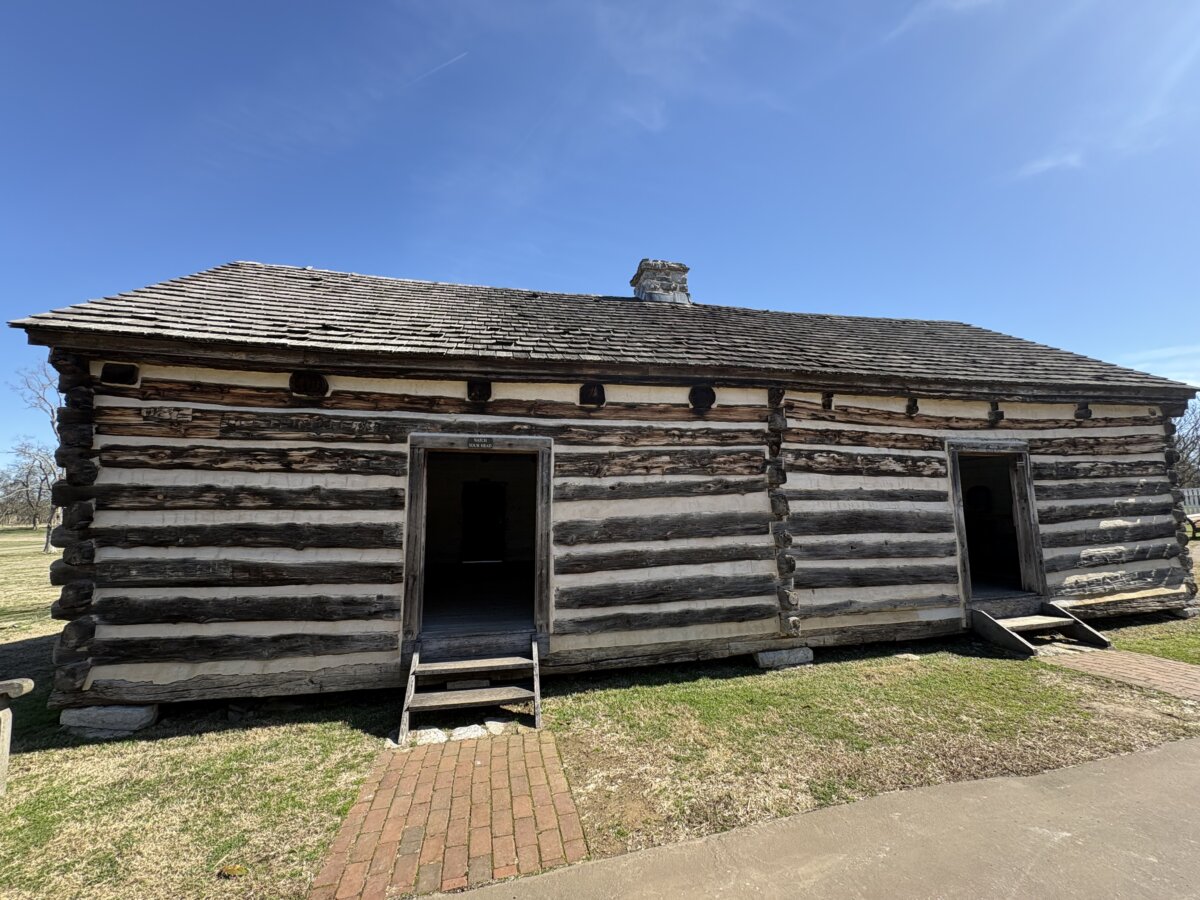
Just outside of Nashville, a looming, two-story Federal-style mansion stands, adorned with a deep portico and 10 massive Doric columns. It was once occupied by the 7th U.S. president, Andrew Jackson. In the home’s shadow is a well-preserved, simple log cabin. Here lived Alfred Jackson, a man born into slavery in 1803. By 1889, he was the notable Nashville plantation property’s key caretaker and tour guide.
To say that Alfred Jackson knew the 1,120-acre cotton estate and home of Andrew Jackson would be an understatement. He was born there, to Betty, the cook, and Ned, a carpenter, and he married, died, and was buried there. As an adult, he became not only a personal attendant to Andrew Jackson, but was also the property wagoner, which meant he oversaw the maintenance and care of carriages, wagons, and horses.
Alfred’s wife was the personal maid of Andrew Jackson Jr.’s wife, Sarah. Alfred and his wife, Gracy Bradley, had two children, Augustus and Sarah.
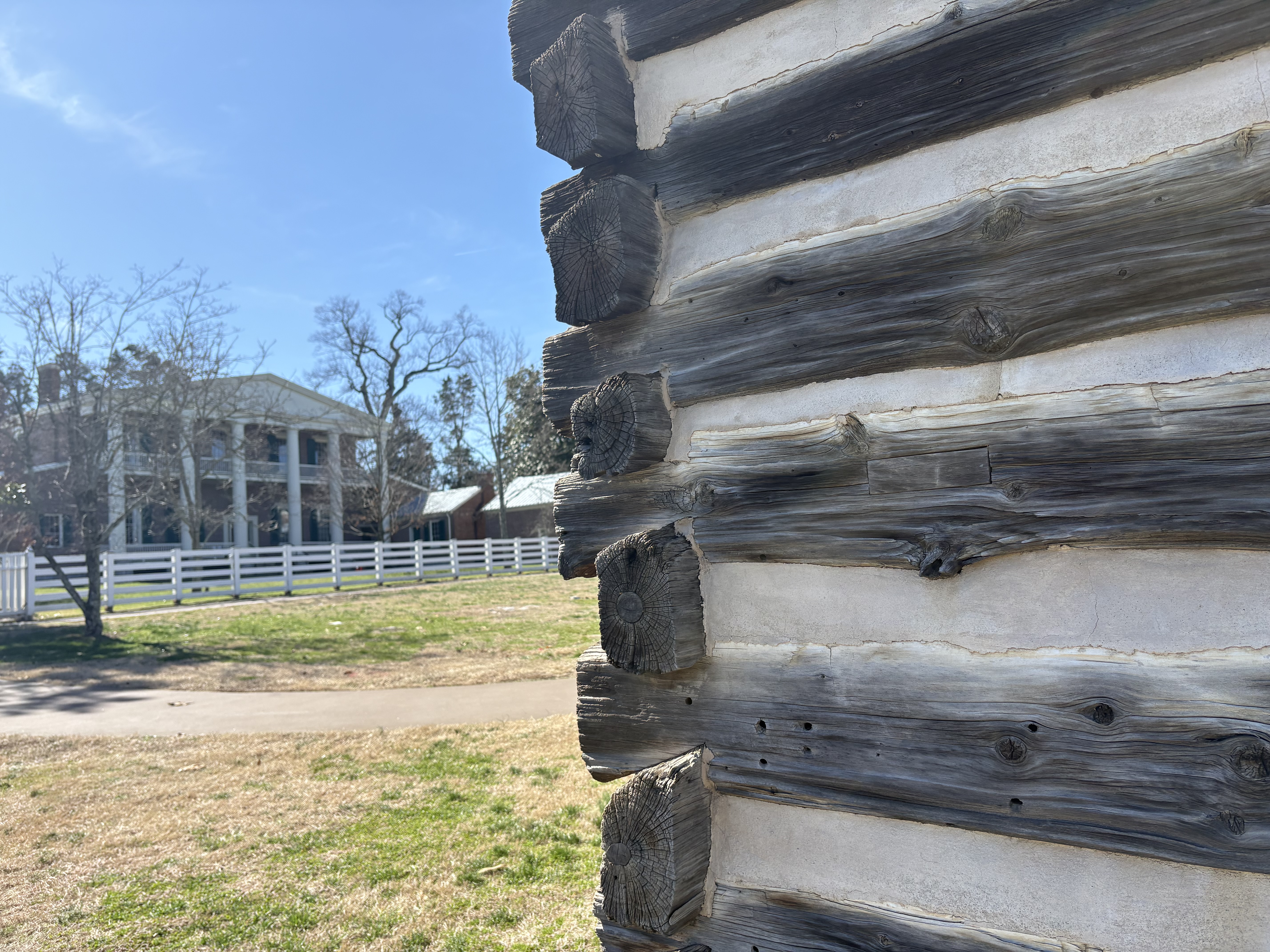 The wooden cabins are nearby Andrew Jackson’s home, called the Hermitage. (Deena Bouknight)
A Well of Wisdom
What is unique about Alfred’s story, isn’t just that he lived through the Civil War—the Battle of Nashville occurred nearby in December 1864. He witnessed fellow enslaved persons working multiple fields so the sale of “King Cotton” could fill Hermitage’s coffers. But after emancipation and more than half his life lived enslaved, he chose to stay and work the same fields. At 53 years old, he decided to remain on the only property he had ever known, rent a 24-acre plot, and grow cotton and food.
Alfred was known as Uncle to everyone he’d grown up with and to Hermitage’s heirs, the family of Andrew Jackson, Jr., who inherited the estate after Jackson’s death in June 1845. For the remainder of his life, he not only repaired, built, and sustained various aspects of the home and other structures throughout the estate, but was also considered Hermitage’s caretaker.
Because of his intimacy with and knowledge of Hermitage, he was a natural choice for a tour guide when the Ladies Hermitage Association was formed in 1889 and opened the site to the public as a historic museum. He continued to share stories and information with guests well into his 80s and 90s—even witnessing the turn of the 20th century. Alfred died in 1901.
Most remarkably, even though he was formerly enslaved by the Jackson family, Alfred requested that the Ladies Hermitage Association allow him to be buried in the Jackson’s graveyard at Hermitage next to Andrew Jackson’s tomb. Nearby the large domed and columned tomb covering the former president’s gravesite obelisk is Alfred’s small carved granite headstone. It reads: “Uncle Alfred. Died Sept. 4, 1901, Aged 98 Years, Faithful servant of Andrew Jackson.”
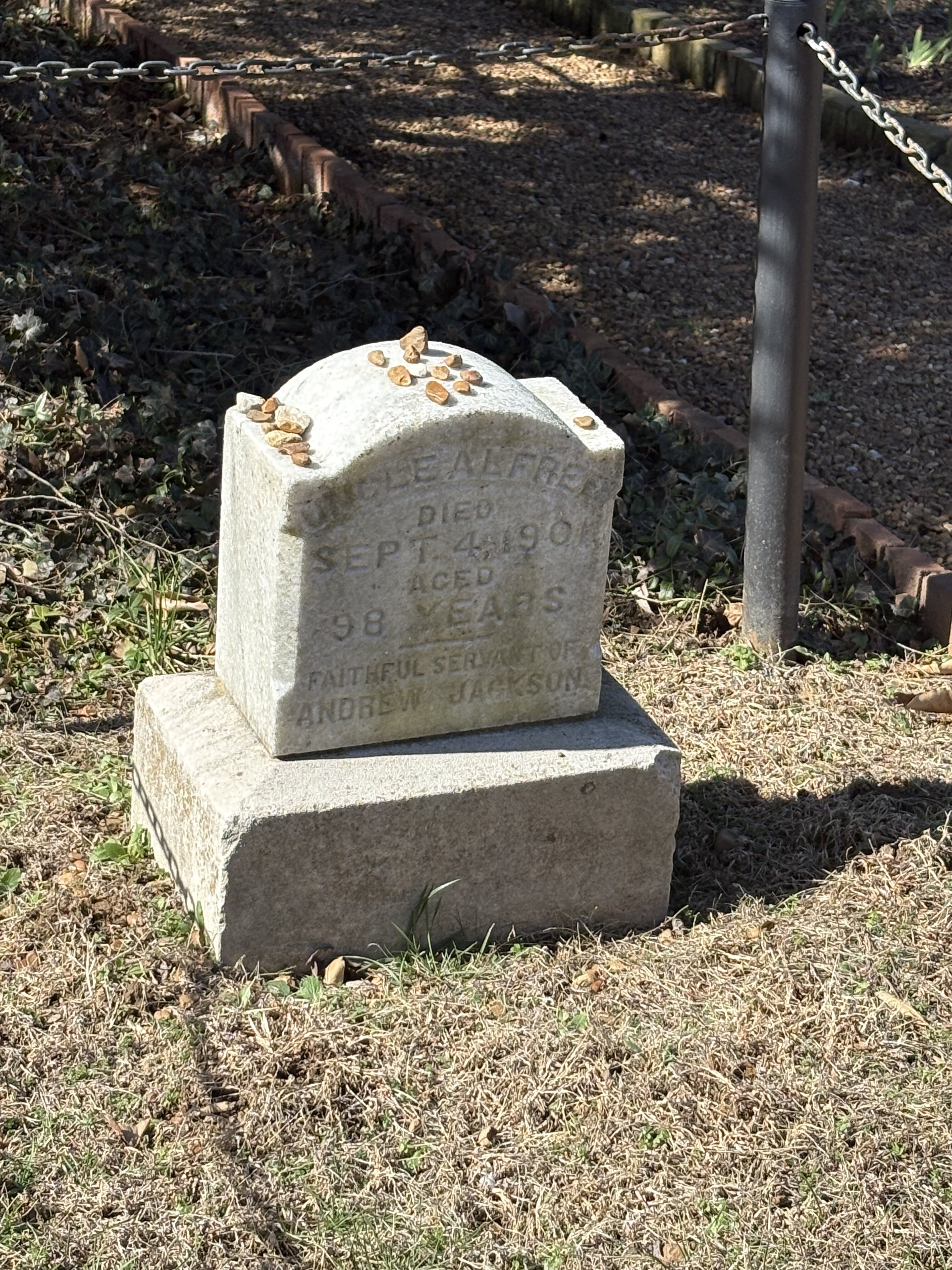 Alfred Jackson’s grave is within the Jackson family’s cemetery. (Deena Bouknight)
Alfred’s grave is surrounded by the family he served, including Jackson’s wife, Rachel, his children, grandchildren, and even some of his children who died in infancy.
In addition to touring the beautiful National Historic Landmark home 10 miles east of Tennessee’s capital city, venture onto the Hermitage’s exterior pathways leading to Alfred’s wide, two-room, red cedar cabin. This unusually large cabin has a sleeping loft and centerpiece stone chimney with two-sided fireplace and brick hearths. Wood siding walls and wood floors, as well as ceiling beams, convey a distinct aesthetic for a 19th-century log cabin. Inside, the cabin is apportioned with 19th-century period furnishings and utilitarian items.
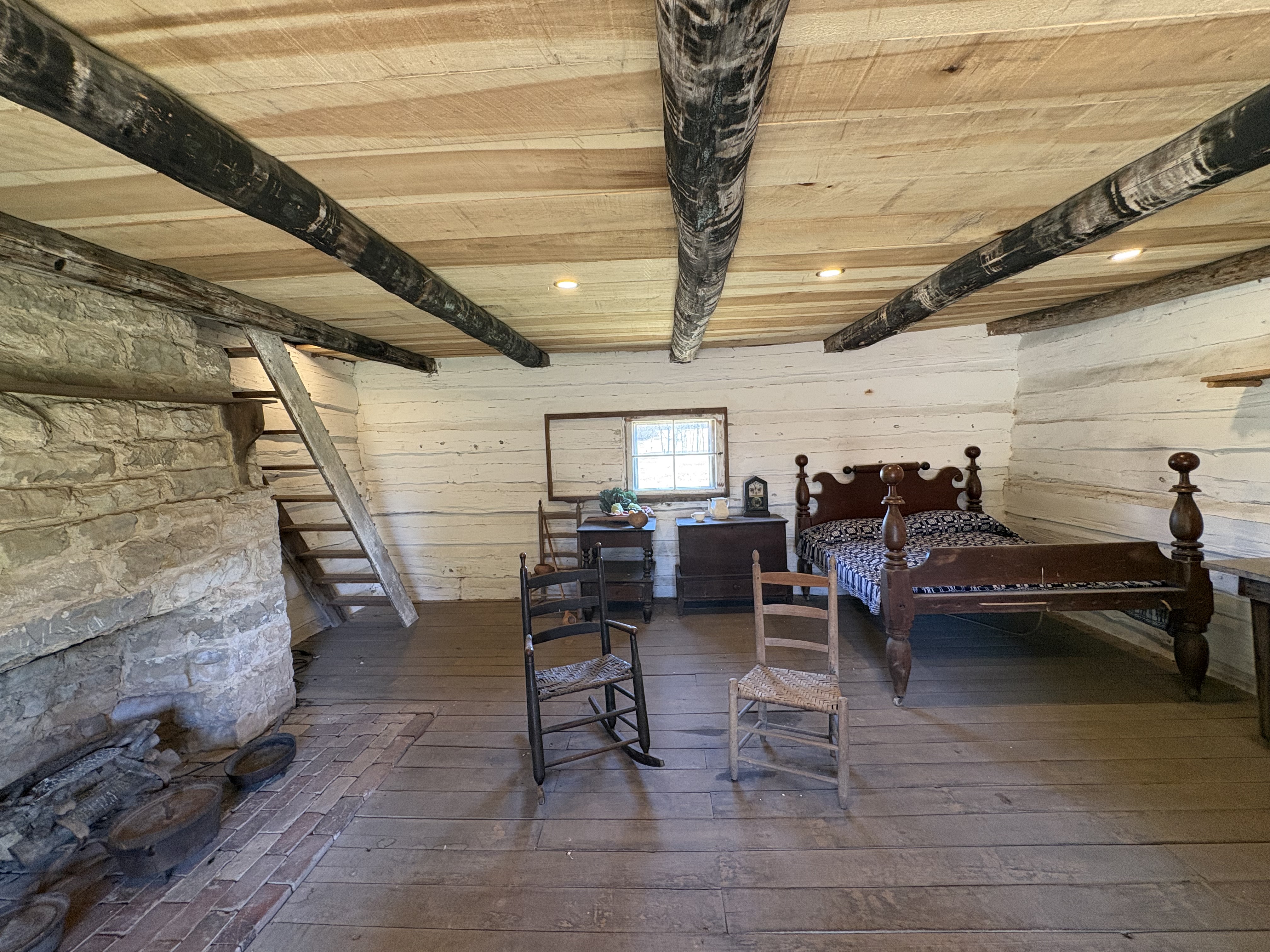 The cabin’s interior is appointed with historical furniture and accoutrements. (Deena Bouknight)
Stepping inside the cabin is looking back to a significant time in our nation’s history. If visitors peer through the leaded glass and paned windows to the lush landscape surrounding the cabin, they can imagine what Alfred must have observed throughout his almost century of life at Hermitage.
What arts and culture topics would you like us to cover? Please email ideas or feedback to features@epochtimes.nyc
