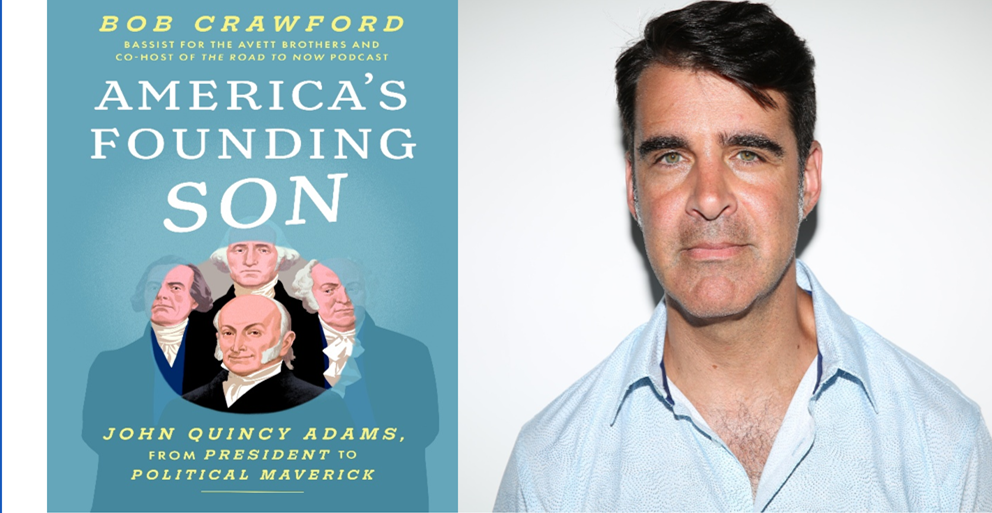
When President John Quincy Adams lost his reelection bid in 1828, he opted to withdraw from public life. But he became bored in retirement and returned to politics by winning election to the House of Representatives in 1830. Adams served in Congress until his death at the age of 80 in 1848.
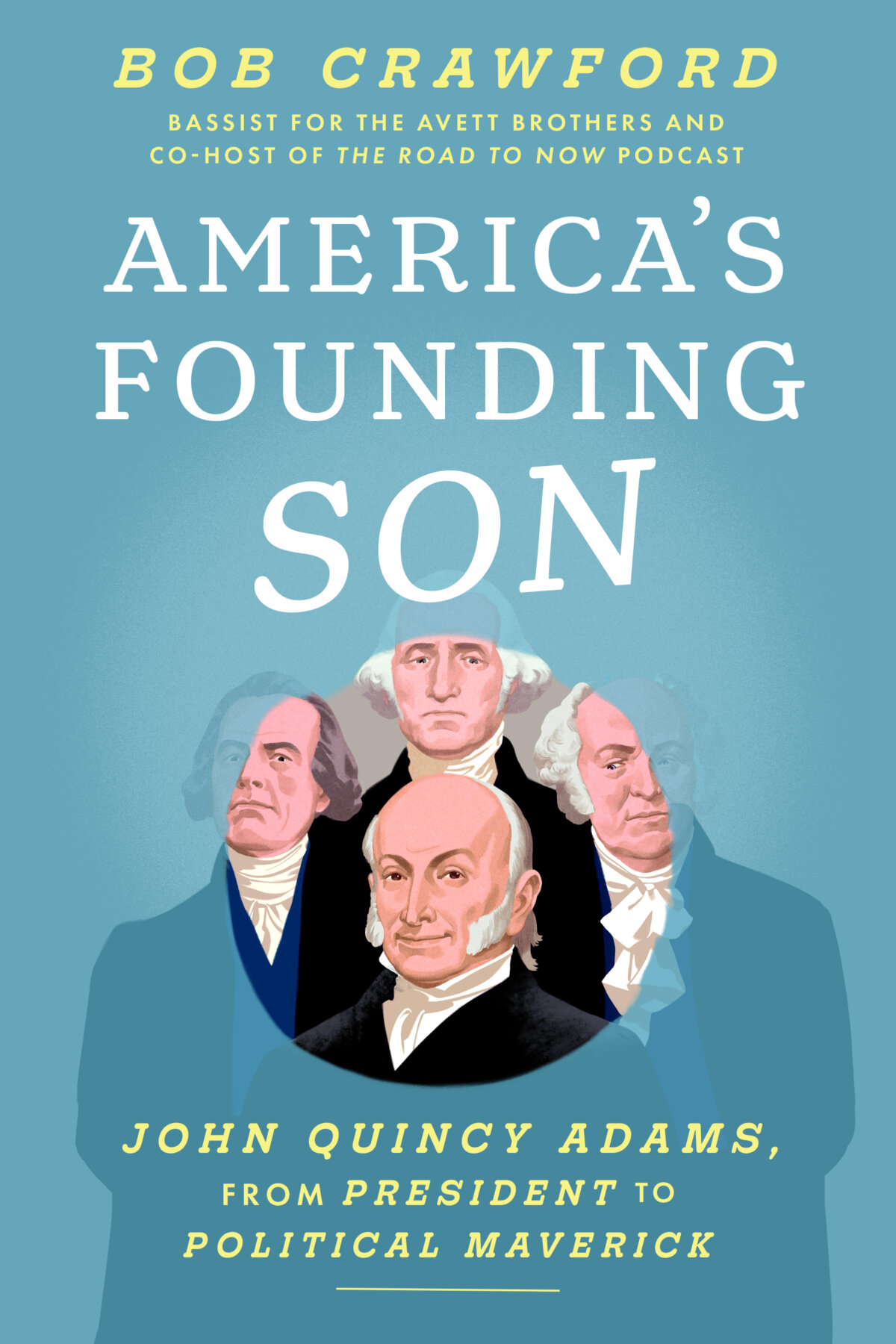
Adams’s dramatic political life is deserving of a book that encompasses the significant political complexities of his career. Unfortunately, “America’s Founding Son” is not that book. Author Bob Crawford, bassist for the Americana band The Avett Brothers, makes an uneasy debut as a historian with a bewildering writing style that doesn’t fit the subject.
A Skilled Diplomat
Adams first gained prominence in foreign policy. President George Washington appointed him as the minister resident to the Netherlands in 1794 and his father, President John Adams, named him minister to Prussia in 1797.
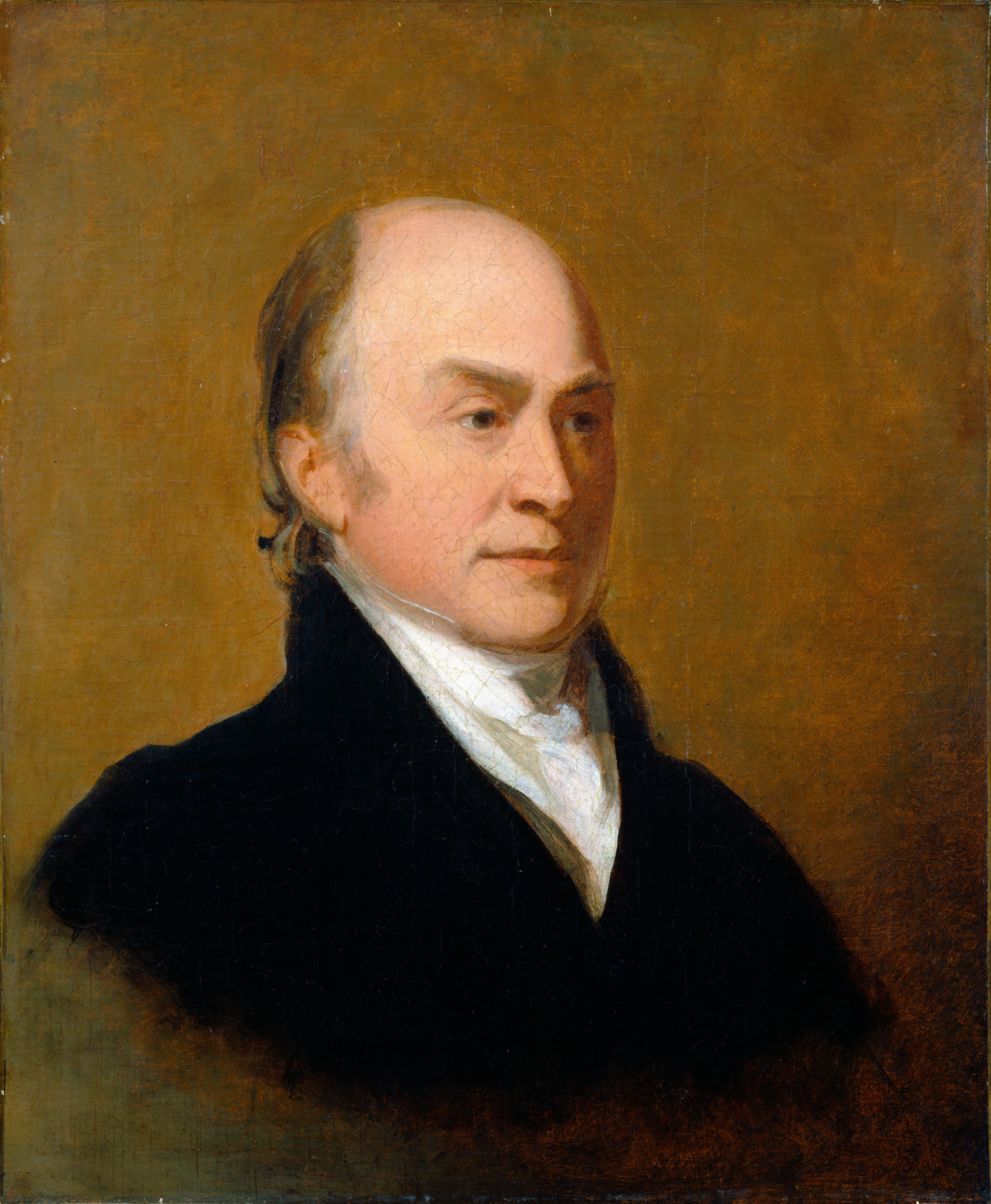
He was later minister to Russia and then the UK during James Madison’s administration. He also played a key role in negotiating the Treaty of Ghent that formally ended the War of 1812. Adams was secretary of state during James Monroe’s presidency and was instrumental in acquiring Florida from Spain and formulating the Monroe Doctrine.
However, Adams’s diplomatic skills were ineffective at home. His first foray into Washington politics occurred when he was appointed by the Massachusetts Legislature to the U.S. Senate in 1803. Adams repeatedly clashed with other members of his Federalist Party on multiple issues, to the point that he angrily resigned four years into his term.
A Curious Election
Adams’ second foray into domestic politics came with the 1824 presidential election, when he sought to succeed Monroe. Due to the peculiar political structure, all four candidates—Adams, Andrew Jackson, Henry Clay, and William H. Crawford—ran for office as members of the Democratic-Republican Party.
None of the candidates secured a majority of electoral votes for a victory, resulting in the election being decided by the House of Representatives. Adams was selected even though Jackson accumulated more popular and electoral votes.
In his first annual message to Congress, Adams envisioned an ambitious agenda with massive infrastructure projects. He proposed the creation of a national university, a naval academy, and a network of “lighthouses of the skies” for astronomy research.
But Congress was appalled, fearing a massive expansion of federal authority at a time when most people favored smaller government. Adams’s vocal opposition to slavery alienated the powerful bloc of Southern lawmakers who were eager to expand enslavement practices across the country.
A Second Act
Adams had few allies in Congress, minimal public support, and hostile newspapers endlessly criticizing him and his British-born wife, Louisa, as out-of-touch aristocrats. As a result, his reelection campaign was doomed. Jackson won a decisive victory, and Adams was the first president since his father who lost a reelection bid.
Adams’s decision to return to Washington as a representative from Massachusetts came as a surprise, especially to his wife since she only learned of his plans through a newspaper article.
He quickly positioned himself as a leading voice against the expansion of slavery, despite his reservations that a politically divided Congress would not abolish the practice. His anti-slavery fervor peaked in 1841. He presented a four-hour defense before the Supreme Court on behalf of the enslaved Africans who revolted on the Spanish ship Amistad. His oration won the captives their freedom.
Adams also opposed going to war with Mexico, stating it was being done to expand slavery across North America. He cast one of the few votes in the House against the 1846 war declaration by President James K. Polk.
Adams never jettisoned his principles and died shortly after collapsing during a House session in February 1848. Even his longtime foes showed respect in his passing.
A Misguided Style
As the author of “America’s Founding Son,” Bob Crawford has done a wonderful job in researching Adams’ story. Crawford calls up once-potent but now-forgotten issues and scandals of Adams’s times. He cited the diplomatic headache created with South Carolina’s Negro Seaman Act; Black British sailor Henry Elkison was apprehended and jailed in 1823 in Charleston for the crime of being a free black sailor in a slave state.
However, Crawford recalls Adams in a bizarre manner. He fills his text with modern pop culture references, peppering his work with unlikely citations that include Archie Bunker, “The Odd Couple” and the “Real Housewives” franchise. This creates bad jokes where none are needed.
Even worse, Crawford relies too heavily on contemporary slang to make his points. He uses hackneyed expressions such as “rip the Band-Aid off,” “see the big picture,” “aha moment” and an F-bomb phrase that denotes indifference. One gets the feeling that Crawford is being paid by the cliché.
This is a major shame, because Crawford clearly has an enthusiasm for the subject; he goes into great depth to explain the peculiarities of the United States political environment of Adams’s time, which differed wildly from today’s system.
But Adams’s dramatic life story is not well served with modern lingo and “Family Guy”-style non sequitur humor, and Crawford ultimately sinks his work.
‘America’s Founding Son: John Quincy Adams, from President to Political Maverick’
By Bob Crawford
Zando: March 10, 2026
Hardcover, 352 pages
What arts and culture topics would you like us to cover? Please email ideas or feedback to features@epochtimes.nyc