



NR | 1 h 12 min | Drama | 1954
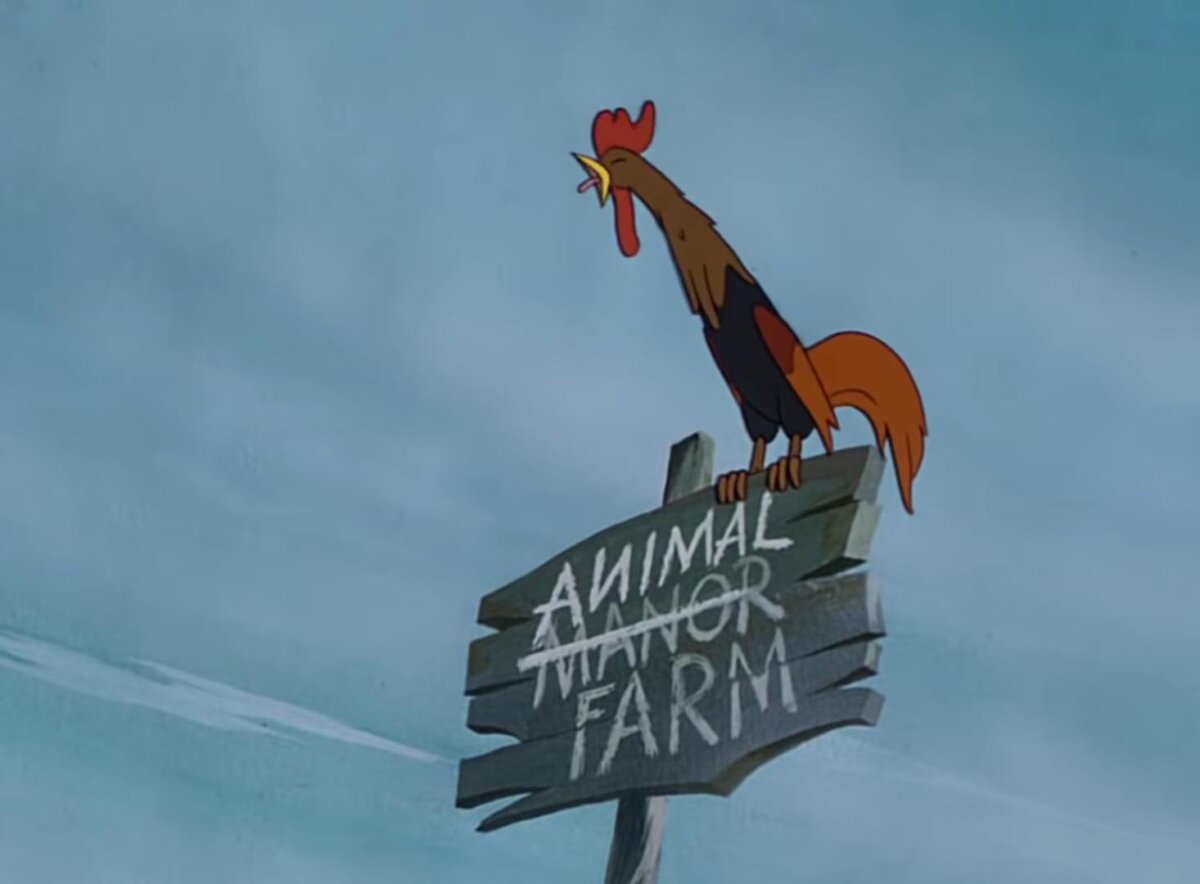
Loosely based on George Orwell’s eponymous novella, the mid-20th century animated film “Animal Farm” warns that socialist-communist propaganda always masquerades as altruism. This is like another late-20th-century Orwellian film, “1984,” that warns of the deceptions of totalitarianism.
Dictatorial, drunken Mr. Jones mismanages Manor Farm, a place bursting with domesticated animals—dogs, goats, and the like. Spurred by Old Major, a dying boar, the resentful animals drive Jones out. They run the farm themselves, renaming it Animal Farm. But new managers—the pigs—prove as dictatorial as Jones.
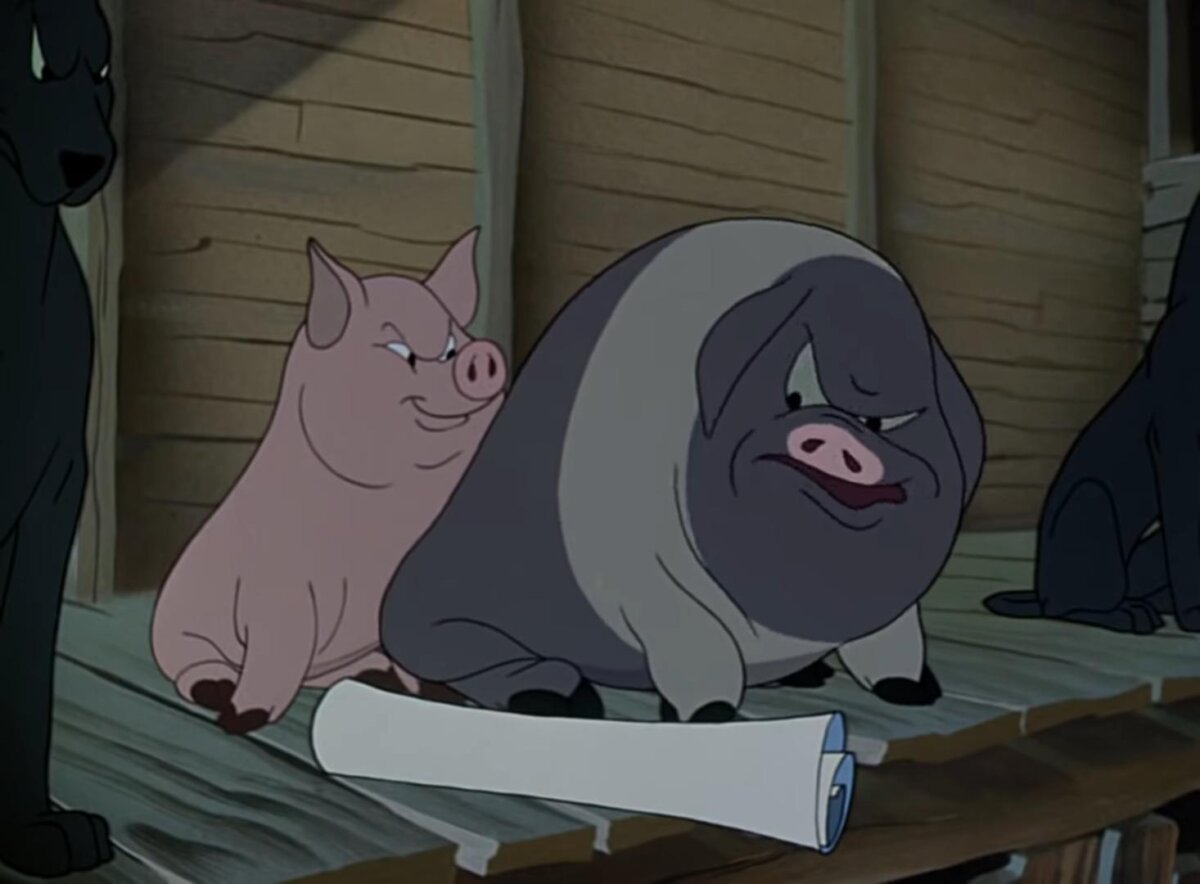
Narcissistic pig Napoleon commands his canine companions to oust an early contender for leadership, another narcissistic pig, Snowball. He also quells a feeble, fleeting uprising led by chickens, then tightens his grip on the animals through enforced hard labor. He imposes stifling rules governing public life, while he and his fellow pigs wallow in luxury.
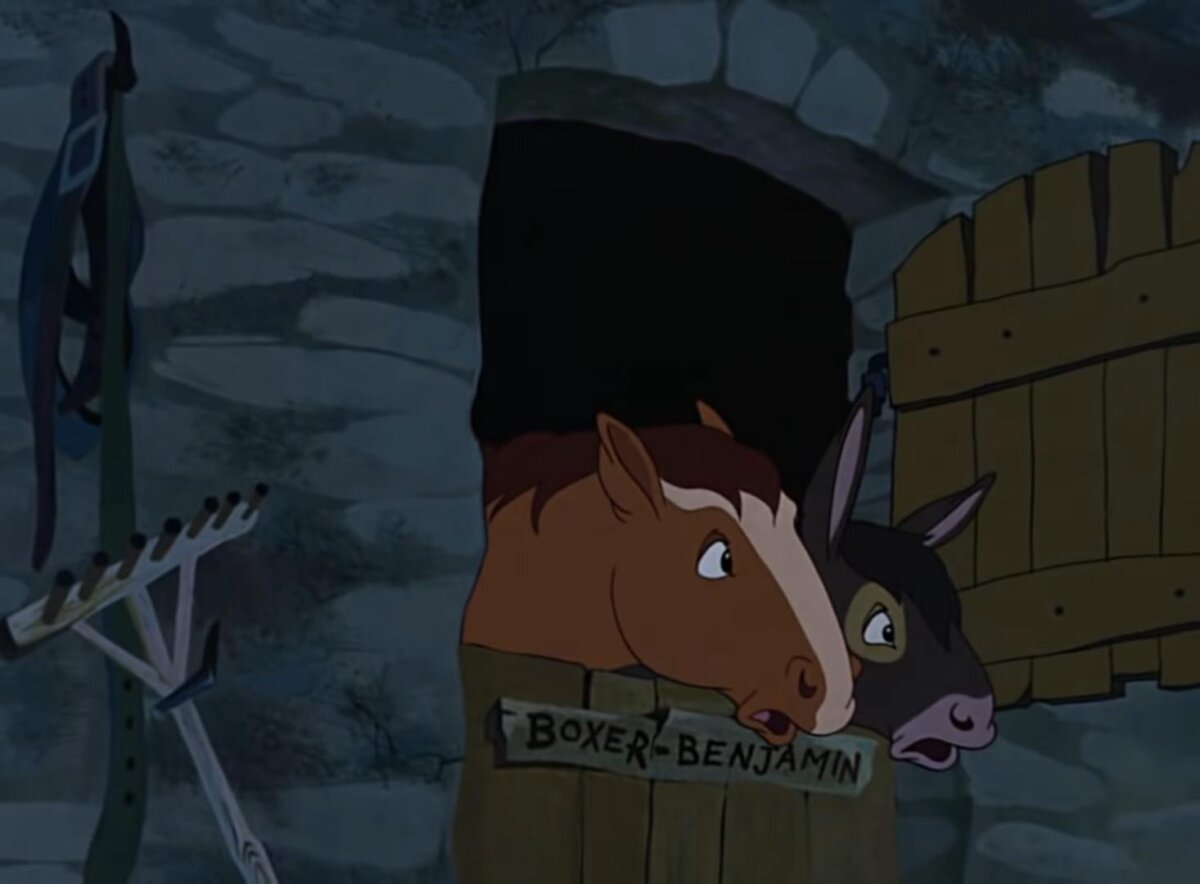
Soon, some animals bristle at Napoleon’s hypocrisy. Others, like workhorse Boxer and his devoted donkey buddy, Benjamin, keep slogging. But it’ll take more than sincerity to unseat this sort of tyranny. Luckily, Benjamin has an idea.
Crafting Britain’s first animated feature film, the filmmakers took several liberties with Orwell’s plot. Still, they remained faithful to its spirit, painstakingly creating as many as 250,000 drawings and 1,200 background settings over three years.
Screenwriters and animator-directors John Halas and Joy Batchelor bring Orwell’s thesis to throbbing life. Gordon Heath’s stately narration and Maurice Denham’s eerie voicing of animal and human characters lend the film a haunting, occasionally horrifying, onscreen power.
Narcissistic Humanity
To Orwell, totalitarianism is narcissistic humanity at war with itself. First, there’s a hypocritical self-loathing that at once bemoans inequality in the established, natural order of things, while enforcing a manufactured inequality. Second, the totalitarian’s inflated self-image undermines the nobility of human dignity, personhood and uniqueness of each human. Either way, it’s self-defeating.
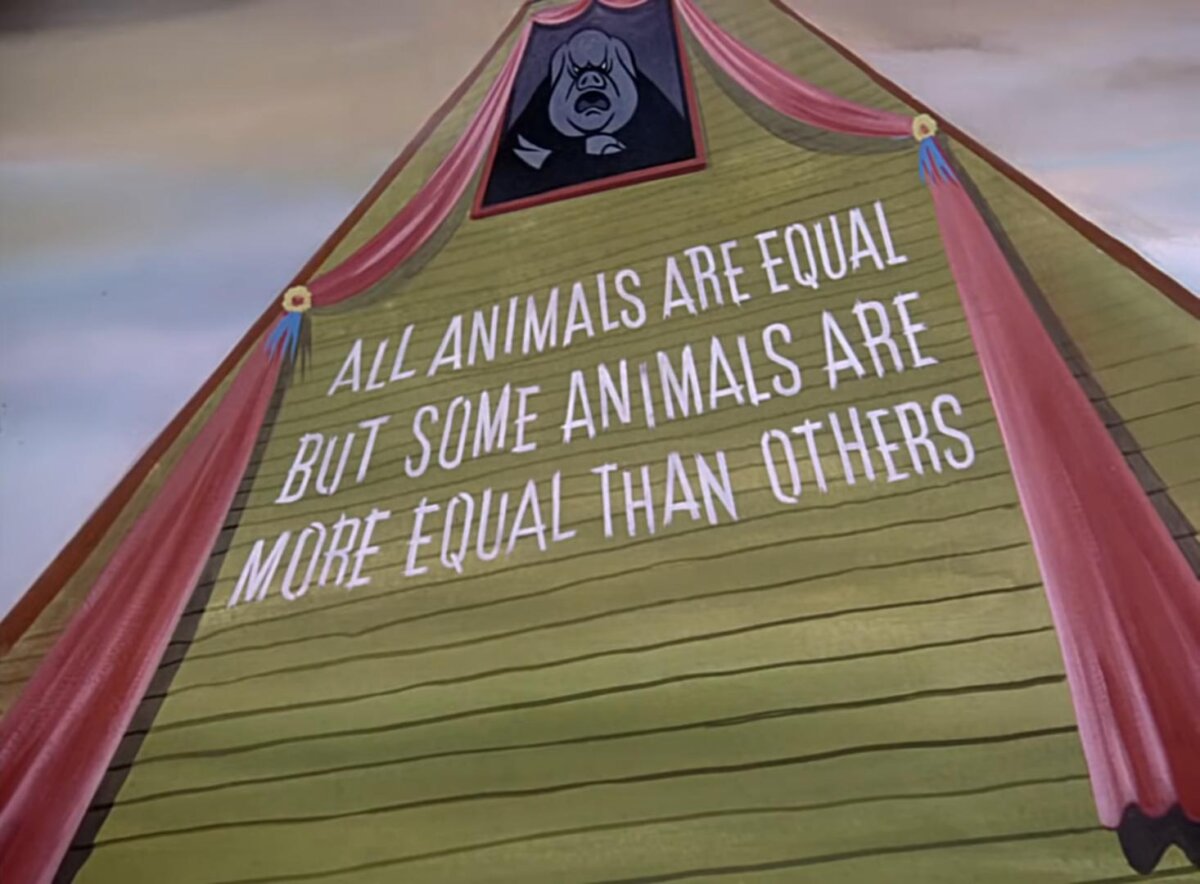
Some animals realize that even if by nature all are equal, in practice, some are more equal than others. It’s convenient for a “Supreme Leader” to announce, “Wings count as legs,” or “Four legs good, two legs bad.” But what are two-legged chickens and ducks to do? It’s fine for herbivores to declare, “No animal shall kill another animal.” Then, what are carnivores to do?
Consider how the contemporary radical left’s DEI mantra militates against its three alleged ideals. It denies that levels of intelligence, knowledge, and skill are diverse and far from equal. Young workers, no matter how adept, cannot—and do not—have the experience and hard-won lessons that older workers possess. Failure to acknowledge such diversity is anything but inclusive.
‘Supreme Leader’
It is altruism that masks the radical left’s desperation to control and consume the best of human nature by protecting and promoting its worst. Napoleon pretends to honor truth while perverting it. His playbook is simple. First, someone else—anyone else—is the enemy, a “traitor.”
Second, he casts himself as the savior, earning special privileges. Third, he decides what’s best for others by destroying or rewriting their history, and championing a vague utopia he calls “the coming of a new era.” As long as his followers are resisting someone or something else, he’ll gleefully cultivate a culture of resistance.
The animals destroy what reminds them of cruel Jones. But these implements are what make them productive farm animals. The shearer, knife, yoke, chain, saddle, bridle, and reins make one animal useful to another, and some animals useful to all.
Submission to reasonable restraints and responsibilities allows the luxury of reasonable freedoms. But socialists-communists prefer to advertise only perfect freedoms; prospective animal leaders promise that “revolt” will make them rich and free.
Napoleon insists a windmill will solve all problems, if only the animals work more and eat less. Today’s climate alarmists also promise a land of “peace and plenty” if only people give up the best years of their lives for unseen glory. They mistake agitation for achievement, mere movement for progress.
The very sound of Old Major’s cry, “Revolt!,” excites the mob, promising affirmation and recognition. That it resembles any imagined reward is beside the point.
Revolt, then, is believed to be its own reward, requiring neither progress nor a meaningful measure of it. If a Supreme Leader is the only one who can measure progress or its absence, revolt needn’t be a one-off; it can be seasonal, even perpetual, with followers being none the wiser.
‘Animal Farm’
Director: John Halas, Joy Batchelor
Starring: Gordon Heath (narrator), Maurice Denham (voicecast)
Not Rated
Running Time: 1 hour, 12 minutes
Release Date: Dec. 29, 1954
Rated: 4 stars out of 5
What arts and culture topics would you like us to cover? Please email ideas or feedback to features@epochtimes.nyc
