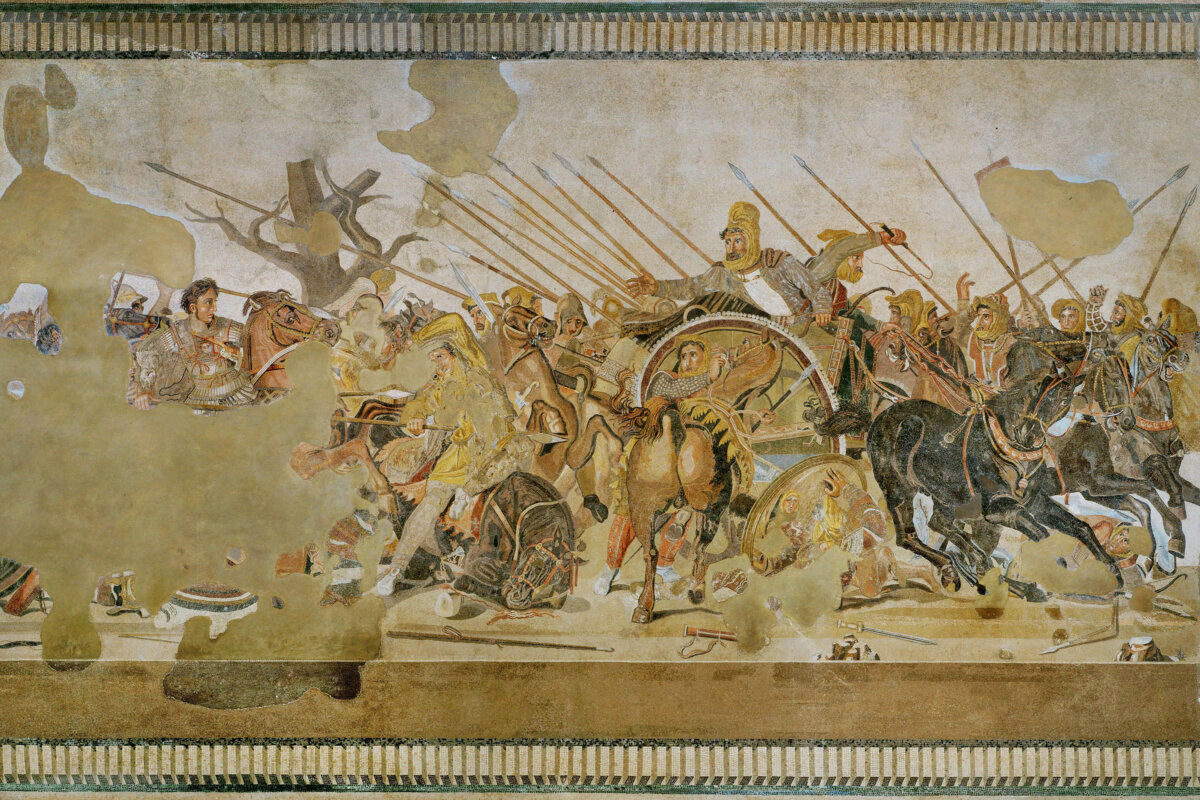
It is fitting that the most famous mosaic of the ancient world depicts the era’s ultimate military leader—Alexander the Great (356 B.C.–323 B.C.). Alexander’s empire extended from the eastern Mediterranean to parts of Asia and included Egypt, the Middle East, and Greece; he never lost a battle. The 19-foot by 10-foot “Alexander Mosaic,” now part of Museo Archeological Nazionale, Naples (MANN), was discovered in 1831 during excavations of the ancient Roman city of Pompeii.
This mosaic masterpiece impresses in size, artistry, and technique. Its intricate details, deployment of foreshortening, shading, and light, as well as dynamic subject create a complex composition. Recent restoration efforts have uncovered more of its history, but many facets of the “Alexander Mosaic” remain mysterious.
Dated to between the end of the 2nd century B.C. and the beginning of the 1st century B.C., the mosaic is based on a now lost Hellenistic painting from the late 4th century B.C. It was probably painted by the ancient Greek artist Filosseno of Eretria that is referred to in the writing of Pliny the Elder. The “Alexander Mosaic,” composed of around 2 million minute tesserae (small individual tiles that make up a mosaic), was already a historic artwork when Pompeii was violently destroyed by Mount Vesuvius in A.D. 79.
At the time it was buried by volcanic ash, the “Alexander Mosaic” decorated what is now called the House of Faun, one of the city’s largest and most lavish residences, taking up an entire block. Mosaics of the time were usually situated as floors, and this was the case for the “Alexander Mosaic.” This tessellated pavement was installed in a large room used to receive guests.
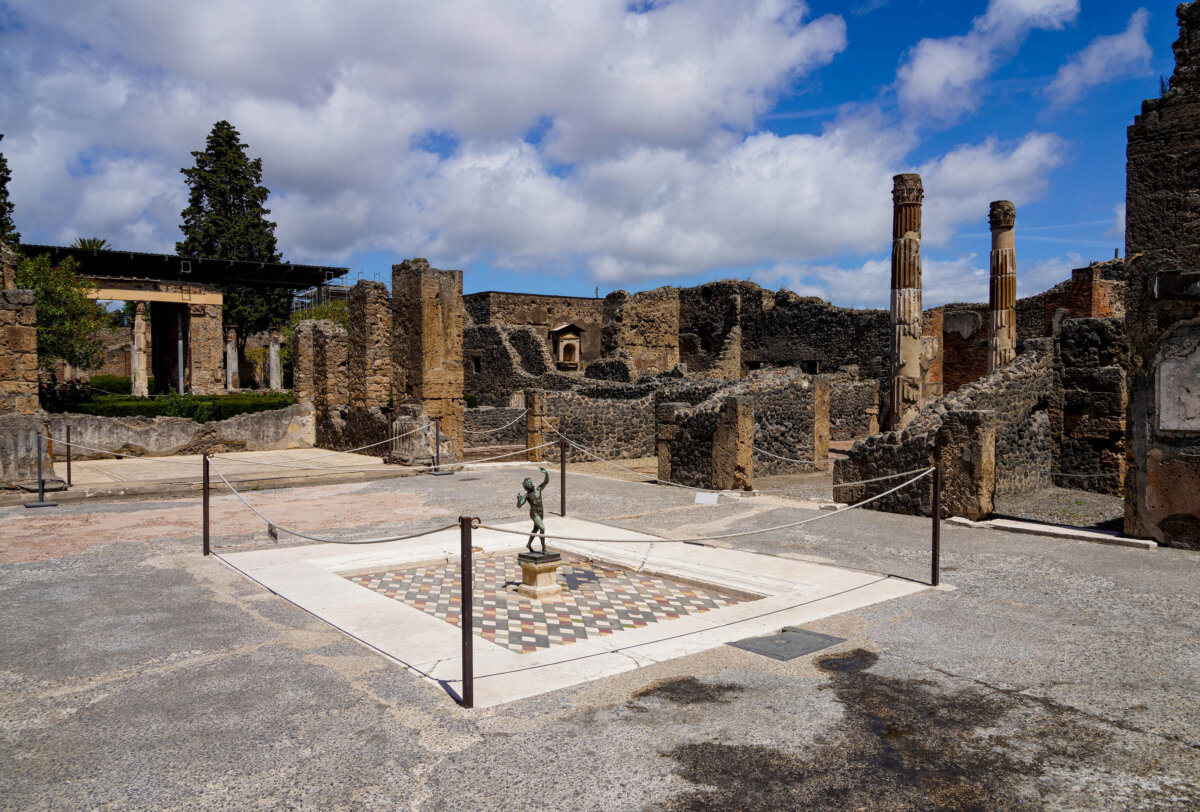
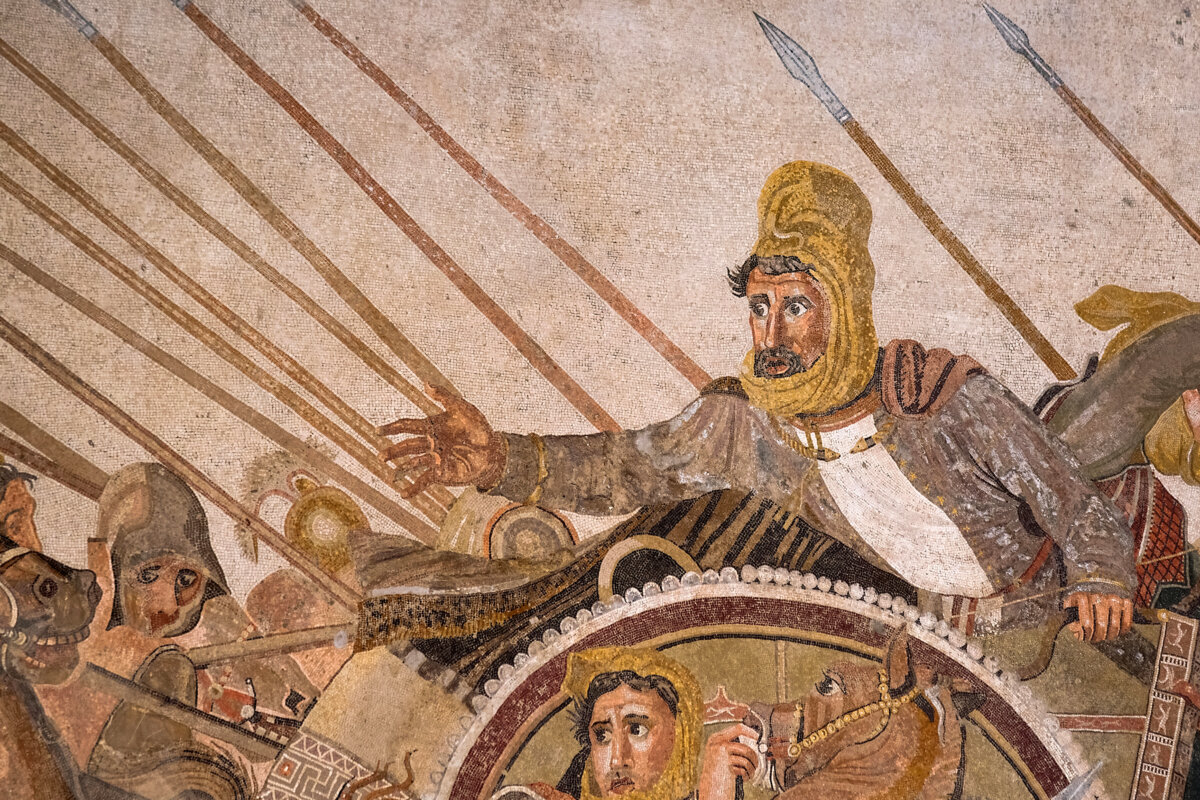
Its makers are believed to have been artisans from Alexandria, Egypt who used the highly refined “opus vermiculatum” technique. This method results in mosaics with gradations of color and exact contours. At first glance, these works appear to be paintings.
Battle of Issus
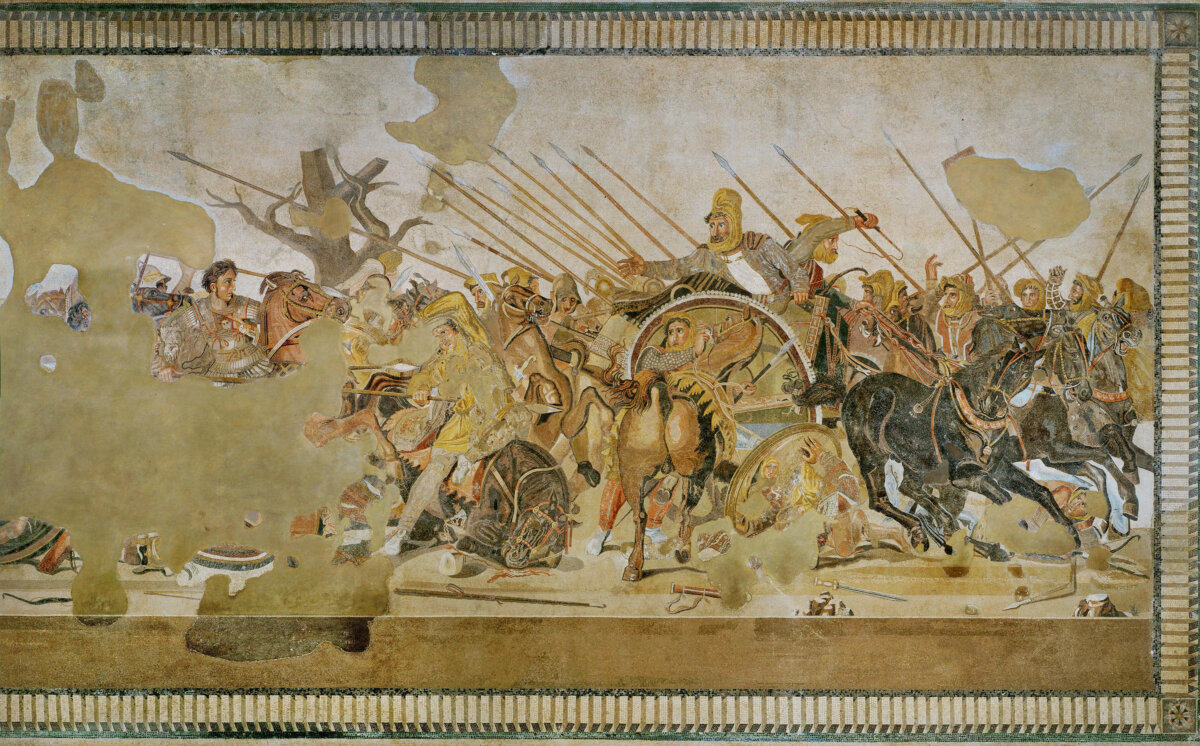
The mosaic shows the military victory of Alexander and his Macedonian army over the Persian King Darius III (circa 380 B.C.–330 B.C.). Scholars believe that this specific triumph is likely the Battle of Issus, which took place in 333 B.C. near the Turkish Syrian border. Another candidate is the 331 B.C. Battle of Gaugamela. However, historic written sources describe the clash at Issus as the “battle of the dry tree.” The mosaic, heavy on action and light on landscape detail, does depict a dark tree with bare branches.
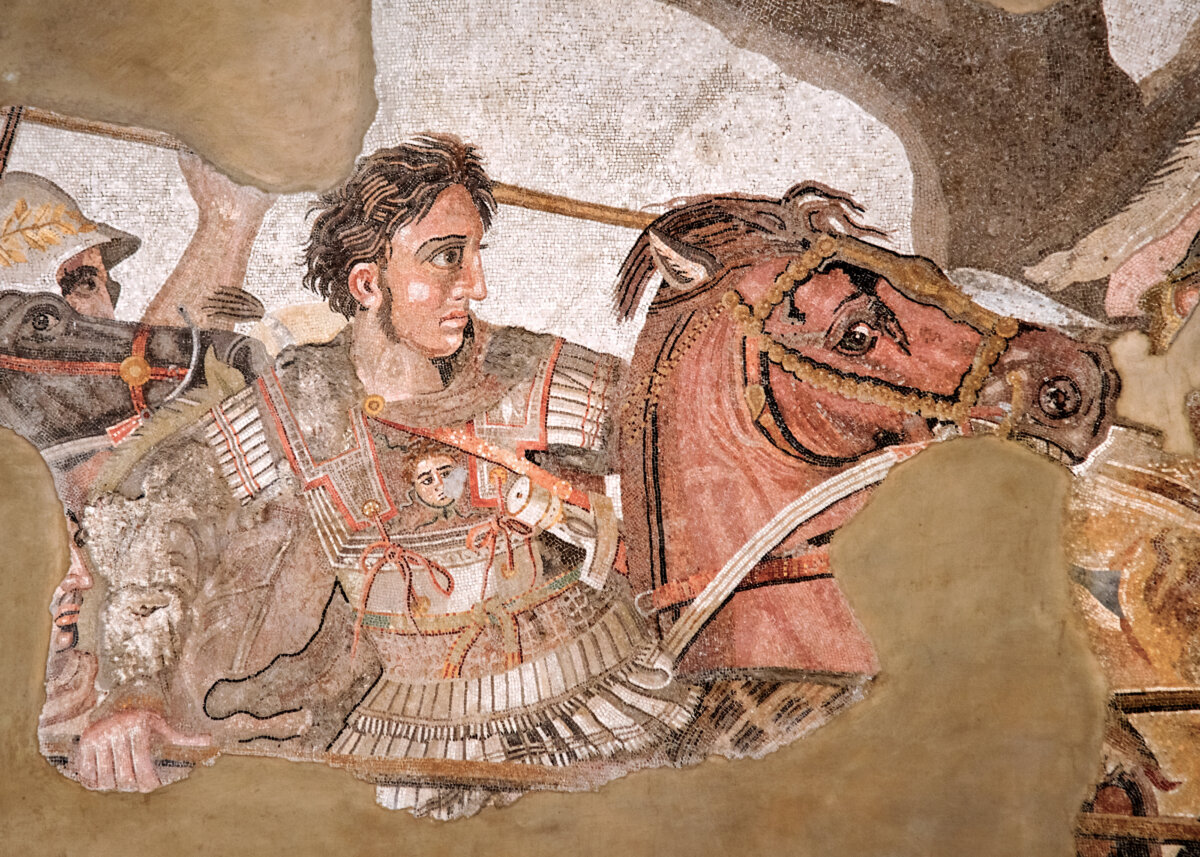
While found in good overall condition, the mosaic has damaged areas. Thankfully, they do not obscure the central action. Alexander is positioned on the lefthand side of the composition. Riding his celebrated horse Bucephalus, he wears armor adorned with an image of the head of Medusa and carries a spear. This carefully modeled portrayal of Alexander’s face has become his most famous likeness. He looks coolly at his rival, Darius, as he charges. Placed at right, the king flees on his chariot, which is crushing a Persian warrior. His disarrayed troops imbue the scene with chaos.
In 1844, the mosaic was removed from Pompeii and taken to the Royal Bourbon Museum in Naples, now MANN. Because the artwork weighs approximately seven tons, it was transported in a box on a cart pulled by 16 oxen. At one point the box fell down onto the street. The mosaic remained intact, however, and was put on display. Initially positioned as it was originally, the Museum decided to place it on a wall like a painting in 1916. This has contributed to conservation concerns, because the Roman mortar was not made with the intention for the finished artwork to be hung.
MANN launched an ambitious and costly restoration project in 2020 after extensive study. Researchers believe that the mosaic’s tesserae came from throughout the Mediterranean region, with mining areas in Italy, the Iberian Peninsula, Greece, and Tunisia being sources for the materials. Scientifically identified colors of tesserae include shades of black, blue, brown, gray, green, pink, red, white, and yellow.
At over 2,000 years old, the majestic “Alexander Mosaic” continues to captivate the public’s imagination, conjuring tales of conquest. It remains a testament to the advanced skills of its makers, the Roman Empire’s global trade, and the enduring impact of Alexander the Great.
What arts and culture topics would you like us to cover? Please email ideas or feedback to features@epochtimes.nyc