
Thriller fans on this side of the Atlantic may not know Anya Niewierra, but the same definitely can’t be said over there. Niewierra is an award-winning, number-one bestselling Dutch author, dubbed by some in the Euro press as the “new queen of Dutch literature.” High praise indeed.
Her undeniable breakthrough into mainstream success came with 2021’s “The Camino” (in Dutch, “De Camino”). The novel became a cultural phenomenon in the Netherlands, winning the nation’s largest public book award and becoming the longest-running Dutch thriller in the bestseller chart, surpassing 170 weeks.
Now, for the first time, an English translation has just been released by Simon & Schuster.
What is The Camino?
Before writing fiction full-time, Niewierra spent over 30 years as a prominent director in the Dutch tourism sector. Having that on her resume, it’s not surprising that she might set a thriller on the famed Camino path in Spain and France.
The Camino de Santiago (The Way of St. James) is not just one path, but a huge network of ancient pilgrimage routes stretching across Europe. All of the trails converge at a single destination: the Cathedral of Santiago de Compostela in northwestern Spain, where the remains of Saint James the Great are traditionally believed to be buried.
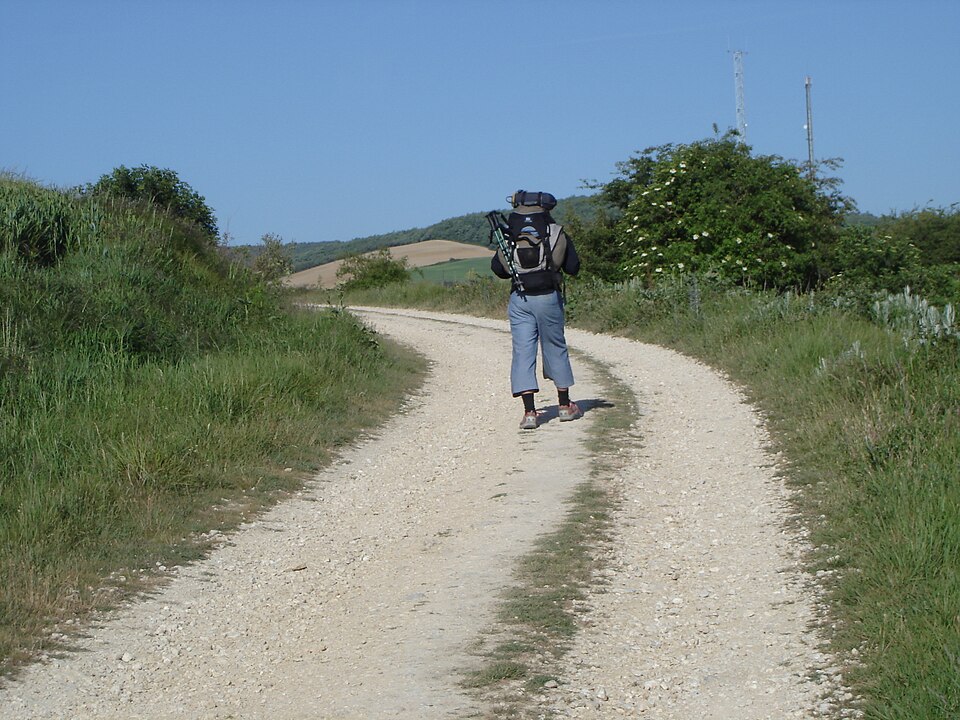
In the 9th century the Camino was established as one of the three major Christian pilgrimages (the other two are to Rome and Jerusalem). Since then, it has evolved into a modern cultural phenomenon. Hundreds of thousands of people walk the routes every year. Some do it for religious reasons, but many do it for spiritual reflection, physical challenge, or historical curiosity.
The Via Podiensis is the most popular and iconic Camino de Santiago pilgrimage route in France, stretching approximately 466 to 475 miles from Le Puy-en-Velay to Saint-Jean-Pied-de-Port.
Blood on the Path
The prologue of “The Camino” throws readers for a bit of a loop. You’ll think you are reading something much more horrific than the dust jacket suggests. The short passage describes a man’s graphic suicide on the Camino in front of an unnamed witness. It’s a short scene, but not for the squeamish. The man dies with a woman’s name on his lips: Lotte.
That woman turns out to be 44-year-old Lotte Bonnet, a Dutch chocolatier from the village of Vijlen. The man was her husband, known to her as Emil Jukic. The book opens as she scatters his ashes at a waterfall in Bosnia and Herzegovina, supposedly near his place of birth, 11 months after his death.
Beyond the obvious turmoil she feels, she privately struggles with a recent shocking revelation. A Sarajevo lawyer, Omer Zecinic, informed her only the week before that the real Emil Jukic went missing in 1995 and was identified in a mass grave in 2017.
Lotte keeps this news from her sons, Stefan and Joran. Accepting that her seemingly happy husband killed himself is one thing, but now she hears that he borrowed a dead man’s name. Who was he, really? Did she ever really know her husband?
Not sure what else to do, Lotte decides to walk the Via Podiensis from Le Puy-en-Velay to Conques, on the same dates and in the same lodgings her late husband used a year earlier. She hopes her own spiritual journey will shed some light on the mystery.
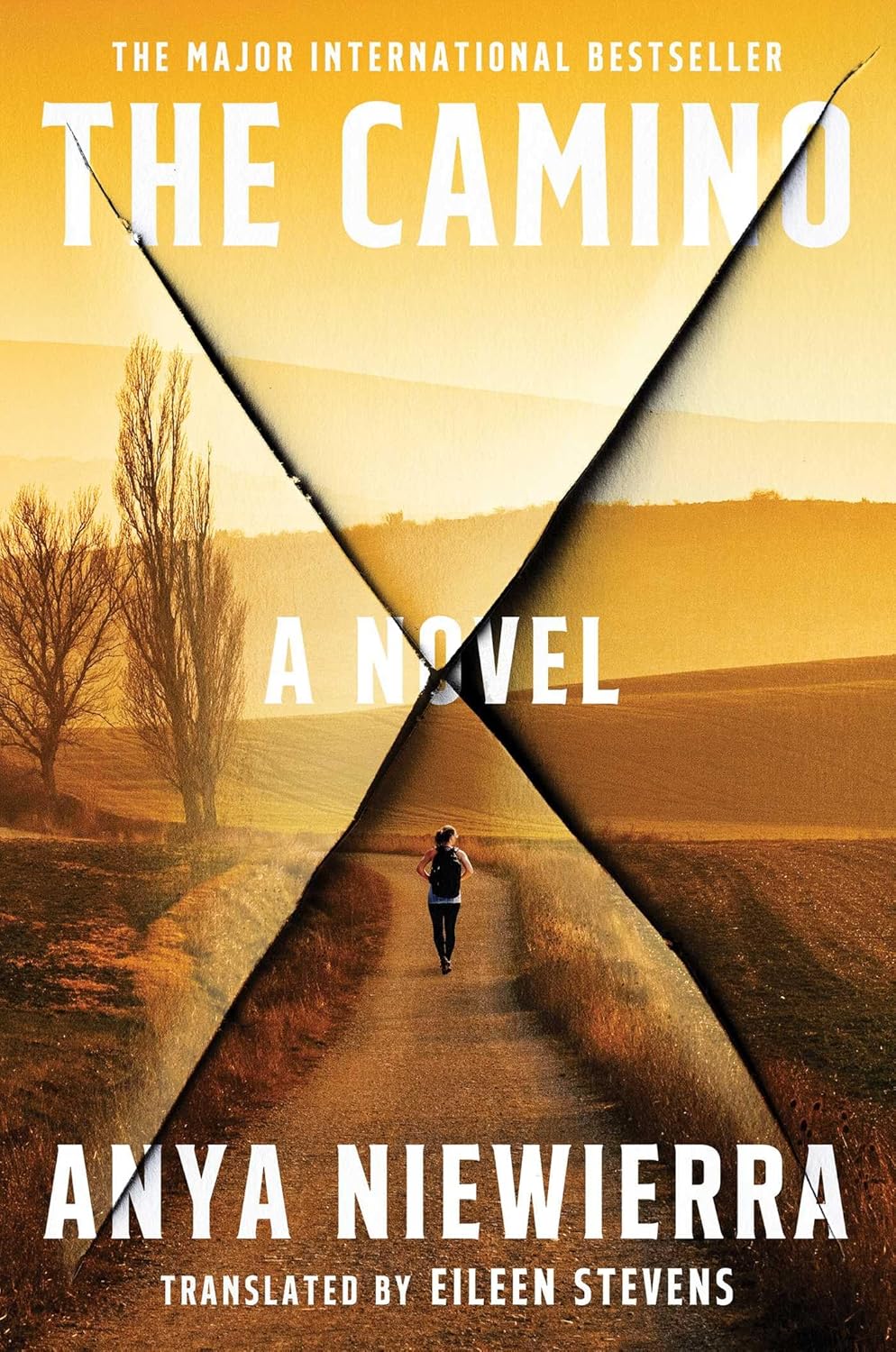
Most of the novel is in epistolary form via entries from Lotte’s travel journal. Interspersed are the thoughts of a mysterious man who is tracking her and planning to kill her when she travels along the Camino.
Niewierra also adds in excerpts of a letter from Lotte’s husband. The catch? Lotte hasn’t yet read it. Through these passages, we slowly begin to understand who “Emil” really was and how the Bosnian war shaped him.
Contrasting Themes
There are some odd dichotomies to this novel. First is the beauty of the setting, contrasted with the evolution of Lotte’s grieving and insights into brutality of the Bosinan war. There is also an interesting travelog paired with a mystery thriller. On paper this shouldn’t work, but it definitely does.
Readers know early on that someone is out to kill Lotte long before she suspects it herself. Both that element, and the foreshadowed letter from her late husband, adds a scintillating creepiness.
What begins for Lotte as a spiritual journey of healing and seeking personal answers slowly transforms. She begins to suspect a much darker side to the man she married, as well as the threat to her own life.
Was “Emil” just another victim of war? The truth turns out to be much more complicated and surprising than what the average American novel strives for. It’s different, but a welcome difference.
“The Camino” makes some dark turns along the way, and the journey that Lotte takes is not what you might expect. But less-traveled paths are always where readers find the more savory thrills, and there are plenty here. It’s easy to see why this has taken Europe by storm.
‘The Camino’
By Anya Niewierra, translated by Eileen Stevens
Simon & Schuster: Aug. 25, 2026
Hardcover, 384 pages
What arts and culture topics would you like us to cover? Please email ideas or feedback to features@epochtimes.nyc