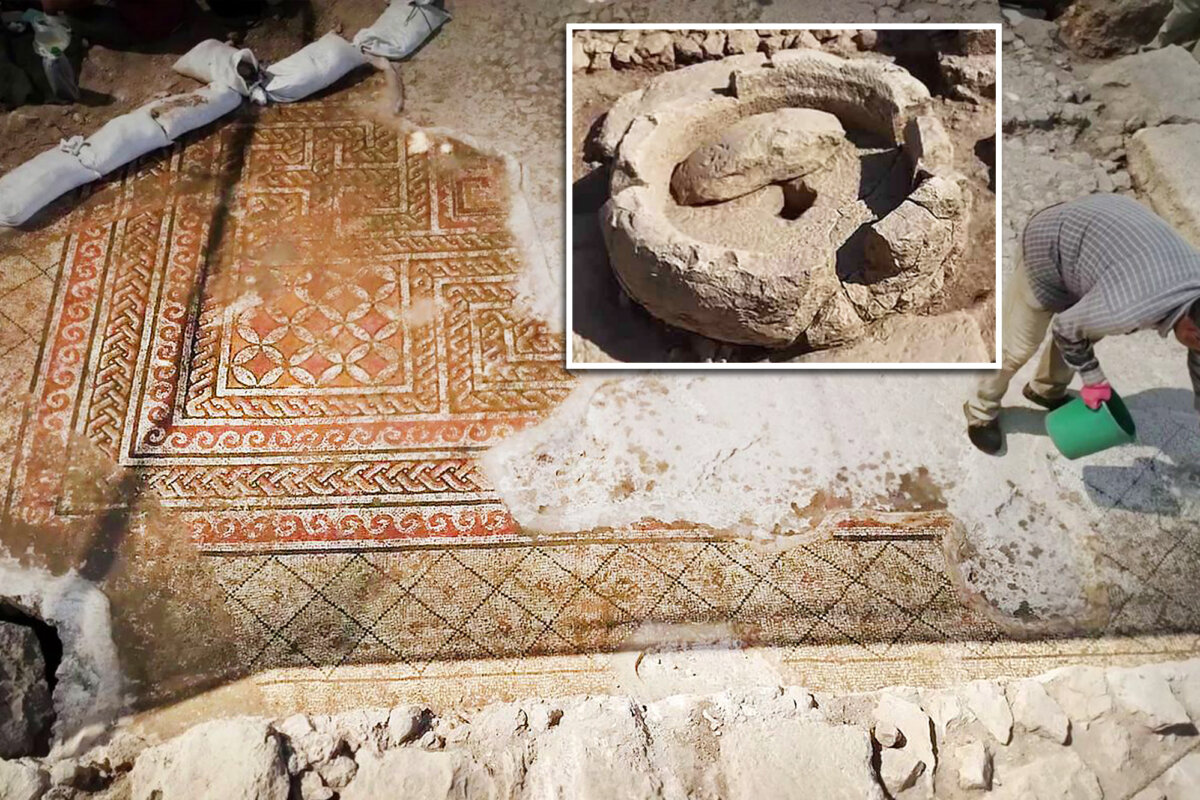
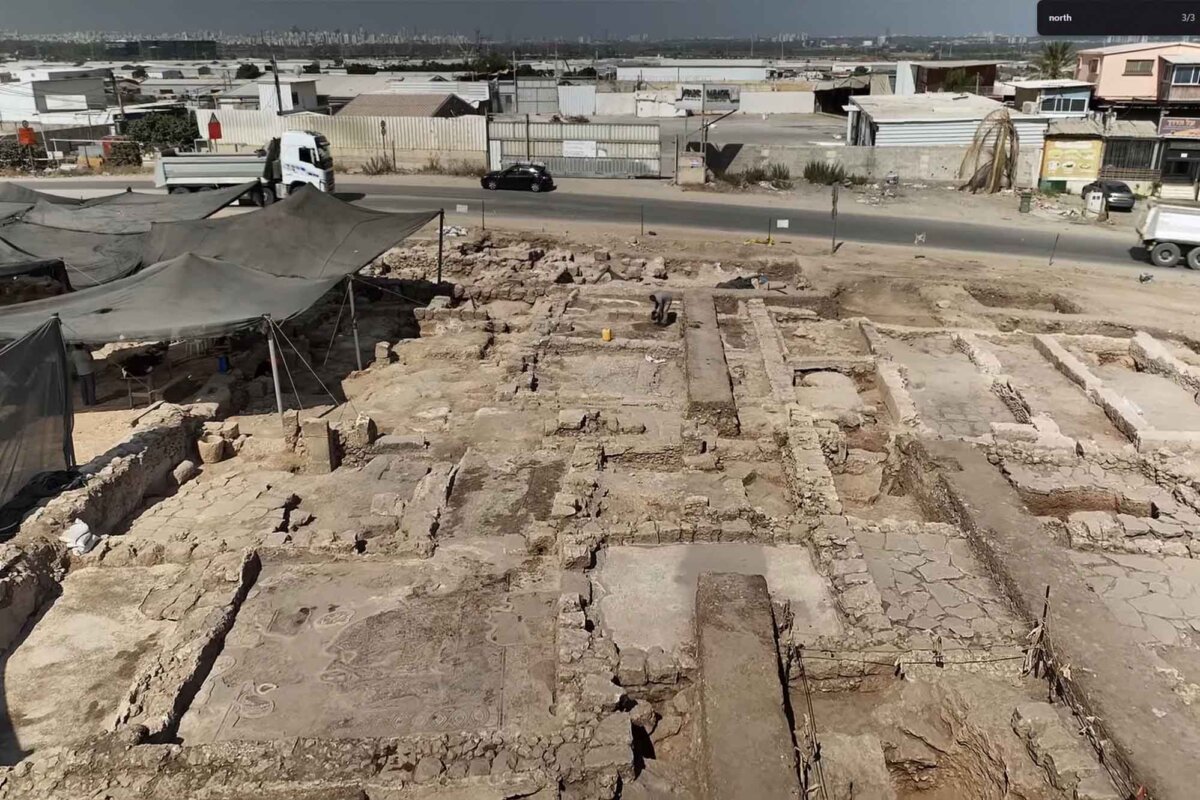
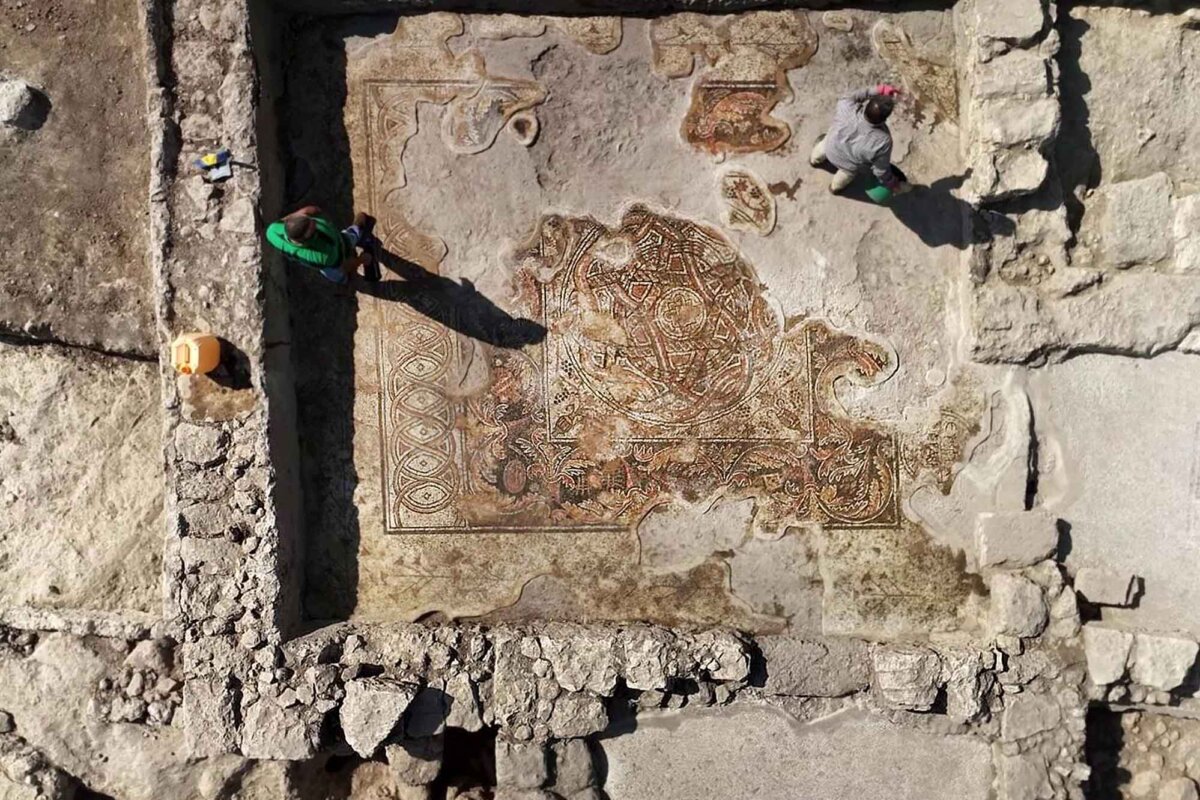
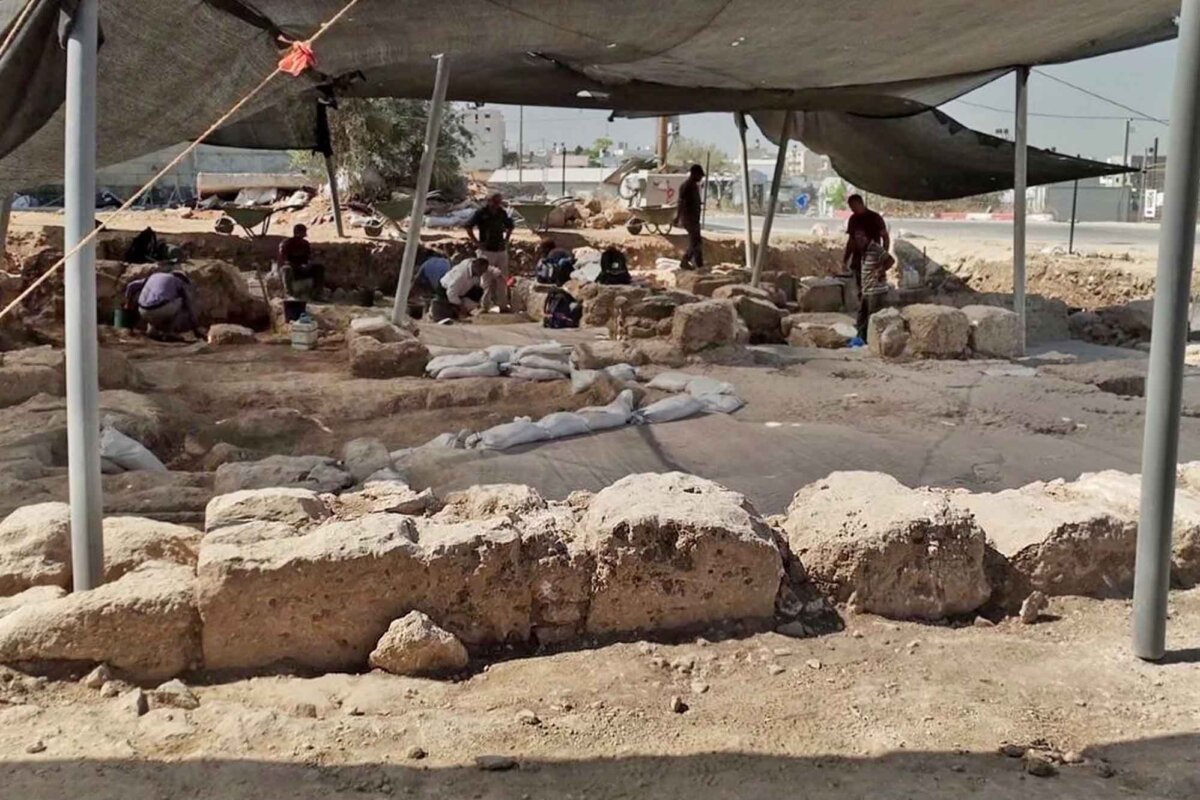
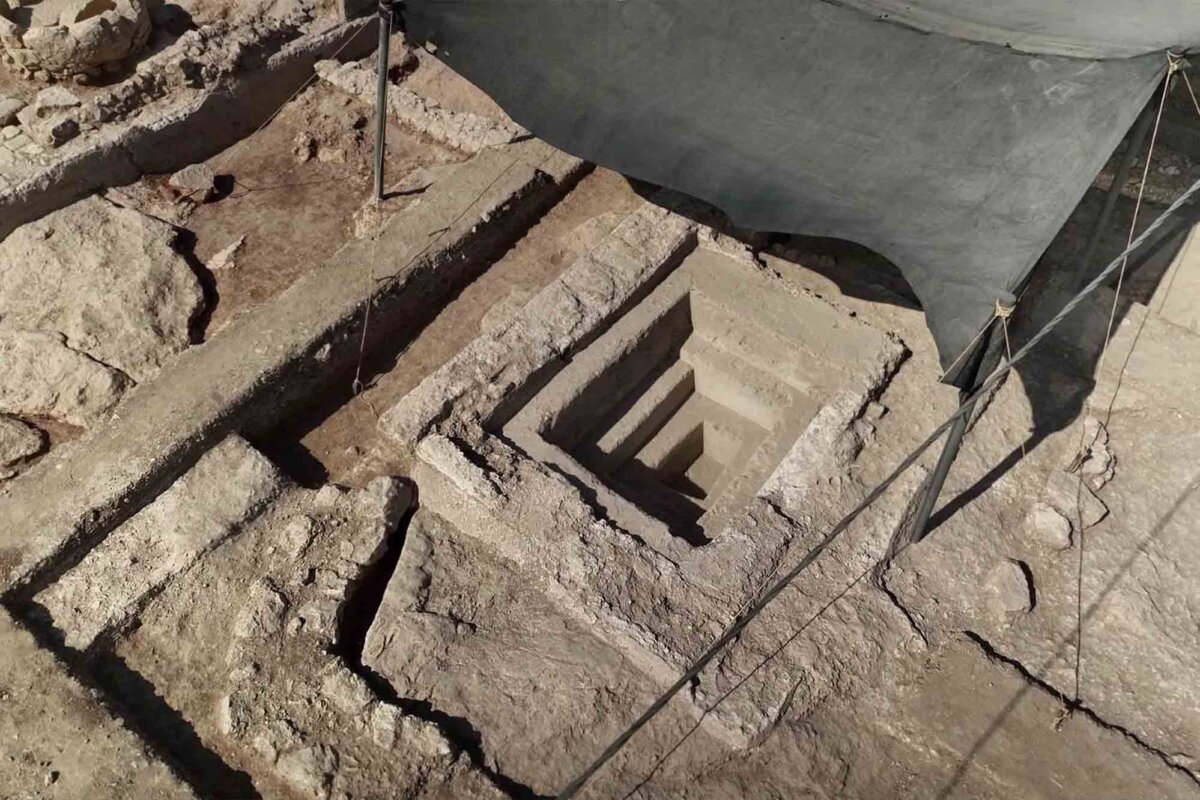
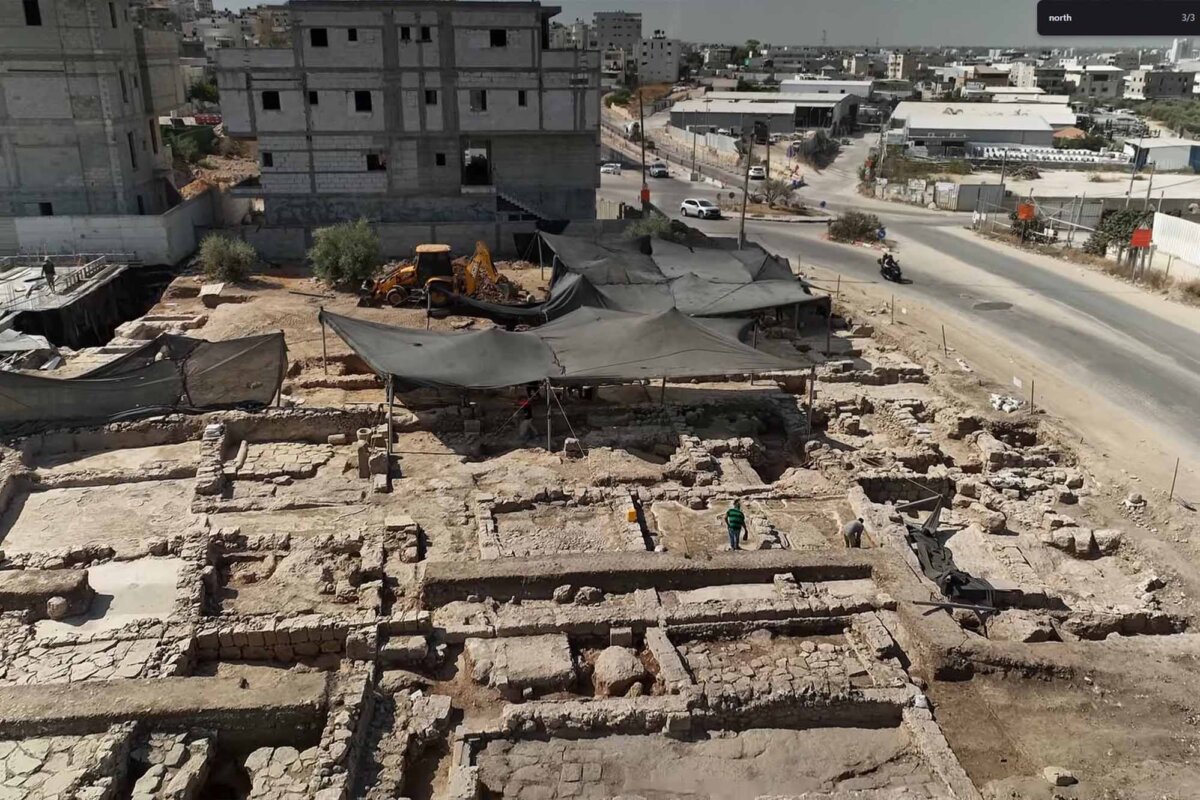
A couple of city blocks away from the new industrial buildings and noisy highway in the Israeli town of Kfar Qasim, an ancient estate has been dug up. Open tents protect the remains of Byzantine-era buildings. Archeologist expose a wealth of artifacts—a stone olive press, two ritual stone baths, and a staggeringly intricate mosaic floor.
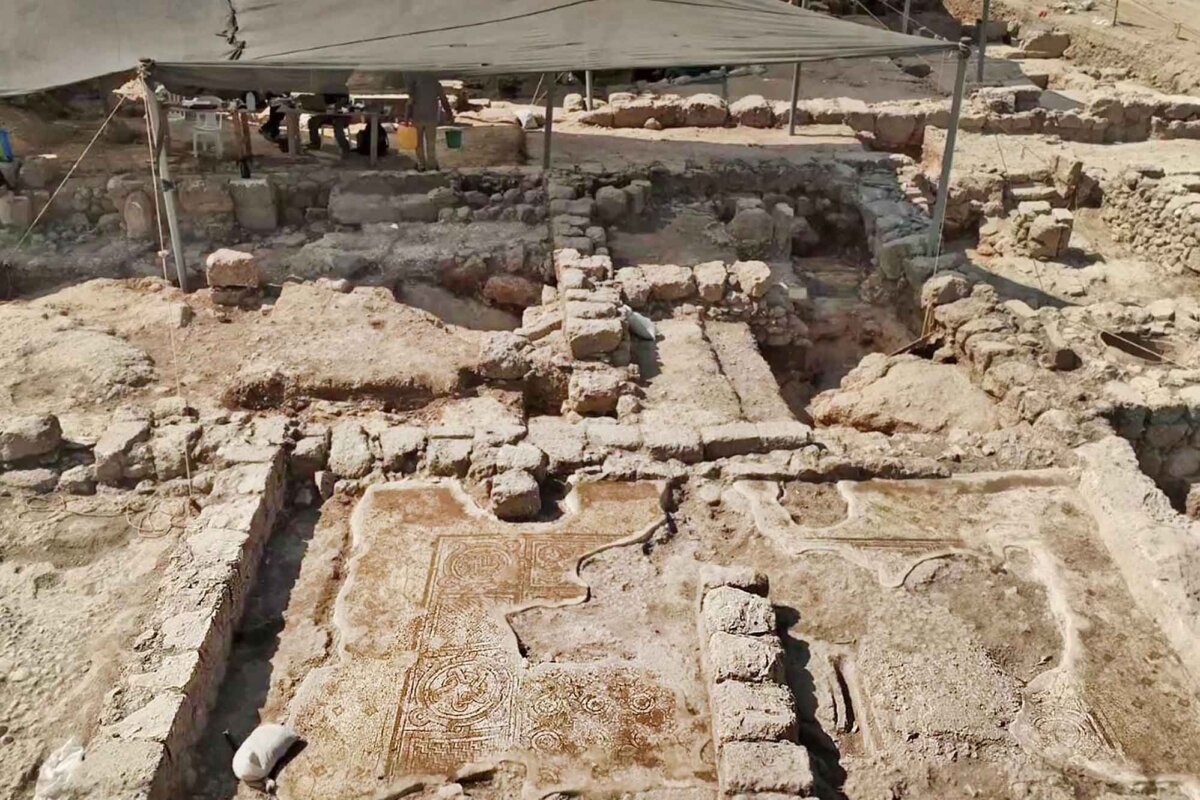
Researches darkened the pale dust covering an excavated floor area by spritzing it with water to make the mosaic’s designs and rich color stand out. They believe the ancient estate, located within the construction site of a new neighborhood development near the West Bank, was once a place of luxury. Over the centuries, however, it became an agricultural hub for producing olive oil.
“The olive press here is a factory, and all life here revolves around the olive press,” said Alla Nagorsky, a director of excavation for the Israeli Antiquities Authority (IAA), in a press release about the estate’s ancient purpose.
This was probably a public installation where locals could bring their own olives and pay to have them pressed, the researches believe. The ritual baths that were uncovered were used by workers in preparation for their labor.
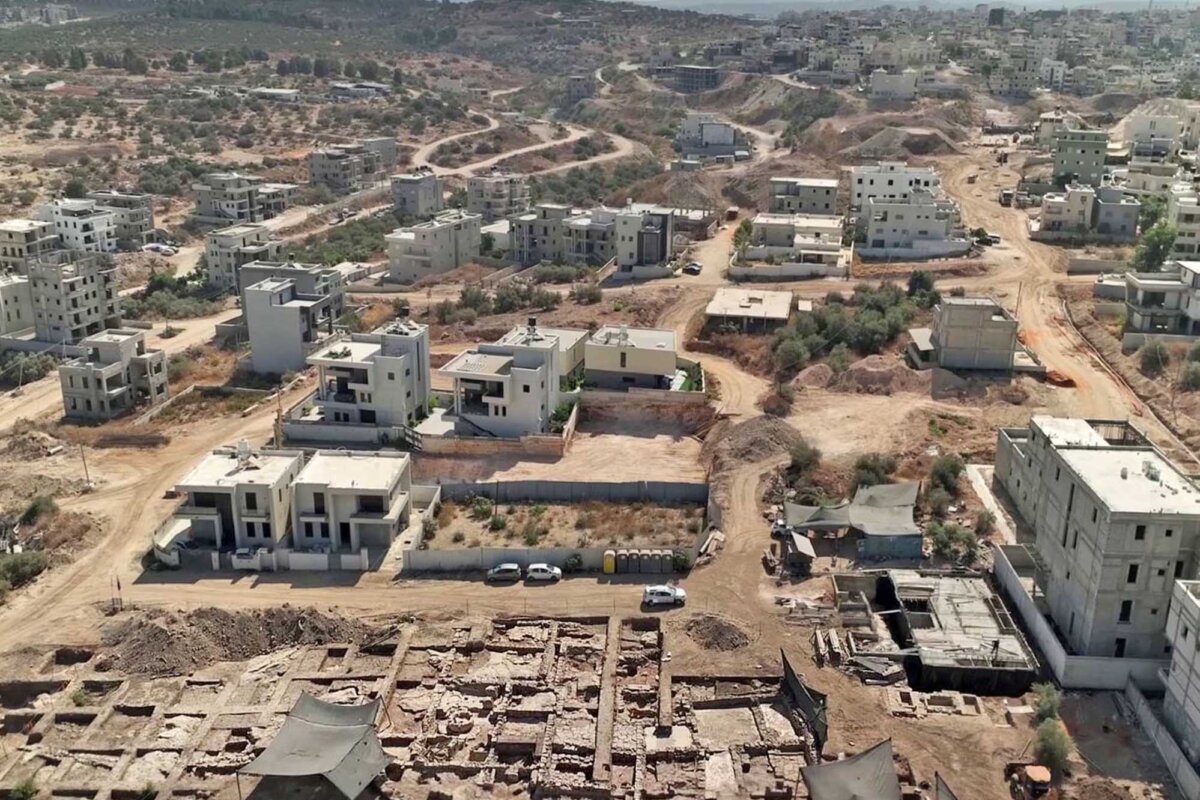
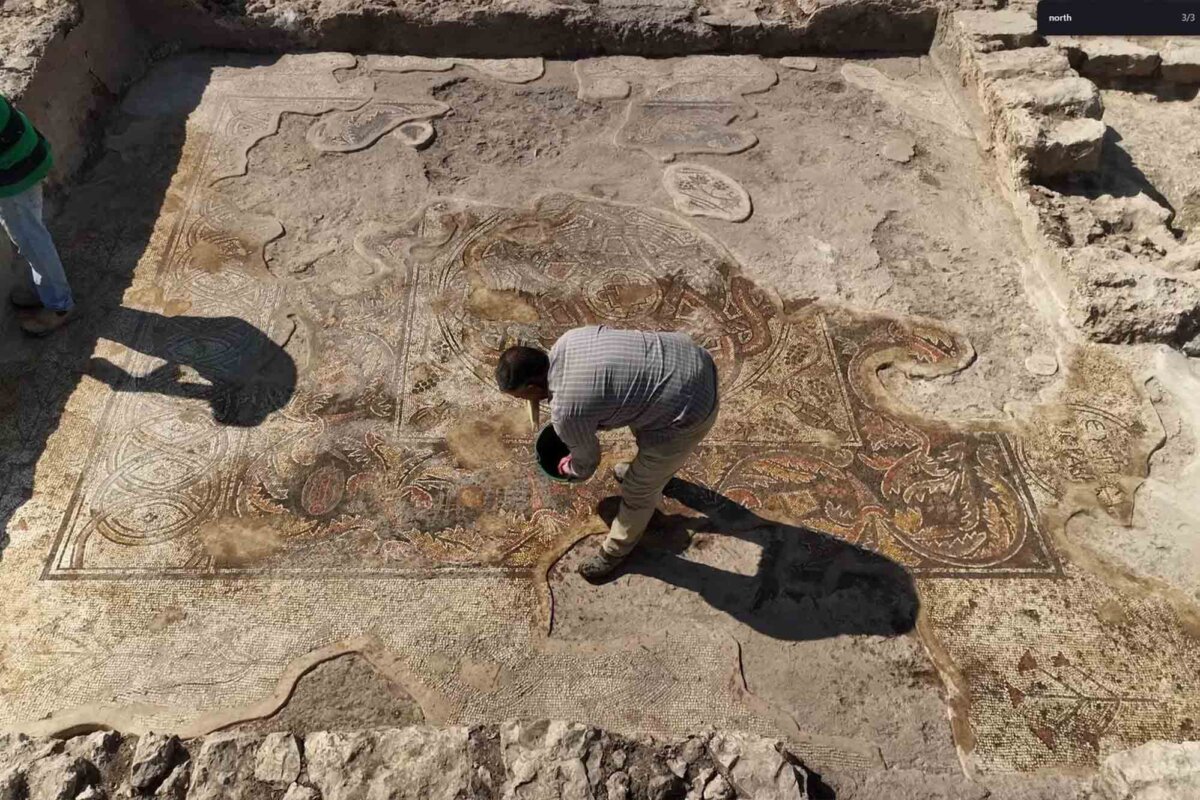
However, the lavish mosaic stone floors stood out foremost for the team of archeologists. Dense geometric patterns and vegetal images encircle the central medallion of one mosaic. An exquisite motif decorates the center with acanthus leaves, grapes, dates, watermelons, artichokes, and asparagus. Finding such artistry in such good preservation is rare in Israel, the IAA stated.
The mosaics uncovered at the Kafr Qasim site are “something special,” Nagorsky said.
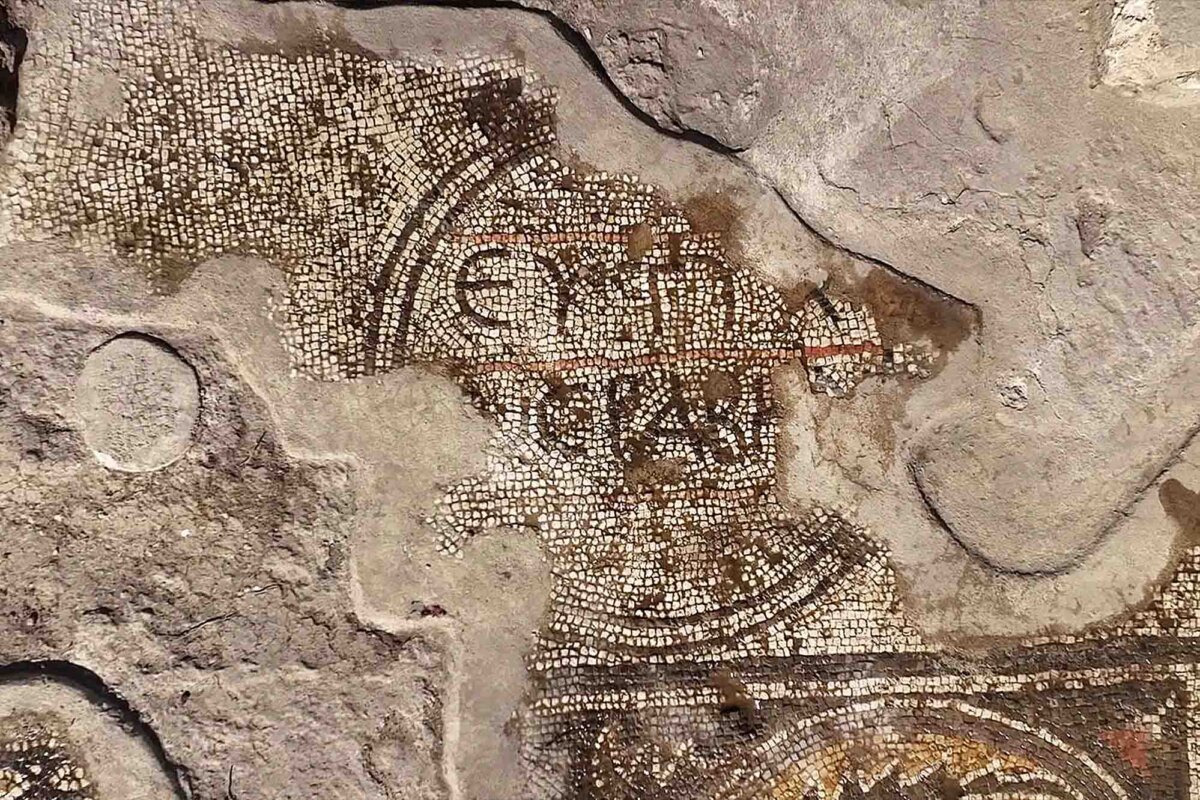
“In one of the mosaics, there’s also an inscription that says ‘congratulations’ to a person’s name, which as of now we read as ‘Rabia.’” In the room’s entrance, a partially-intact Greek inscription wishes the building’s owner “good luck.” The overall splendor and the quality of the mosaic floors indicate great wealth and prosperity, Nagorsky said.
In addition to the decorative mosaic, the voluminous sizes of the rooms point to these having been very important buildings. It’s believed they were built by Samaritans who lived here for 400 years, from the 4th century to 7th century A.D., roughly from the fall of the Roman empire to the end of the Byzantine age.
The changes this once-luxurious estate saw over the centuries likely had to do with an uprising during the Byzantine era, when the Samaritans revolted against the Byzantian emperors. Once a place of luxury, the estate was integrated with agriculture. Spaces between once-splendid columns were filled to make humble walls. The mosaic floors were damaged by these new additions.
“Unlike some of the other Samaritan sites that were destroyed in these revolts, the agricultural estate in Kafr Qasim actually continued in use, and even preserved its Samaritan identity—as evidenced by the Samaritan ceramic oil-lamps uncovered in our excavation,” Nagorsky said.
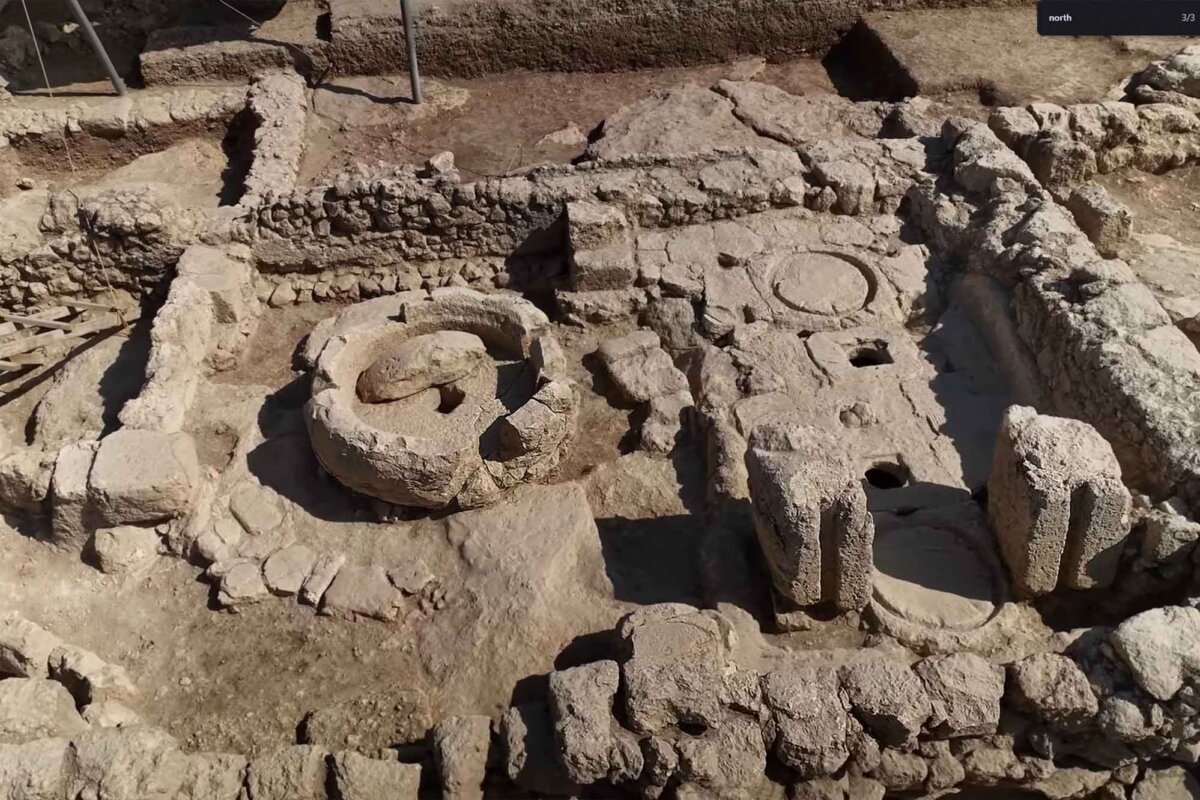
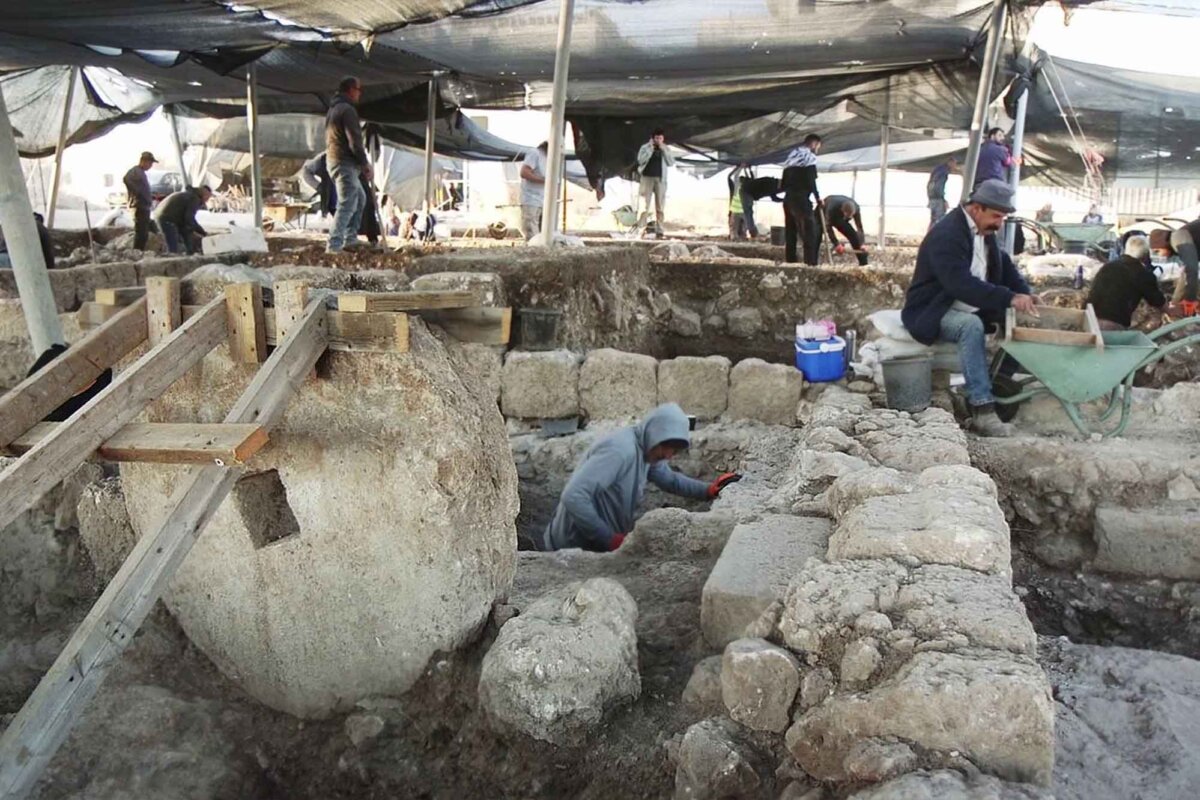
On the estate’s north side, a large stone basin was found containing a crushing stone for pressing olives.
“This type of olive press is more typical of the Jerusalem region and the Judean Shephelah and is less common in Samaria,” Nagorsky said.
They also found a large, warehouse-like building and a mikvah, or ritual purification bath, with steps around its perimeter. A second ritual bath for private use was found in the courtyard of another building.
“This is a fascinating site, which displays the historical gamut between the days of prosperity and the decline of the Samaritan community,” Nagorsky said.
Nowhere in Israel has a structure so central and so large as this been uncovered, the IAA stated. Nagorsky hopes to discover more about its history over the centuries and the lives of its ancient Samaritan inhabitants.