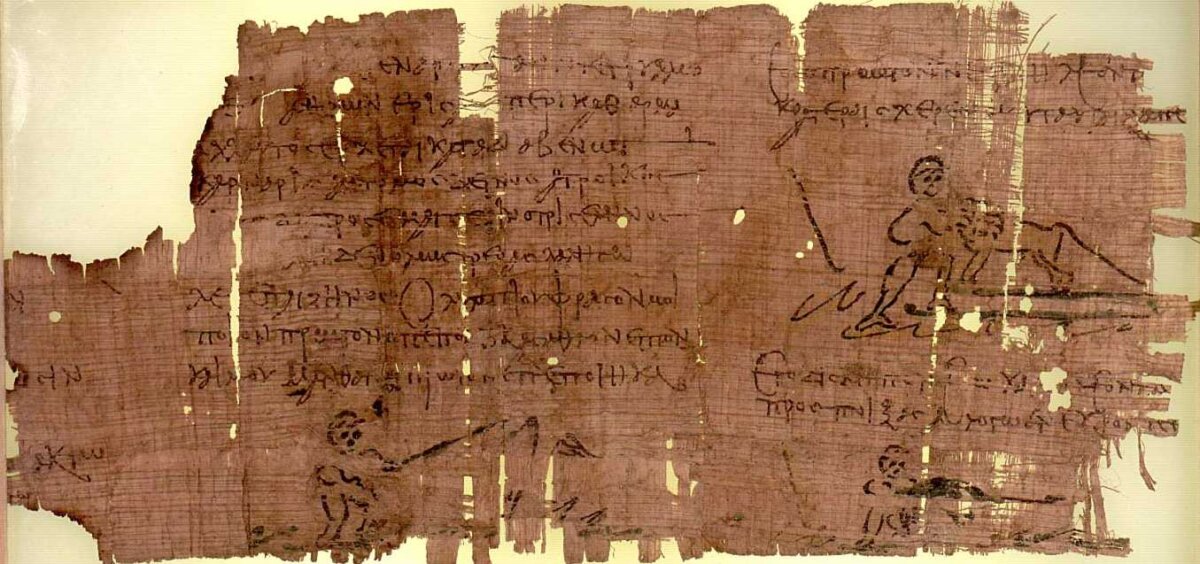
In a groundbreaking discovery, archeologists working in the ancient city of Oxyrhynchus, Egypt, have discovered a passage from Homer’s epic poem, the “Iliad,” buried with a 1,600-year-old mummy. The text was found stuck in the mummy’s abdomen, meaning it was placed under the wrappings on the deceased’s body during embalming. Archeologists have found other mummies in the area with papyri carrying religious ritual texts, but this is the first time a literary text has been discovered in this context.
First Literary Papyrus in a Mummy’s Wrappings
“This is the first time a Greek literary text has been found in a mummy,” according to an official statement from the University of Barcelona. “It is the first time in the history of archaeology that a Greek literary text has been found deliberately incorporated into the mummification process.”
The statement also included a quotation from Professor Ignasi-Xavier Adiego, one of the scholars who analyzed the papyrus. He explains the significance of the discovery:
“This is not the first time we have found Greek papyri, bundled, sealed, and incorporated into the mummification process, but until now, their content was mainly magical. Furthermore, it is worth noting that, since the late 19th century, a large number of papyri have been discovered at Oxyrhynchus, including Greek literary texts of great importance, but the real novelty is finding a literary papyrus in a funerary context.”
The text in question comes from one of the most iconic passages in Western literature: the catalog of ships in Book II of the “Iliad.” This section of the narrative poem lists the different peoples, tribes, ships, and chieftains who sailed to Troy to recover Helen, the wife of the Greek hero Menelaus, who had been abducted by Paris, a prince of Troy (or “Ilium”).
Researchers from the University of Barcelona and the Institute of the Ancient Near East discovered the tattered artifact in Tomb 65 of Sector 22 late in 2025 at the Al Bahnasa necropolis. This site is linked to the ancient city of Oxyrhynchus, a key city of Greco-Roman Egypt located 190 kilometers south of Cairo.
The poetic mummy was found during an excavation that uncovered a funerary complex comprising three limestone chambers. The chambers contained mummies and sarcophagi, along with signs of prior looting.
According to Smithsonian magazine, the archaeological team is currently proposing hypotheses to explain the presence of the “Iliad” text with the mummy, which dates from the period of Roman control of Egypt and appears to be an adult male. Previous papyrus fragments of this kind, found with mummies, seemed intended to protect the individual or serve some other religious purpose. It’s unclear whether a literary text such as Homer’s “Iliad” could have served the same purpose for the embalmers.
Maybe this piece of literature was simply a beloved text of the deceased. Or maybe the embalmer was reusing a discarded piece of papyrus that just happened to include Homer’s verses as part of the mummy’s wrappings. But the placement of the poem on the mummy’s abdomen indicates that it was put there purposely. Another hypothesis is that papyrus texts used in embalming served as a signature of the embalmer.
Homer in Roman Egypt
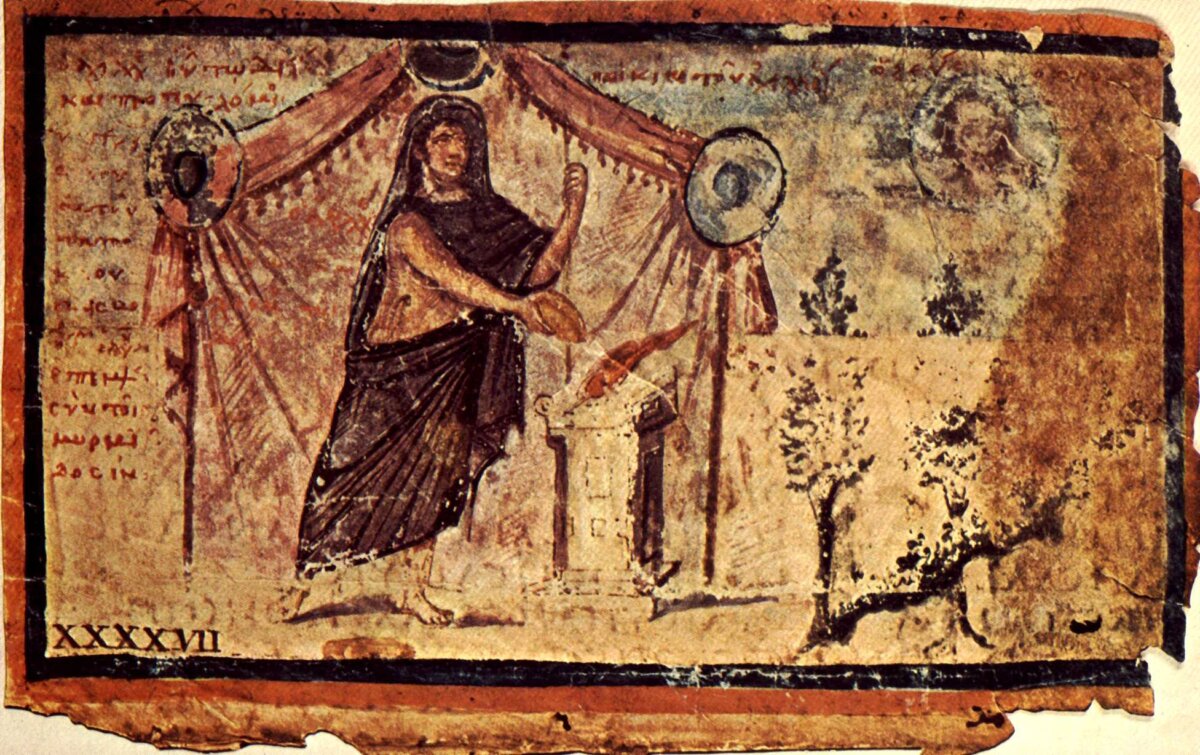
Whatever the reason for the text’s presence in the tomb, the discovery speaks to the widespread popularity of Homer’s poem throughout the ancient Mediterranean. According to papyrologist Leah Mascia, copies of the “Iliad” circulated across Egypt and were used both for education and private reading. Greco-Roman culture heavily influenced Egypt, particularly after the region came under Alexander the Great’s control in 332 B.C.
Few works of literature have left a deeper mark on the foundations of Western civilization. The searing epic poem deals with important themes that have dominated the “Great Conversation” ever since, such as humanity’s relationship to the divine, fate, free will, war and peace, and the nature of true heroism. The discovery of a mummy who was accompanied into the afterlife by Homer’s verses is just the latest reminder of this fact.
The Oxyrhynchus Archaeological Mission launched in 1992 and is one of the longest-running Spanish archaeological digs. The project led by Maite Mascort and Esther Pons has unearthed many exceptional historical and archaeological finds. In addition to the Homeric text, archeologists also found mummies with tongues covered with gold foil or copper foil. This discovery correlates with ancient Egyptian belief that a golden tongue would enable the dead to speak to the gods of the underworld. Gold symbolized the flesh of the gods. The use of copper is less well understood.
The Oxyrhynchus site was originally cataloged by the French scholar Vivant Denon, who was with Napoleon when the French Emperor invaded Egypt in 1798. British researchers later began digging at the site, where they found tens of thousands of ancient texts in what had once been the city’s dump. From garbage dumps to tombs, Oxyrhynchus offers a fascinating window into ancient Egyptian culture, and the literary history of Homer’s poem.
What arts and culture topics would you like us to cover? Please email ideas or feedback to features@epochtimes.nyc