As America fought for its place in the world of classical music, the biggest challenge was the persistent notion that all serious musical training must be done in Europe.
The first group of Americans to distinguish themselves as serious composers were the Boston Six, also known as the Second New England School of Music. From the 1860s to the 1920s, these gifted and tenacious musicians inspired audiences and fellow musicians alike by showing just what Americans could produce.
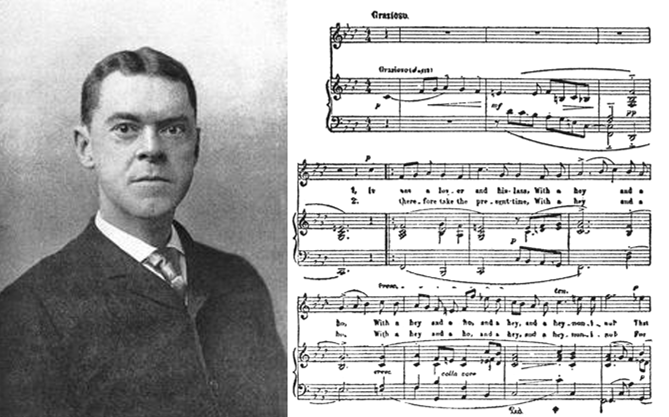
The earliest of these composers received their formal training in Europe, bringing that legacy back to the United States, where they made it distinctly American. However, one member of the Boston Six received his entire music education in America, making him the first noted American composer to be trained exclusively in the United States. This composer was Arthur Foote (1853–1937).
Unitarian Roots
Arthur Foote was born on March 5, 1853, in Salem, Massachusetts. The third and youngest child in his family, he was only 4 when his mother died, so he was largely raised by his much older sister.
Foote had roots in the two religious schools of thought that had shaped New England in the generations before his time: Puritanism and Unitarianism. His ancestors were early Puritan settlers in Massachusetts, but his parents met while teaching Sunday school and singing in the choir of local Unitarian churches.
Foote’s mother, Mary Wilder Foote, was friends with famous Transcendentalists like the Peabody sisters, Ralph Waldo Emerson, and Nathaniel Hawthorne, who also were Unitarians. His father, Caleb, owned and edited the Salem Gazette. His parents’ religious beliefs shaped the course of his life.
A Master of Music
Foote received his formal musical training at Harvard, studying composition and music history with another member of the Boston Six, John Knowles Paine. His brother, Henry, married Frances Anne Eliot, the sister of Harvard president Charles W. Eliot.
Foote graduated in 1874. The next year, he received his master’s degree, the first master’s in music ever granted by an American university. Foote had long considered music a hobby, as he planned to join his father at the Gazette. However, his postgraduate studies with organist B.J. Lang made him decide to become a professional musician.
Like many young musicians, he first supported himself by teaching piano and organ. In 1876, he began giving piano recitals and performing with chamber music ensembles. Soon after, he found his preferred performance venue, the church.
Organ, Hymns, and Hymnals
Foote greatly admired his older brother, Henry, who became a Unitarian minister. His son, grandson, and grandnephew also followed that vocation. While Foote was never a member of the clergy, he enjoyed performing as a church organist more than in a concert hall.
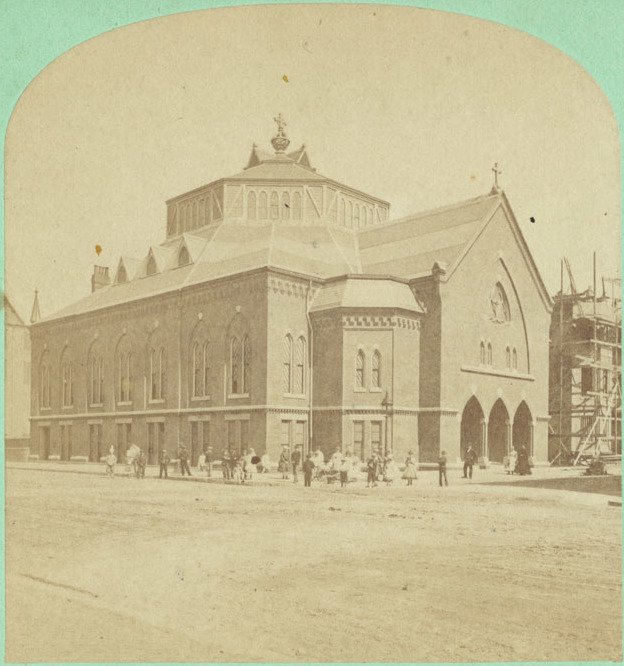
In 1876, he became church organist at Boston’s Church of the Disciples. In 1878, he became organist and choirmaster at First Church, a Unitarian congregation in Boston, a position he held for 32 years.
As church organist, Foote wrote organ pieces, hymns, and anthems for church services. Although he purposely wrote them to be short and simple enough for the congregation to sing easily, he was surprised that the most popular was actually among his most complex, “Still, Still With Thee.”
Foote’s brother and his wife compiled a hymnal for King’s Chapel, where his brother served as minister, a ministerial and editorial tradition later carried on by his descendants. Foote was one of the editors of his brother’s Unitarian hymnal in 1890, “Hymns of the Church Universal.” He collaborated with his sister on “Hymns for Church and Home” for the American Unitarian Association in 1896.
Along with Paine, he was among the founders of the American Guild of Organists. He also helped organize the group’s New England chapter and served as its national honorary president for three years.
Dean of American Composers
For the first two decades of the 20th century, Foote was considered the “Dean of American Composers.” He’s best remembered for his instrumental compositions. He wrote “Four Character Pieces After the Rubaiyat of Omar Khayyam,” which was his most popular orchestral work during his lifetime.
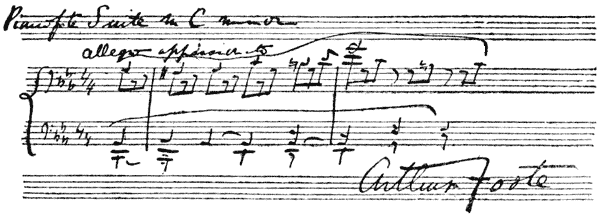
His “Night Piece for Flute and Strings” and “Suite in E Major” are the most frequently performed and recorded today.
He preferred to write chamber compositions, like sonatas and concertos, for individual instruments. Almost all his chamber ensemble compositions have been recorded.
Foote was one of the early American composers to promote the work of European composers Johannes Brahms, Edvard Grieg, and Richard Wagner, whom some conservative members of the musical establishment considered too daring.
Although he never lost his traditional classical roots, he experimented with new styles, such as his flute, harp, and cello piece “At Dusk.” He also wrote art songs for voice and piano, as well as secular choral works.
Foote received the honorary title of dean because he influenced generations of future musicians and composers through his writing and music. In addition to teaching, Foote wrote many textbooks on musical pedagogy.
He wrote, “Modern Harmony in Its Theory and Practice” with Walter R. Spalding in 1905 (re-released in 1969 as “Harmony”), “Some Practical Things in Piano-Playing” in 1909, and “Modulation and Related Harmonic Questions” in 1919. He also followed in his father’s footsteps as a journalist by contributing articles to several music journals.
Arthur Foote died on April 8, 1937, in Boston, leaving behind a vibrant musical legacy. Wilma Reid Cipolla’s catalog is a useful resource on Foote’s compositions.
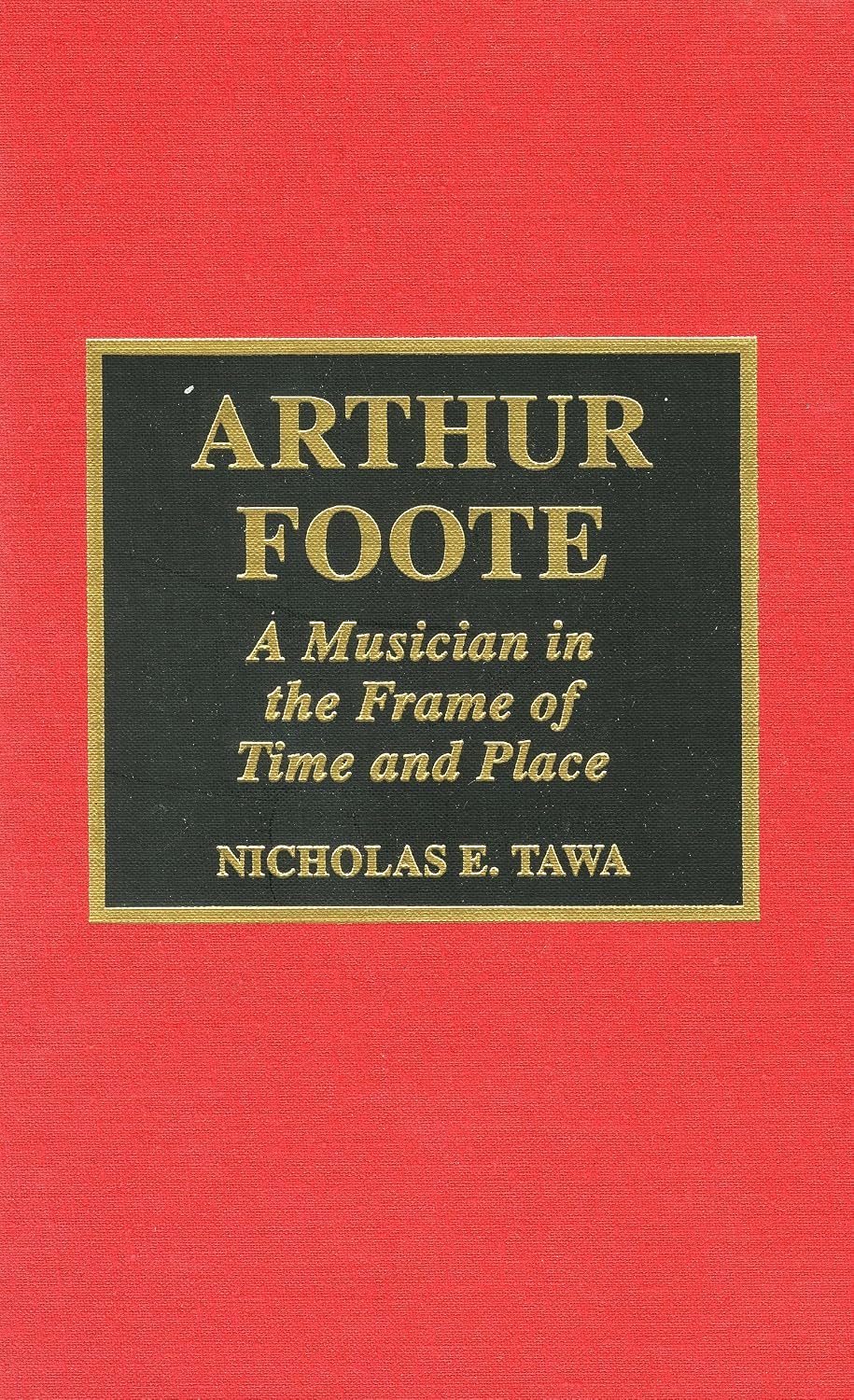
The autobiography Foote’s daughter encouraged him to write provides fascinating insight into the composer’s life. Further information is provided in Nicholas E. Tawa’s well-researched biography “Arthur Foote.”
However, the best memorial to this man is his music, which can best be discovered and appreciated one note at a time.
What arts and culture topics would you like us to cover? Please email ideas or feedback to features@epochtimes.nyc.