A month shy of his 89th birthday, the award-winning American artist and art instructor Glenn Vilppu can’t stop drawing. He’s drawing every day, and often teaching—anyone from beginners to established artists.
He’s taught thousands of students and continues to teach around the world in person, in workshops, and in animation studios. He’s one of the founders and teachers of the New Masters Academy. Students also learn via his “Vilppu Drawing Manual.” He’s also taught students through a series of online demonstrations and interactive classes and critiques at the Vilppu Academy.
At the time of the interview, he was with his wife, Eleanor, in the midst of a European teaching tour for the Vilppu Academy. He was about to start teaching in Sardinia, Italy. The previous week they were in Paris. The following week they’d be in Vienna. It’s easy to see why he calls himself a “wandering preacher of drawing.”
Rooted in the old masters, Vilppu’s approach to drawing has become the animation industry standard for the likes of Walt Disney Animation Studios, Marvel Studios, and Warner Bros.
Famous former Disney animator Ron Husband wrote in a testimony for Vilppu’s drawing manual: “Glenn is truly a modern-day ‘old master’ at drawing and analyzing the human and animal figures. Through thoughtful text and dynamic illustrations, he has shared his approach and inspired me.”
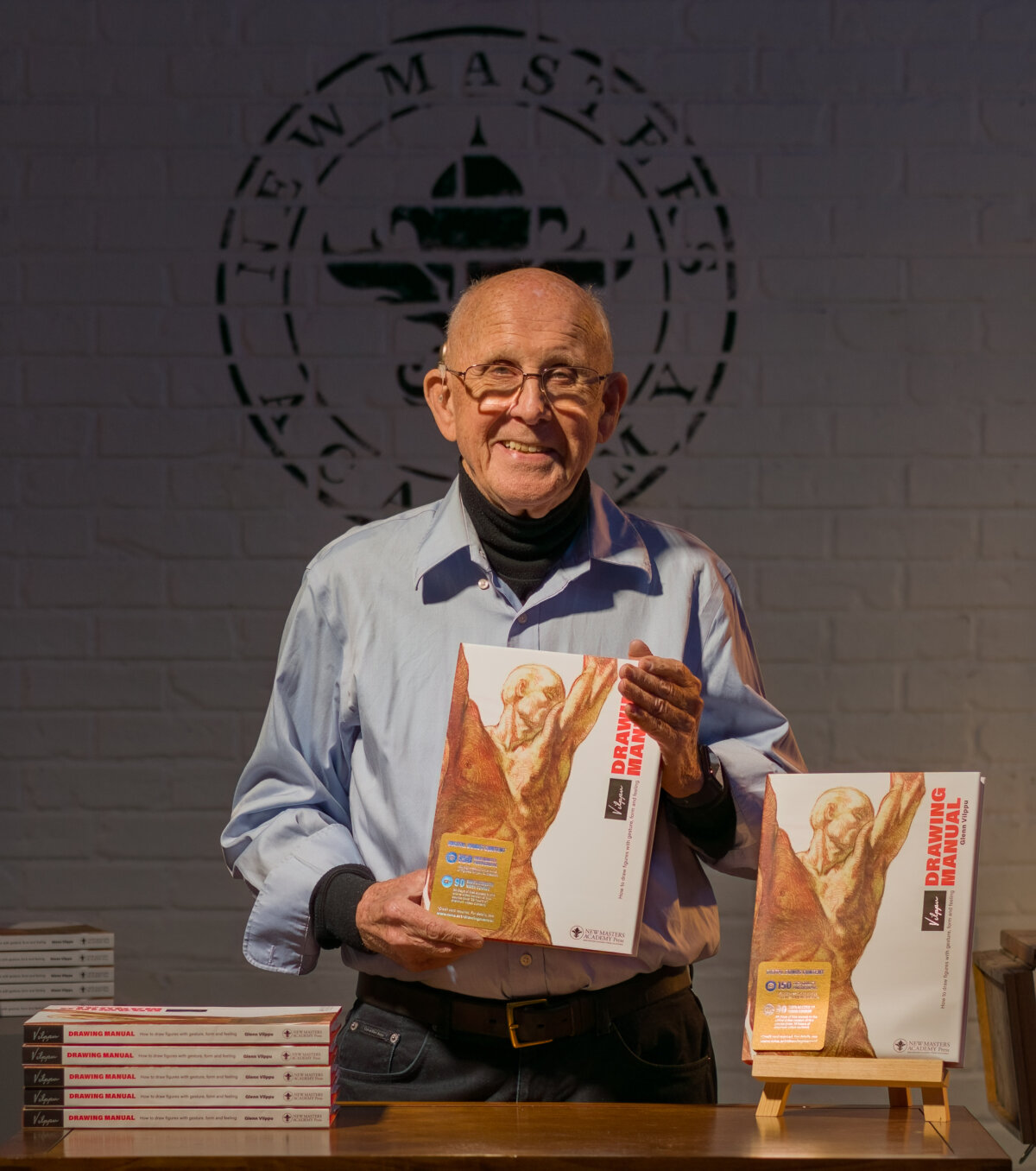
In 2022, Vilppu was awarded a prestigious Annie Award for Special Achievement in Animation. It’s an amazing accolade, even more so because he never dreamed of working in animation.
The Reluctant Animator
Born in America to Finnish parents, Vilppu spent his early childhood in Finland. “We were way up in the Arctic, where Russia attacked,” he told The Epoch Times. When he was 3 years old, the family fled Finland to America, and he knew no English. “The drawing was my sort of shelter,” he said.
His father was a Sunday painter, and Vilppu remembers watching his mother pose for her portrait when he was 6 years old. He sat on the floor copying the portrait from his father’s sketchbook. He hasn’t stopped drawing since; his sketchbooks date back to 1953.
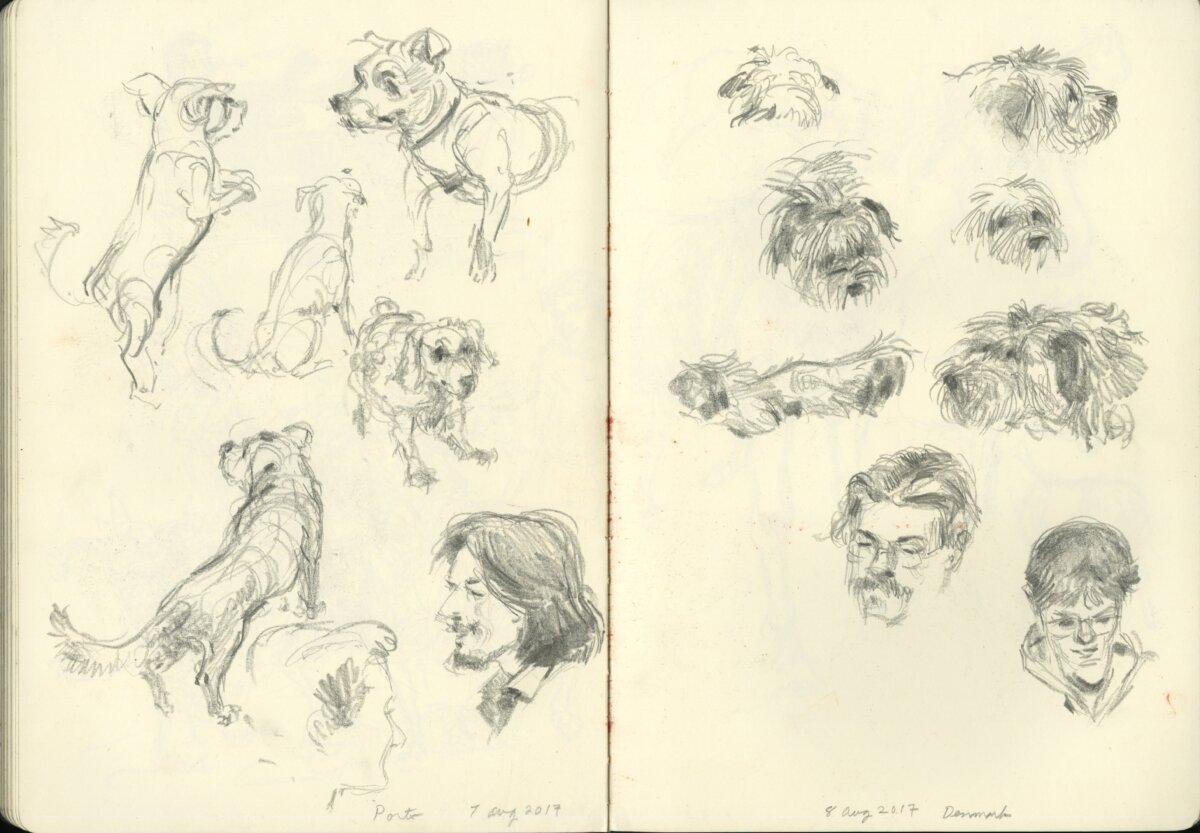
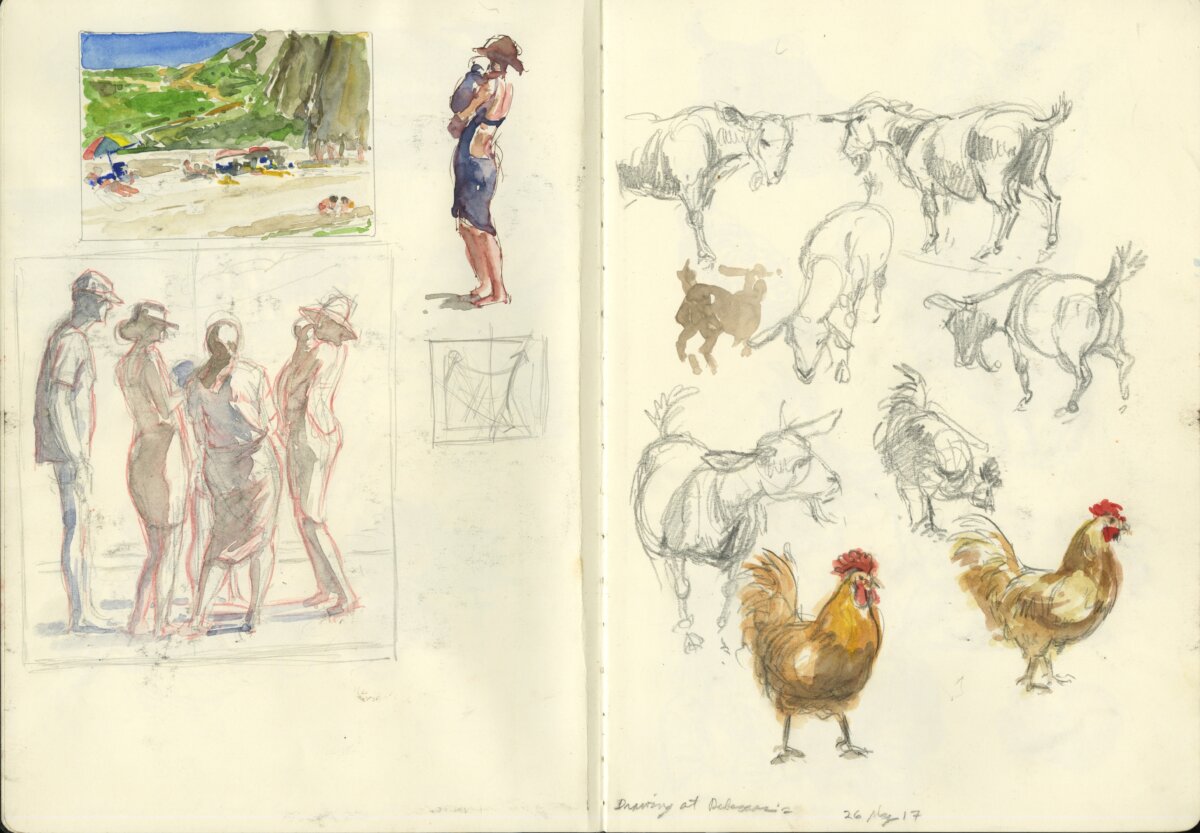
He said that drawing got him through high school, where he won a full scholarship to the ArtCenter College of Design in Pasadena, California. Realizing he wasn’t quite ready for rigorous study, he enlisted in the Navy for a few years before he enrolled at ArtCenter.
His teaching days started during his studies, and he eventually became an ArtCenter instructor. This was in the late 1950s and early 1960s, when the current trend in art had become abstract and nonobjective. Vilppu pursued traditional art methods in his teaching. When the ArtCenter classes no longer emphasized drawing fundamentals—the foundational skills that artists of all mediums need—Vilppu decided to leave after 13 years.
He founded Vilppu Studio, his own art school based on traditional art principles. He did everything from teaching drawing and painting techniques to performing janitorial tasks. After five years, he burned out.
Animating With the Old Masters
Many of Vilppu’s students worked in animation studios, but he had never been interested in working in the industry. He’d held solo art exhibitions every year for 20 years, and that was his focus. His ArtCenter instructors didn’t classify animation as art. When he started working at Disney, he was 40 years old, and many of his painter friends felt he’d sold out.
“I knew nothing about animation, other than you do the same thing over and over again to make it move,” he said. On the way home after being hired, he stopped at a bookstore and bought a book on the art of Disney animation, just so that he could understand what his colleagues were talking about.
He needn’t have worried. He said that the animation-making process is no different from the process Michelangelo used to create the paintings of the Sistine Chapel. “The technical things are different, but the actual creative process is no different,” he explained. “You spend your whole time trying to communicate through drawing ideas and movements and stories—something I was already doing.”
He started teaching at Disney immediately. “I have a certain knack for storytelling.” He rather humbly attributes his success in animation to organizing the visual storytelling process into clear steps—and, of course, to the old masters. “Everything I really learned has been [from] studying composition with the old masters.”
The Heart of Vilppu’s Drawing
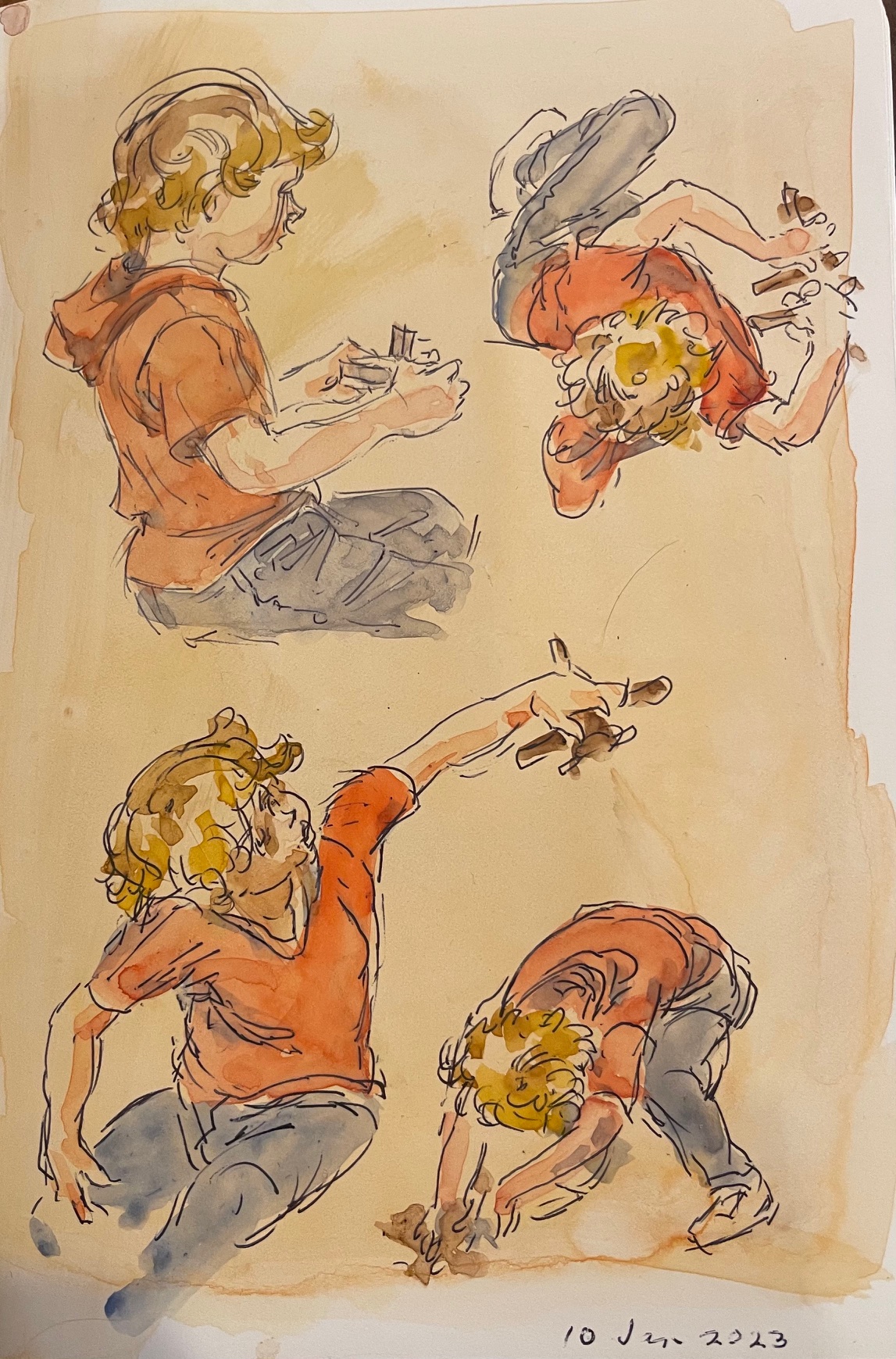
Vilppu explained his teaching approach: “I decided very early that I wanted to focus on the fundamentals, because fundamentals don’t change. Fundamentals are fundamental. If you focus on the fashion of the moment, you’re basically focusing on obsolescence.”
The core of Vilppu’s drawing dates back to the old masters and the writings of Renaissance humanist Leon Battista Alberti (1404–1472). Alberti influenced Renaissance artists especially with his interpretations of Vitruvius, Emperor Augustus’s architect, from the first century B.C. Leonardo da Vinci (1452–1519) illustrated Vitruvius’s teachings in his “Vitruvian Man.”
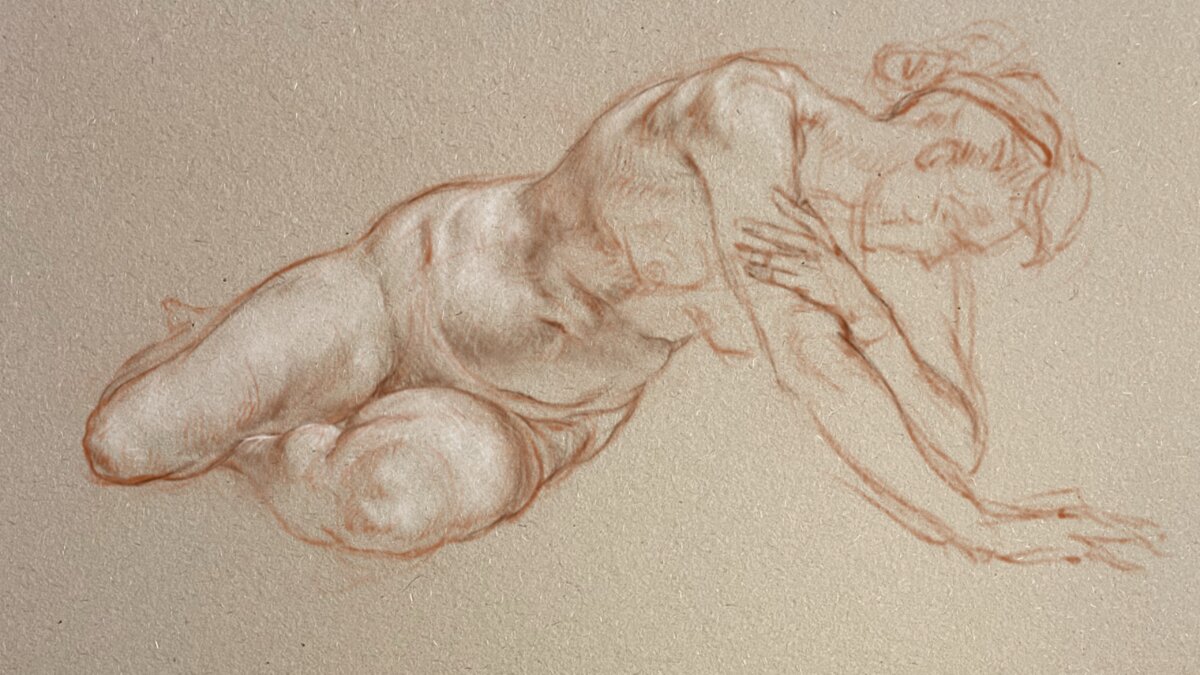
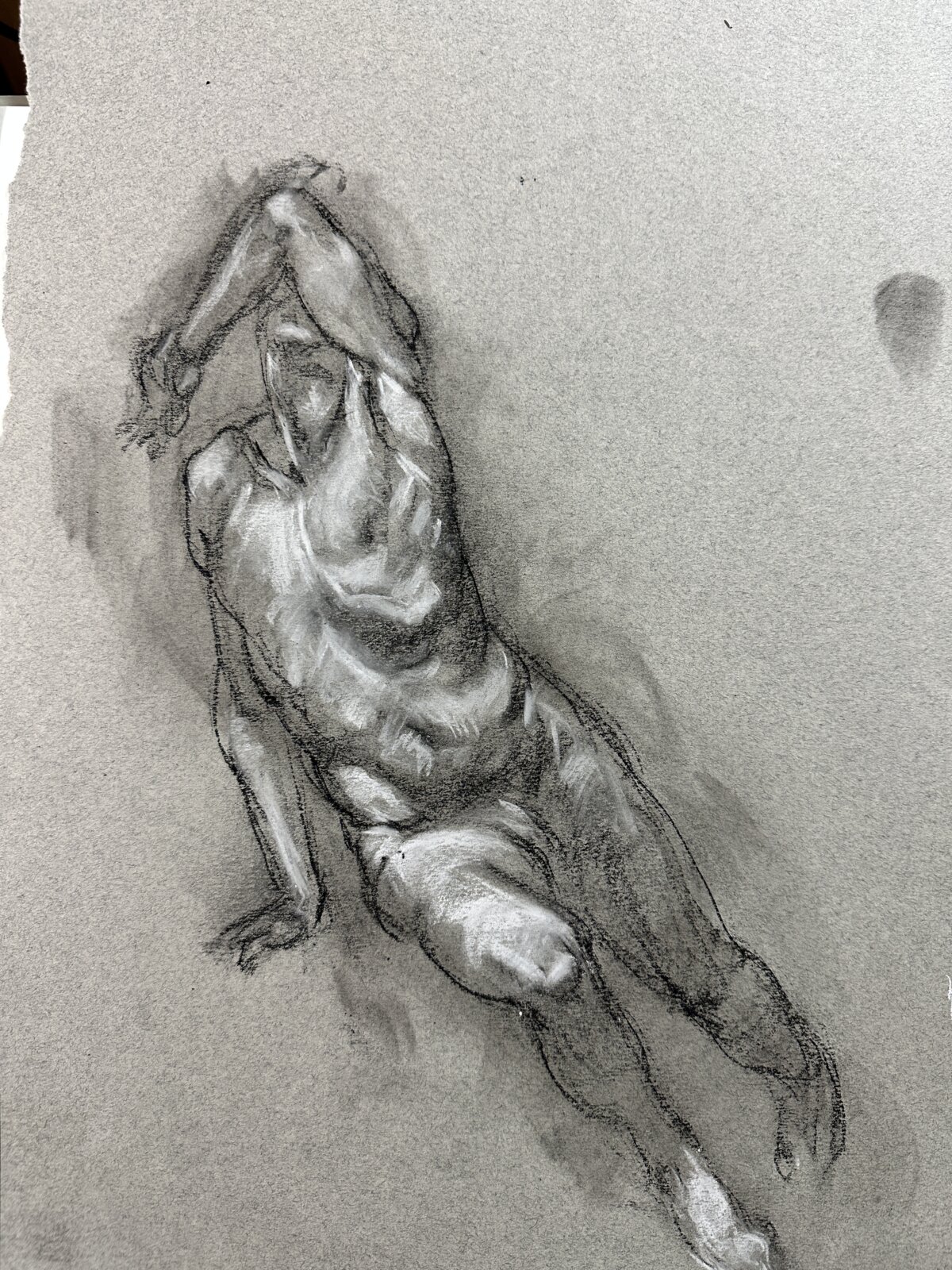
“The essence of [Alberti’s teachings] is that you learn from the inside out: You learn the muscles, the bones. … You do this so that you can take and capture the emotional element of your subject, and that’s the mental attitude of your subject.”
Take a bird singing: The viewer needs to hear that melody in the drawing—or at least believe it. “But that takes a shift in thinking that’s contrary to the way most people are thinking and studying,” he said.
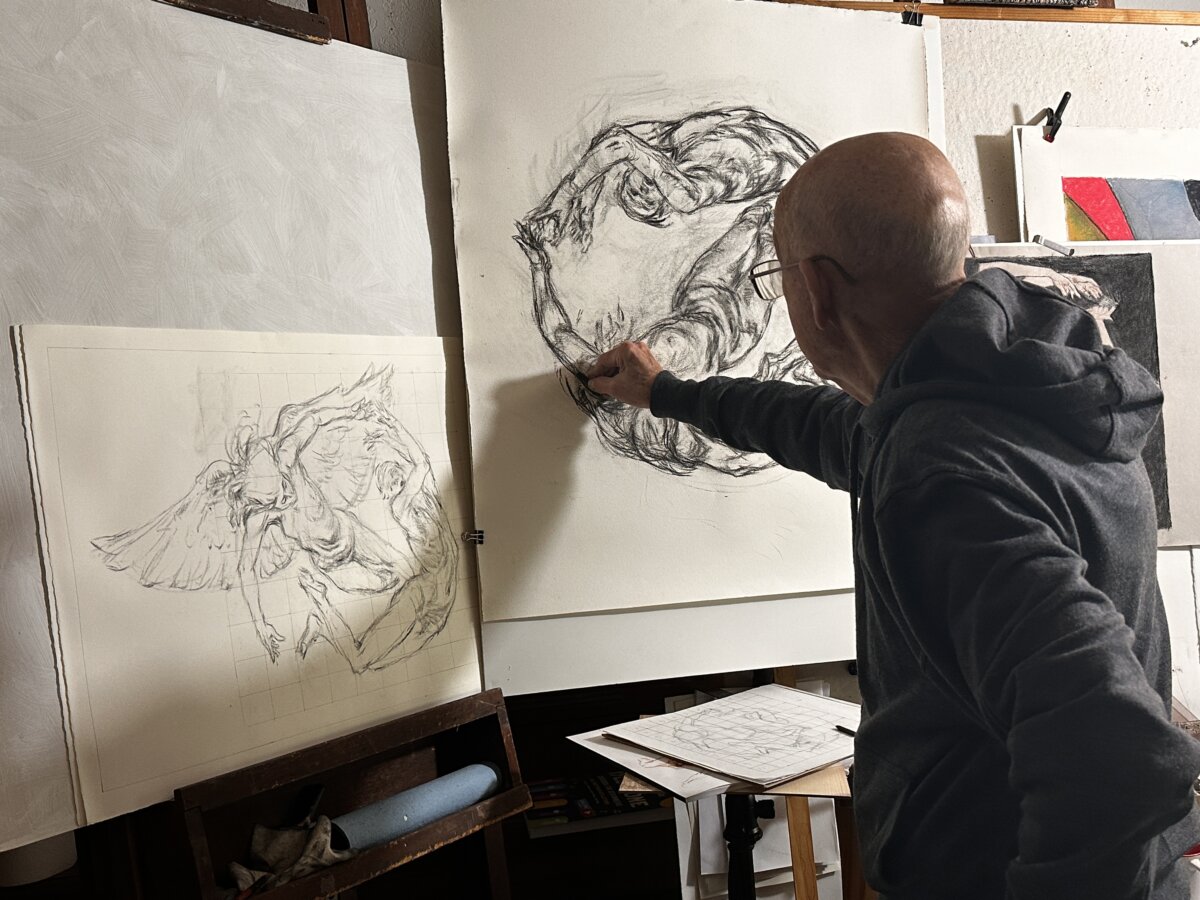
Vilppu looks to the likes of Titian (circa 1490–1576) and Tintoretto (1518–1594) for his teaching demonstrations, but time and again, he sees students struggle. They observe the outlines, shapes, and color tones. He encourages them to seek out the essence of the subject, their internal quality. ”It’s difficult for people to think in those terms without trying to copy what they see.” It’s an approach that requires aptitude to keep developing the skills and abilities to communicate the emotion.
The Language of Art
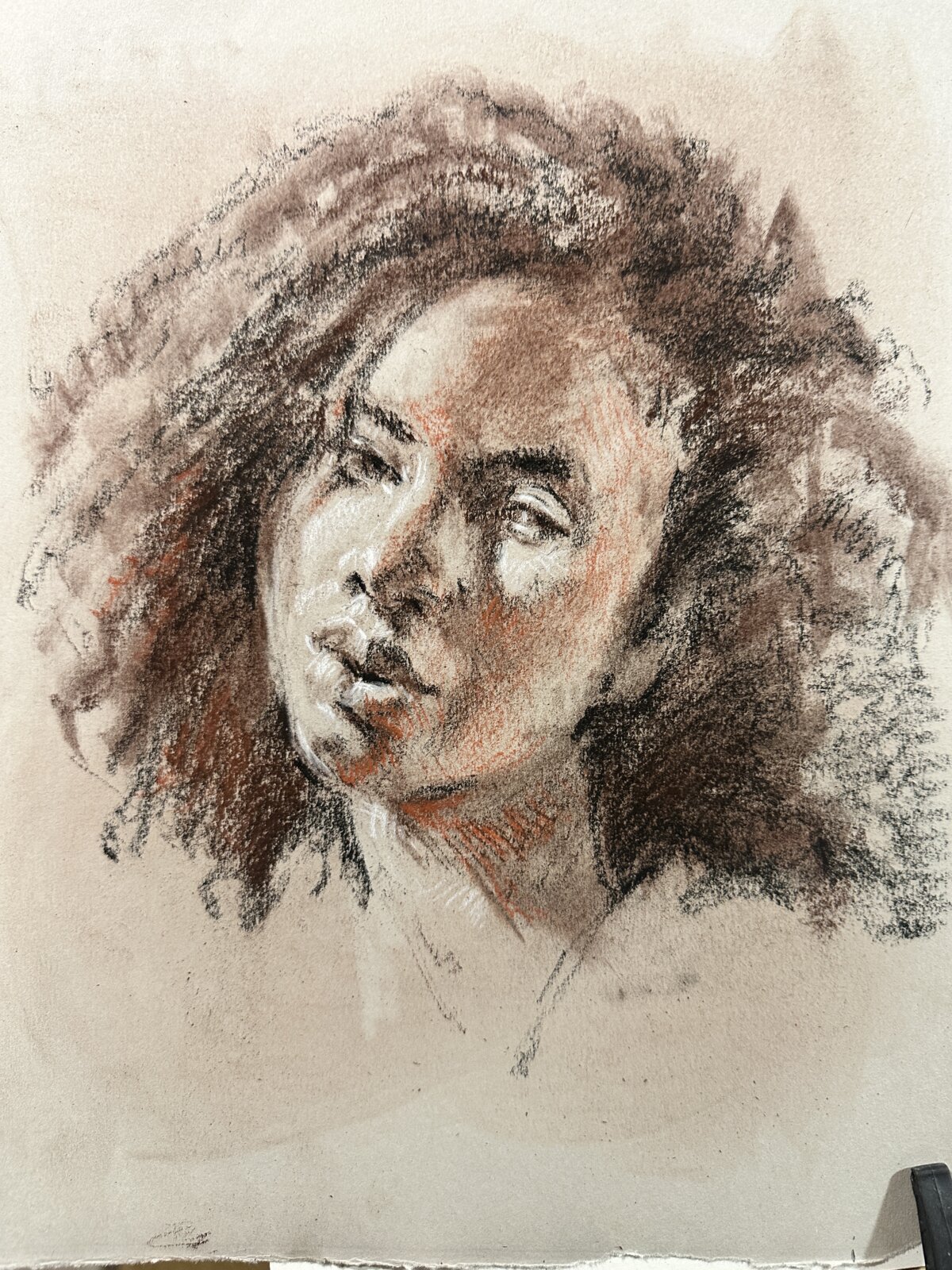
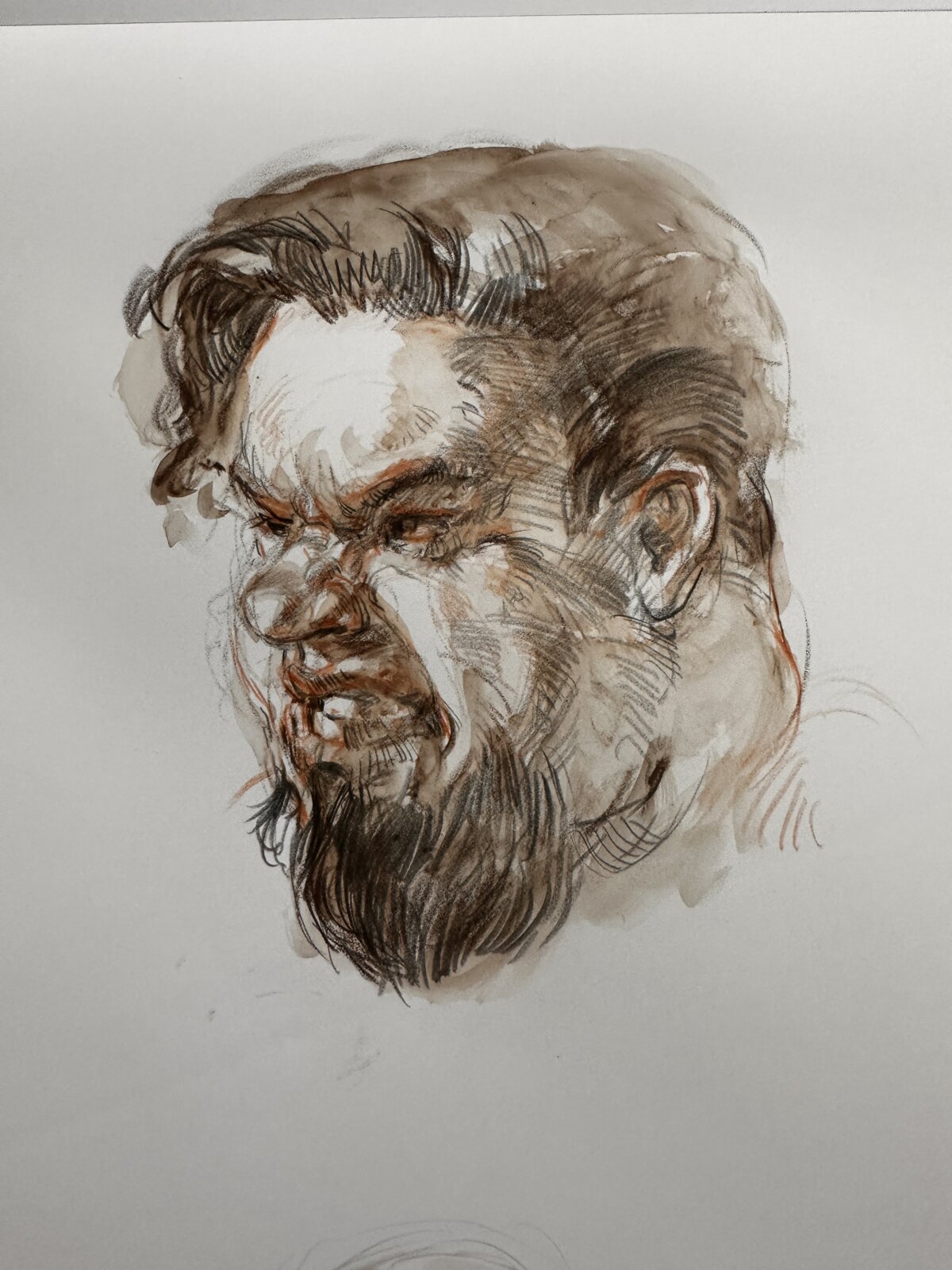
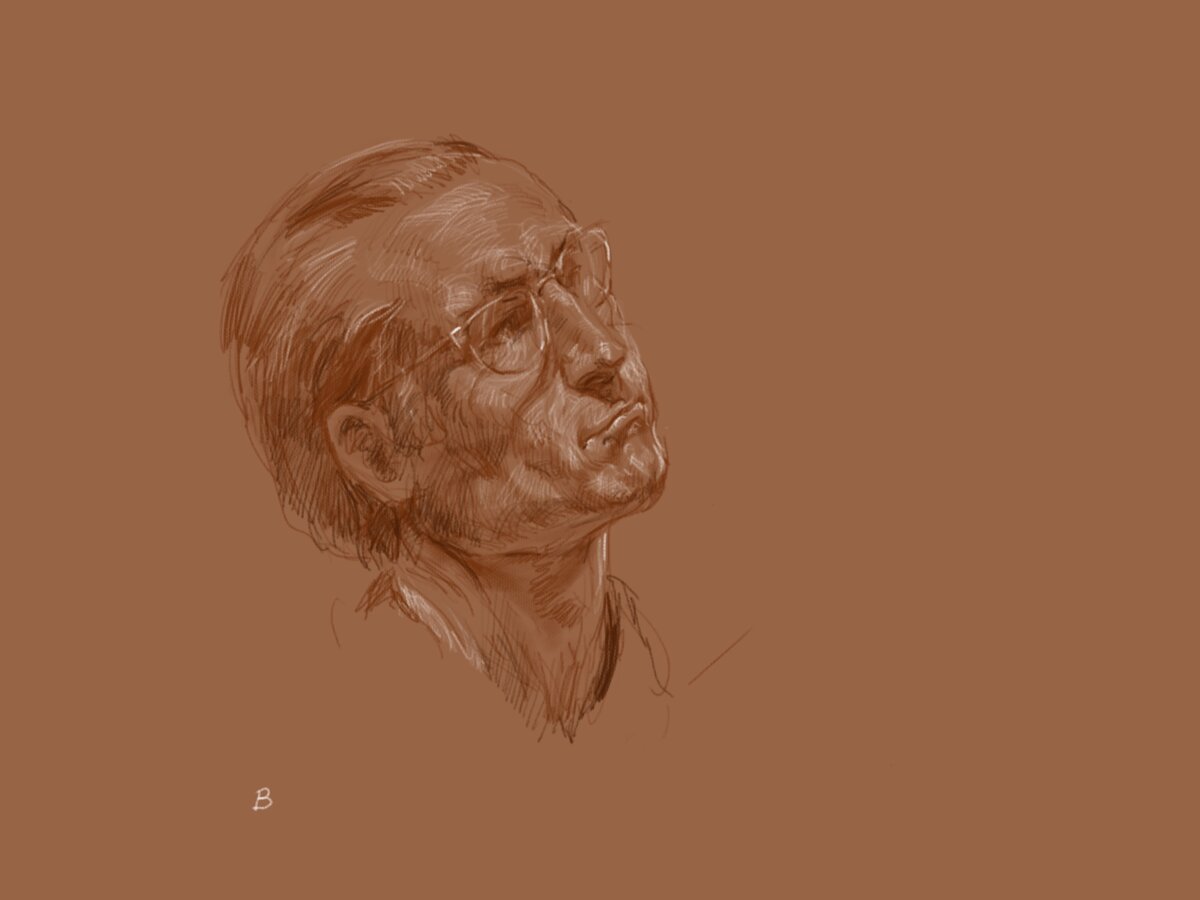
Vilppu sees drawing as a language, whereby artists communicate through lines rather than words. But a story can’t be contained in a single line. It’s visually expressed in how the lines work in concert with one another and the arrangement of objects on the picture plane.
“My drawing is moving. The drawings are flowing. They’re all alive; they’re not static,” he said.
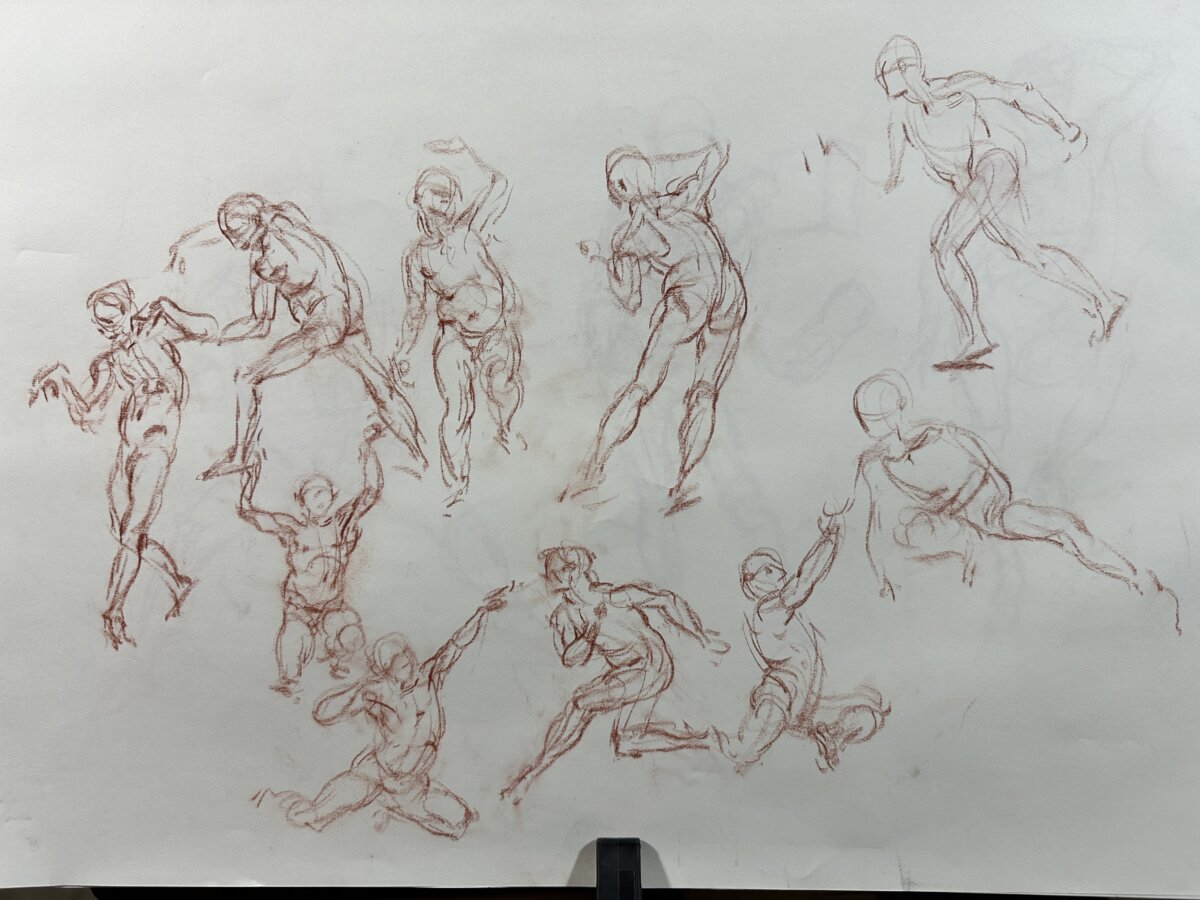
The same compositional concepts of organization have been used for centuries. “[All art,] music, writing, [and] dance is based on the ideal opposites: differences of straight against curve, fast against slow, tall against small,” he said, Then, the artist organizes the opposing elements to create an experience.
“Everyone says ‘the great Giotto,’ but if you look at a Giotto painting, it’s not a pretty picture. So, why is Giotto so good? Why did everybody look up to Giotto? He’d been very clear about his communication. He told his story very directly.” Yet each element has a purpose and isn’t ornamental.
Vilppu often compares masterpieces across several centuries and from different cultures, such as the Japanese prints of Katsushika Hokusai (1760–1849) with Renaissance landscape paintings by the likes of Tintoretto. Hokusai’s placement of bamboo mirrored compositional elements of his Italian counterparts’ works. “It was all the same sense of movement, the same idea.”
When traveling and teaching, Vilppu takes students to museums to study directly from old master paintings. He’ll photograph the painting on his tablet, explaining the idea of the composition and how the eye is led through the painting hanging in front of them.
Vilppu’s hands-on, heartfelt approach is the essence of his teaching. He demonstrates rather than criticizes. He shows students directly how to improve their work, sitting beside each one and drawing, or using his tablet to make corrections when teaching online.
With over six decades of teaching behind him, Vilppu’s realized that technology has become part of the artist’s toolkit. He sees the tablet, for instance, as just another medium, although he has a few caveats about working from photographs and creating digital paintings. “When you’re working from photographs, there’s separation. It’s already been reduced down to a two-dimensional surface, so it’s very difficult to have an emotional relationship [or] contact with what you draw.”
He said he also advises students to start drawing on paper. He’s noticed that digital animators who studied traditional painting were more competent at painting on the computer.
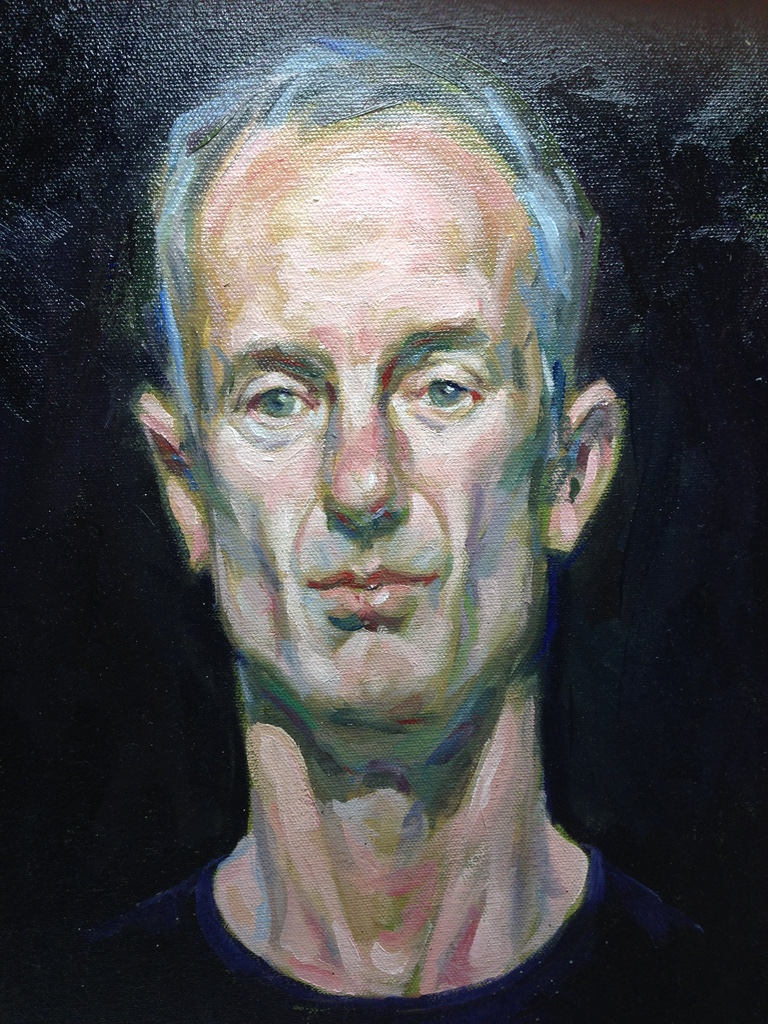
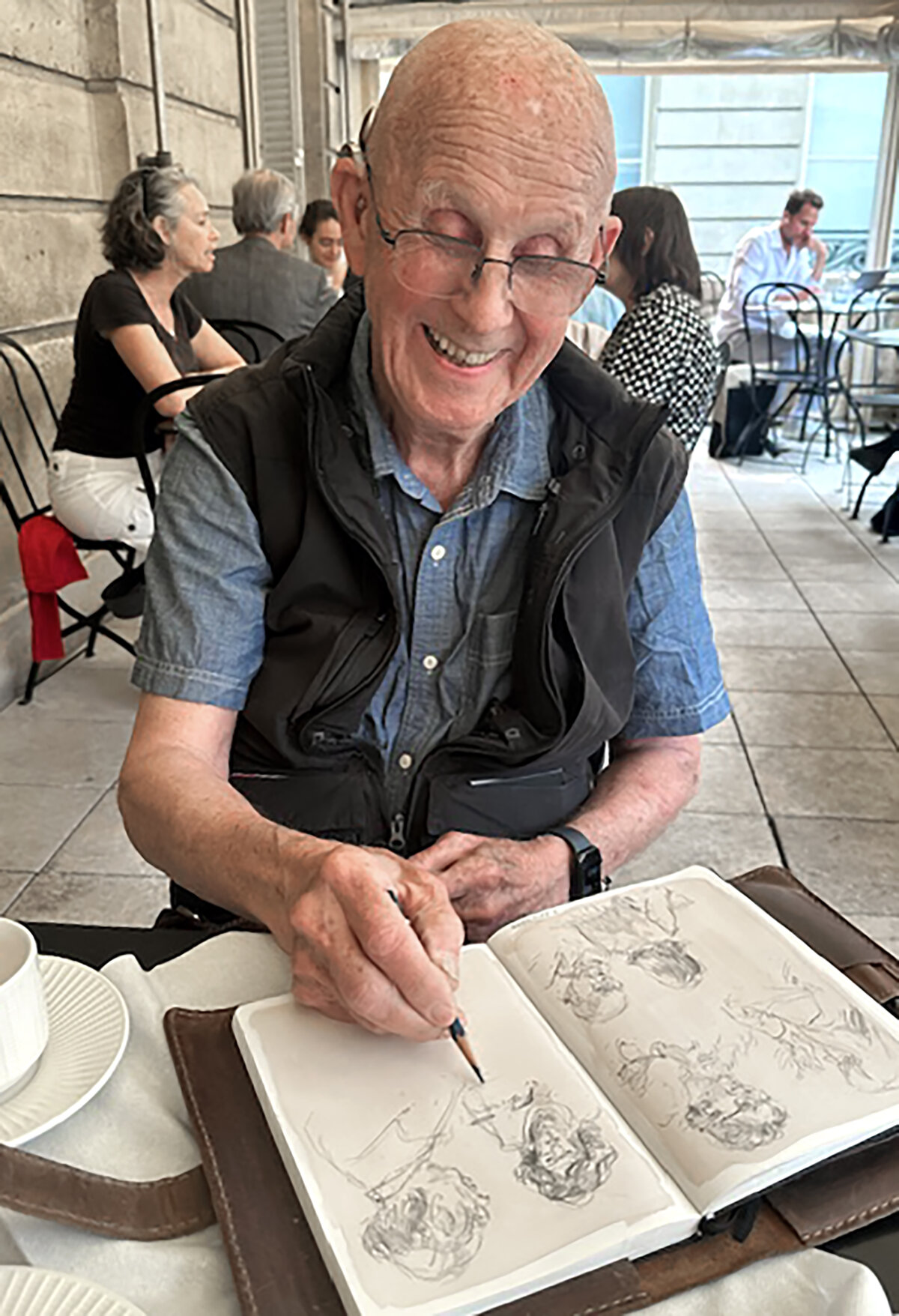
“I’m learning absolutely all the time.”
His wife, Eleanor, said that “it took him one whole year to get an Apple pencil to do what he wanted. … People have to get the idea that it’s not going to happen instantly, even for him.” He’s recently discovered stone paper, a friction-free and grain-free drawing surface.
Eleanor sees her husband’s drawing improving year after year. “He just keeps getting better and better,” she said.
To find out more about artist Glenn Vilppu, visit VilppuAcademy.com
What arts and culture topics would you like us to cover? Please email ideas or feedback to features@epochtimes.nyc