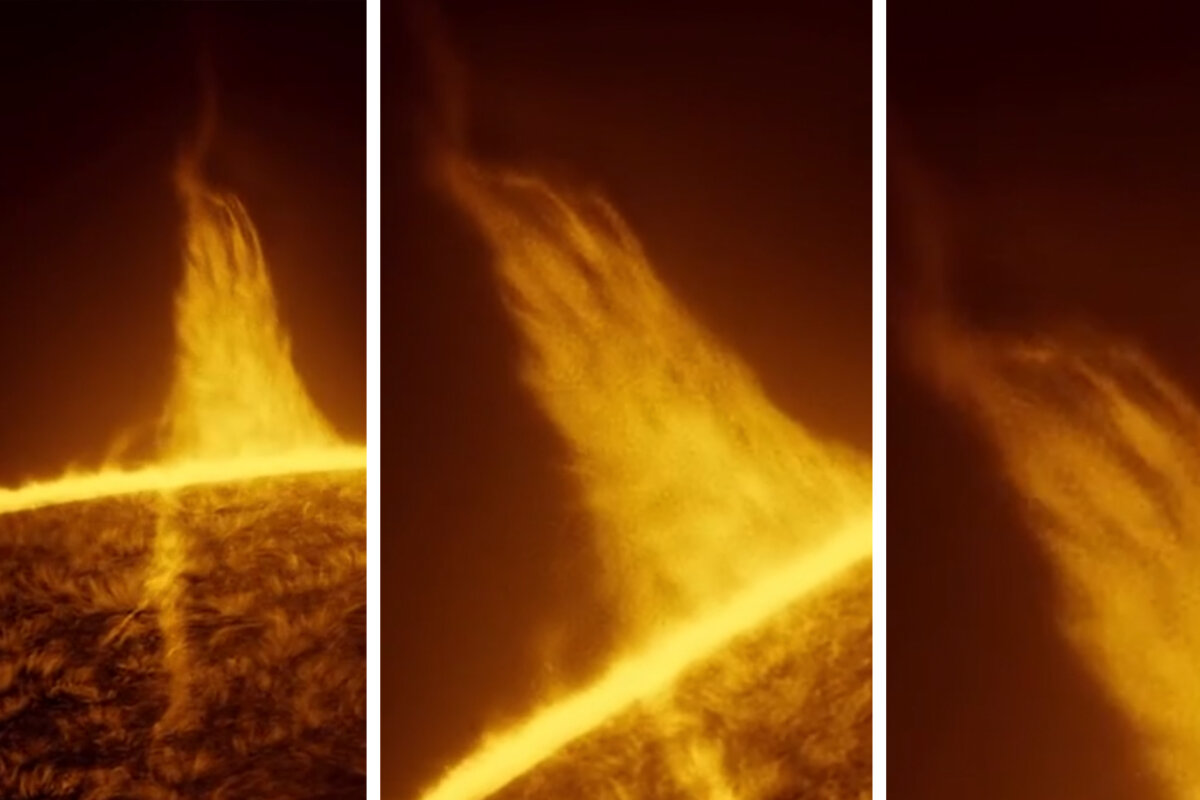
Everything about photographing the sun is extreme. With a vast illumination 400,000 times brighter than the moon, the sun can be captured in detail only by using extremely specialized—and very expensive—equipment. The images that appear are no less extreme.
The scale is also incredible. Size comparisons on Earth bear hardly any relationship with those on the sun, where solar events can trigger plasma filaments and prominences that tower over a million miles above the chromosphere and, in theory, could engulf our world countless times over.
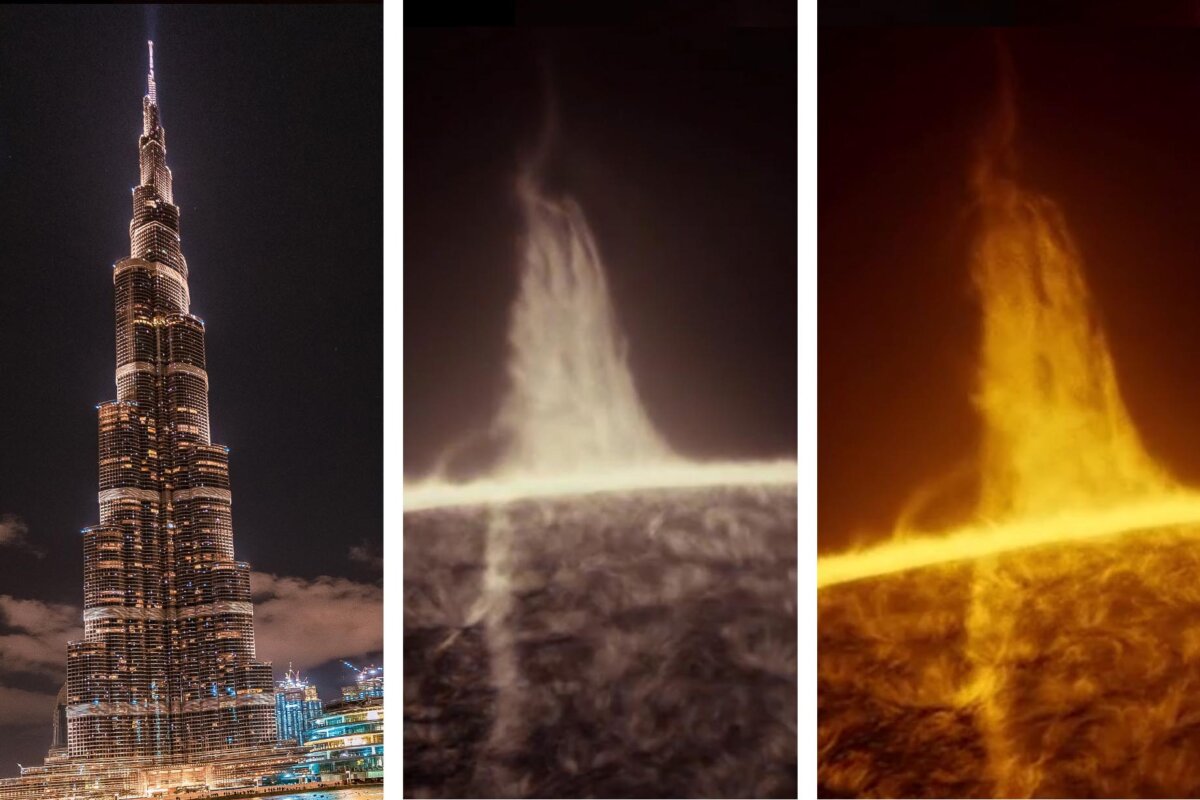
What might be considered mankind’s most extreme-sized construction here on Earth, the Burj Khalifa skyscraper in Dubai, stands a mind-boggling 828 meters high. It seems fitting that this manmade marvel somehow appeared to transport itself onto a time-lapse photography of Miguel Claro, official astrophotographer of the Dark Sky Alqueva observatory in Portugal, when he witnessed a significant solar event last fall.
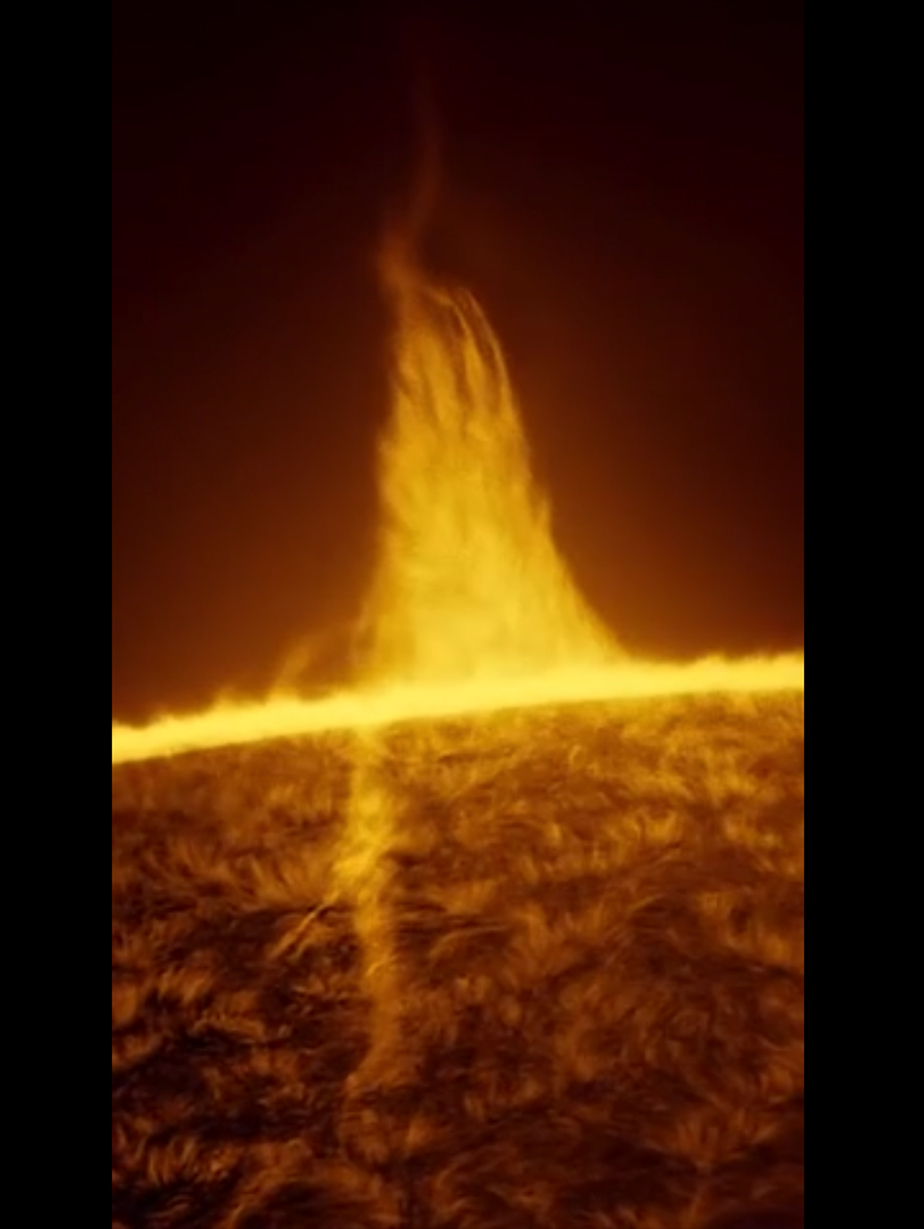
He captured what he calls a solar “Burj Khalifa” orders of magnitude larger than the actual tower in the United Arab Emirates.
“To photograph the sun, it’s very tricky,” 48-year-old Claro told The Epoch Times, adding that up until about three decades ago, only NASA’s space probes had solar telescopes. But now special filters and high-end solar telescopes are available, for a high price, to the public. It could be hazardous to use anything else.
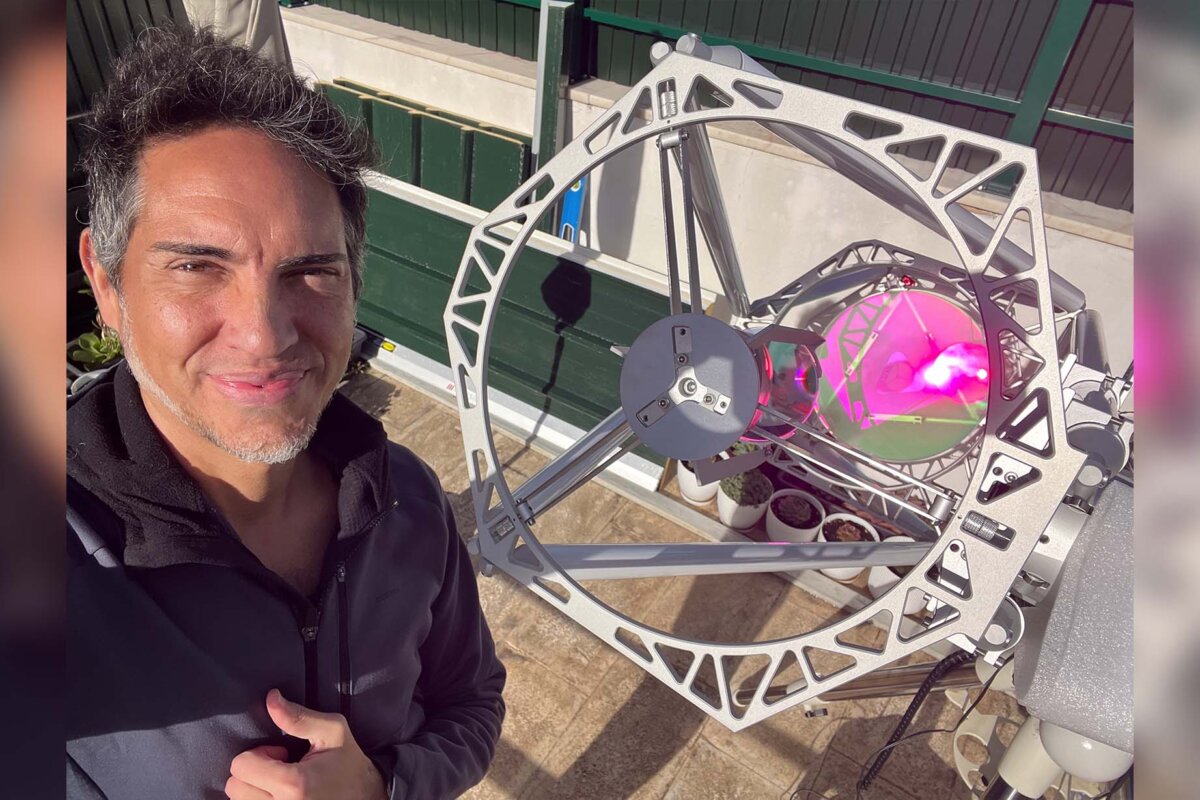
“It’s a special telescope [that’s required] because you cannot use a reflected telescope, a normal one,” Claro said. “You will explode the telescope with yourself. It’s very dangerous.”
The mirror on his brand-new custom-made, open-truss 300 mm Soleye solar telescope is specially designed to reflect three very specific wavelengths of light: hydrogen-alpha detects filaments and prominences; the K-band looks at the sun’s plasma “surface,” or chromosphere; and the G-band observes the photosphere to identify sunspots.
Besides needing a lot of specialized equipment, “you need a very stable atmosphere, otherwise your images can be very blurry with the effect of turbulence,” Claro explained. Fortunately Alqueva Lake, located in the Alqueva reserve, is a thermal buffer that stabilizes the atmosphere over the observatory, making it one of the world’s top nighttime astronomy destinations.
Claro had waited weeks to test the new telescope as autumn rains had previously made photographing the sun impossible. But when the sky finally cleared, solar activity was peaking and all signs said go. He noted that the sun cycles through periods of greater and lesser activity every 11 years, and “now is the best time because we are in the peak of activity of the solar cycle.”
The moment when Claro finally clicks the shutter of his solar telescope is no trivial matter. His equipment will fire off hundreds of high-resolution shots per second, eating up terabytes of data. Meanwhile, he must constantly tweak the motion of the telescope to compensate for the sun’s movement and the Earth’s rotation, all while controlling the exposure time and refocusing.
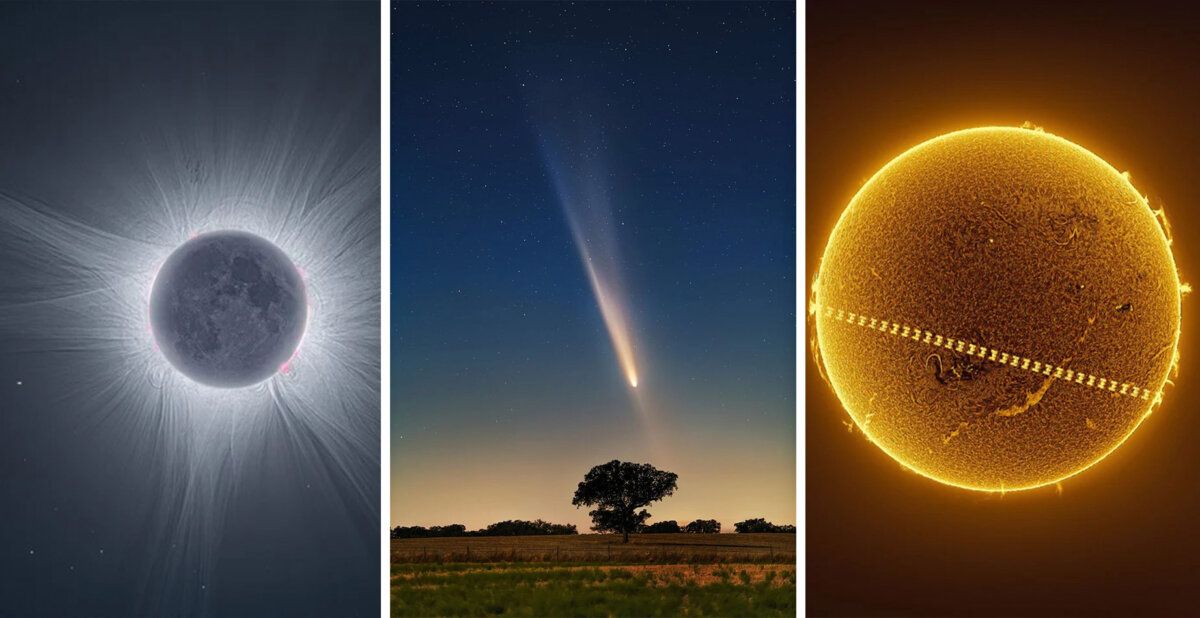
“If the temperature changes a little bit—even sometimes a portion of a degree—I need to refocus it again to have an even more sharper image,” Claro said, adding that heat and high magnification causes the optical equipment to expand and contract.
“I need to control all of this at the same time while I’m seeing the sun,” he said.
Claro works alone to allow him to concentrate, he said, “because shooting the sun is always a risk, always dangerous, and you need to know what to do in the right time.”
With numerous cables connected to rotating motors, telescope, camera, laptop, and cooling system, Claro was finally ready. He photographed several 10-second time-lapses of the sun over the course of an hour. Astronomers around the world were aiming at the same solar eruption Claro was observing.
The grainy picture that appeared on his laptop “looks cool, but looks much more cool after processing,” he said.
Back in the observatory, he spotted the unusual likeness of the tower extending hundreds of thousands of miles above the sun’s chromosphere. Claro had captured a prominence, which is like a mountain of plasma erupting from the sun’s limb, together with a filament, which is like a string of plasma visible against the golden disk of the sun. The two overlapping forms, which together are called a fila-prominence, displayed awesome nuclear energy swirling together majestically.
“I was in Burj Khalifa maybe a half-month ago,” Claro said. He saw keepsakes in the souvenir shop that resembled the twisting pillar of plasma. “More people wrote on the comments when I published it—I think it was not only me,” he said, speaking of his Instagram post with the time lapse.
This isn’t Claro’s first sun illusion. He says he once saw the shape of a dragon, and once a woolly mammoth.
“It’s like art—the art of nature, basically,” he said, laughing.