



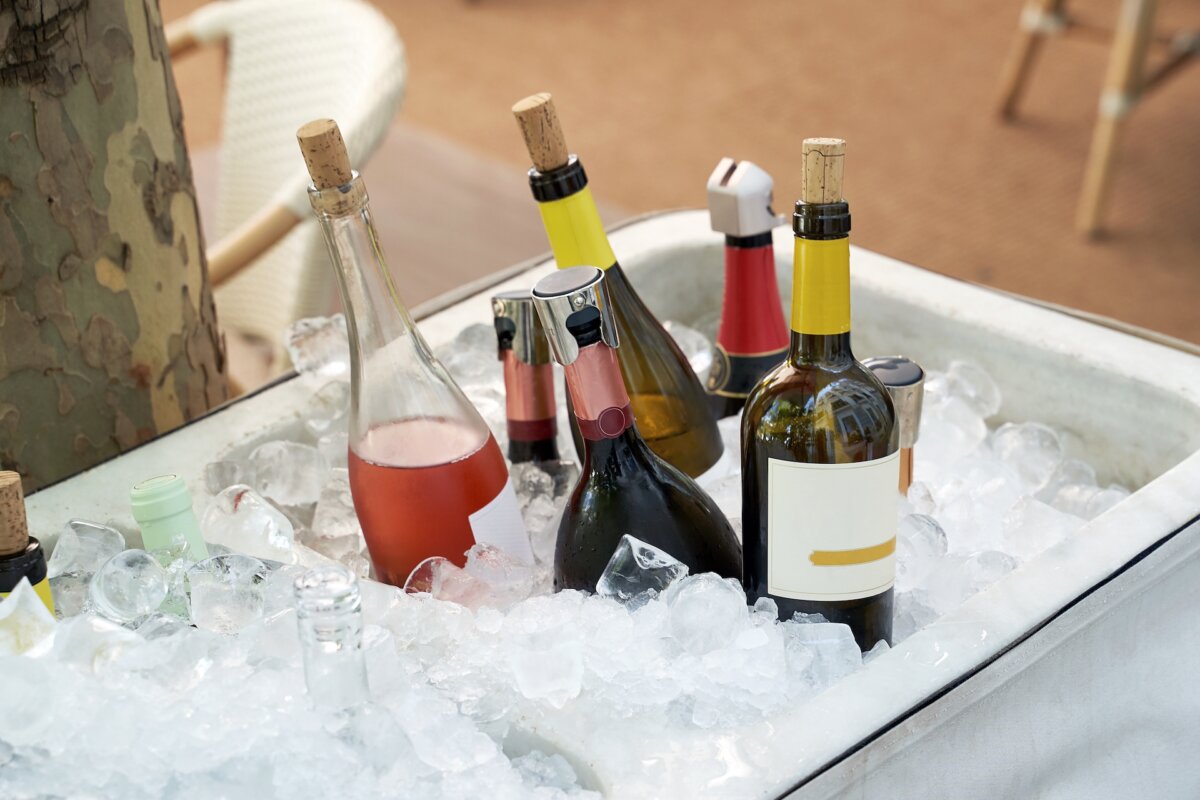
TV beer commercials usually emphasize the near-freezing temperatures at which big beer companies want us to consume their beers. This is proof that the beer in question is so bland that taste is not what matters most.
The colder you serve any beverage, the less likely you are to be able to taste the flavors that make it what it is supposed to be.
Serious beer and wine lovers know that ice cold wipes out character. This is how large beer companies want their products consumed. Craft brewers, by contrast, want us to taste the uniqueness they offer.
Fine wine lovers do the same. Cool is best for quality wines. At such levels, aromas and tastes are accessible and allow for a slow enjoyment of the nuances.
I once heard a friend who had just returned from London complain that the British drink their beer warm. In his view, 65 degrees F was warm. I reminded him that he was used to drinking his domestic six-packs at 40 degrees F or lower.
The basic advice I give newcomers to wine is that, with a few exceptions, fine wine should be served at about 65 degrees F. Yet some restaurants serve whites and reds all wrong.
Servers have told me that red wine should be served at “room temperature.” But the phrase “room temp” comes from the French phrase “a chamber,” referring to rooms in unheated French chateaus.
I often ask for an ice bucket so I can cool down a too-warm red wine. This unnerves some servers who have told me that red wine shouldn’t be chilled.
Similarly, white wines in restaurants are often served far too cold. One awful tactic is when a waiter constantly jams a wine bottle into an ice bucket, even after it has been cooled enough to enjoy.
Fine wine, such as quality chardonnays and sauvignon blancs, is best at the same 60 to 65 degrees F that’s best for reds.
In some small cafes, even those that carry a great selection of top-rate wines, whites are often served too cold. This happens due to economic factors.
Health departments often mandate that restaurant refrigerators remain at 40 degrees F to protect food from spoilage. Some cafes can’t afford to buy a second cooling unit for keeping wines cold. So, white wines are cooled in the fridge.
Aromatic white wines such as riesling, gewurztraminer, and viognier can withstand colder temperatures, but temperatures lower than 50 degrees F can harm the delicate aromatics of some older white wines, such as classic older rieslings.
The best strategy for quickly cooling down a white or rosé is to buy a small quantity of plastic liquid-filled cubes that may be frozen. Two or three dropped into a room-temp wine will cool it in a few minutes.
Wine of the Week
NV La Ina Fino Sherry, Jerez ($18): Dry Fino Sherries can be distinctive aperitif wines. They may be served ice cold. Best with olives, almonds, and bites of hard cheese, the best Fino Sherries are fresh and young. This reliable brand now has only 15 percent alcohol. Finos used to be closer to 20 percent. This wine is light and crisp. Also, try it alongside a creamed soup.
Dear Readers: We would love to hear from you. What topics would you like to read about? Please send your feedback and tips to features@epochtimes.nyc.
