The Huntsville Museum of Art holds the world’s largest public collection of Buccellati animal sculptures, all donated by Huntsville artist Betty Grisham (1921–2021).
Italian luxury jeweler Buccellati began in 1919, when Mario Buccellati opened his first jewelry store in Milan. The world-renowned company continues to create fine jewelry using engraving, Renaissance techniques, and new innovations.
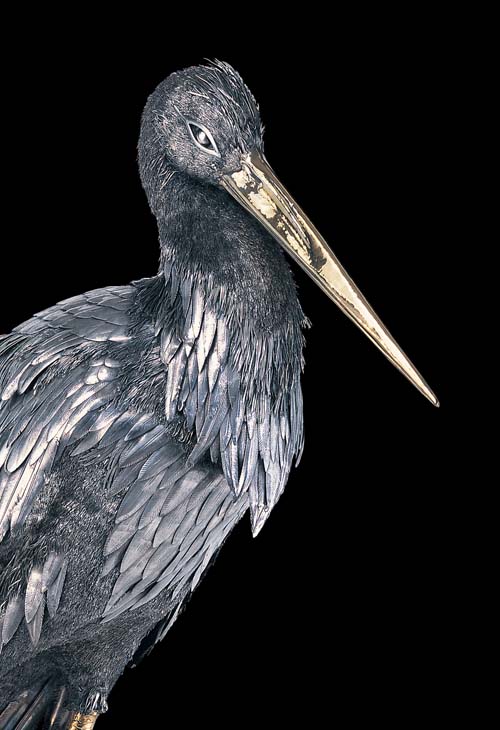
Mario’s son, Gianmaria, invented a silverworking technique called “lavorazione a pelo” (hair-like workmanship). This enables artisans to create realistic works by welding silver filaments of different lengths and thicknesses, one atop the other. The technique works well for creating fur, skin, scales, and feathers.
A selection of Grisham’s Buccellati animal pieces is on permanent display in the museum’s exhibition “A Gilded Wilderness: The Artistry of Buccellati Silver,” which opened in September 2025. The exhibition explores Buccellati’s artistic brilliance and the technical virtuosity behind the lifelike works, including a 9-inch-tall rabbit, an array of deep-sea creatures, and a near-lifesize, 3-foot heron.
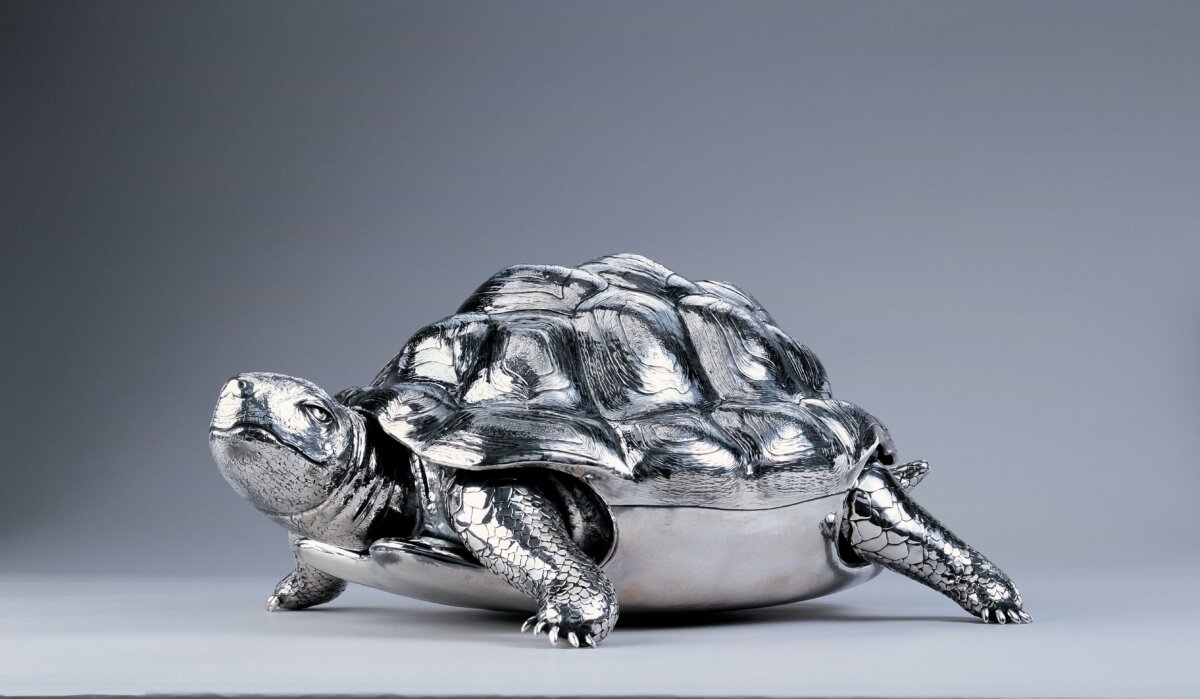
Buccellati’s silver animals reflect the jeweler’s astute understanding of animal behavior and anatomy. If the photograph of Buccellati’s tortoise were in black and white, one could mistake it for a real reptile; the textures of the tortoiseshell, skin, scales, and claws all appear lifelike. He’s caught the creature mid-stride, gently propelling itself forward and lifting its head under the exertion.
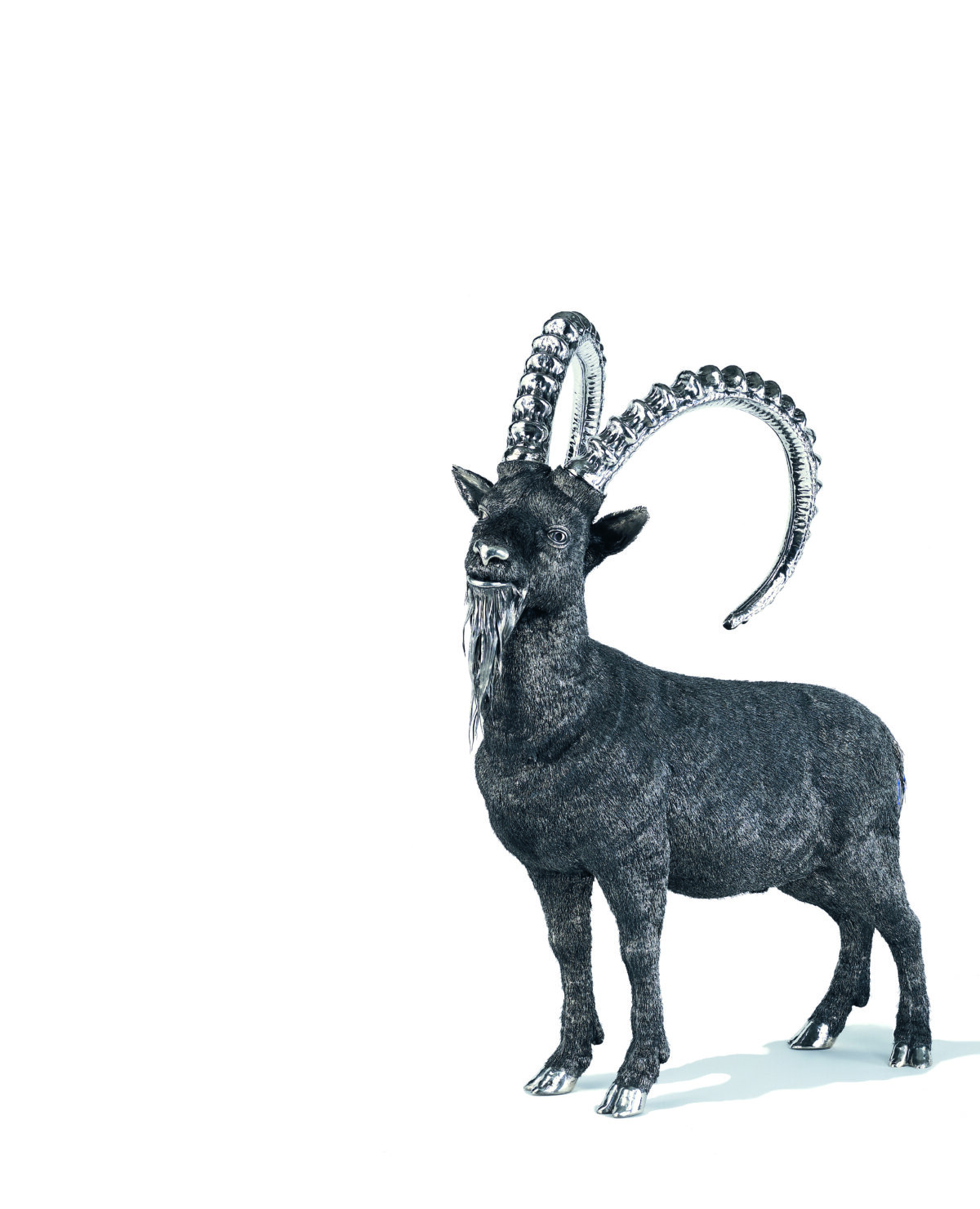
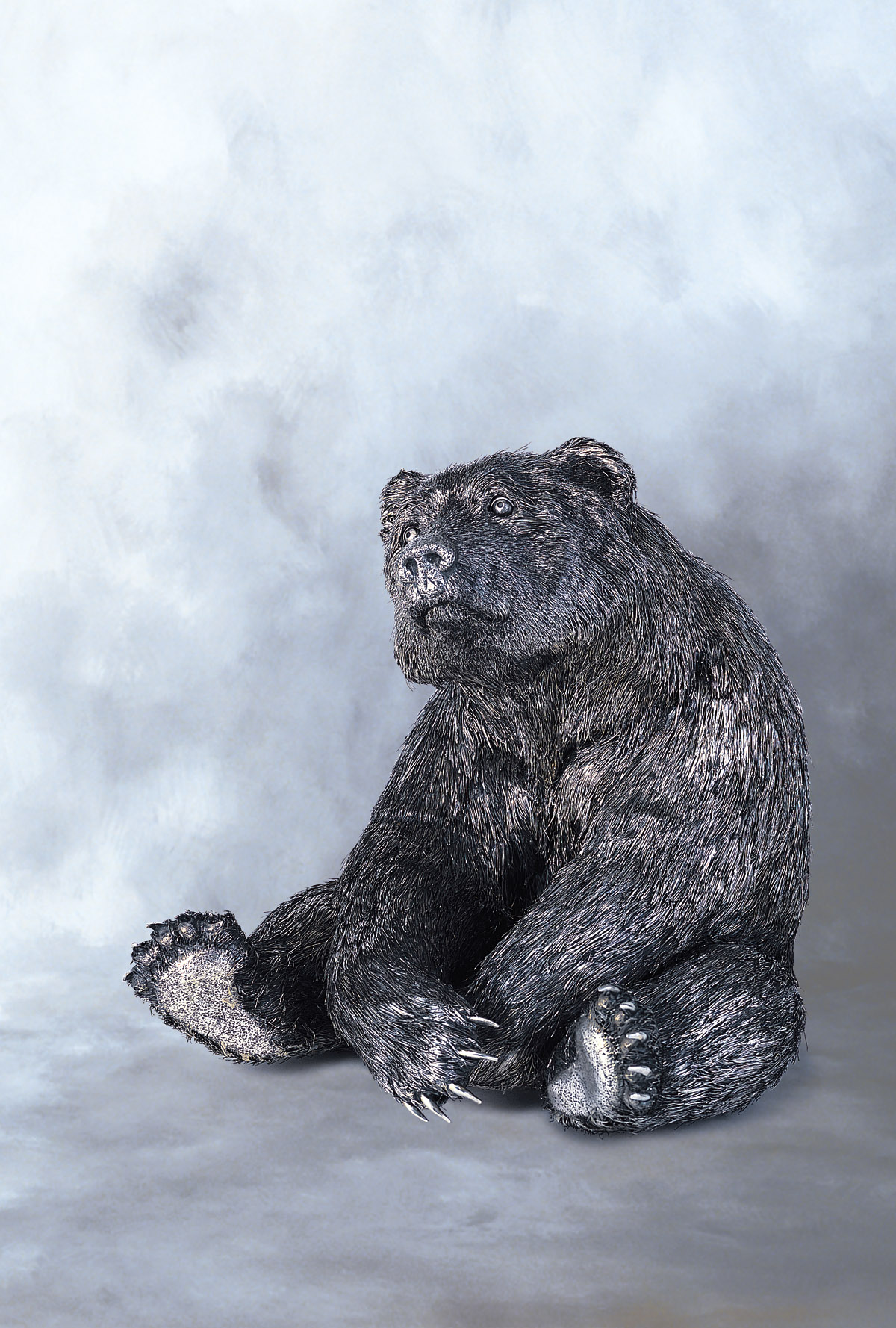
Buccellati’s mastery and patience can be further appreciated in the heron, ibex, and seated bear, where he used “lavorazione a pelo” to apply thousands of silver filaments. Like an alchemist, Buccellati made the cold, hard silver appear like the delicate feathers of the heron, and the smooth fur of the ibex, and the rough coat of the seated bear, making the bear almost cuddle worthy. The heron also shows Buccellati’s skill at gilding details such as the beak.
Many of the animals are made of 800 silver, which is 80 percent silver and 20 percent alloy, as welding melts sterling silver. But after 1995, the artisans discovered how to make the animals in pure sterling silver.
“A Gilded Wilderness: The Artistry of Buccellati Silver” is on permanent view at the Huntsville Museum of Art, Ala. To find out more, visit HSVMuseum.org
What arts and culture topics would you like us to cover? Please email ideas or feedback to features@epochtimes.nyc