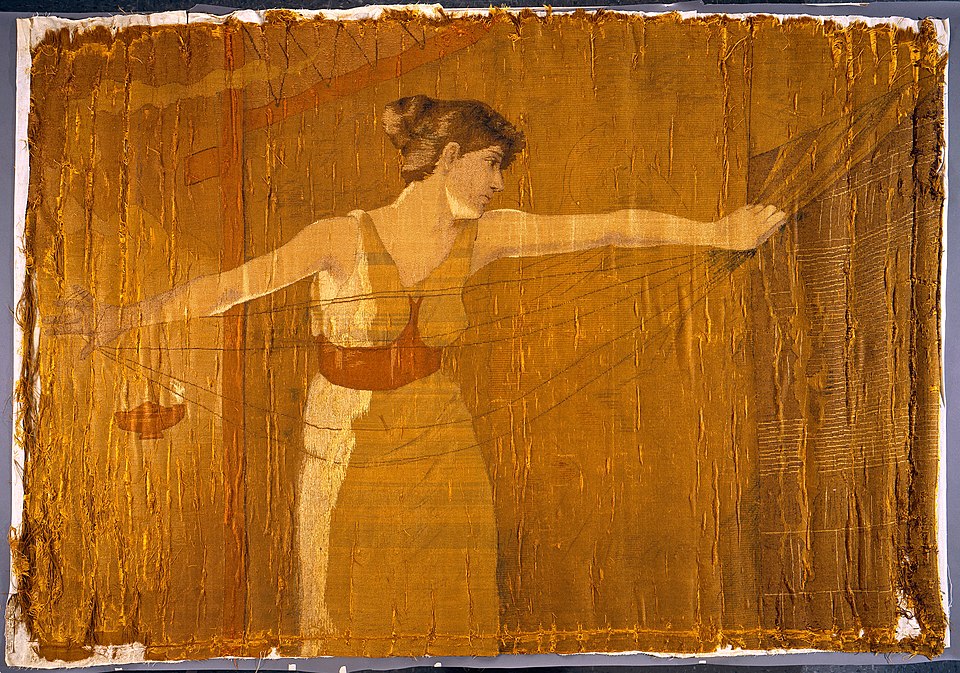
Artists have long admired the heroic adventures and life lessons woven throughout Homer’s epic poems, the “Iliad” and the “Odyssey.” They have captured episodes of these ancient Greek works countless times, always hoping to inspire viewers to cultivate virtue and to better themselves.
One popular muse is Homer’s Penelope, an honorable queen in the “Odyssey,” extolled for her prudence and marital fidelity. Homer wrote:
The fame of her great virtue will never die.
The immortal gods will lift a song for all mankind,
a glorious song in praise of self-possessed Penelope.
In the “Odyssey,” Queen Penelope’s husband, Odysseus, has been away from home fighting in the Trojan War for many years. Every day, suitors ask for the queen’s hand in marriage because Odysseus has been gone for so long and is presumed dead.
Penelope doesn’t want to remarry. In her heart, she believes her husband is still alive and will return. To appease her suitors, she tells them that she cannot decide who to marry until she’s woven a shroud for her father-in-law, Laertes. Every evening, without fail, she unravels her work.
Penelope’s patience and perseverance eventually pay off as Odysseus returns, after 20 years.
Needle-woven Tapestry
In 1886, American artist Dora Wheeler embroidered the queen in the needlework “Penelope Unraveling Her Work at Night.” Wheeler bathed the dynamic composition in brilliant candlelight. She depicted Penelope pulling the shroud off her loom and carefully winding the thread around her hand. The queen’s weary expression reflects the laborious work.
From afar, Wheeler’s needlework resembles an oil painting, but up close, her silk stitches render it a painterly “needle-woven tapestry.”
In 1882, Wheeler’s mother, Candace, patented the needle-woven tapestry technique and the loosely woven silk canvas on which silk stitches were woven. Most of these fragile works have disintegrated, making the faded and torn “Penelope Unraveling Her Work at Night” the last known example of this lost craft.
What arts and culture topics would you like us to cover? Please email ideas or feedback to features@epochtimes.nyc.