On March 17, Christians commemorate St. Patrick’s Day. Irish congregations worldwide will sing their patron saint’s praises with “Hail, Glorious St. Patrick, dear saint of our isle,” from the 19th-century hymn: “Hail, Glorious St. Patrick.”
Ireland’s primary patron saint forever resides in Irish hearts. Yet one of the greatest paintings of the 5th-century missionary was created not in Ireland but in Italy.
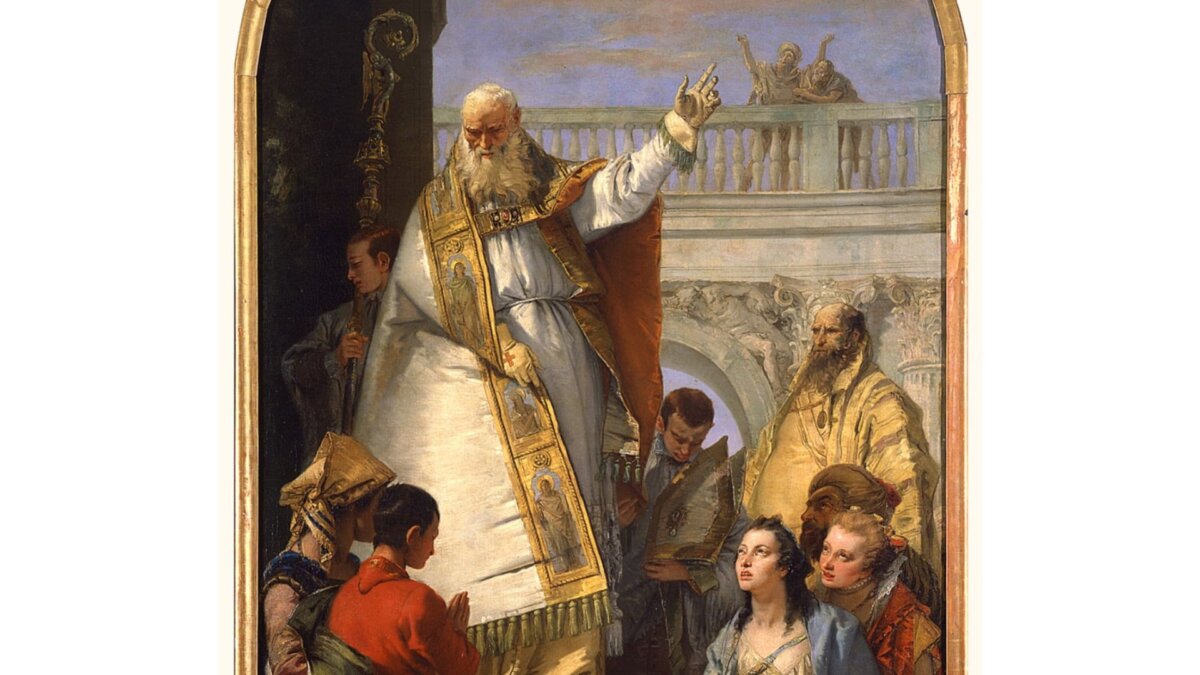
The Lateran Canons, part of the Roman Catholic Order of the Canons Regular of St. Augustine, commissioned “Saint Patrick, Bishop of Ireland” by Giovanni Battista Tiepolo, as an altarpiece for Padua’s St. John of Verdara, a church and monastery that is now a military hospital.
According to a longstanding legend embraced by the canons, Patrick—the Roman Briton who became Ireland’s beloved patron saint—once visited Rome’s Basilica of St. John Lateran, where Pope Celestine blessed his mission to Ireland.
Scholars differ as to whether Patrick traveled to Rome or even if he met the pope, with some believing that a bishop consecrated Patrick on behalf of the pope somewhere near the sea between Britain and Gaul (modern day France). Nevertheless, the Lateran Canons later helped spread the sect of St. Patrick across Europe.
Tiepolo’s St. Patrick
Venetian painter Giovanni Battista Tiepolo (1696–1770) was the most sought-after Italian painter of his day and excelled at creating frescoes with theatrical flair. Many of these embellish the walls and ceilings of prestigious buildings in Italy, Spain, and Germany.
In “Rococo to Revolution: Major Trends in Eighteenth-century Painting,” art historian Michael Levey wrote that “Tiepolo extended the epic world of [Peter Paul Rubens’s] Marie de Médici series in which history and allegory cheerfully blend to make great events seem greater, and where every act is a public one involving heaven and earth.” This is evidenced in Tiepolo’s “Saint Patrick, Bishop of Ireland.”
The painting celebrates Patrick’s potent preaching and its heavenly consequence, a sentiment echoed in the hymn a century later with: “Hail, glorious St. Patrick, thy words were once strong / Against Satan’s wiles and a heretic throng.”
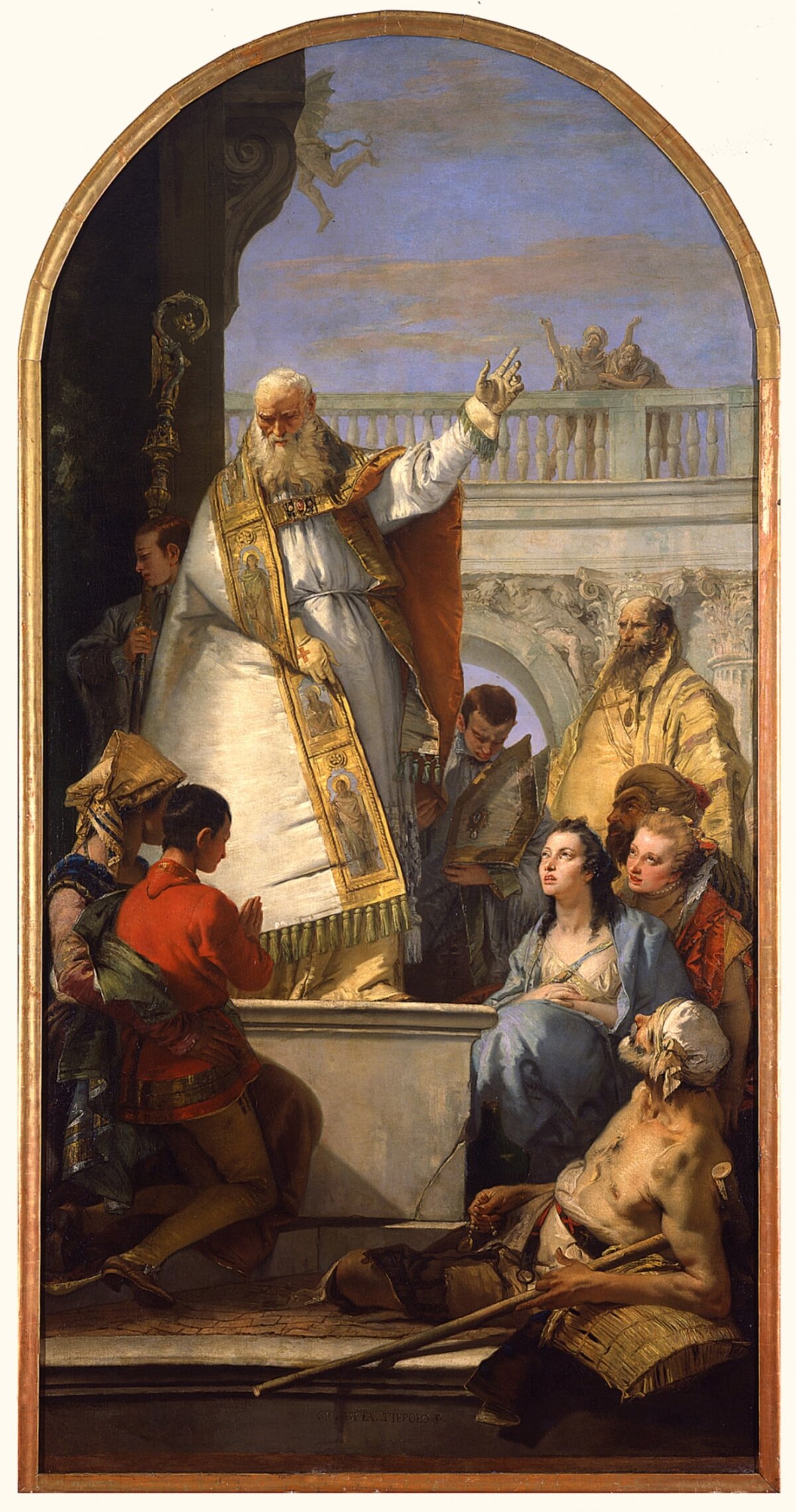
In the altarpiece, Tiepolo depicted the majestic grandeur of Patrick preaching on a marble pedestal in a Roman architectural setting. Bedecked in episcopal attire, he’s accompanied by two attendants who hold the bishop’s crozier and mitre. He directs a sermon to a mother and son, while a group of figures from different backgrounds listens in awe.
Patrick’s blessing gesture draws the viewer’s attention to two animated figures on the parapet above. These figures point to a demonic creature flying off in the distance that Patrick’s faith has exorcised.
Ireland’s Patron Saint
St. Patrick’s Day remains an important part of the Emerald Isle’s faith, culture, and traditions. The last verse of “Hail Glorious St. Patrick” expresses the country’s reverent pride in its primary patron saint:
“Ever bless and defend the sweet land of our birth,
Where the shamrock still blooms as when thou wert on earth,
And our hearts shall yet burn, wherever we roam,
For God and St. Patrick, and our native home.”
‘Saint Patrick, Bishop of Ireland’ by Giovanni Battista Tiepolo is at the Civic Museums of Padua, Italy. To find out more, visit PadovaMusei.it
What arts and culture topics would you like us to cover? Please email ideas or feedback to features@epochtimes.nyc