Painters from the Renaissance onward imparted ancient wisdom on their canvases. Many great artworks emerged from the wellspring of Virgil’s “Eclogues,” a collection of 10 pastoral poems that the Roman composed between 42 B.C. and 37 B.C.
One quote from the “Eclogues” has inspired artists time and again: “Omnia vincit amor” or “Love conquers all.”
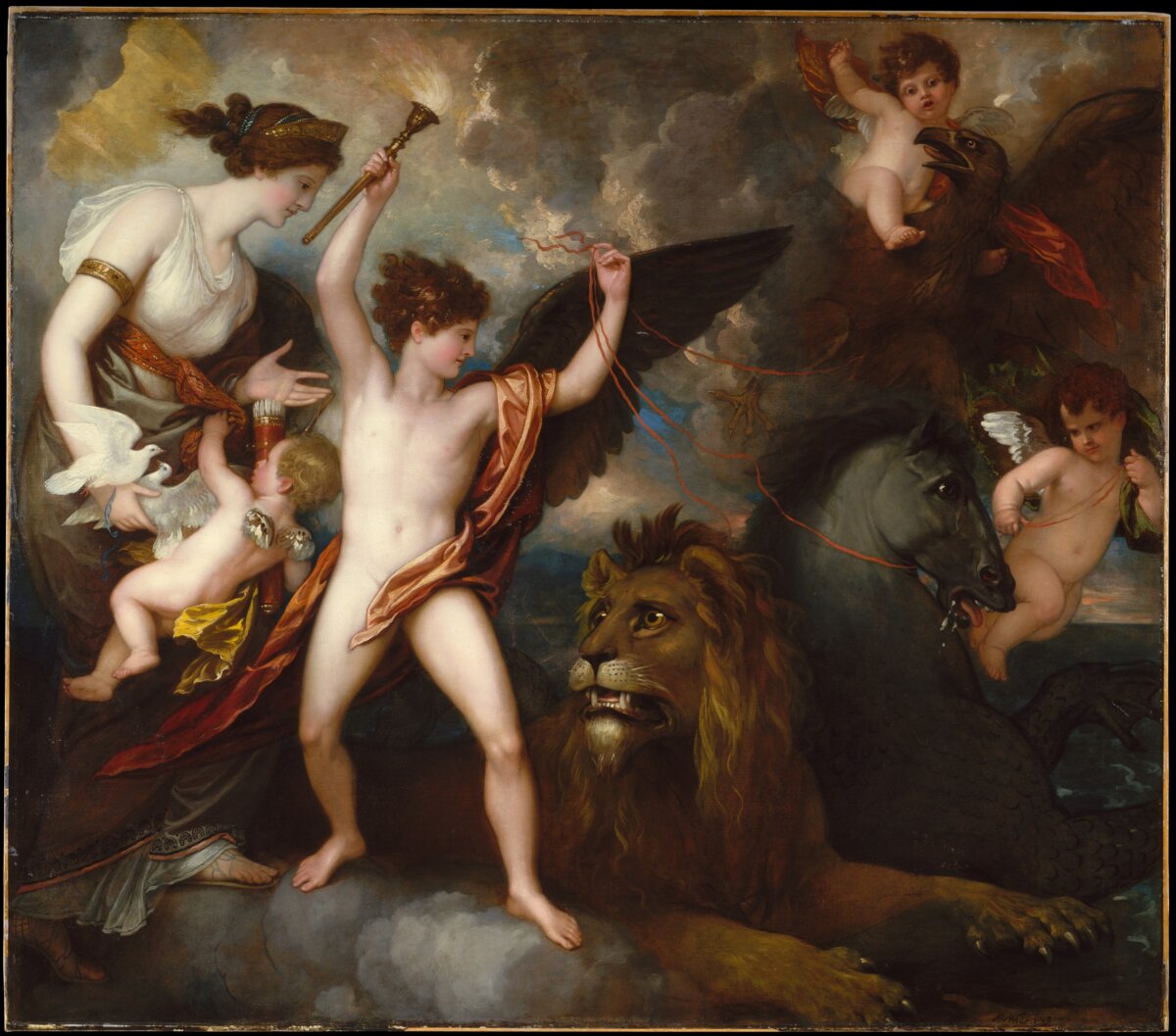
Virgil’s quote inspired 19th-century American artist Benjamin West’s mythological painting “Omnia Vincit Amor, or The Power of Love in the Three Elements.” In the painting, West (1738–1820) depicted the strengths of love and marriage in taming earthly desires. He conveyed the message using traditional symbols, such as the four classical elements that ancient philosophers believed classified all substances in the physical world.
West rendered the Roman goddess of love, Venus, and her son Amor, commonly known as Cupid, in the heavens. West included their traditional emblems: Venus with her doves and Cupid with his bow and quiver full of arrows. Cupid’s arrows inflicted love or passion on his targets.
Hymen, the winged god of marriage, stands beside the pair in a strong, protective stance. He holds three red threads that lead to different creatures lurking in the shadows. The creatures represent three classical elements that relate to all creatures of the sea, land, and sky. There’s the eagle (air), lion (earth), and the hippocampus (water), which is a mythical sea creature often described as being similar to a seahorse.
According to the Metropolitan Museum of Art, Venus, the winged Amores, and Hymen’s flaming bridal torch represent the fourth element of fire. Venus’s fire is love; Amores’s fire is passion.
Fire traditionally symbolized either destruction or intellect. In the painting, sunlight—often seen as divinity, intellect, and the transience of life—peeks through the storm clouds, illuminating Venus triumphant. The goddess resists all temptations. West seems to have rendered mischievous Cupid (the god of erotic love), trying to steal her belt known as the “Girdle of Venus,” which according to legend inspires desire. Both Venus and Hymen—love and marriage, respectively—eliminate the wild emotions of profane love.
The Enduring Appeal of ‘Love Conquers All’
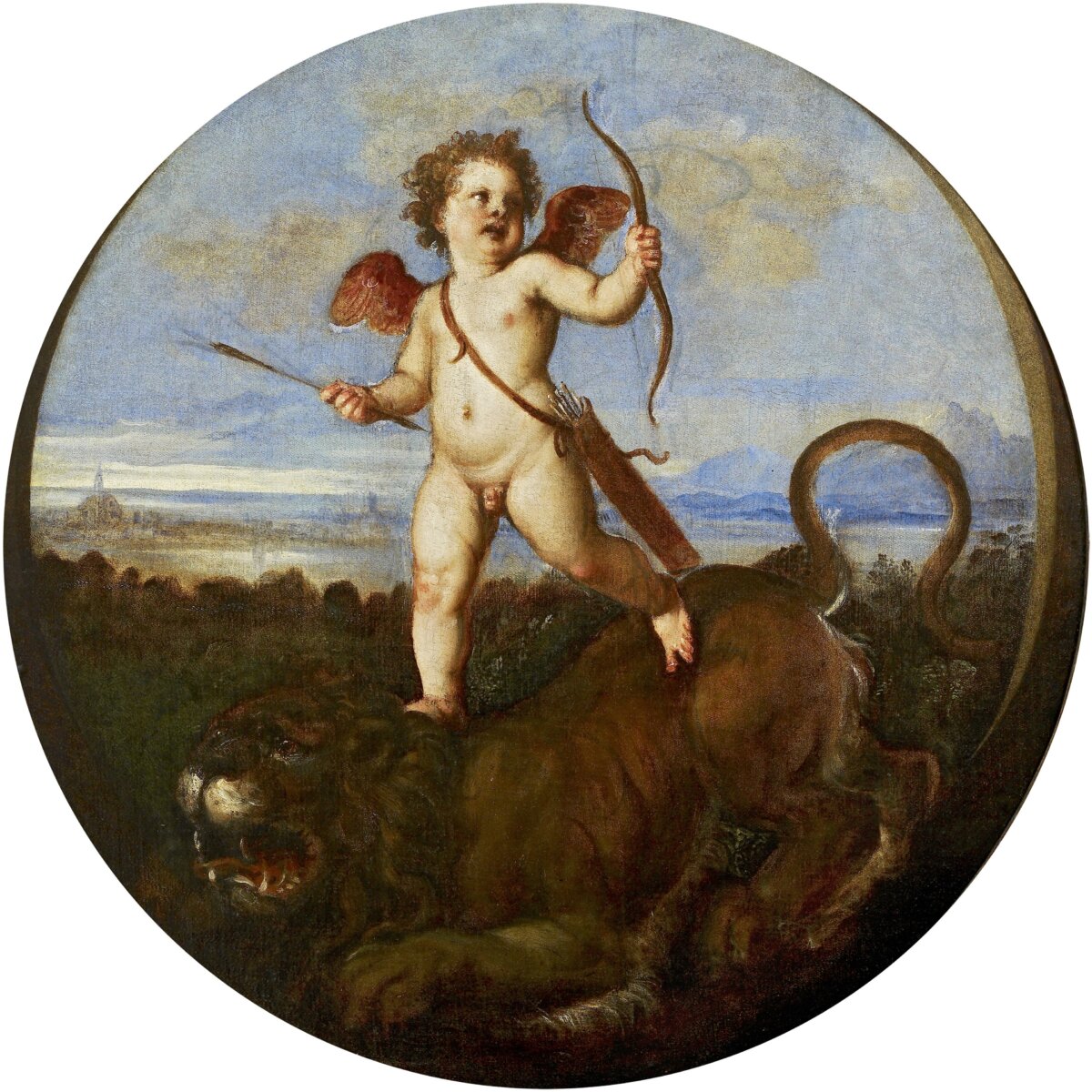
Other artists used similar elements seen in West’s painting but interpreted “Omnia vincit amor” in different ways. In Renaissance Venice, Titian (circa 1488–1576) depicted a jubilant Cupid riding a fierce lion. He readies his bow and arrow as if he’s about to take aim. This was a common motif in the Renaissance, when lions symbolized pride and wrath. Titian therefore expressed the power of love (Cupid) conquering these emotions.
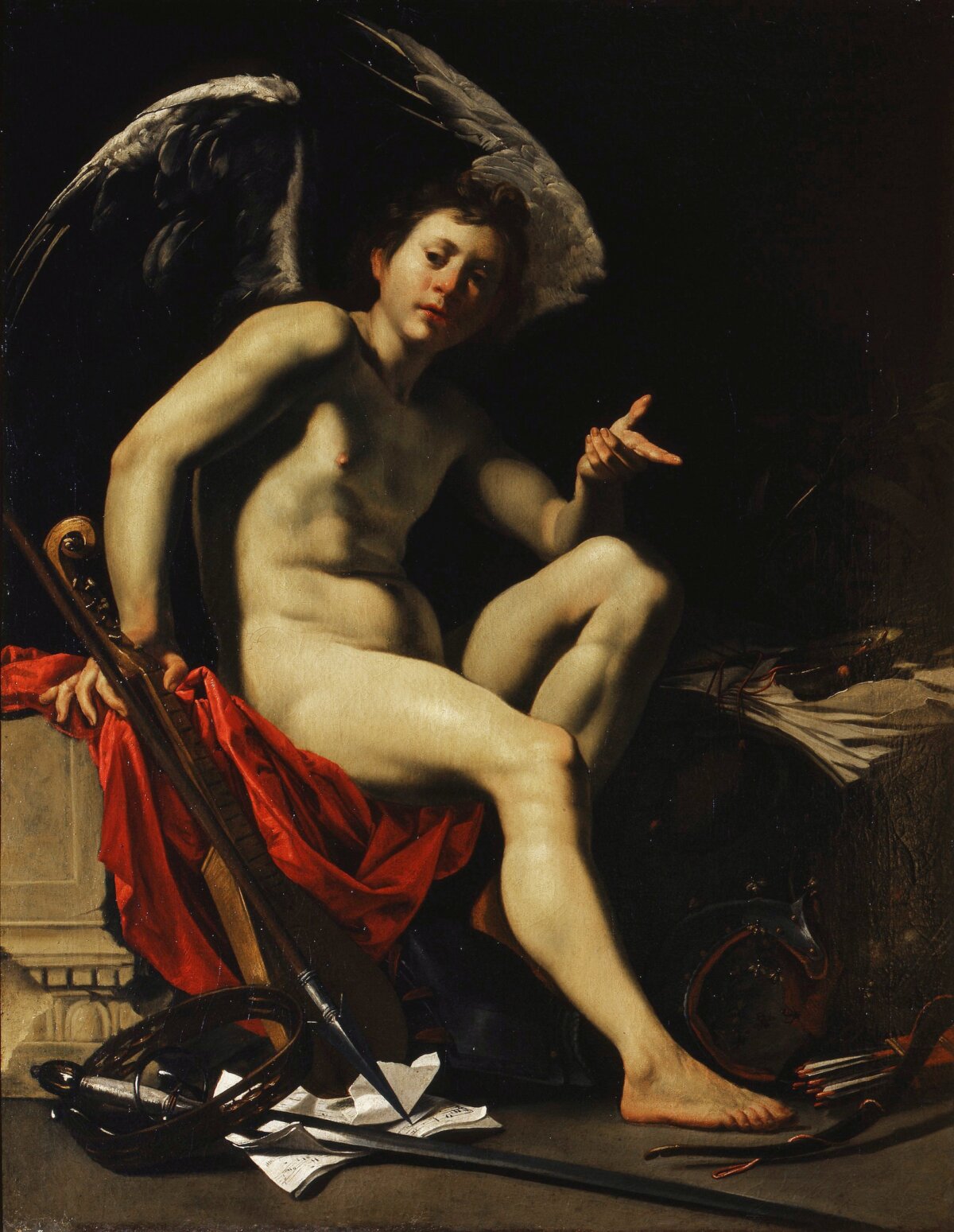
In Renaissance Pisa, Orazio Riminaldi (1593–1630) expressed “Omnia vincit amor” in his striking painting that’s often referred to as “Love Winning Over the Arts.” Over the centuries, the painting has been titled “Love Ruler of All” and “The Talent of Virtue.” Riminaldi depicted Cupid with an array of objects, including weaponry, literature, and sheet music. The Uffizi Galleries website states that Riminaldi’s painting is an “exhortation not to give in to passion but to practise the arts and other human activities … in order to achieve harmony.”
Virgil’s “Omnia vincit amor” in its entirety reads like a motto to live by: “Omnia vincit amor: et nos cedamus amori (Love conquers all; let us, too, yield to love!)”
What arts and culture topics would you like us to cover? Please email ideas or feedback to features@epochtimes.nyc