



It’s a balmy 74 degrees Fahrenheit. Midmorning, light breeze, wispy high clouds. No need for a jacket. In fact, I’m in a swimsuit, about to plunge into a freshwater lake just 140 miles south of the Arctic Circle.
That’s not what most people envision in Alaska, but midsummer in the far North is a remarkable time when sunshine rules the land. Infinite day yields an infinity of things to do in a setting hard to match anywhere on Earth. The 24-hour daylight reflects through the emerald-and-ivory birch and aspen woodlands with a tint as pleasant as a soft breeze. Actual wind is rare up here, but soft breezes are endemic. The air feels like silk, humidity is low, and rain is represented by thunderheads so distant they might be in another country.
All that makes for two separate and distinct—but closely related—recreation venues highly appealing to outdoorsy Alaskans and visitors: Dive in the water and trek on the ice.
Have a good night’s sleep, rinse, and repeat.
Alaskans get the good out of summer better than most other Americans precisely because it is so fine and valuable. Six months ago it was below zero and dark. So now they’re out fishing, hiking, camping, canoeing, golfing (11 courses in four cities with barely 400,000 total residents), bike riding, glaciering, swimming, birdwatching, and more. Lines snake out the door and down the block at the two most popular ice cream emporiums, Hot Licks in Fairbanks and Wild Scoops in Anchorage. Legend has it that Alaskans eat more ice cream per capita in summer than in any other state, although how you’d prove such a thing is beyond me.
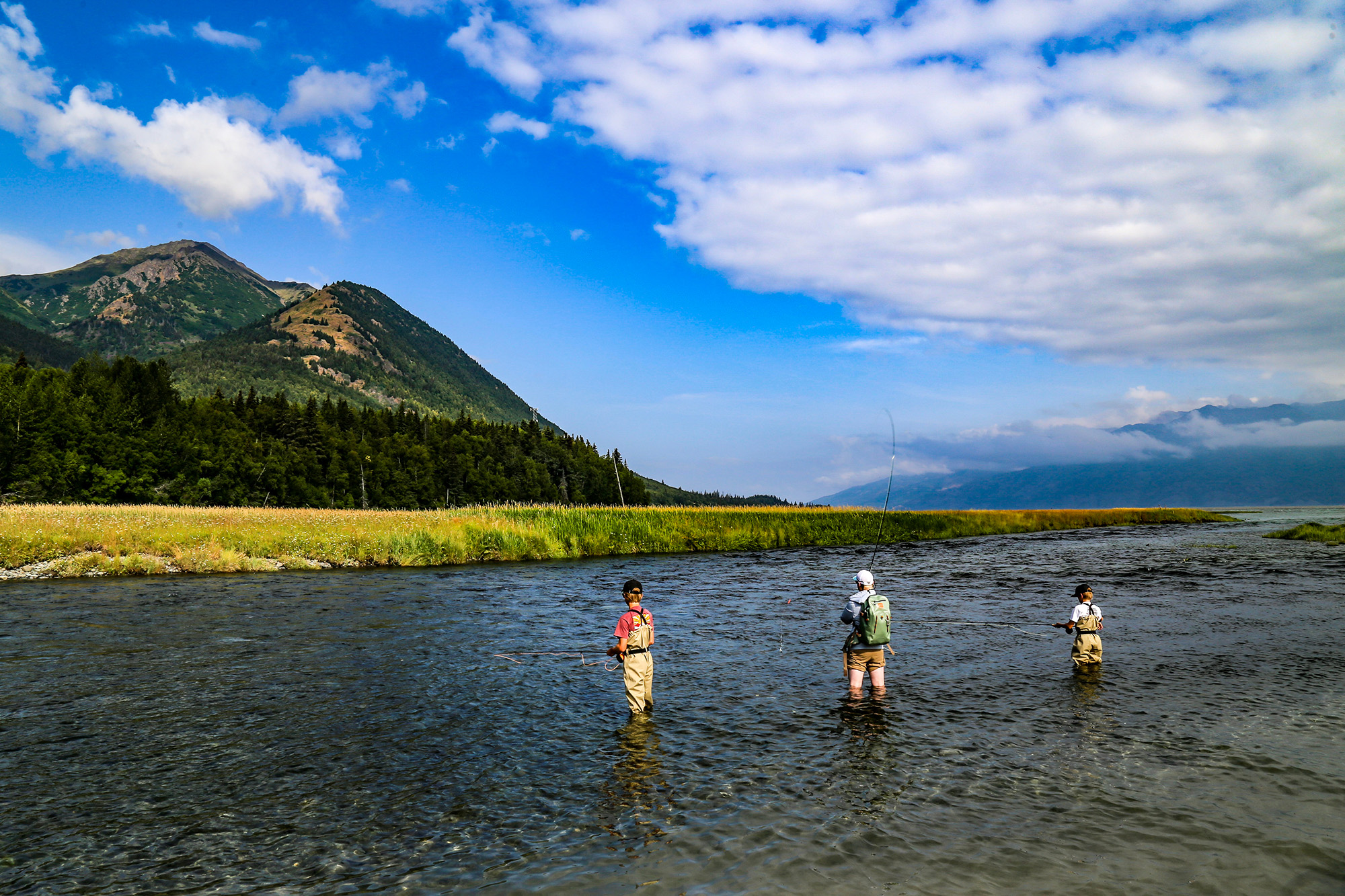 Fly-fishing for salmon on Resurrection Creek in Hope, Alaska. (CSNafzger/Shutterstock)
“More protein per square foot of air space than anywhere else on Earth,” an ornithologist once told me. Yum. Horseflies bigger than cats add to the entomological bonanza. Bears, moose, caribou, and more seek mud wallows to fend off the onslaught; the answer for humans is DEET, and it works. Forget about your tree-hugger lavender spray, folks.
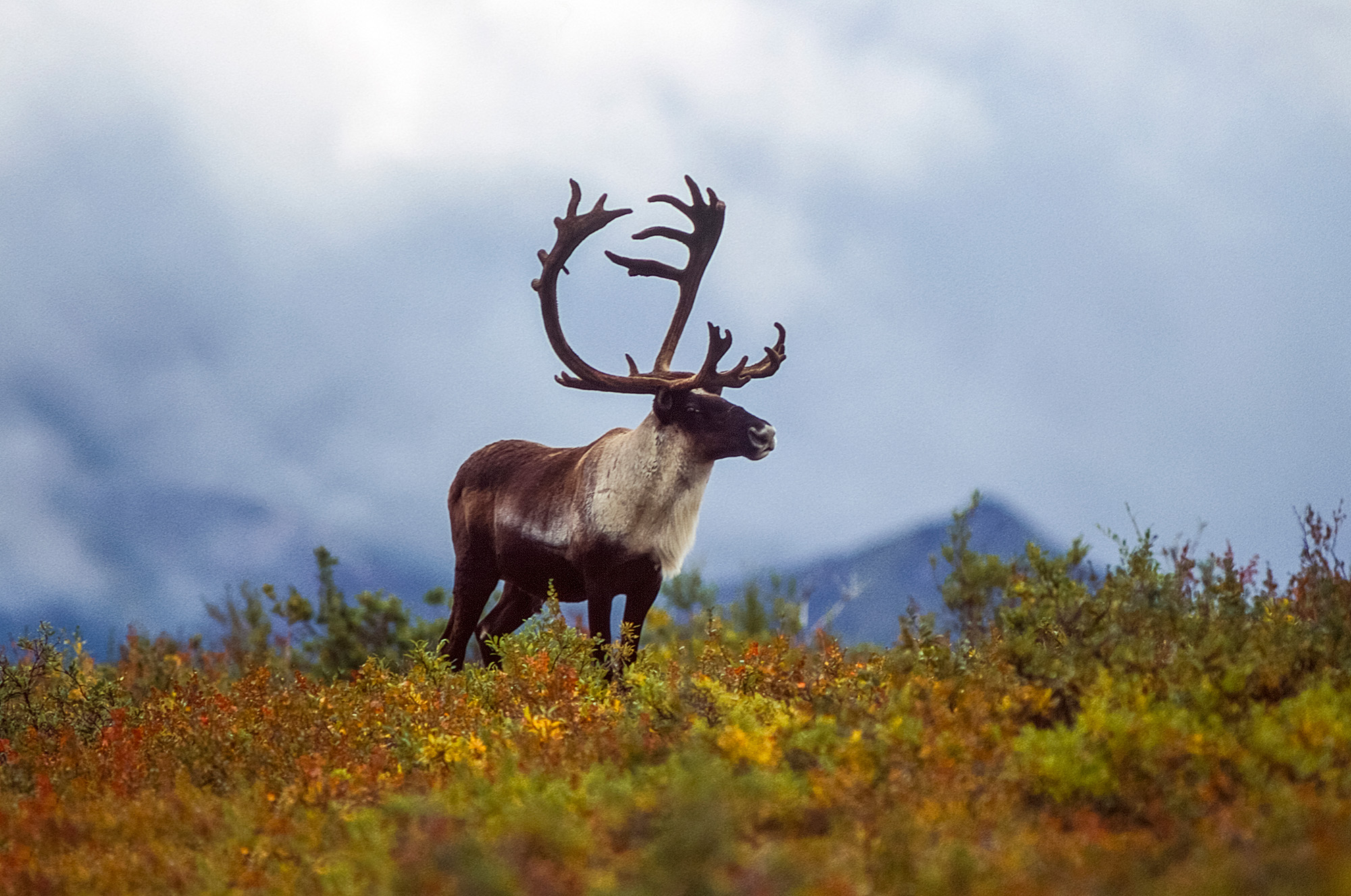 Alaska is home to about 750,000 to 950,000 wild caribou, and some herds migrate across the tundra each year. (Dennis Welker/Getty Images)
Quirks typify Alaska, one of our planet’s most distinctive places. Especially in summer.
Come On In, the Water’s Fine
Yes, I do mean swimming, and I’m not joking.
In the “Frozen North”? That’s what cynics called Alaska when Secretary of State William Seward bought it from Russia in 1867, an act widely derided in the rest of America as folly. Let’s get one thing straight right away: It is not frozen in summer.
In fact, it can be hot. The state record high temperature is 100 degrees F at Fort Yukon, a remote Athabaskan town on its namesake river well above the Arctic Circle. Temperatures regularly climb into the 80s, and although that doesn’t sound extreme, it is magnified by the fact that the sun is beating down from 3 a.m. to 10 p.m. and cloud cover is rare.
I have many times, in many places, resorted to a local swimming hole, and they are everywhere below the Arctic. Program note: People do travel to the Arctic at Utqiagvik (Barrow) just to do quick plunges into the Arctic Ocean, and add it to their life list. Seven continents, seven seas. I passed up the opportunity. The water looked grim.
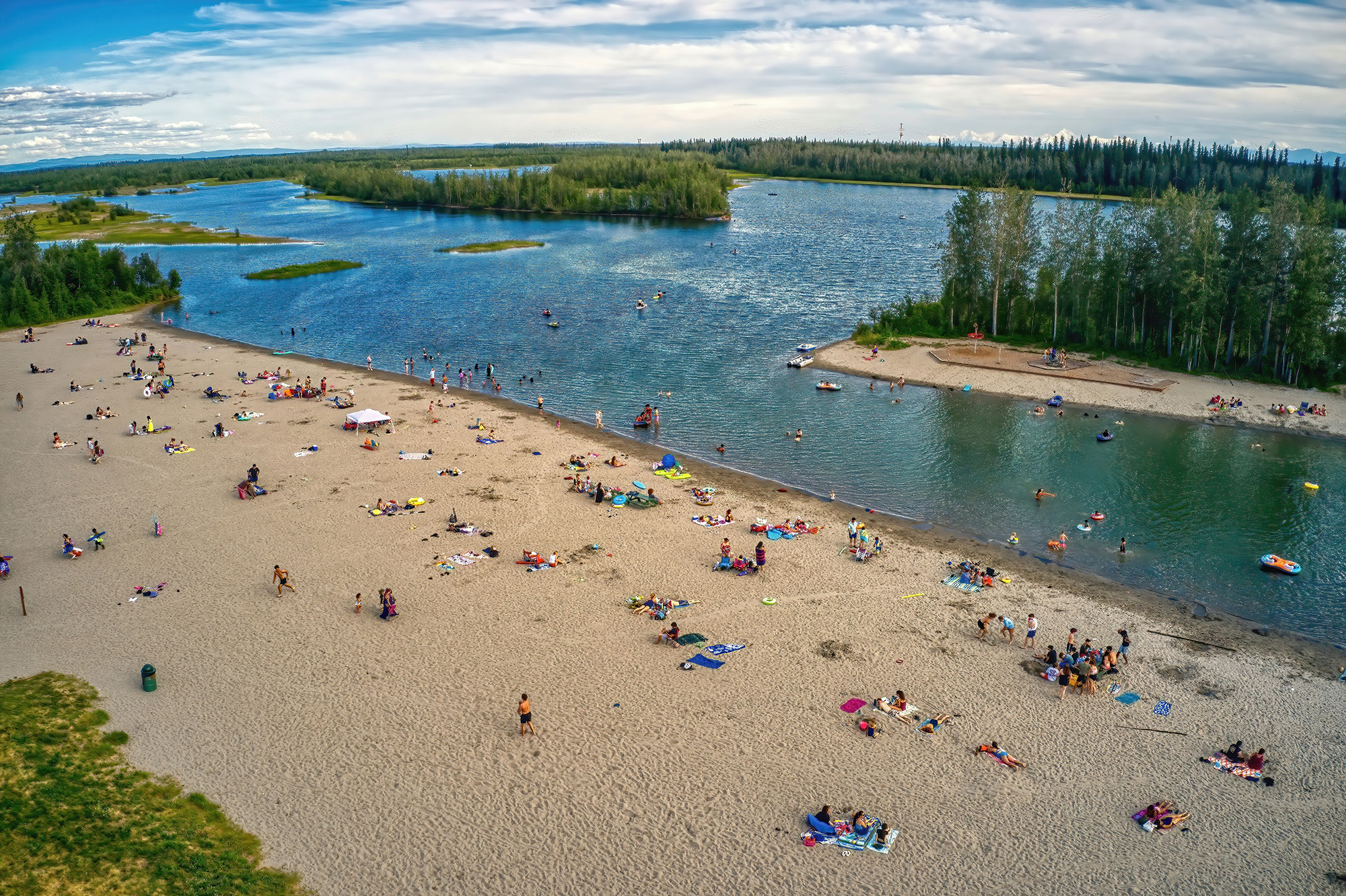 Crowds gather at a popular beachfront at the Tanana Lakes State Recreation Area in Fairbanks, Alaska. (Jacob Boomsma/Shutterstock)
The same description applies to Sandy Beach in Juneau, a Gastineau Channel saltwater venue. Was it cold? Surely. But the sun was fierce, the air balmy, the breeze languid, and the fjord scenery matchless. A lifetime experience.
Wellness experts advise that cold-water swimming is a healthful activity that reduces stress and enhances longevity. Alaska is a superb venue to try it out.
Bonus: no alligators. Bears swim, but only for salmon.
Tippy Canoe and Kayak, Too
Think paddling in Alaska and most people picture a kayak. Not surprising; the modern kayak is derived from ancient Arctic conveyances, also called “baidarka,” invented by polar peoples for oceangoing fishing and hunting. You can see several marvelous examples in Sitka’s peerless Sheldon Jackson Museum, housing the collection of a 19th-century Presbyterian cleric who traveled the state ministering and collecting.
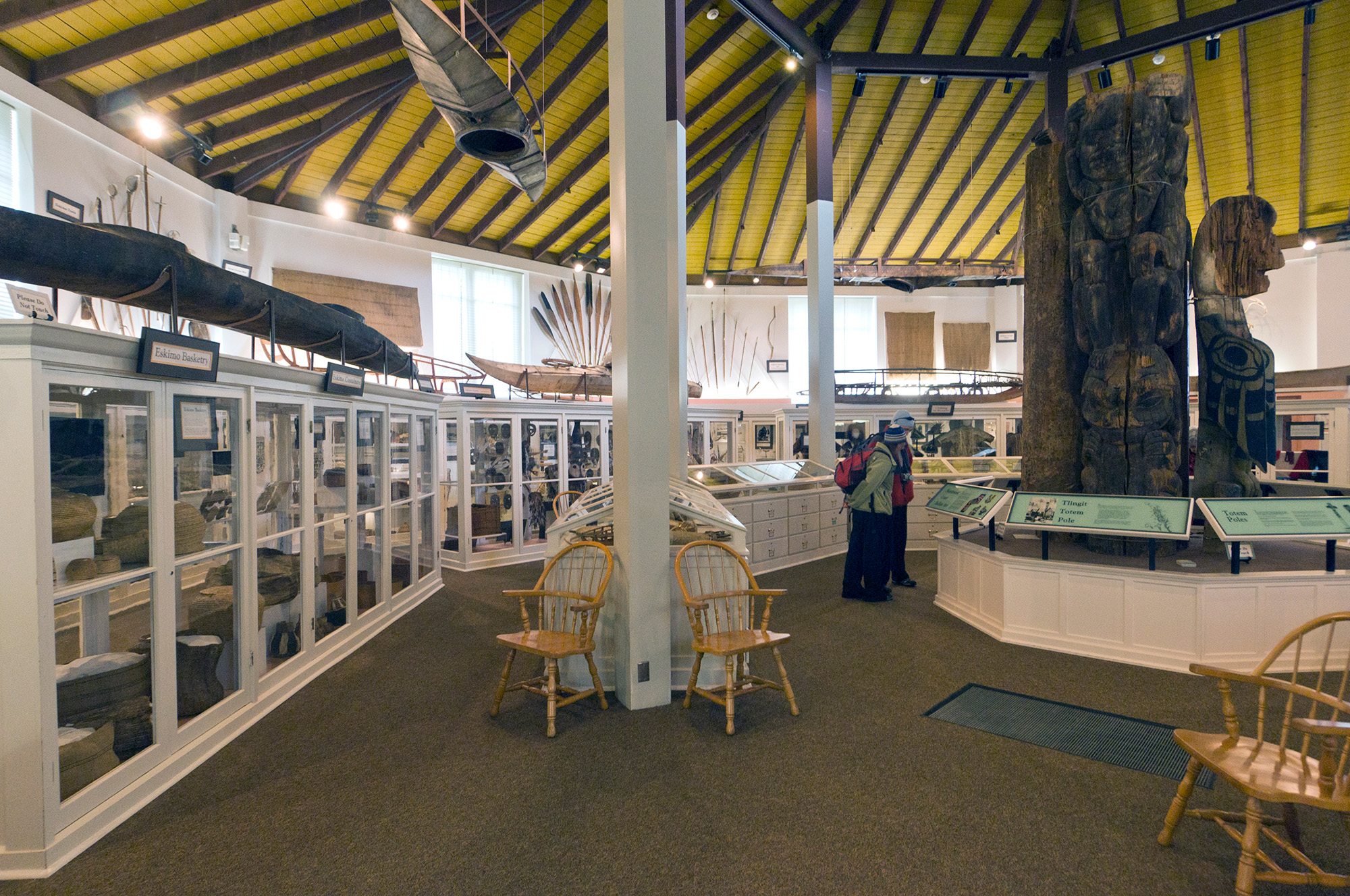 Exhibits at the Sheldon Jackson Museum in Sitka, Alaska. (John Elk/Getty Images)
Rightly so—the Great Land has more than 3 million lakes, large ponds, tarns, and such. Yep, 3 million. Add in more than 47,000 miles of saltwater shoreline, and the water calls paddlers of all types. I’ve canoed in back bays in southeast Alaska near Petersburg, peering into the topaz waters at thousands of pink salmon lining up to make their last journey upstream for spawning and watching a black bear prowl the shoreline for seaweed snacks.
I’ve spent a marvelous afternoon paddling across the Tangle Lakes on the cosmically scenic Denali Highway, east of its namesake park. Distant snowcapped peaks shimmered in the sun, fireweed carpeted the nearby hills, fish swirled and splashed, and we parked on a sandy shore so I could, yes, dive in.
If sitting down seems too placid, you can rent a paddleboard in Fairbanks and coast down the calm, remarkably undeveloped Chena River. The city is barely visible from water level, the current is helpful but mild, and the setting is a small preserve of nature in mid-city, ranging from beavers to ducks to seagulls far from saltwater.
Let me reiterate: All these adventures have taken place in warm sun, balmy air, and breezes as light as silk. “Frozen North”? Nope.
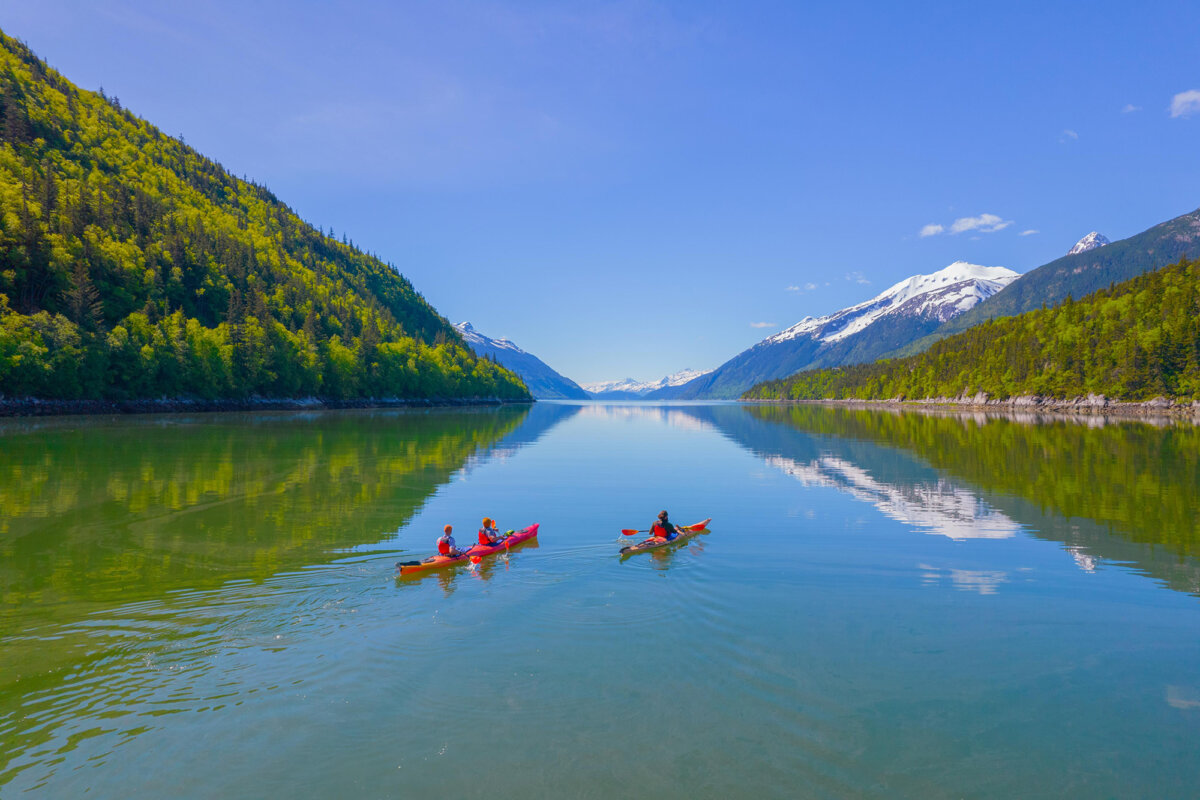
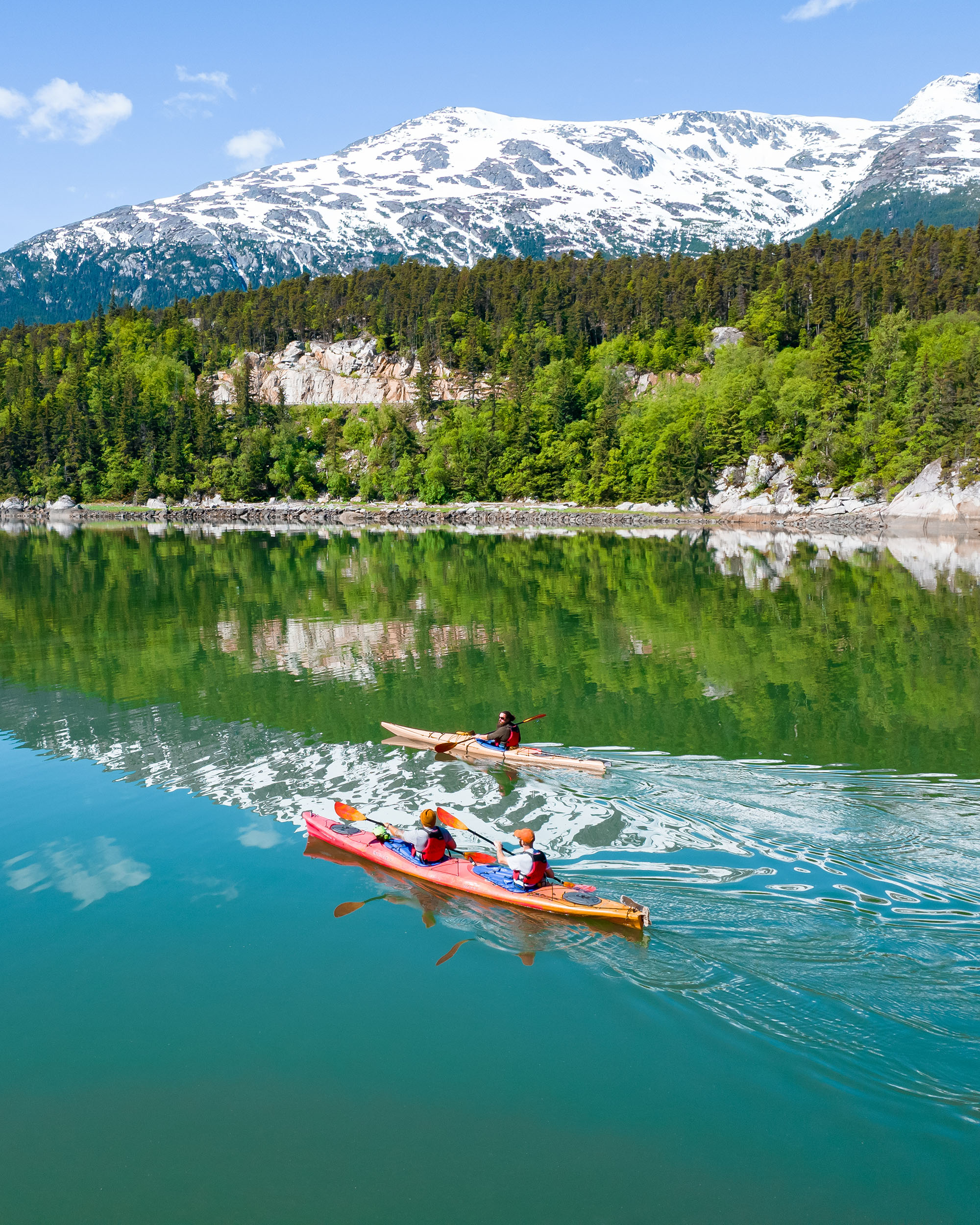 Kayaking in the Port of Skagway near Skagway, Alaska. It’s part of the popular Inside Passage cruise route. (Travel Alaska)
Some Say the World Will End in … Ice
Few will say that any longer. But with more than 20,000 glaciers, according to scientists at the U.S. Geological Survey, Alaska remains a bastion of frozen water. It has fallen over centuries as heavy snows in the state’s hundreds of miles of coastal mountains. For those fascinated by these rivers of ice, that means that glaciers are a near-constant presence in the areas most frequented by visitors.
The ice blanket currently covers about 28,800 square miles, 3 percent of the state—five major ice fields and all those glaciers. People are often surprised that there are few big glaciers in Arctic Alaska—it’s so cold up there—but volume of snowfall, not temperature, is the key to the formation of ice fields and the glaciers that branch off from them.
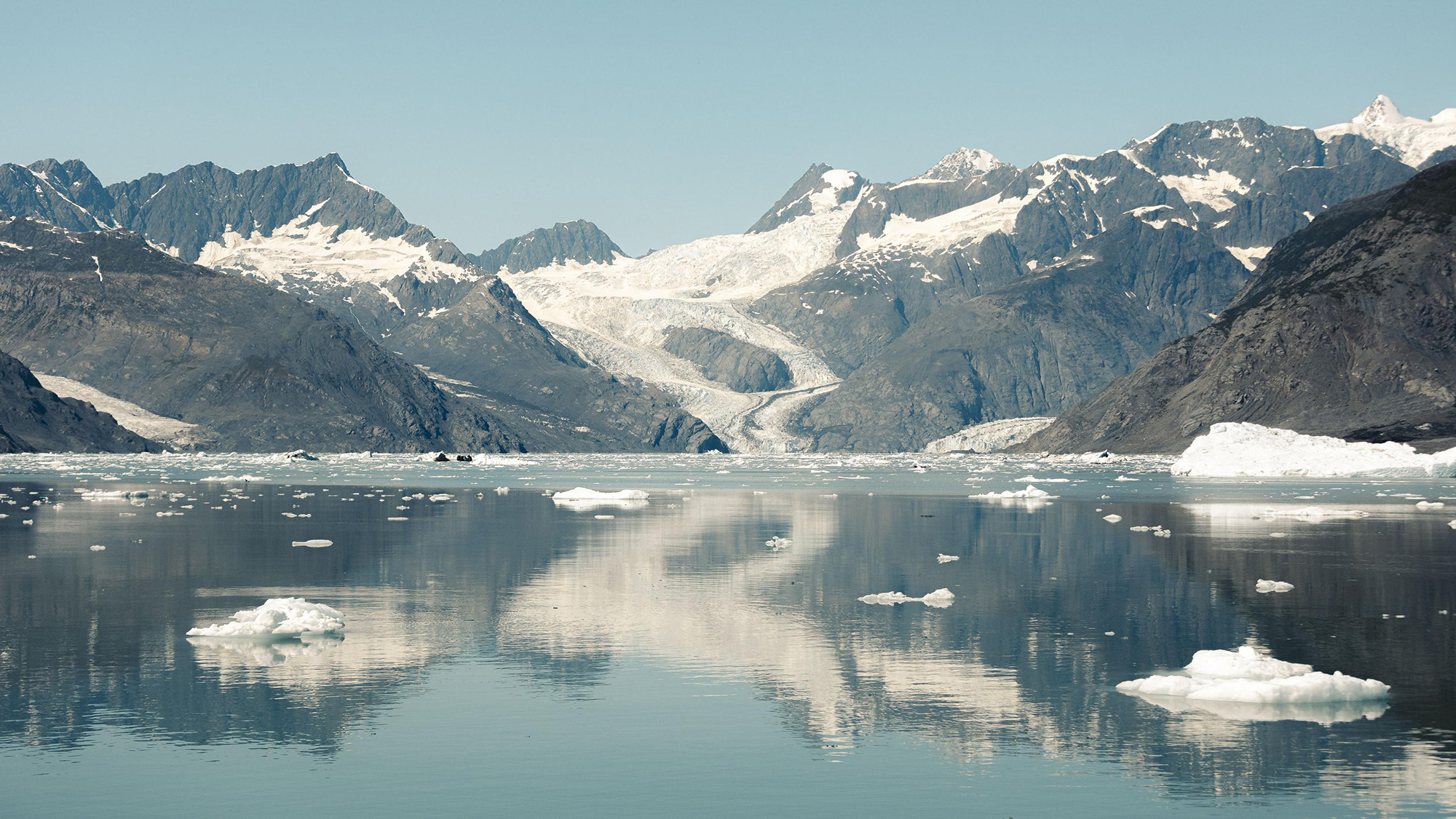 Prince William Sound contains about 150 glaciers. (Travel Alaska/Ben Prescott)
Most people just go look at the Mendenhall from afar, but tour guides regularly and happily take people up there every day.
Once you’re on one of these immense rivers of ice, the experience is a symphony of water.
The sight, smell, and, most important, sound of water are everywhere around you. Trickles, freshets, rivulets, streams, and gushers pour down. Large flows disappear into crevasses whose distant bottoms are hidden from view. Ice pockets accumulate standing water in what are rightly called “blue pools.” The glacier creaks and rumbles, the water trickles and crashes, and the air has a fresh-washed scent, as if you were in a birch forest in January.
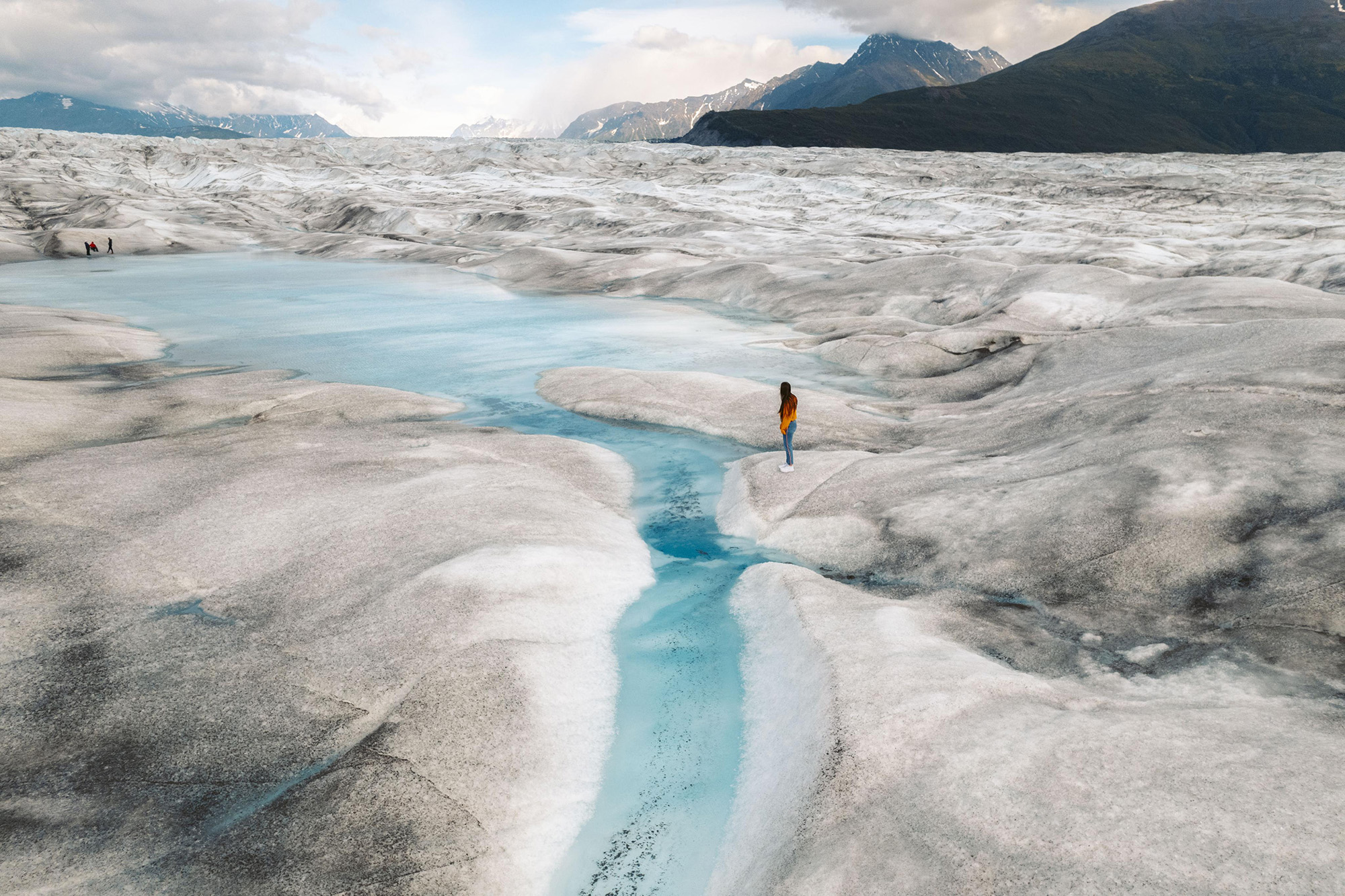 Knik Glacier is one of the largest ice fields in south-central Alaska, measuring more than 25 miles long and five miles wide. (Travel Alaska/Ben Prescott)
By the way, mosquitoes avoid glaciers. Wrong habitat. There are rivers of water on the ice, but none of it is stagnant. Makes sense on ice that is in constant, if slow, motion itself.
Roaring waters aside, glaciers seem rock-steady when you are on them. Do they really move? Yes, in downward speeds ranging from a few feet to hundreds of feet per year. In physics terms, ice is not a solid; geologically, it is a fluid that glaciologists liken to toothpaste in a tube. So why are they all receding? They’re melting faster than they’re advancing.
It’s best for visitors to go glacier trekking with an experienced Alaska resident, or on a guided tour. The latter are available in Juneau, Seward, Anchorage, and Wrangell-St. Elias National Park and Preserve, America’s biggest national park by far. There, hiking tours depart the historic copper mining town of Kennecott for a short trek up onto the Root Glacier, clasped in a high valley between the surrounding 7,000-foot peaks of the Wrangell Range, from which the ice descends.
A day on a glacier is yet another Alaskan once-in-a-lifetime adventure, and the journey across the Root Glacier is a kaleidoscope of sight and sound, wonder and awe, and authentic, only-in-Alaska experiences.
“So, anyone up for a swim?” Our guide sheds her hiking clothes to reveal a swimsuit underneath. We’ve stopped for a rest at the end of our journey beside a blue pool that looks like iced sapphire. The pool is about 10 feet long and four feet wide, but it’s impossible to tell where the bottom is, if any.
Wilderness guides, especially in Alaska, are notoriously and brazenly, um, wild.
“Who’s going in first?” she asks.
