The early 1970s was a rough time for the United States. The Vietnam War and the Watergate scandal created paralyzing political crises, while high inflation inflicted economic pain.
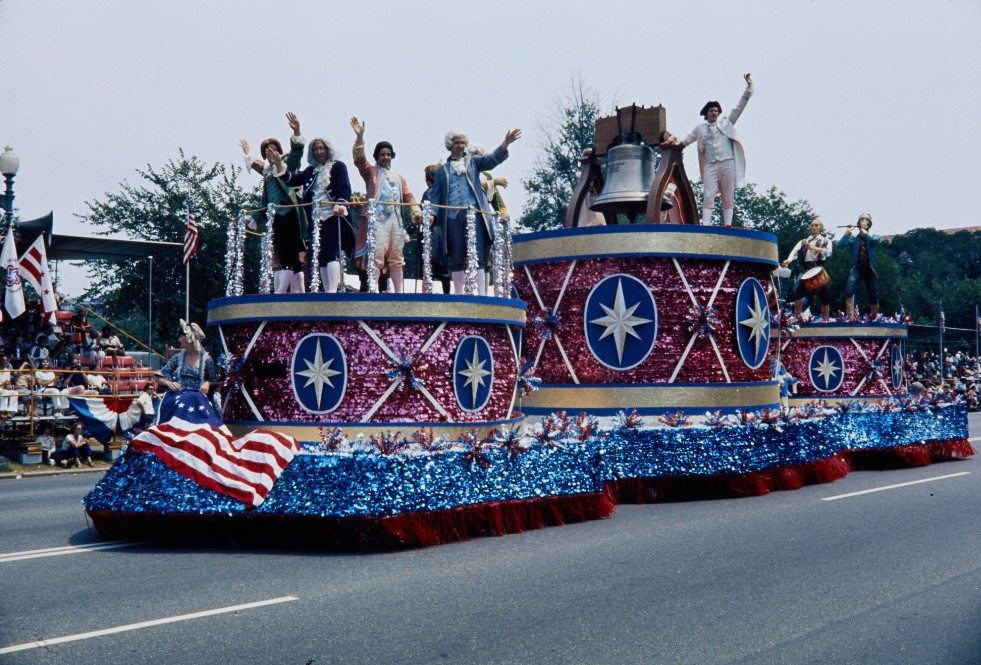
For many people, the 1976 Bicentennial, commemorating the 200th anniversary of American independence, offered the promise of a patriotic reset. However, this once-in-a-lifetime event came with deep challenges and concerns.
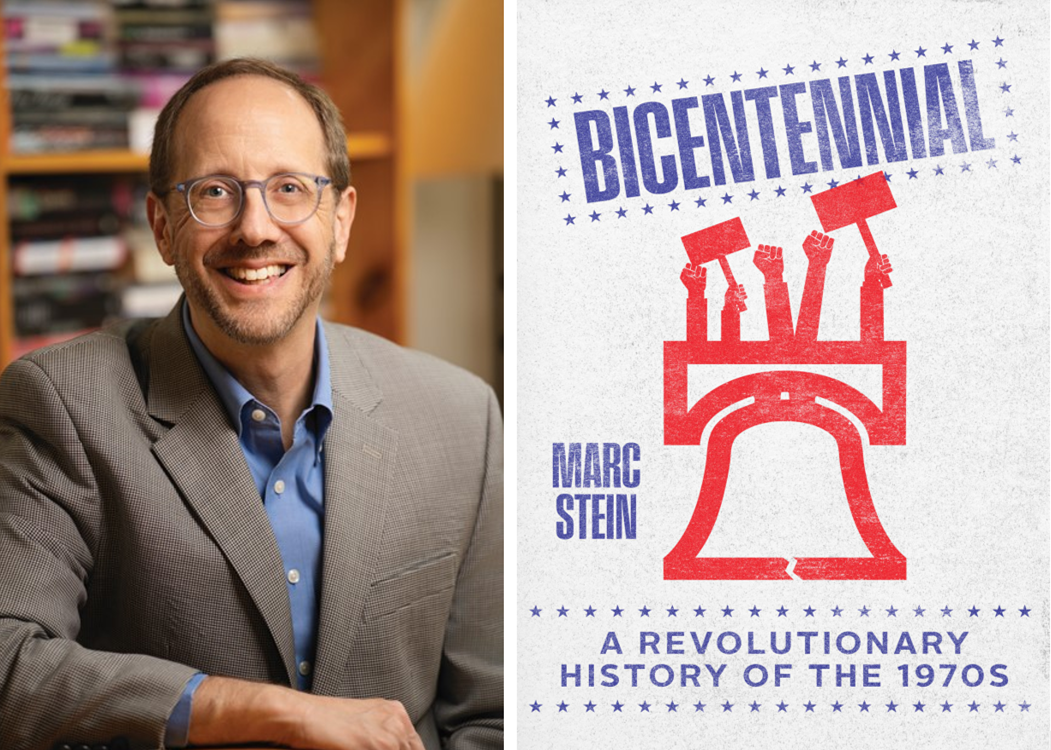
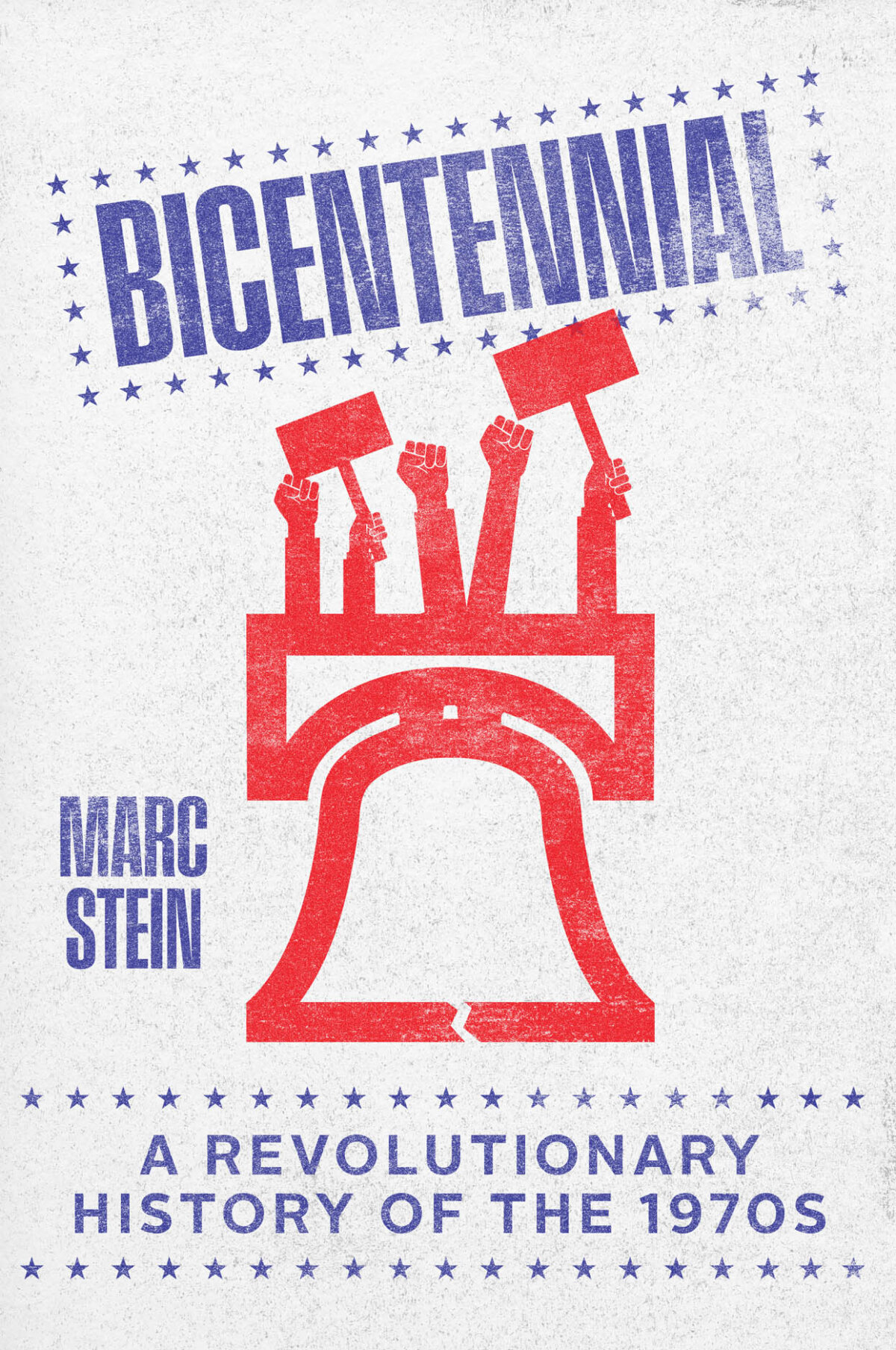
Marc Stein’s new book, “Bicentennial: A Revolutionary History of the 1970s,” offers a fascinating look at the tumult behind this celebration. The work also reshapes the longstanding historical assumptions about the flag-waving nature of the event by recalling the considerable level of discontent stirred by revisiting the nation’s birth.
Many Failed Ideas
Stein notes that preparations for the Bicentennial began in 1957, with the goal of anchoring celebrations solely in Philadelphia. This extremely advanced planning strategy was meant to duplicate the success of the city’s Centennial Exposition in 1876 while avoiding the mistakes that doomed the Sesquicentennial Exposition in 1926.
Among the notions floated in the early planning stages was having Philadelphia host the 1976 Summer Olympics and planning a world’s fair there in 1976. The Olympics idea went nowhere, but in 1970 Philadelphia officials announced a $1.2 billion plan for a Bicentennial World’s Fair.
However, the extravagant budget sparked outrage across the city, which was struggling with budget problems. Civil rights leaders complained that the all-white planning commission wanted to dislocate minority communities and turn their neighborhoods into the expo fairgrounds. City officials tried for a few years to reshape the plan before scrapping it.
Then, there was the federal government’s input. In 1970, President Richard M. Nixon took the exclusive Bicentennial focus from Philadelphia by declaring a celebration that was “national in scope,” adding “there can be no single Bicentennial City.”
Further mayhem came with the congressionally established American Revolution Bicentennial Commission (ARBC), whose focus on commercialism led critics to fear a “Buy-centennial.” Some of the sillier ARBC ideas included lobbying Baskin-Robbins for “a great American ice cream series” featuring the “Betsy Ross Twirl” and the “George Washington Cherry Tree.”
An investigation by the House Judiciary Committee determined the ARBC couldn’t “provide this country with a meaningful Bicentennial commemoration,” so ARBC was shut down. Its successor, the American Revolution Bicentennial Administration (ARBA), was more serious in supporting thousands of community-based projects. Stein credits ARBA’s director, former Secretary of the Navy and future senator John Warner, with reaching out to “diverse constituencies” in shaping the depth and scope of events.
Voices of Discontent
However, Warner’s efforts weren’t enough to mollify a large number of activists and thought leaders, who felt the Bicentennial was rewriting history while ignoring contemporary social justice.
First Lady Betty Ford used the June 29, 1976, opening of the “Remember the Ladies” exhibit in Plymouth, Massachusetts, to link sociopolitical common ground between colonial and contemporary American women. “We’re here to honor the unsung women who helped to win our national revolution and to focus attention on the unfinished business of our revolution for full freedom and justice for women,” she said.
Many black Americans were uncomfortable with the celebration of an era when their ancestors were enslaved by colonists who hypocritically espoused freedom. Native Americans also looked askew at the Bicentennial, glumly noting the loss of their ancestral lands, cultural heritage, and the right to self-determination which began in the colonial period.
The LGBTQ community sourly viewed the Bicentennial’s emphasis on freedom, especially since discrimination based on sexual orientation was legal in the 1970s. Members of this demographic questioned whether the Jeffersonian vision for life, liberty, and the pursuit of happiness would be extended to them.
Stein also points out how the observance sparked calls for the United States to grant independence to territories under its control. This included efforts by separatists from the Marshall Islands and Palau, which were administered by the United States within the United Nations’s Trust Territory of the Pacific Islands. Those territories would become independent in 1979 and 1994, respectively.
In 1985, Rep. Ron Dellums (D-CA) introduced a Puerto Rican self-determination resolution in the House of Representatives. Dellums recalled how the colonists who broke away from Great Britain in the 1770s made a commitment “to the principles that all colonial people have the inalienable right to self-determination and the right to assume their place as sovereign states among the nations of the world.” Congress didn’t pass the resolution.
While the mainstream media of the mid-1970s offered mostly positive coverage of the Bicentennial events, Stein’s meticulously researched book affirms that this rosy interpretation was far from the whole story.
As the U.S. prepares to celebrate its 250th birthday, “Bicentennial” offers a look at a fascinating chapter in the story of a nation that’s still very much a work in progress.
‘Bicentennial: A Revolutionary History of the 1970s’
By Marc Stein
University of Chicago Press: March 17, 2026
Hardcover, 416 pages
What arts and culture topics would you like us to cover? Please email ideas or feedback to features@epochtimes.nyc