



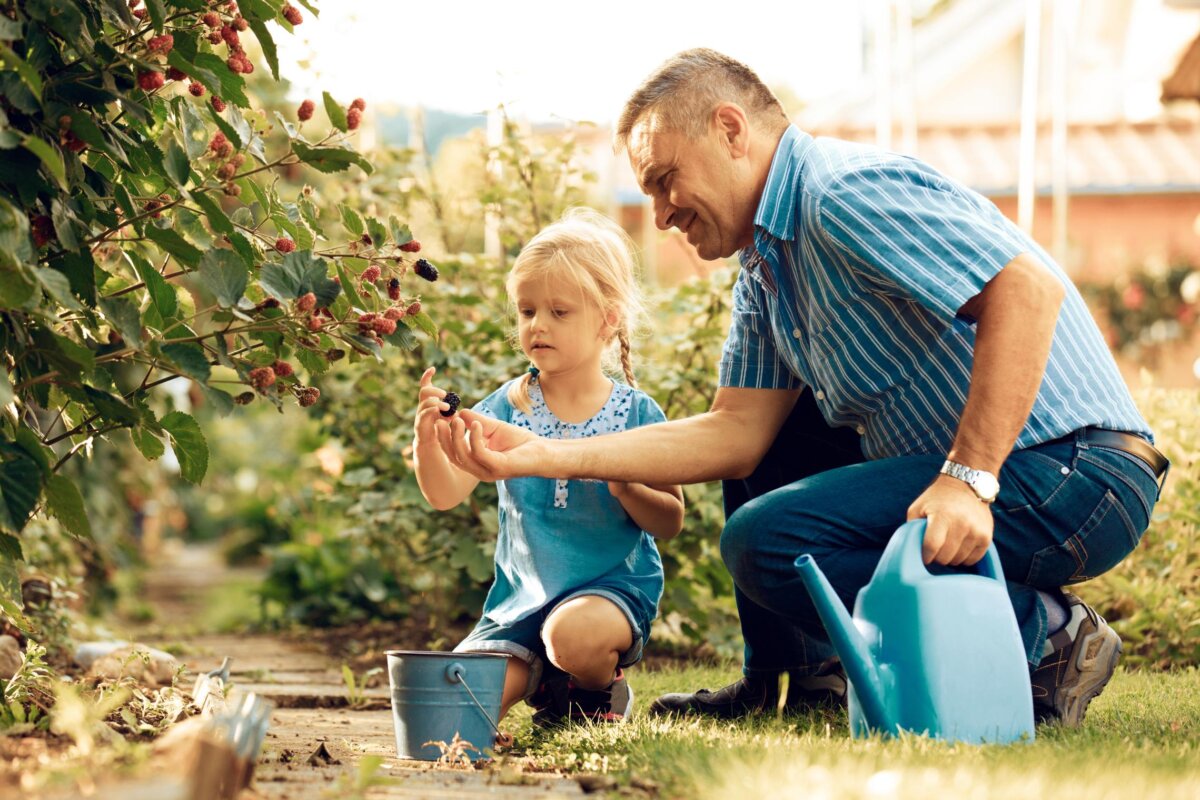
In our childhood, my brothers and I had a penchant for running rampant through the verdant woods at our grandparents’ house. Our grandfather had cleared a winding network of paths, which were perennially overgrown. Somehow, it was all the more delightful having to push through the branches and tangled vines to get to the raspberry and blackberry bushes at the back of the property.
The bushes grew untended and, if we didn’t mind the way there, we gained the enjoyment of an abundance of berries ripe for the picking during our summer visits.
It may seem strange that we derived so much enjoyment from running through the woods to pick the berries ourselves when our grandmother always had a bowl of store-bought berries ready for us in the kitchen. Even with the difference in flavor, there was an added delight in the fact that the blackberries sprang up, wild and unbidden, to reward us in our imaginative forest quests.
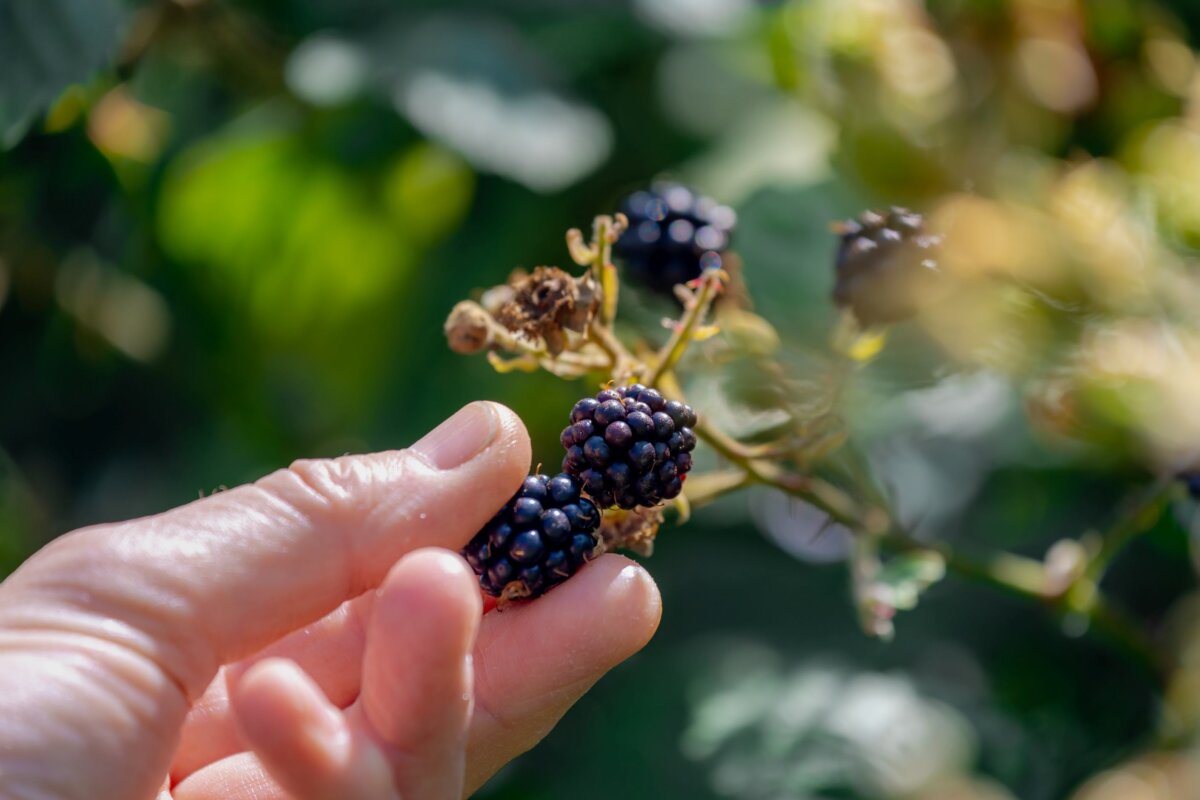
The sense that the woods were our own, that even this wild and untamable patch of nature yielded its fruit to us, added a sense of triumph to ordinary sweetness. In a sense, the fruit-picking seemed a dim echo of the Garden of Eden and man’s dominion over nature.
Picking Berries
June is a seasonable time to think of such activities; nature brings forth its fruit in due season. Richard Wilbur thought much the same and drew from similar memories in his poem “Blackberries for Amelia.” In the poem, Wilbur recalls the times he spent picking berries with his granddaughter in Cummington, Massachusetts.
Fringing the woods, the stone walls, and the lanes,
Old thickets everywhere have come alive,
Their new leaves reaching out in fans of five
From tangles overarched by this year’s canes.
They have their flowers too, it being June,
And here or there in brambled dark-and-light
Are small, five-petaled blooms of chalky white,
As random-clustered and as loosely strewn
As the far stars, of which we are now told
That ever faster do they bolt away,
And that a night may come in which, some say,
We shall have only blackness to behold.
I have no time for any change so great,
But I shall see the August weather spur
Berries to ripen where the flowers were—
Dark berries, savage-sweet and worth the wait—
And there will come the moment to be quick
And save some from the birds, and I shall need
Two pails, old clothes in which to stain and bleed,
And a grandchild to talk with while we pick.
Like small-scale mirrors of the stars above, the white, five-petaled blackberry blossoms dot the bushes and provide a proximate source of celestial beauty for the speaker. The speaker knows that the great cosmic events others speak of will not happen during the remainder of his life. He has a more immediate change to contemplate: These “stars” will turn to darkness in just a few months, just as the heavenly stars will someday fade and leave us in darkness.
To dwell on a cosmic event is fruitless, according to Wilbur. Our actions cannot stave off such change. The speaker, however, can save the fruit from being eaten by the birds, and he can enjoy the company of one he loves while he works.
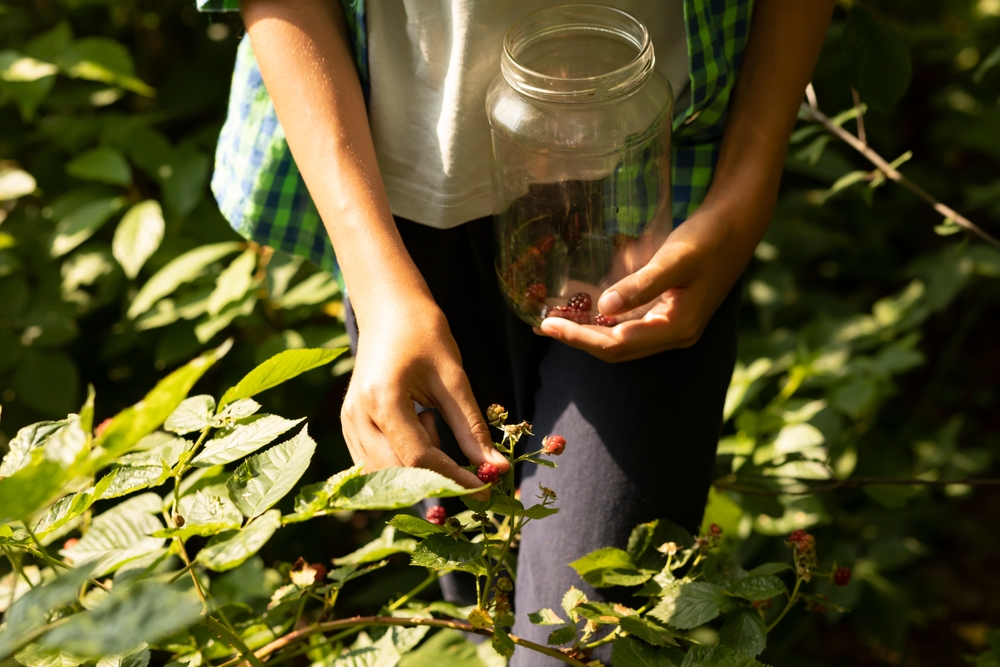
Internalizing the wisdom gained from the perspective of old age, those who will see many more Augusts can have the same mindset to achieve happiness in life. We are not likely to effect any cosmic change or bind the stars in place to forever give the earth light. But we can work, enjoy the fruits of our labor, and delight in the company of those we love.
Perhaps, in this regard, we might feel a certain powerlessness. The actions of our everyday lives may seem insipid or perhaps futile in the face of events that threaten to disrupt, or even permanently halt, the rhythms of our daily routines.
Divine Plan
But the small action depicted in Wilbur’s poem reflects man’s dominion over nature, hearkening back to the original state of man in Eden. In this light, even our everyday work assumes greater significance and value as we view it within the setting of God’s divine plan for creation.
Toil—tending the garden—was always a part of human life, even before the fall of man. Like my grandfather clearing paths through the woods for us and cutting back the growth, or like the speaker in the poem pushing through the thickets and tangles to enjoy the year’s harvest, man carries on the work originally assigned to us in the Garden of Eden, regulating what is overgrown in order to reap greater beauty or the enjoyment of nature’s bounty.
In John Milton’s “Paradise Lost,” Eve tells her husband:
Adam, well may we labour still to dress
This Garden, still to tend Plant, Herb, and Flour,
Our pleasant task enjoyn’d, but till more hands
Aid us, the work under our labour grows,
Luxurious by restraint; what we by day
Lop overgrown, or prune, or prop, or bind,
One night or two with wanton growth derides
Tending to wilde.
Adam and Eve’s task of pruning or binding the plants that are overgrown corresponds to the virtues of prudence and pastoral care. Their work of cultivation in turn cultivates virtue in them; they direct the growth of the plants and increase the beauty of their surroundings. Curbing the growth of the plants helps Adam and Eve to grow, showing virtue in moderation rather than excess. The loving care they put into cultivating the plants represents a small sacrifice of effort that yields greater fruit, both literal and spiritual.
Similarly, the speaker in Wilbur’s poem recognizes that some small sacrifice must be put into the work of berry-picking. The work must be done quickly to save the berries from the birds, and the speaker must wear clothes “in which to stain and bleed,” a phrase that emphasizes the nature of the toil as more than a dainty pastime.
Even beyond care and cultivation, the poem emphasizes the value of patiently waiting for things to happen in their proper season. The speaker draws from past memories to anticipate future joys; the blessings of the past give him hope for the future.
Reflected in the June flowers is a mingling of past and future: The close of summer will bring renewed joy in a cherished pastime shared with one he loves. Thus, the speaker welcomes the changes of the season, knowing that his work and waiting will be rewarded in the future.
What arts and culture topics would you like us to cover? Please email ideas or feedback to features@epochtimes.nyc
