
In her short story “The Touch of Fate,” L.M. Montgomery illustrates a situation in which life and love’s unpredictable nature thwart the matchmaking schemes of a well-meaning friend. Montgomery demonstrates that we may attempt to control our lives, but life often thwart those attempts, proving that it’s impossible to control fate.
Fateful Arrival
Mrs. Major Hill lives with her husband Major Hill in Dufferin Bluff, a Northwest prairie town in Canada. There, he’s stationed as the commander of the Northwest Mounted Police. However, the station is proving too desolate for Mrs. Hill, who loves playing matchmaker.
Luckily (or perhaps fatefully), Mrs. Hill’s young and single friend, Violet Thayer, decides to visit the station. Upon hearing this wonderful news, Mrs. Hill quickly chooses the M.P. Ned Madison as a match for Violet: “He and Violet are simply made for each other. … They can’t help falling in love, I’m sure; it’s fate!”
Very soon after her arrival, Violet has almost “every one of the half-dozen eligibles at her feet, not to mention a score or more ineligibles.” Ned Madison becomes the most favored of Violet’s suitors, much to Mrs. Hill’s satisfaction.
Contrary to all logic or desired fate, Violet soon finds herself distracted with the arrival of a quiet young man named John Spencer, who has a government post in Dufferin Bluff. Unlike all the other fawning young men, John hardly pays any attention to Violet and doesn’t respond to her winsome ways. Perhaps it’s the novelty of being ignored or of not being fawned over, but Violet finds herself wanting to be with John.
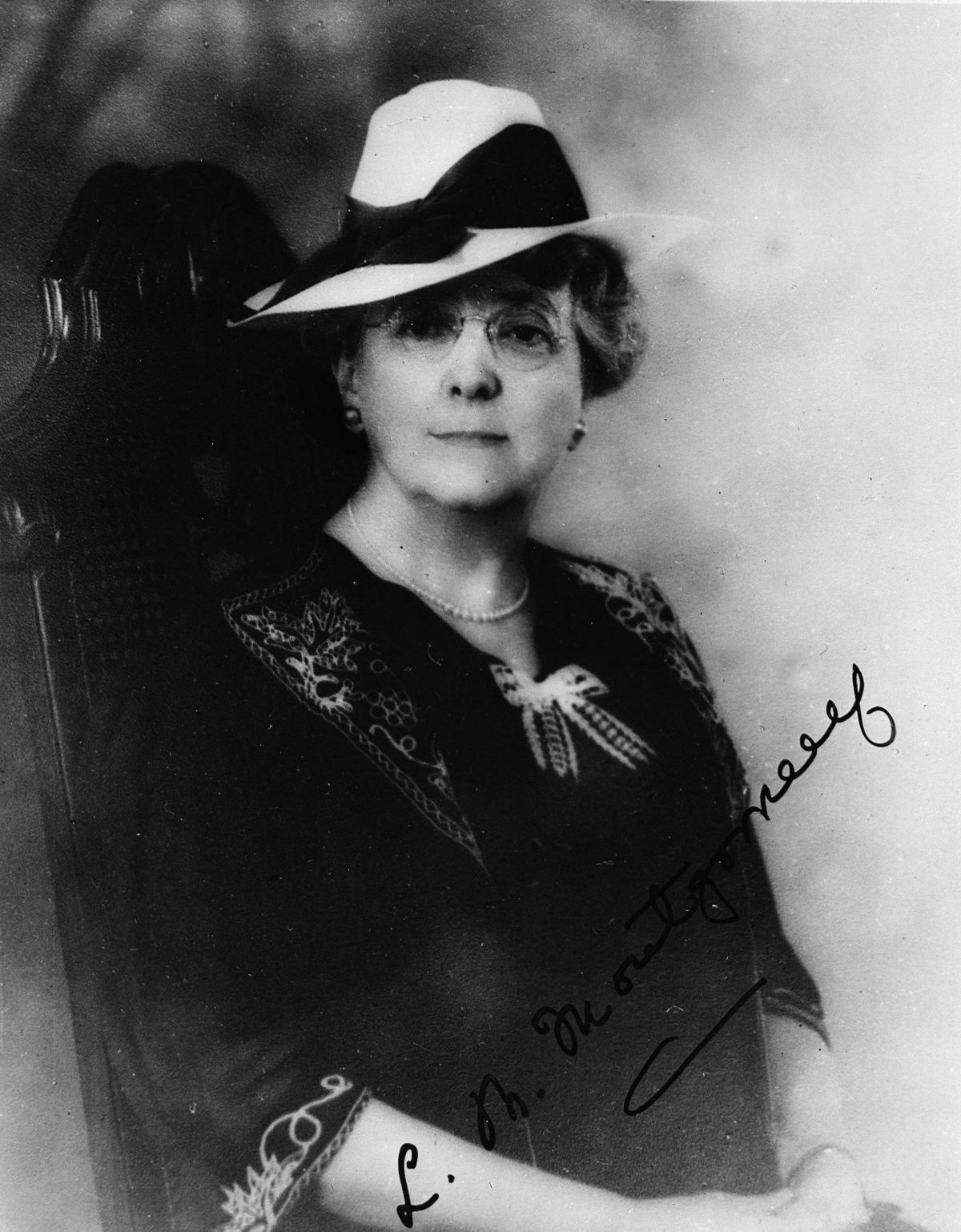 Author Lucy Maud Montgomery. (The Canadian Press/National Archives of Canada)
Bound by Fate and Love
Violet’s affection for John quickly grows and, just as quickly, she puts off all her other suitors, including Ned Madison. The other suitors come to resent John, but no one is more angry than Mrs. Hill. She complains to her husband: “[Violet] is behaving abominably. She treated poor Ned shamefully tonight. … I’m sure I don’t know what she can see in [John Spencer]. He’s the dullest, pokiest fellow alive—so different from her in every way.”
Determined to regain control of the situation, Mrs. Hill takes the opportunity to talk with John while Violet is out riding. She hints to him that before she arrived in Dufferin Bluff, people believed that Violet was engaged to Harry St. Maur. John despairs of his ill-fated luck and immediately leaves the Hills’ house and heads out on an assignment.
However, once Violet gets wind of what Mrs. Hill has done, she confronts her friend with determined anger: “I love him … and you’ve sent him away. … I shall never see him again!” The fate-bending Mrs. Hill feels sudden remorse at having so cruelly separated Violet and John.
Yet, not quite finished meddling, Mrs. Hill sends a letter to John, hoping that she can mend what she hurt. She may have done wrong, but she will right it if she can.
Through this story, Montgomery sweetly illustrates how love and meaningful moments in life come when we least expect it. She illustrates the uncontrollable nature of fate, while simultaneously showing the undeniable beauty of that uncontrollable nature.
She, like Marcus Aurelius says in “Meditations,” encourages us: “Accept the things to which fate binds you, and love the people with whom fate brings you together, but do so with all your heart.” We may not be able to completely control our fates, but perhaps that’s a good thing. For there’s beauty and love in the unpredictable—such is fate.
What arts and culture topics would you like us to cover? Please email ideas or feedback to features@epochtimes.nyc