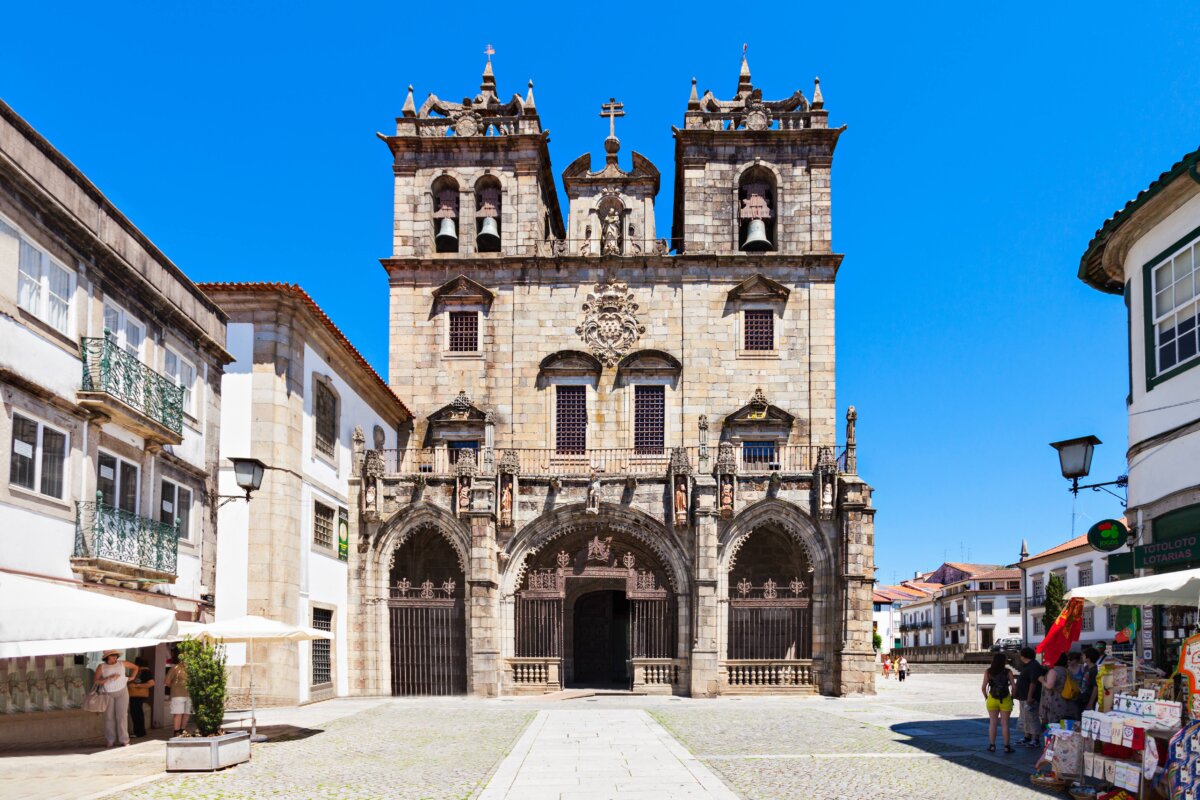
The cathedral’s façade features a blend of Romanesque, Gothic, and Manueline elements, indicative of the various renovation periods since its construction. While the main façade is Romanesque, the bell towers feature Manueline spires, and the archway is Gothic. (saiko3p/Shutterstock)
Known locally as Sé de Braga, Braga Cathedral is located in the historical center of Braga, in the heart of Portugal’s Minho region, which is in the northern part of Portugal.
As Portugal emerged from Moorish rule more than 525 years ago, Archbishop Pedro de Braga commissioned a church to be built over an older Roman temple. Construction of the church began in 1070 and took more than a century to complete, under the supervision of Archbishop Paio Mendes. Over the centuries, the cathedral was modified in several architectural styles.
The original Romanesque style is still noticeable in the cathedral’s overall shape, especially around the southern entrance, the west portal, and tower archways. The cathedral became the main reference for Romanesque architecture in Europe because this style was first developed in the Portuguese Minho and Douro regions.
The cathedral’s exterior features Manueline towers and roof, designed by João de Castilho, the architect of Lisbon’s famous Hieronymites Monastery. Manueline architecture, also known as Portuguese Late Gothic, was a 16th-century architectural style similar to Gothic architecture. The style featured symbols and structures relevant to the Age of Discovery, specifically nautical designs.
Inspired by French churches, the cathedral’s interior is both Baroque and Manueline, and is designed according to similar pilgrimage sites on the way to Santiago de Compostela.
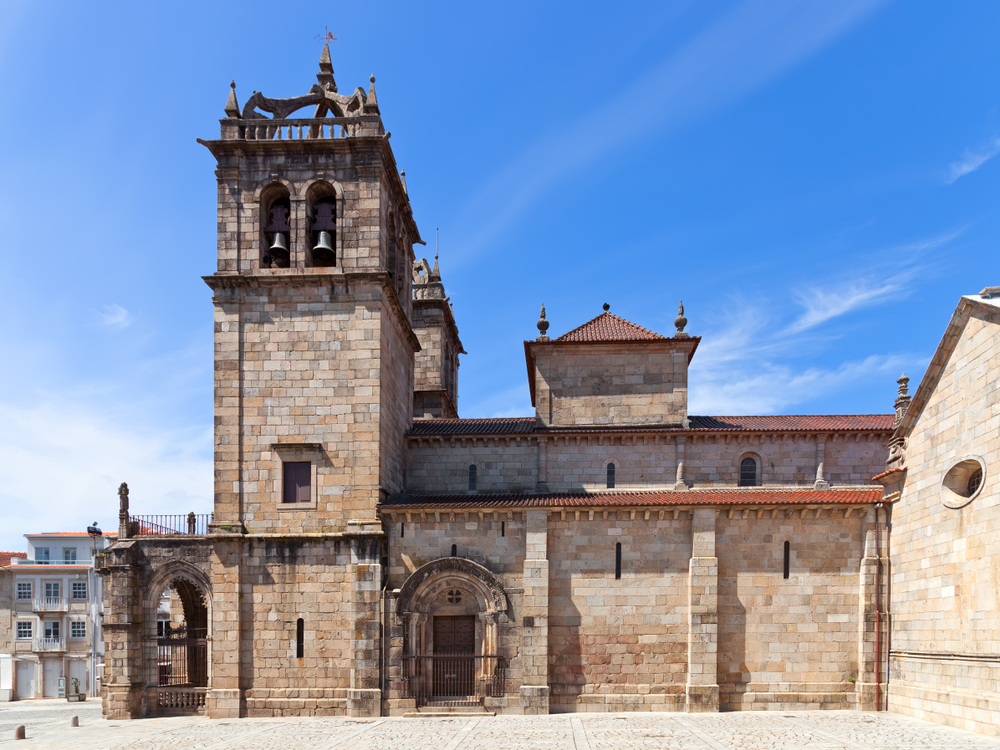
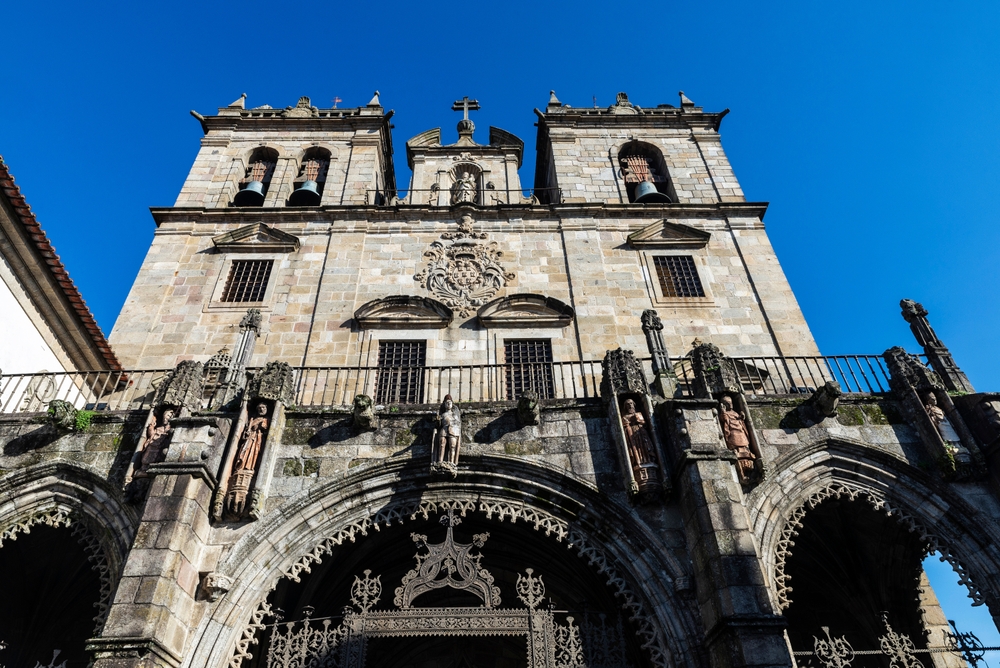
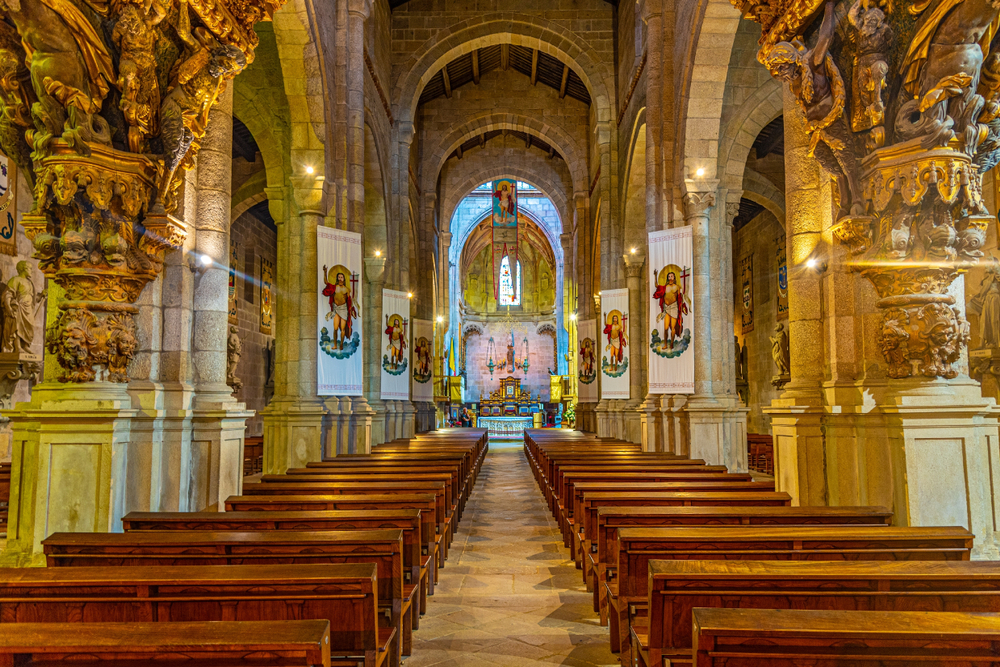
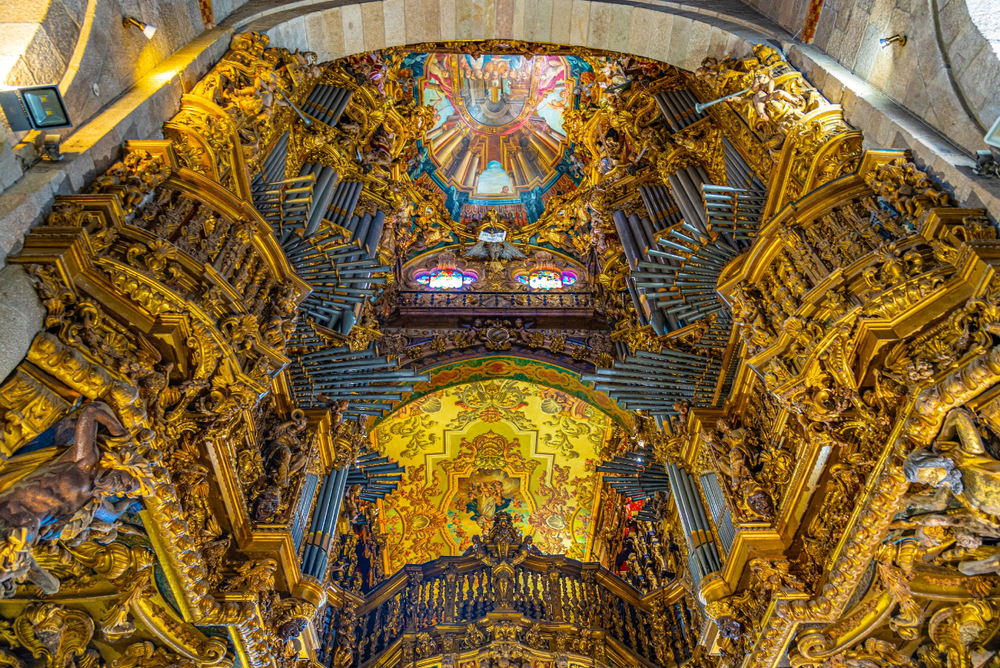
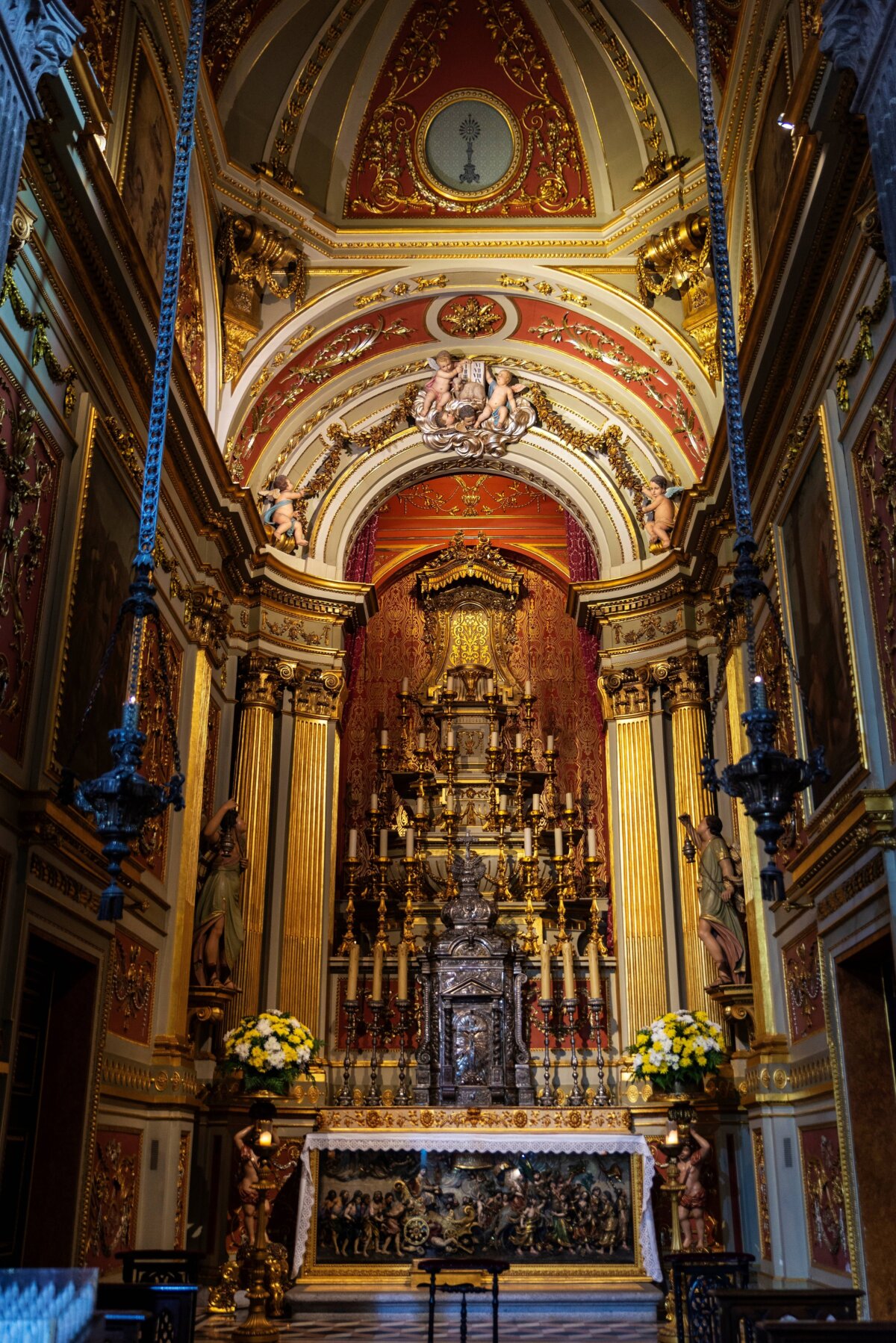
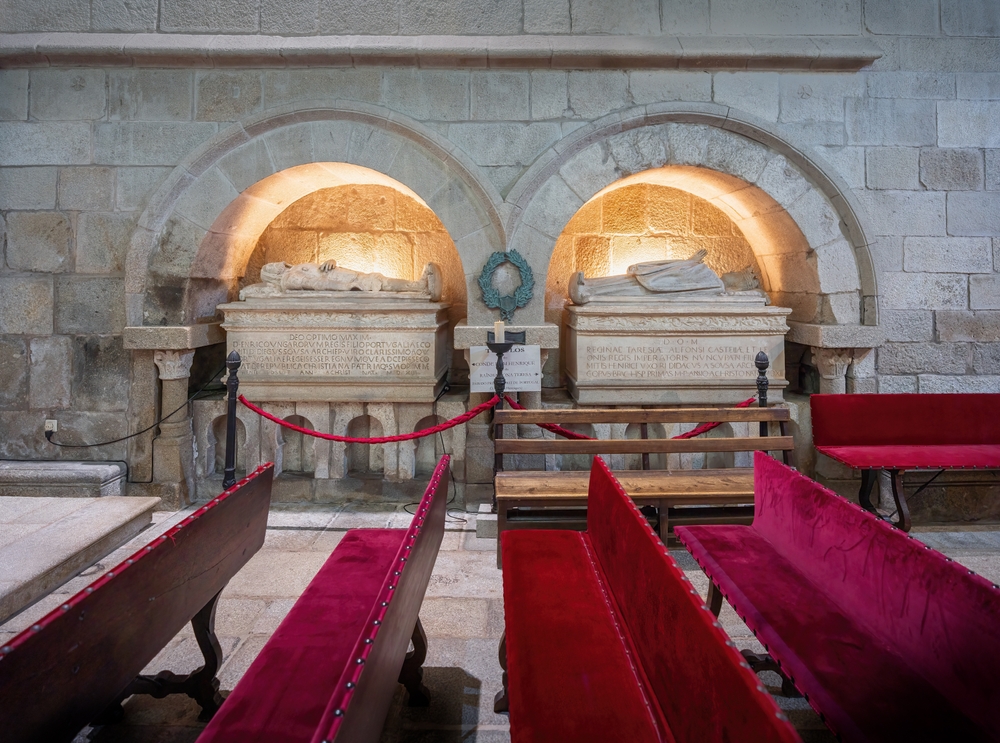
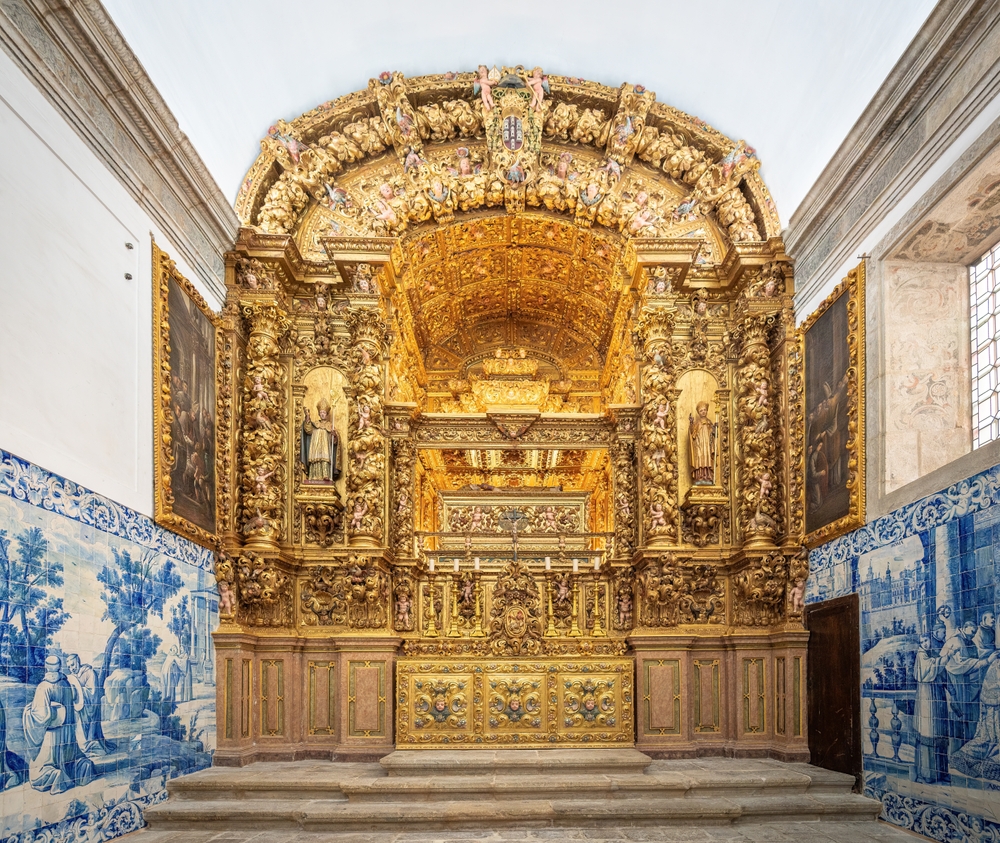
Romanesque-style stone construction characterizes the cathedral’s south side. The central section features what’s known as the Door of the Sun, a prominent arched doorway with intricate carvings. The doorway is flanked by thick stone walls with narrow windows and decorative elements, and a square bell tower rises above one side. The roofline features red tile roofs capping different sections of the building, adding to the cathedral’s layered and complex silhouette. (StockPhotosArt/Shutterstock) On the cathedral’s western face, the twin-towered building is a mix of architectural styles from through the centuries. Two Manueline bell towers flank the cathedral’s main entrance, featuring square windows, triangular arches, an iron gate, and a Romanesque portal sheltered inside a Gothic porch. The central portal features stone tracery, as well as sculptured animal and human reliefs, thought to originate from the European fables of Reynard the Fox. Above the portal is a carved relief of Portugal’s coat of arms. (J2R/Shutterstock) Originally inspired by the Romanesque architecture of the Cluny Abbey in France, the cathedral’s interior features a cross-shaped nave with three aisles, a transept, a chancel, and five chapels in the apse on the eastern end of the church. The stone columns and rounded arches are typical of the Romanesque style and are adorned by carved capitals at the top of the columns. The chancel, visible at the far end, is bathed in light from the stained-glass windows and highlights the Manueline altar as a focal point of the cathedral. (trabantos/Shutterstock) The Baroque high choir features a painted ceiling and two gilded wooden organs by Portuguese sculptor Marceliano de Araújo. The gilded wooden organs feature symmetric pipes, framed by layers of gilded sculptural elements, which draw the eye upward. The ceiling above is adorned with vivid frescoes and a depiction of the marriage of the Virgin Mary and St. Joseph. The use of gold leaf throughout reflects light, adding to the grandeur. This area of the cathedral emphasizes dramatic, lavish decoration and a seamless integration of architecture, sculpture, and painting. (trabantos/Shutterstock) The high altar exemplifies Baroque and Manueline artistry. The 18th-century altar features a combination of gilded wood, ornate carvings, lavish gilding, and vibrant polychrome elements. The central focus is a large sculpted altarpiece in the Manueline style, depicting scenes from the life of Jesus and various saints. The altar is framed by columns, and a canopy decorated with gold leaf, stucco, and angel carvings. (J2R/Shutterstock) The Chapel of Kings is a shrine to Portuguese history. The stone chapel features the tombs of Dom Henrique and Dona Teresa, the parents of the first king of Portugal, Dom Afonso Henriques. The tombs, separated by framed arches, are crafted from fine stone, with detailed inscriptions and carvings. (Diego Grande/Shutterstock) The chapel of Saint Gerald (São Geraldo) is a masterpiece of Portuguese architecture. The walls are covered in traditional Portuguese blue-and-white tiles, called azulejos, which narrate scenes from the life of St. Gerald, who baptized the first king of Portugal. The focal point of the chapel is the exquisite altar, which houses a relic of St. Gerald and features intricate carvings and gilded details that highlight the sacredness of the space. (Diego Grandi/Shutterstock)
Would you like to see other kinds of arts and culture articles? Please email us your story ideas or feedback at features@epochtimes.nyc