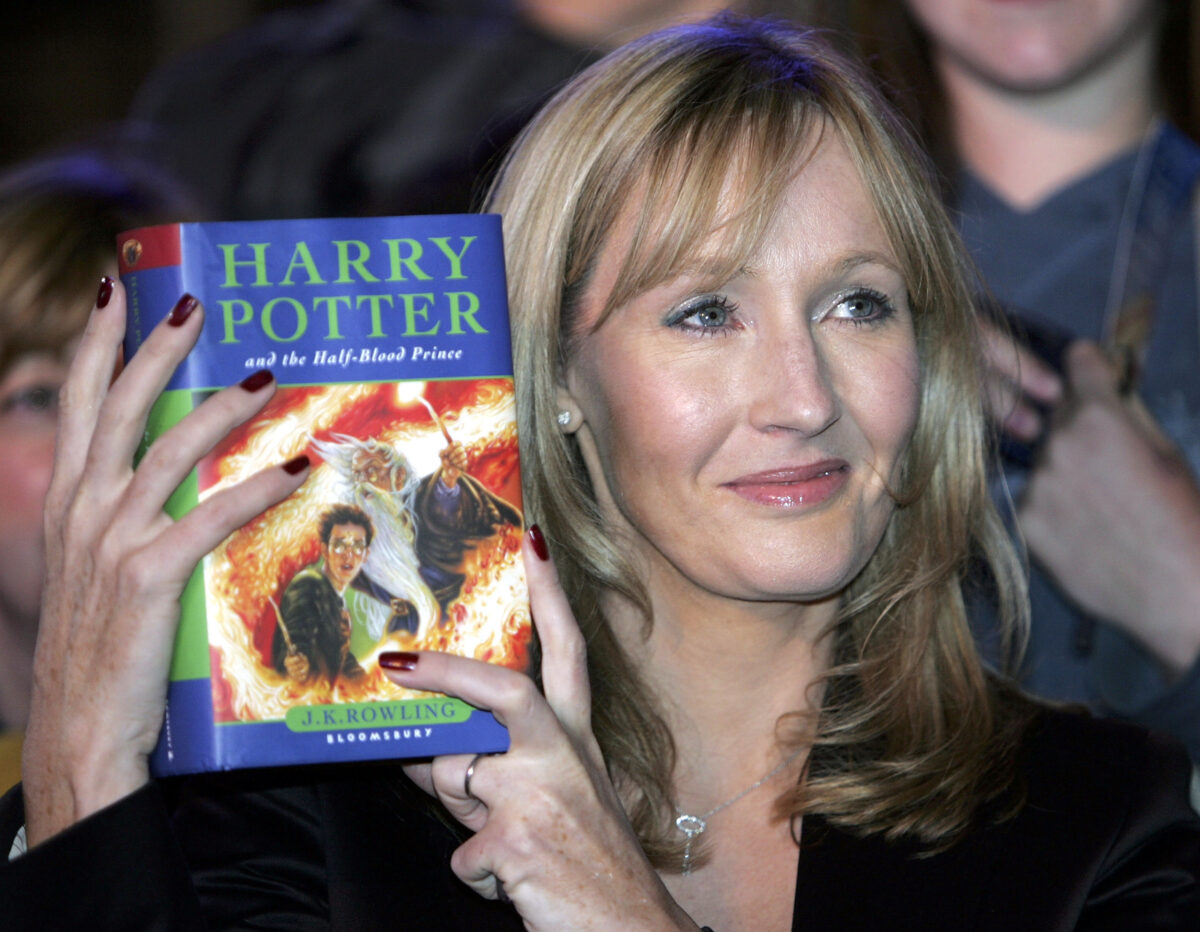
It was just approaching midnight before July 21, 2007, and my 12-year-old son and I were returning from a family get-together south of town. As we approached Asheville Mall, the sky was bright with lights and the traffic unusually heavy. As we came closer, we saw the parking lots on both sides of the expressway crowded with cars outside Books-a-Million and Barnes and Noble. It took me a second, but then I remembered it was the release date for J.K. Rowling’s “Harry Potter and the Deathly Hallows,” a copy of which I’d preordered for my son.
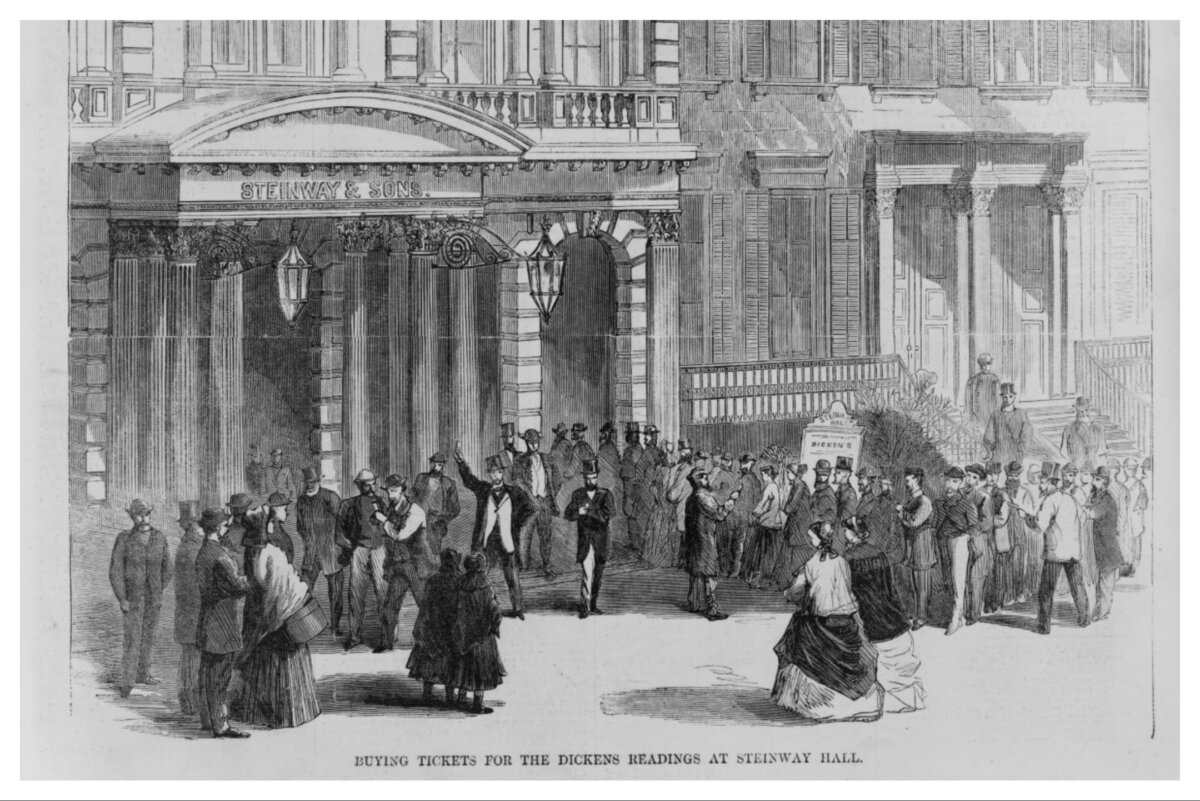
We caught the exit ramp, parked, and entered Books-a-Million, where a serpentine line wound up and down the aisles of books. All four of my children loved these fantasies, and Jeremy was eager to get his hands on this latest and last addition to the series. Though not a fan myself, I marveled at this queue of adults, teens, and children. As a former bookseller, it was a delight seeing so many readers and such a massive number of books being sold, with hundreds more such events scheduled across the country in the coming hours. Standing in line, I thought of Charles Dickens’s visits to America, when crowds swarmed him wherever he appeared.
But before Dickens there was Scott.
‘The Wizard of the North’
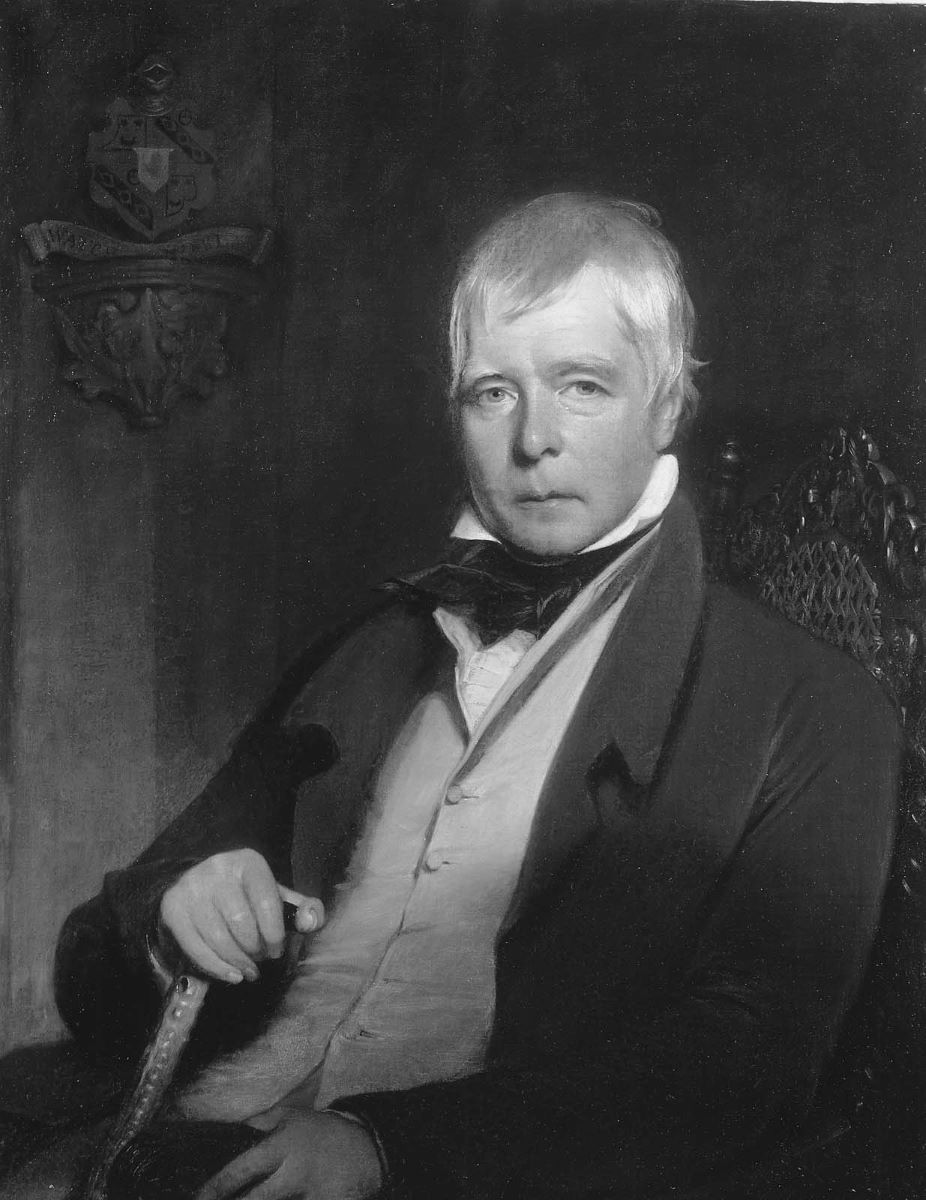
Poet and novelist Sir Walter Scott (1771–1832) was the father of the historical novel and writer of the world’s first blockbuster bestsellers. His long poems like “The Lay of the Last Minstrel” and “The Lady of the Lake” first seized the public’s attention, outdone only with the release of his novels like “Waverly.” First winning renown in Great Britain and then across Europe, sales of Scott’s books climbed into the millions throughout the 19th century.
America took part in the Scott phenomenon. His poems and novels sold by the thousands and were read aloud in parlors around the country, the poetry memorized in school, the novels inspiring visions of knights and ladies in both children and adults.
Scott’s descriptions, characters, and plots so captured the American imagination that they escaped the printed page and entered larger realms of culture. Throughout the Midwest, for example, are towns named Waverly by fans of Scott’s novels. Streams of influence, including Scott’s writing, fed a Gothic Revival in architecture in mid-19th-century America, leaving behind a string of castle-like homes and commercial buildings.
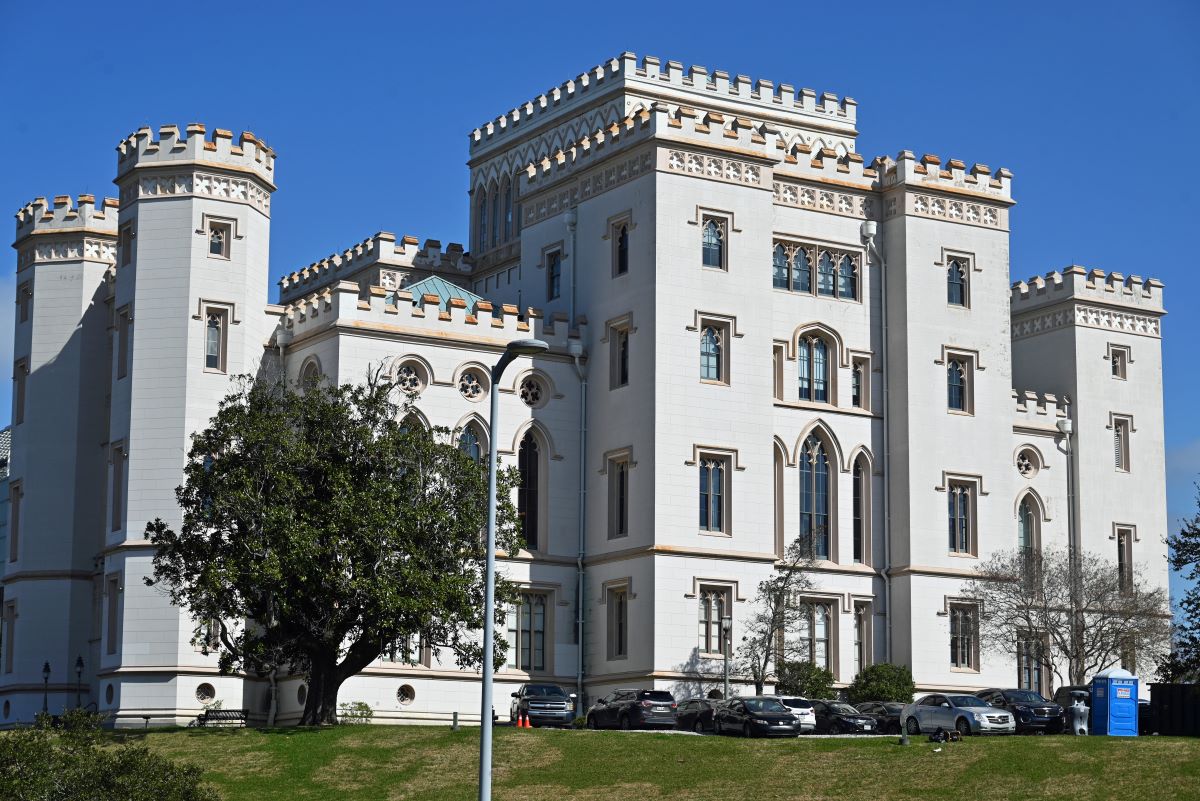
Louisiana’s State House in Baton Rouge is a prime example of this craze for the Gothic Revival. It drew many admirers, but Mark Twain was not among them. In his 1883 “Life on the Mississippi,” he blamed this mock-medieval creation directly on Scott, writing:
“Sir Walter Scott is probably responsible for the Capitol building; for it is not conceivable that this sham castle would ever have been built if he had not run the people mad, a couple of generations ago, with his medieval romances. The South has not yet recovered from the debilitating influence of his books.”
In this same book, Twain added an even graver charge to this indictment. He accused Scott of helping to light the bonfire that became the Civil War:
“Then comes Sir Walter Scott with his enchantments, and by his single might checks this wave of progress, and even turns it back; sets the world in love with dreams and phantoms; with decayed and swinish forms of religion; with decayed and degraded systems of government; with the sillinesses and emptinesses, sham grandeurs, sham gauds, and sham chivalries of a brainless and worthless long-vanished society. He did measureless harm; more real and lasting harm, perhaps, than any other individual that ever wrote. … Sir Walter had so large a hand in making Southern character, as it existed before the war, that he is in great measure responsible for the war.”
Twain exaggerates in his criticism, and yet there is truth here as well. Watch “Gone With the Wind”; the movie features a chivalric code that encouraged war fever in plantation houses.
The Rock Star of Literature
Scott never visited America, but Dickens twice crossed the Atlantic, once in 1842 and again in 1867. Regarding both occasions, some of his commentators today compare his visits to the frenzy of “Beatlemania” in the 1960s. Just 30 years old on his first visit, and already the author of novels like “Oliver Twist” and “Nicholas Nickleby,” Dickens was hurrahed and mobbed in the streets, asked incessant questions by the press, and attended balls and parties held in his honor.
At first, Dickens reveled in this attention. After a special Valentine’s Day ball arranged just for him, attended by some 3,000 guests, Dickens spoke at a dinner the following evening and said, “If I should live to grow old, the scenes of this and other evenings will shine as brightly to my dull eyes 50 years hence as now.”
Quickly, however, the gilt vanished from this cup of welcome, and Dickens came to detest much about the Americans he met on his journey. He already abhorred slavery, but was repelled as well by Midwest table manners and the spitting of tobacco juice on the walkways and streets of Washington. Adding to his disgruntlement was the absence of copyright laws, meaning that the enormous sales of his books he was witnessing brought no money into his pockets.
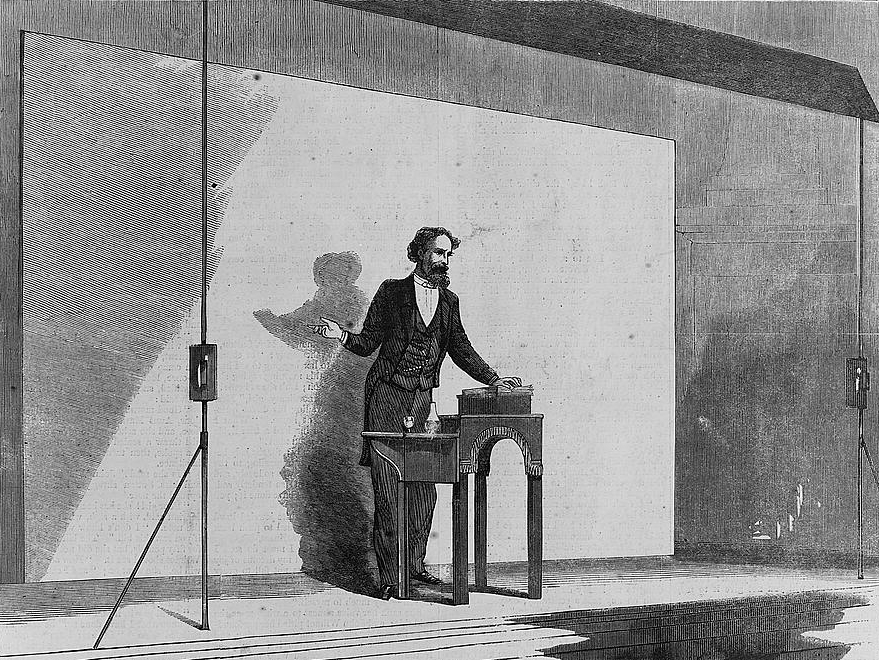
On his return to England, he attacked his hosts in “American Notes” and then took them to task again in his novel “Martin Chuzzlewit.” These back-of-the-hand responses to their hospitality left a sour taste in America, but, by the time of his second visit, those slaps were largely forgotten. On this 1867–1868 trip, Dickens took to the lectern to perform his now famous dramatic readings from his books, captivating huge and adoring audiences while raking in the cash.
The American fascination with Scott, Dickens, and, for that matter, with Rowling, has gone far beyond reading their books. From all three authors, scriptwriters made radio plays from certain works by Scott and Dickens, and Hollywood has produced many movies taken from the books of all three authors. Scott is the least known of this trio today, in part because of his more antiquated language and themes which are out of step with present-day tastes, but this literary trio have left indelible and lasting marks on American culture.
In “The Life of Charles Dickens,” biographer John Forster quoted Dickens as saying, “I find it impossible, utterly impossible, for any Englishman to live here [in America], and be happy.” It was an odd statement then, given that so many Englishmen and others from the British Isles founded the country and continued to emigrate here.
Today, it is doubly odd given that Americans have welcomed and adopted as their own such Brits as Ivanhoe and Rebecca, Scrooge and Tiny Tim, and Harry Potter and Hermione Granger.
What arts and culture topics would you like us to cover? Please email ideas or feedback to features@epochtimes.nyc.