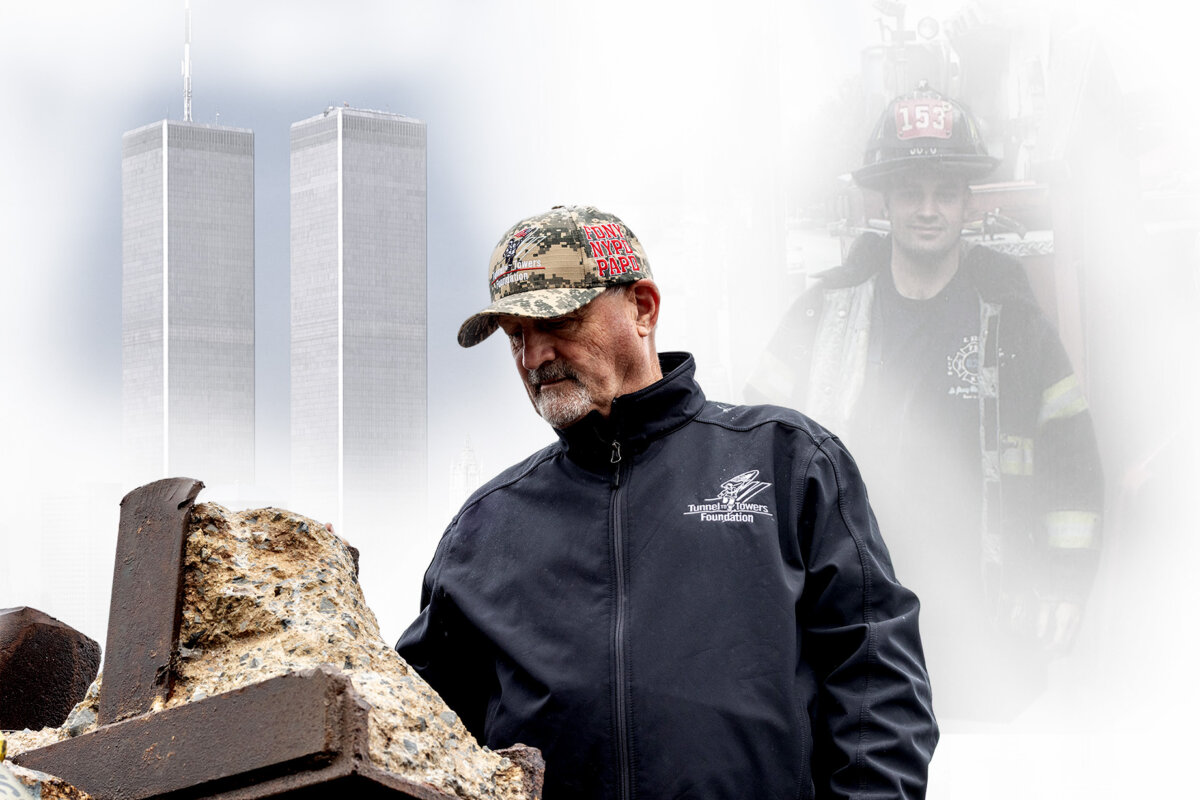
What is the weight of a memory?
It’s weightless—until it takes the form of a 16,900-pound I-beam of concrete and steel salvaged from Ground Zero in downtown Manhattan.
For Frank Siller, this surviving steel beam from the World Trade Center was exactly what was needed to anchor the history of Sept. 11, 2001, in the minds of a new generation of Americans born after the towers fell.
As the founder of the Tunnel to Towers Foundation, Siller has spent a quarter of a century turning personal grief into public service. Now, on the 25th anniversary of the attacks, he is using the relic of the South Tower and a new memoir, “Let Us Do Good,” to ensure a changing nation keeps its promise to never forget.
Earlier this year, Tunnel to Towers kicked off its Steel Across America tour to commemorate those who died in the attacks and “unite communities in remembrance, reflection, and resolve.” The beam, transported by truck across 21 states with stops along the way, will make a final stop at the White House on Sept. 8 and end its journey in New York City on Sept 11.
Long before it was enshrined as a mobile memorial, the I-beam sat inside a cavernous hangar at John F. Kennedy International Airport—a graveyard for the broken remains of the World Trade Center. When Siller first stepped inside the hangar with former FDNY Fire Commissioner Salvatore Cassano to examine the steel, memories of his brother came flooding back.
“It has so many bodies in there, including my brother, Stephen,” he told The Epoch Times from his office in New York. “It’s not just steel—you stand around steel, who cares?—but you stand around steel that was down at Ground Zero, it has a whole different meaning.”
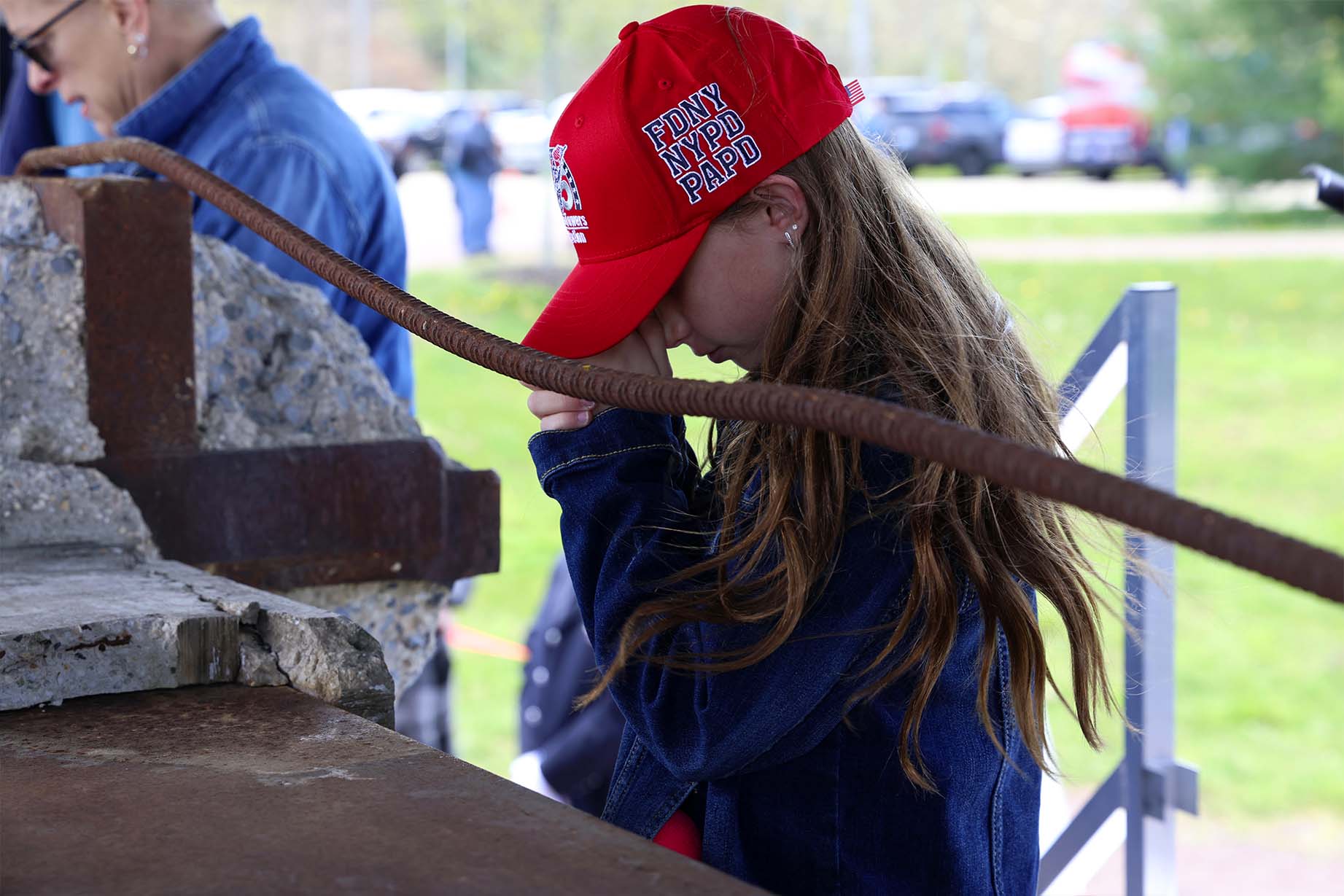 A young girl says a prayer next to the I-beam on display during the Steel Across America tour. (Tunnel to Towers)
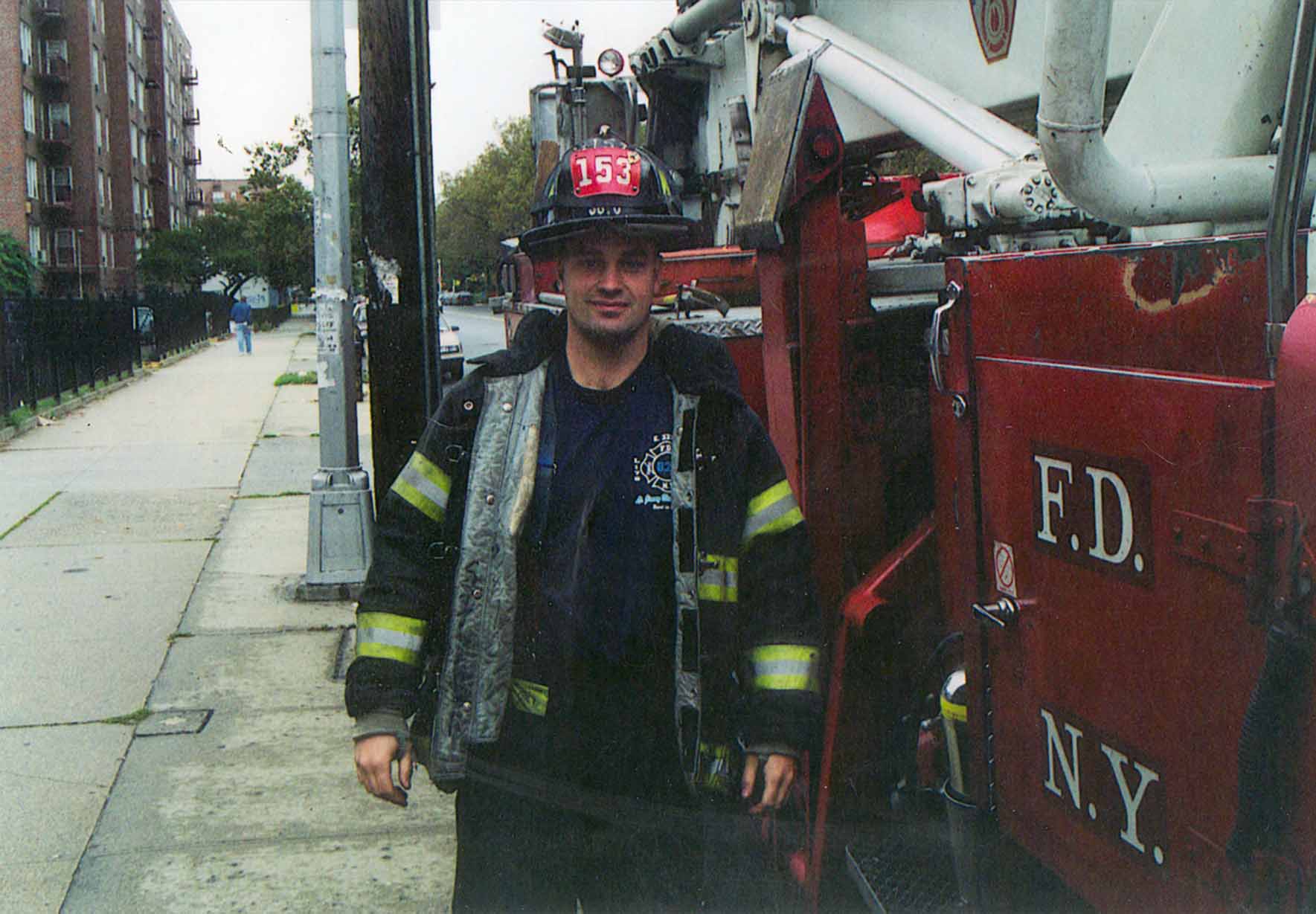 Stephen Siller during his years as a firefighter. (Tunnel to Towers)
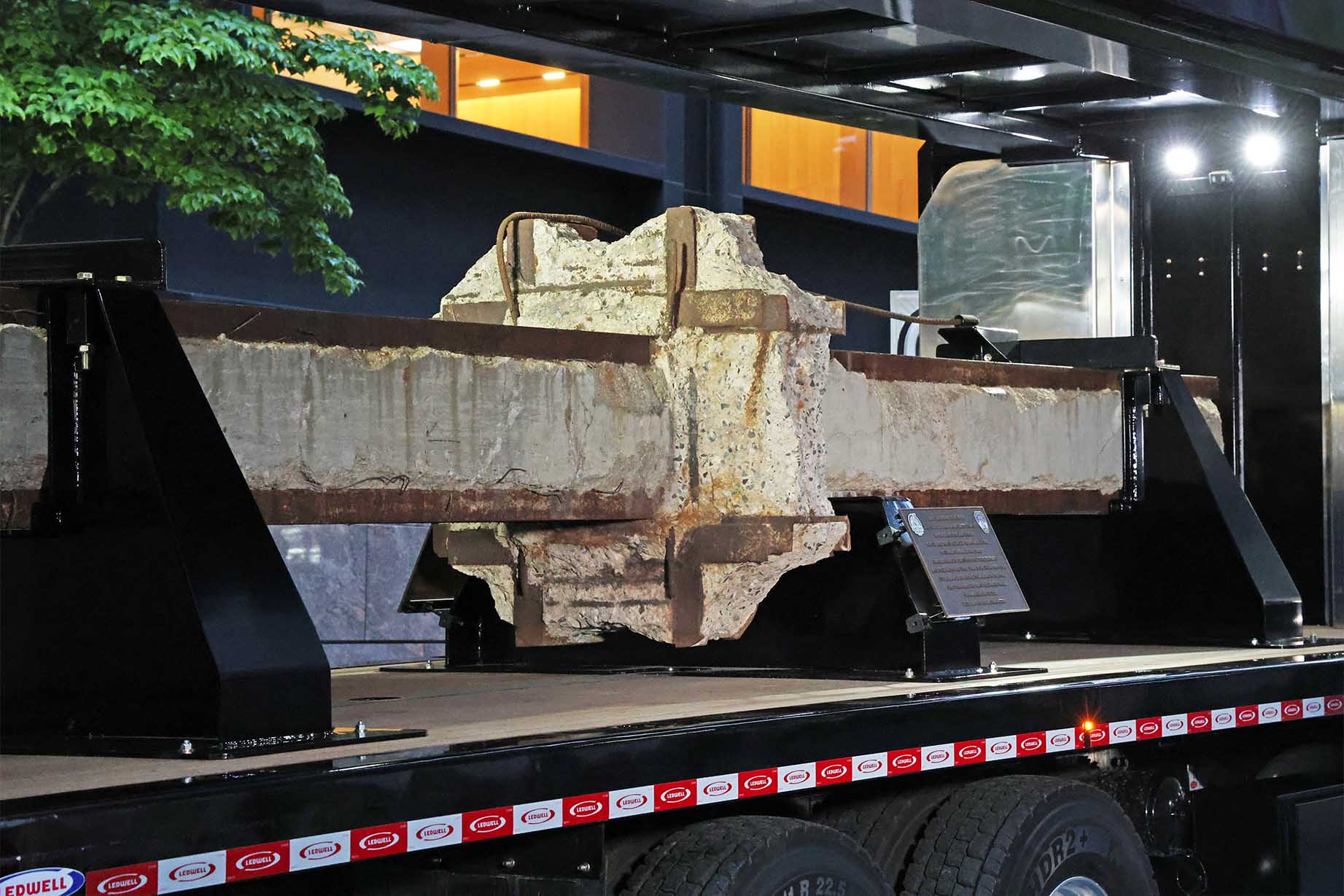 The I-beam salvaged from the South Tower of the World Trade Center is touring with Steel Across America on a custom-built flatbed truck. (Tunnel to Towers)
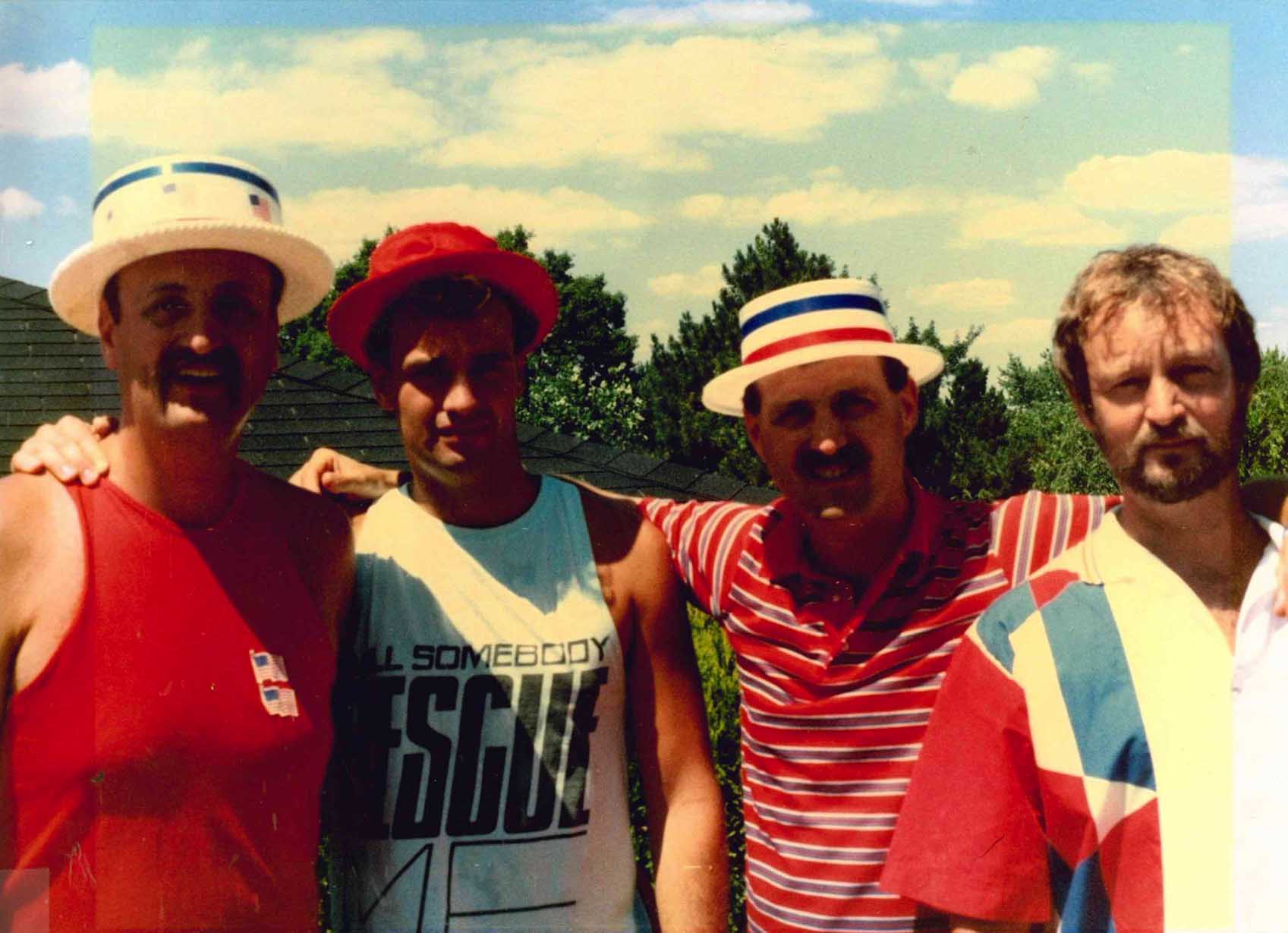 Stephen Siller (2nd L) with his brothers, including Tunnel to Towers CEO Frank Siller (far R). (Tunnel to Towers)
Stephen Siller was the firefighter who became the posthumous inspiration behind Tunnel to Towers. While off duty on 9/11, he heard the emergency alerts on his scanner and self-dispatched to the scene, literally leaving the golf course to don 60 pounds of gear before running through Brooklyn Battery Tunnel to meet his teammates at the burning towers. He was never seen or heard from again.
The trauma of sudden loss was a familiar shadow for the Siller family. The brothers’ parents had both died by the time Stephen was 10, imbuing the fragility of life upon their young minds. That lesson undoubtedly influenced the young firefighter’s choice to run toward possible death during the attacks—leaving behind a wife and five children.
Because his remains were never recovered, the family operated under the belief that he perished inside the South Tower. So when the Port Authority ultimately entrusted the Tunnel to Towers Foundation with a massive piece of South Tower infrastructure, it felt deeply personal to Frank Siller.
“I said what we’re going to do is, we’re going to build a beautiful truck and we’re going to make this piece feel very sacred, because it is,” he said. “We’re going to bring it all over America so they can get an opportunity to pay their respects and feel the history of the loss.”
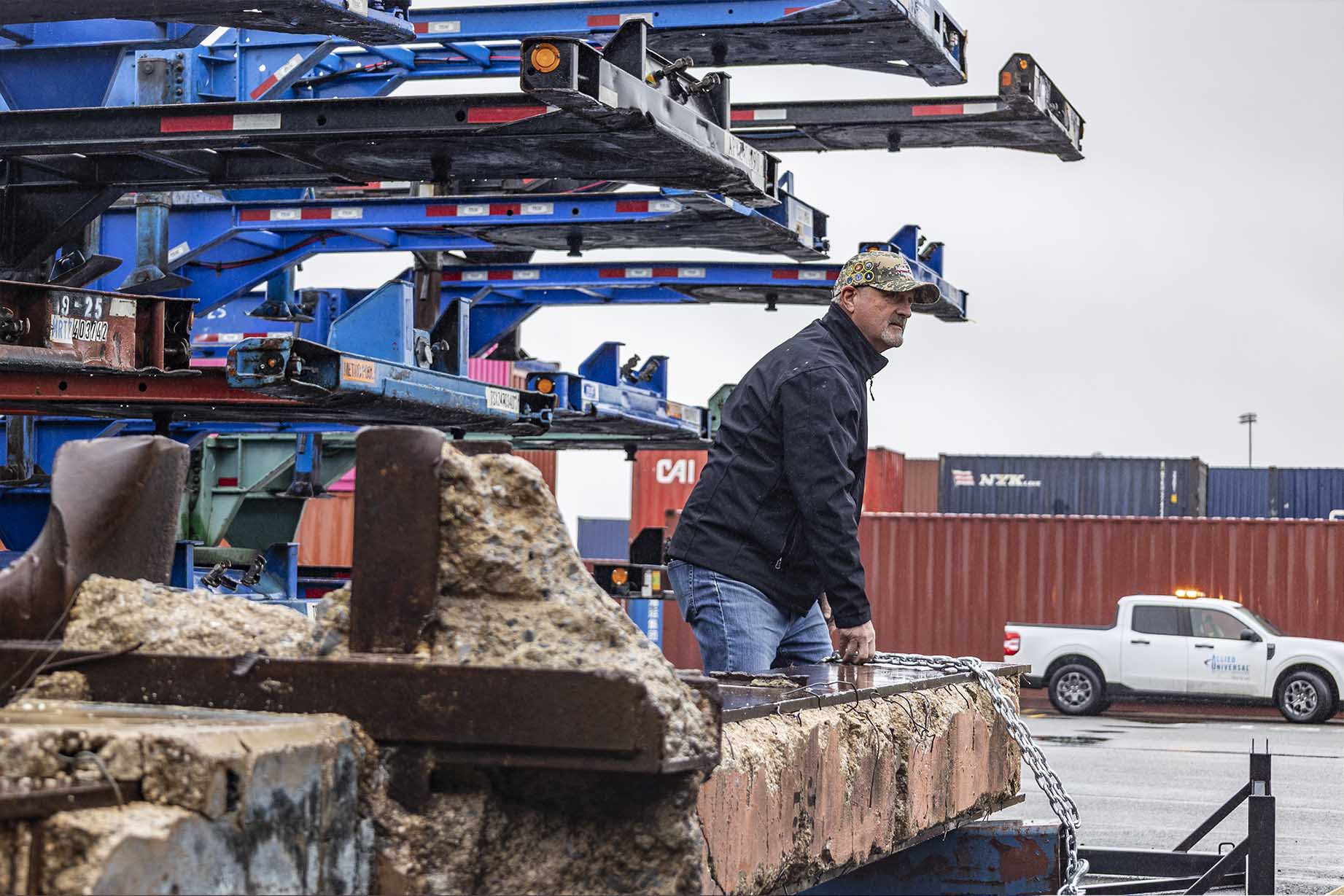 Frank Siller helps load the I-beam from the Twin Towers, preparing for departure. (Tunnel to Towers)
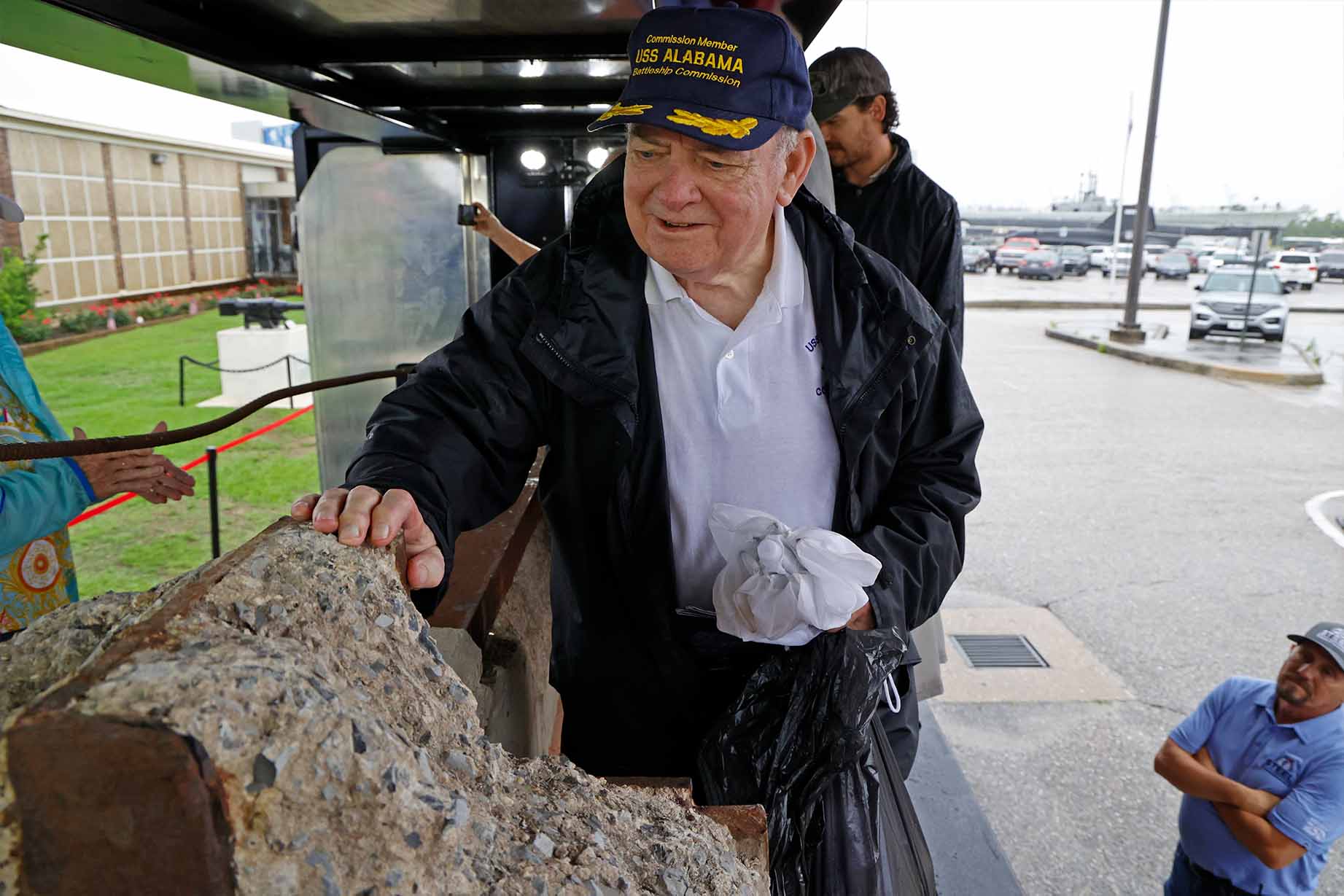 A man rests his hand on the steel girder near the USS Alabama on Memorial Day. (Tunnel to Towers)
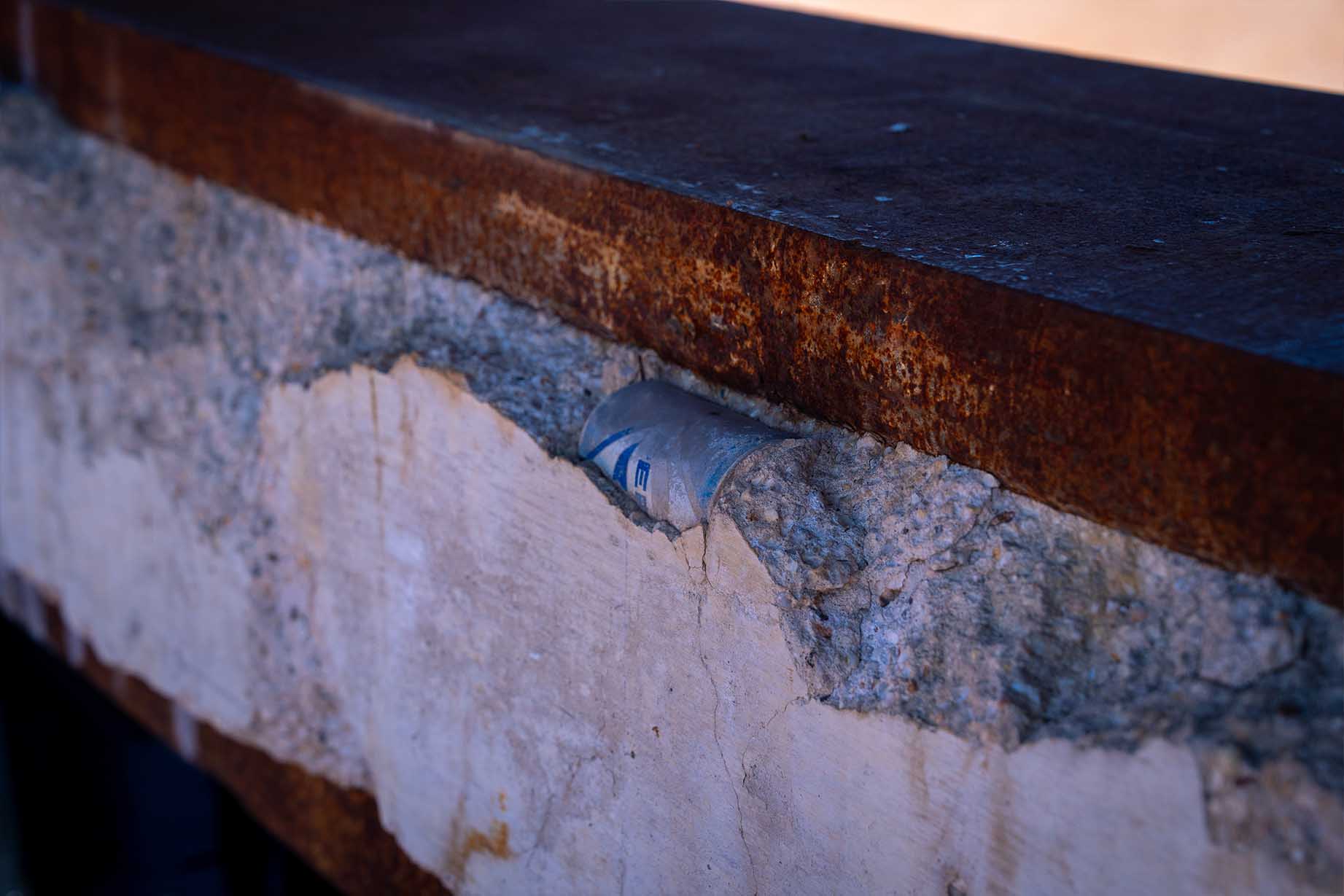 The recovered I-beam encases history from the early construction of the twin towers decades ago. (Tunnel to Towers)
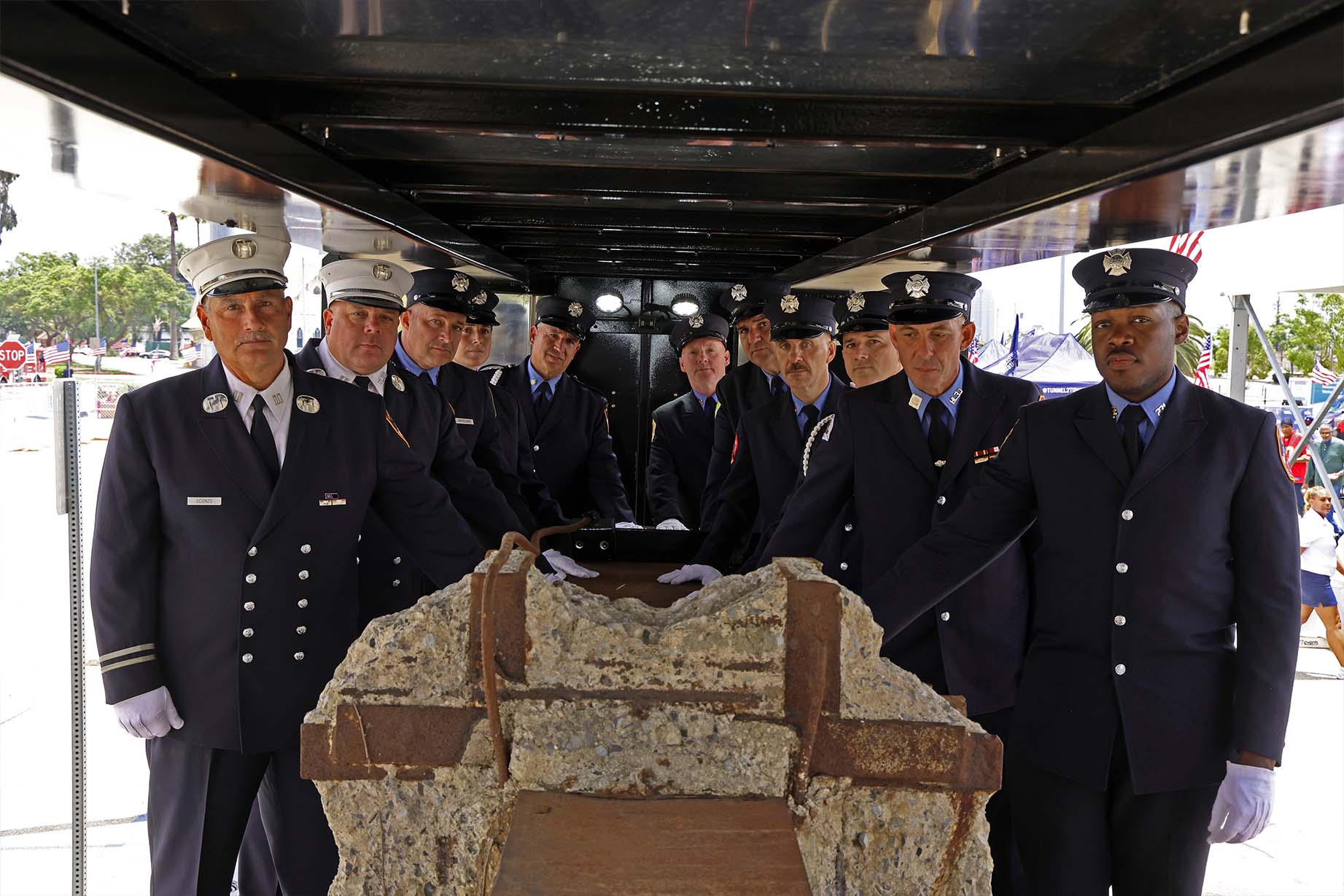 Service members honor the I-beam from Ground Zero at the Veterans Campus is West Los Angeles. (Tunnel to Towers)
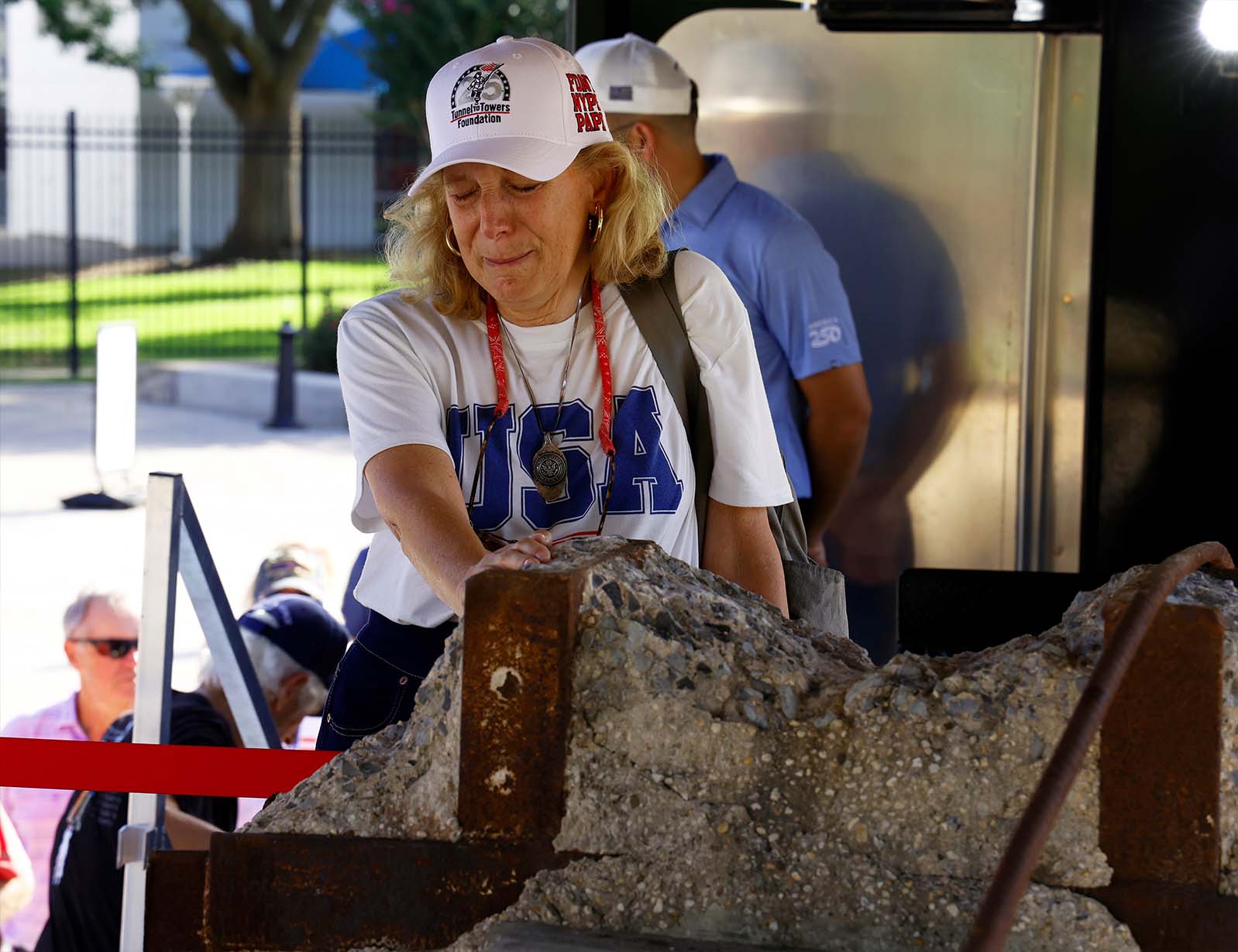 A visitor prays with her hand on the I-beam at the Space Center in Houston. (Tunnel to Towers)
For a quarter century, Siller has treated the repository of World Trade Center steel as a sacred currency. The foundation has gifted small fragments to Gold Star families—along with custom smart homes for catastrophically injured service members.
“You have to pay a big price to get this steel,” he said.
Siller sees so many memories in the steel. The chipped surface covered in gashes bespeaks of the terrible violence of the attacks. The caked concrete poured during the 1970s recalls the towers’ birth. The embedded Pepsi can tells tales of life within its walls. During stops on the tour, thousands of people placed their hands on that raw patina in prayer, across 21 states, from California to Texas to Washington state, and New York City.
“It’s magnificent, because we’re teaching a lot of kids that weren’t even born about 25 years ago—it’s almost like a third of America that wasn’t born,” he said. “We’re also paying respect for those who do remember what happened on 9/11.”
‘The Air Was so Emotional’
To realize its vision, the foundation commissioned Ledwell Manufacturing in Texarkana, Texas, to build a heavy-duty custom rig. When the flatbed arrived in New York, contract driver Keith Ragan looked at the massive artifact and told Siller it would be his greatest honor to haul it. Ragan joined the tour permanently, alongside a living legacy sitting in the passenger’s seat: Stephen Siller Jr., the fallen firefighter’s youngest son, who volunteered to spend four months on the road.
Ground Zero was the logical staging point for the 10,500-mile trek. On May 2, a crane hoisted the metal memorial onto onto its shiny new mobile plinth.
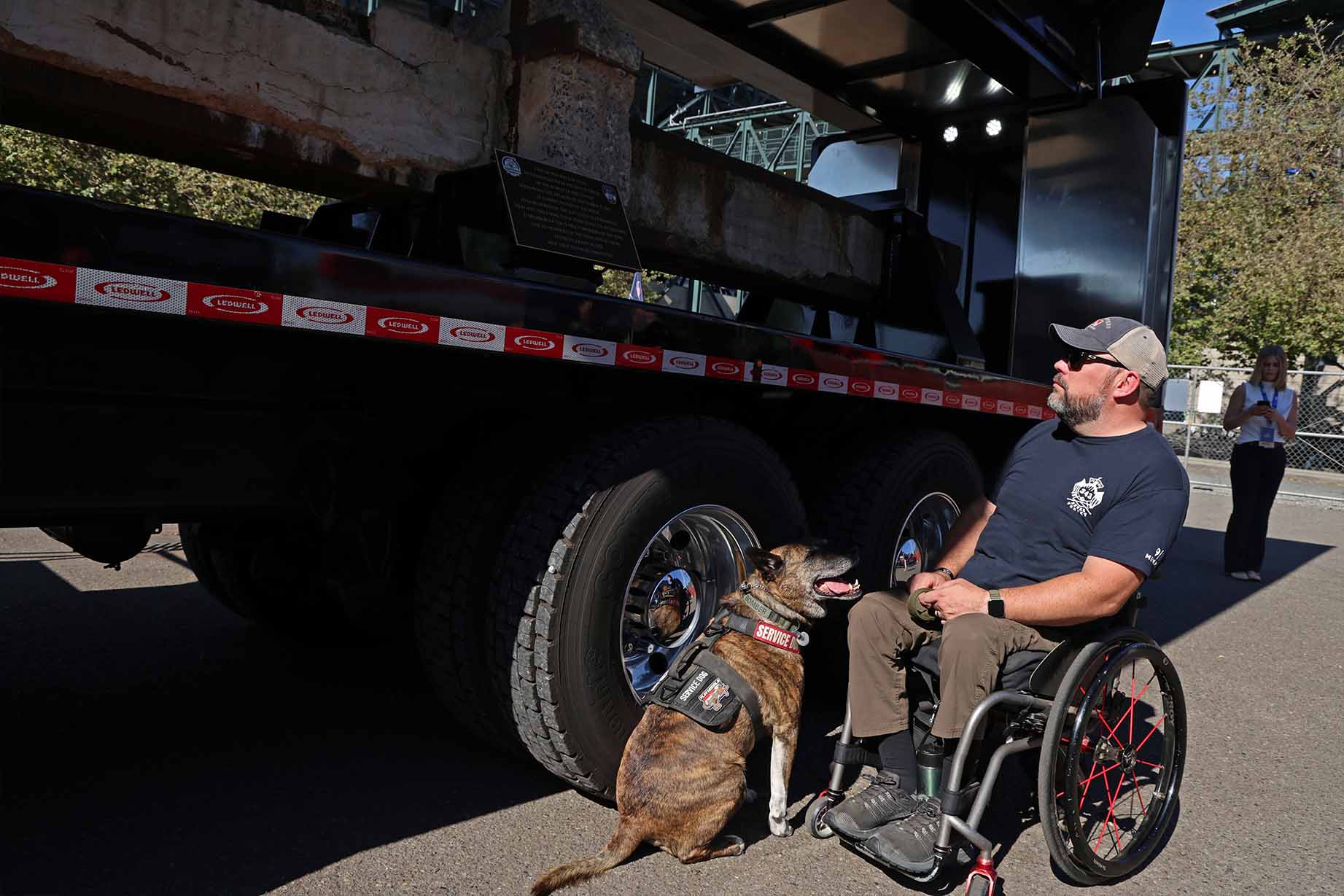 A veteran looks at the steel remnants of 9/11 during the tour’s stop in Seattle. (Tunner to Towers)
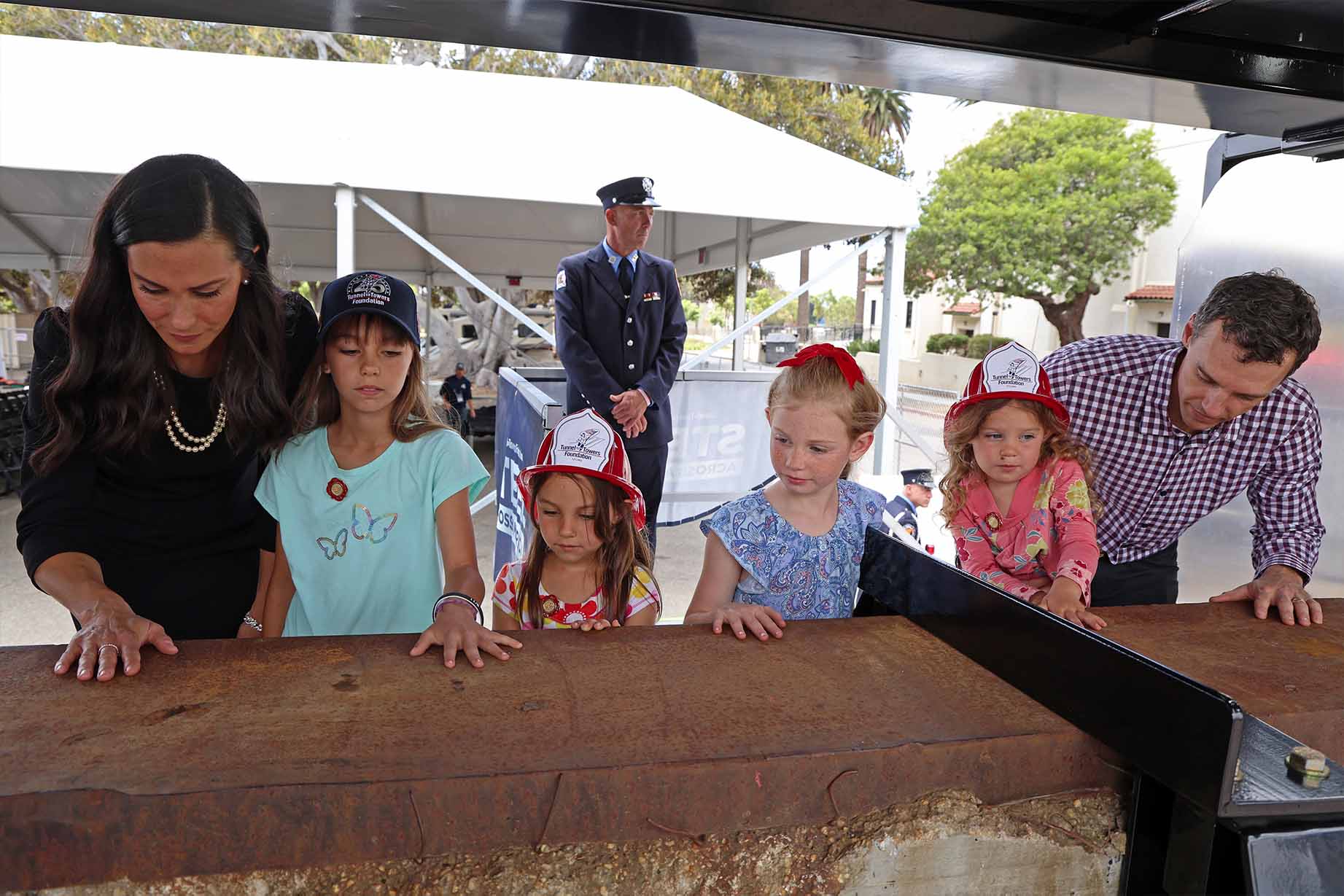 A family pay their respects to the service members who died in the 9/11 attacks. (Tunnel to Towers)
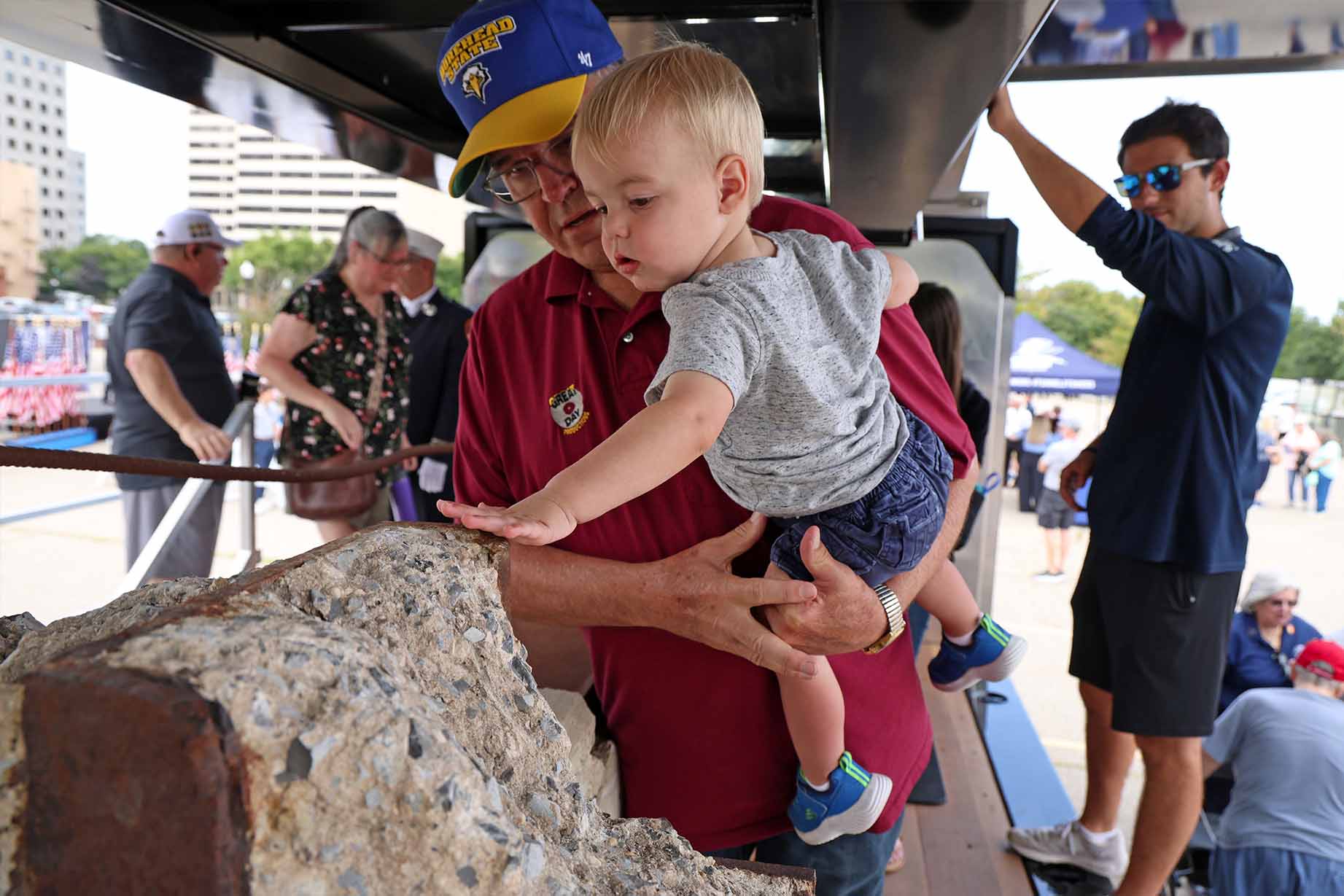 People view the beam during a stop at the Cincinnati Fire Museum. (Tunnel to Towers)
The tour’s early stops were entirely novel for the foundation. On May 4, the rig pulled into the LT Michael P. Murphy Navy SEAL Museum on Long Island, named after the real-life Medal of Honor recipient whose final stand inspired the book and film “Lone Survivor.”
“The air was so emotional people could hardly speak,” Siller said.
The crowd was a mix of the old guard: aging volunteers who dug for weeks in the smoking pile in 2001, alongside families carrying invisible scars from the tragedy. Among them were the daughters of Terry Manning, a civilian who was visiting the World Trade Center for a breakfast meeting on Sept. 11 but never returned.
The truck pushed past the Flight 93 crash site in Shanksville, Pennsylvania, then struck into the Deep South where the demographic shifted. Crossing Texas and Oklahoma, the truck was given roaring escorts by hundreds of leather-clad motorcycle clubs, including Patriot Guard Riders, flying American flags from the backs of their Harleys. The tour made a homecoming stop at the Ledwell factory in Texarkana, where “Grill Team 6”—a mobile barbecue squad of retired FDNY members—fed hundreds in a celebration to heal old wounds.
By July, the Pacific turning point arrived. The beam crossed into California, connecting with locals at Pier 27 of San Francisco’s Embarcadero, near Alcatraz, and at Alameda County Fairgrounds, where police escorted the memorial over Altamont Pass. The truck pushed northward, bringing the tangible history of 9/11 to Seattle, then headed back inland into Utah.
Town squares thousands of miles from Manhattan witnessed a ritual. The truck’s hydraulic gull wings swung slowly upward like a giant DeLorean, revealing the raw girder. Portable steps invited visitors up to eye level to place their hands on the scarred metal and pray for the fallen.
For Siller, the most profound moments were seeing parents whispering to their children about the attacks.
“A third of America wasn’t even alive then,” he said. “When a kid sees their mom or dad overcome with emotion while explaining it, they instantly understand the gravity. It has happened over and over again. This journey became far bigger than we ever dreamed.”
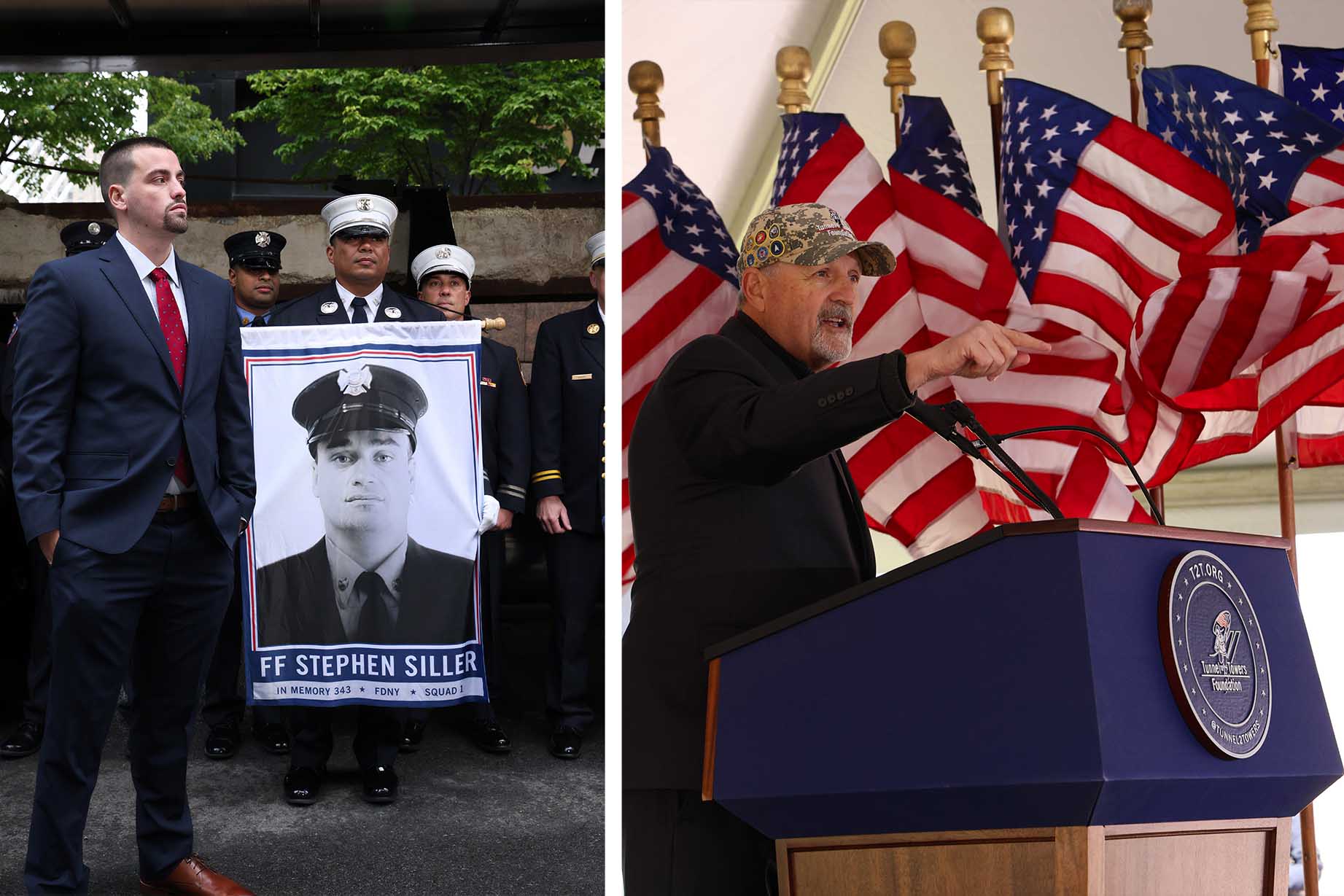 (Left) Stephen Siller Jr. honors his father, firefighter Stephen Siller, and the others who died in the attacks of 9/11; (Right) Tunnel to Towers CEO Frank Siller. (Tunnel to Towers)
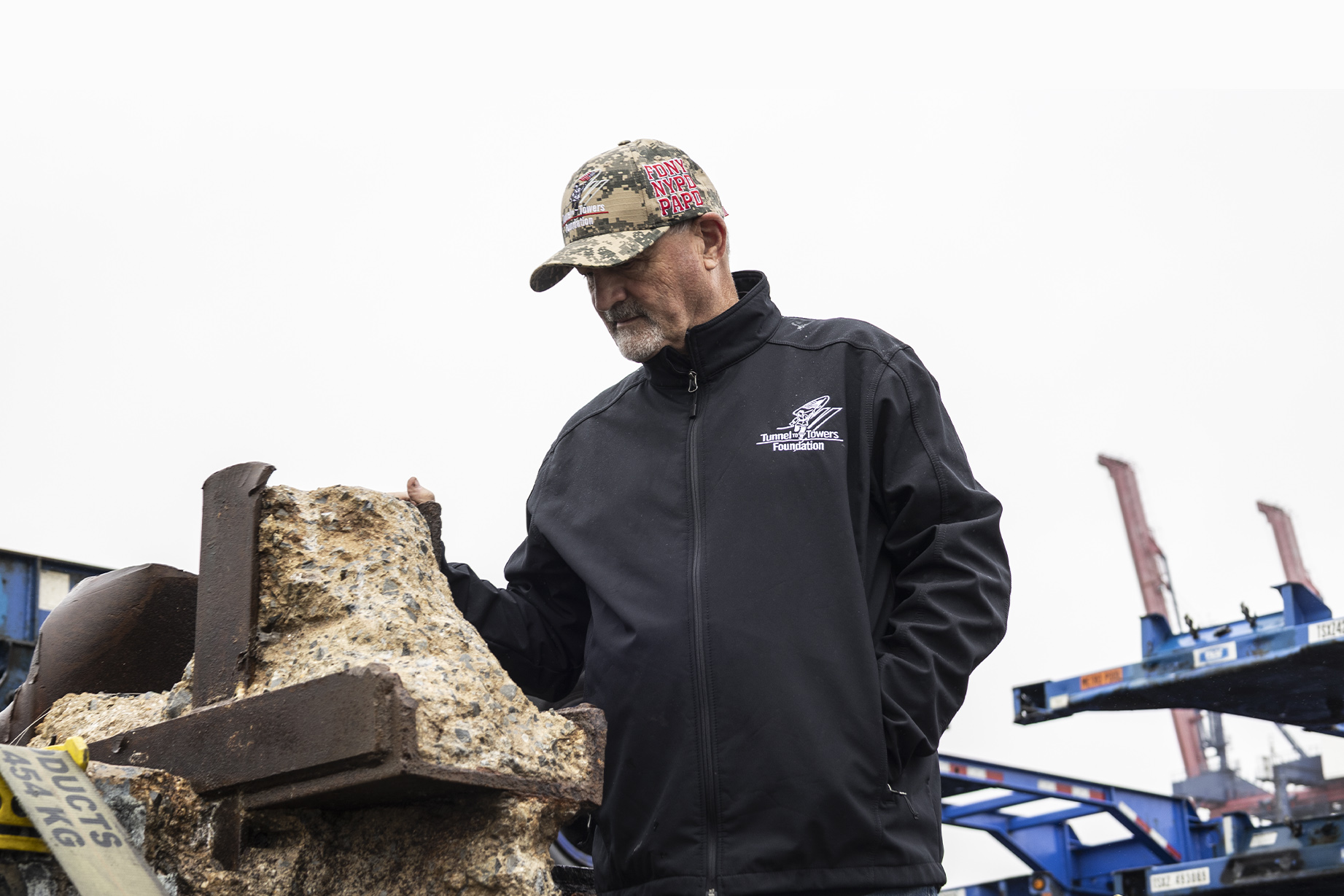 Frank Siller examines the steel I-beam at a port in New York. (Tunnel to Towers)
The cross-country loop is now narrowing. Following a late-summer stop at Boston’s Fenway Park and a Sept. 1 ceremony at the U.S. Military Academy at West Point—where a stadium of young cadets born after 2001 stood in crisp formation to salute the steel—the truck is bound for a final ceremony on the White House lawn on Sept. 8.
The tour will ultimately close on the morning of Sept. 11. Rolling down Interstate 95, the motorcade will arrive at the mouth of the Brooklyn-Battery Tunnel where Siller, alongside his brother’s widow, Sally, his children, grandchildren, nieces, and nephews, will march with the steel through the dark underpass. They’ll trace the the same steps Stephen ran hauling heavy gear.
The trek will end adjacent to Ground Zero at Ten House—the historic fire station that is home to Engine Co. 10 and Ladder Co. 10—where the family will lay a wreath beneath the bronze memorial wall etching the names of the 343 firefighters who died on that fateful day.
Siller knows that final walk will conjure heavy memories. He’ll retrace that last mile remembering the words of St. Francis of Assisi—instilled in him by his parents, who were secular Franciscans, during his youth: “Brothers and sisters, while we have time, let us do good.”
“It’s going to be very emotional to say the least,” he said. “But I think what [Stephen] did was very difficult, so this is nothing.”