



The Battle of Gettysburg, which took place July 1 to 3, 1863, is well-known as the bloodiest battle of the Civil War. Afterwards, it garnered national notoriety due to President Abraham Lincoln’s short but powerful speech, which he gave after the battle. But there is a bloodier battle.
Tennessee’s Nov. 30, 1864 Battle of Franklin is lesser known than the Battle of Gettysburg. It’s considered the bloodier battle because it was fought in a shorter period of time. Union and Confederate forces fought on farmland in Williamson County and suffered close to 10,000 casualties within five hours. Under Confederate Lt. Gen. John Bell Hood’s attempt to recapture the state’s capital, Nashville, from the Union, Confederates experienced the most casualties. Six of their generals were killed.
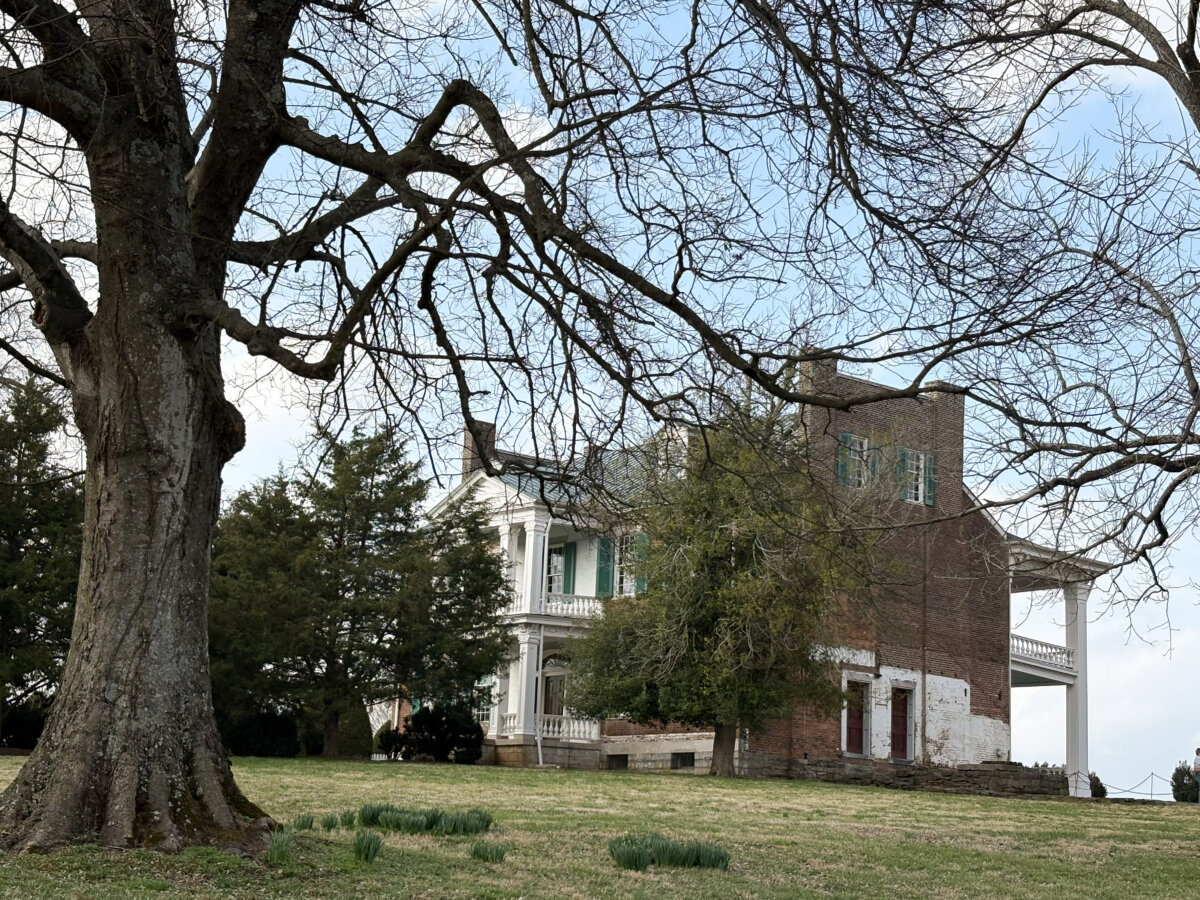
Countless wounded Confederates ended up in the yard, on porches, and inside the grand mansion of a 1,400-acre farm called Carnton. In fact, on the fateful evening of Nov. 20, 1864, life irrevocably changed for the property’s second-generation owner John McGavock, his wife, Carrie, and their two children: 9-year-old Hattie and 7-year-old Winder. The couple’s three other children tragically died of illnesses before the Battle of Franklin.
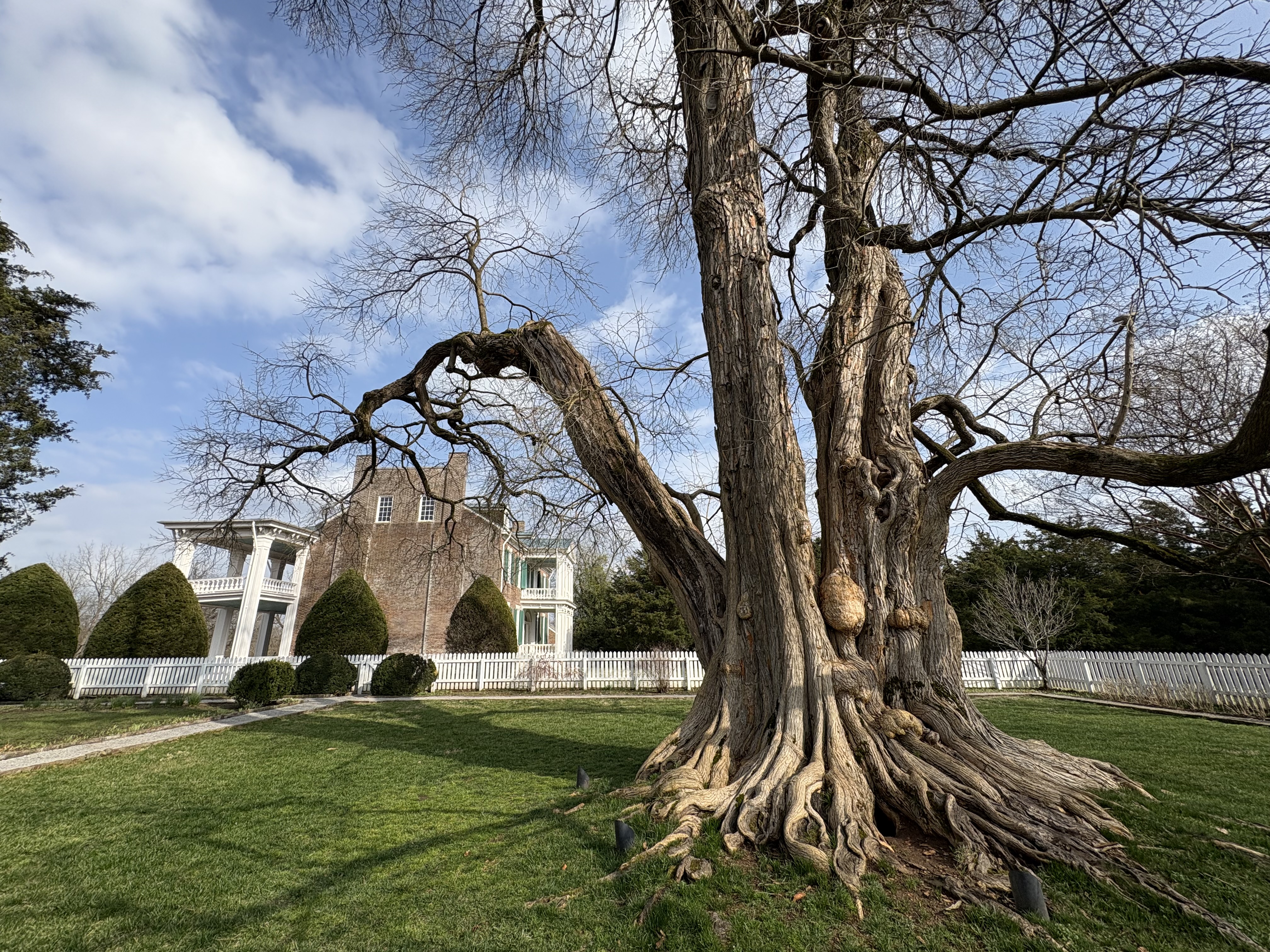 An ancient Osage Orange tree stands near the Carnton mansion, over 150 years since the Civil War. (Deena Bouknight)
Preceding the unexpected, late-in-the-war battle, Franklin was considered a prosperous, mostly peaceful, agrarian town. John’s disagreement with secession meant he did not enlist. Instead, he managed the farm’s main moneymakers: hogs, thoroughbred horses, and a sawmill. In their two-story, Federal-style home apportioned with primarily European-imported furnishings, the family enjoyed an advantageous lifestyle. According to a Carnton docent during a Feb. 19 tour, the McGavocks’ holdings would have been worth millions of dollars today. Prestigious visitors to the house included two American presidents: Andrew Jackson and James Polk.
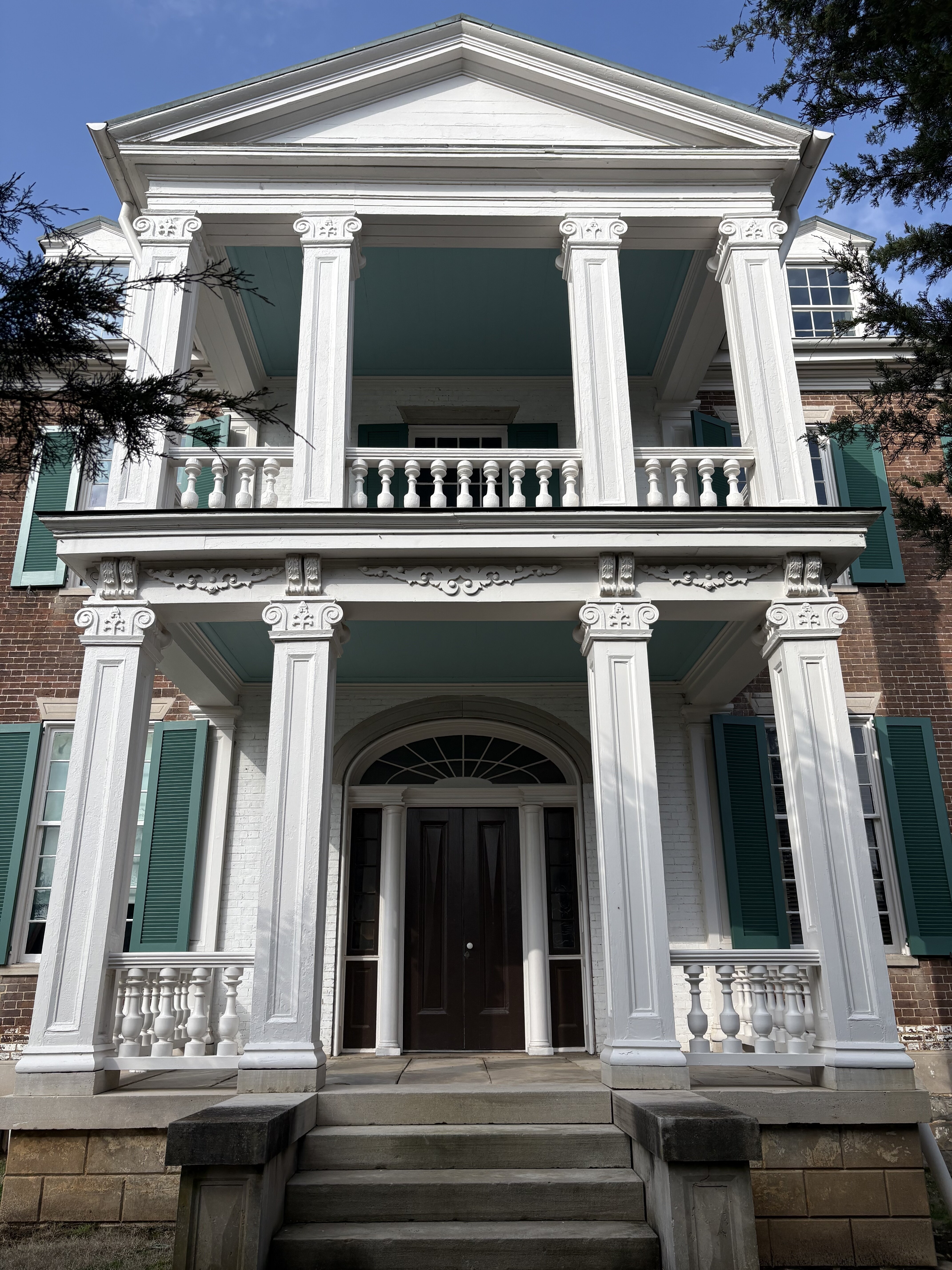 The stately columns of the Carnton mansion greeted governmental leaders and soldiers. (Deena Bouknight)
Confronting Chaos
On Nov. 30, 1864, Confederate soldiers lined up for two miles and marched to the Union’s semicircle entrenchment. A few hours afterward, the results of close-range shooting and hand-to-hand combat began impacting the McGavocks’ lives. Nearby cannon blasts rattled windows and caused a deafening din. Gunpowder’s sickening sulfur permeated the air. But it was the flood of battered bodies that truly challenged the family’s resolve.
John and enslaved servants pulled stall doors off hinges to serve as surgery tables. Mrs. McGavock gathered fine linens, her husband’s shirts, and even her own undergarments for bandages. Young Hattie and Winder served water to soldiers who wailed from mortal wounds or catastrophic injuries.
Some of the dead soldiers, including generals, were laid out on one of Carnton’s wide, covered, columned porches. At one time, up to 300 wounded soldiers filled the mansion’s interior: 25 to 30 soldiers per 20-foot by 20-foot room. Dying or dead soldiers were mostly left in the yard. Soldiers deemed savable crowded into the first floor’s arched entry hall, gilt-accented formal parlors, and mural-wallpapered dining room. Upstairs, the heavily draped and ornately carved four-poster beds were moved aside for doctors to perform bullet-removal surgeries and amputations near windows for better ventilation.
The current owners of Carnton, The Battle of Franklin Trust, shares with visitors Confederate W.D. Gale’s account of the bedlam inside the mansion: “Every room was filled, every bed had two poor, bleeding fellows, every spare space, niche, and corner under the stairs, in the hall, everywhere.” He described Carrie as “this noble woman,” and added that she “was very active and constantly at work.”
Other homes in and around Franklin also became makeshift field hospitals in the hours and days following the battle. Yet, Carnton tended the most wounded. Most importantly—and what truly put the historic property on the map—were the efforts of John and Carrie to provide a permanent resting place fallen soldiers.
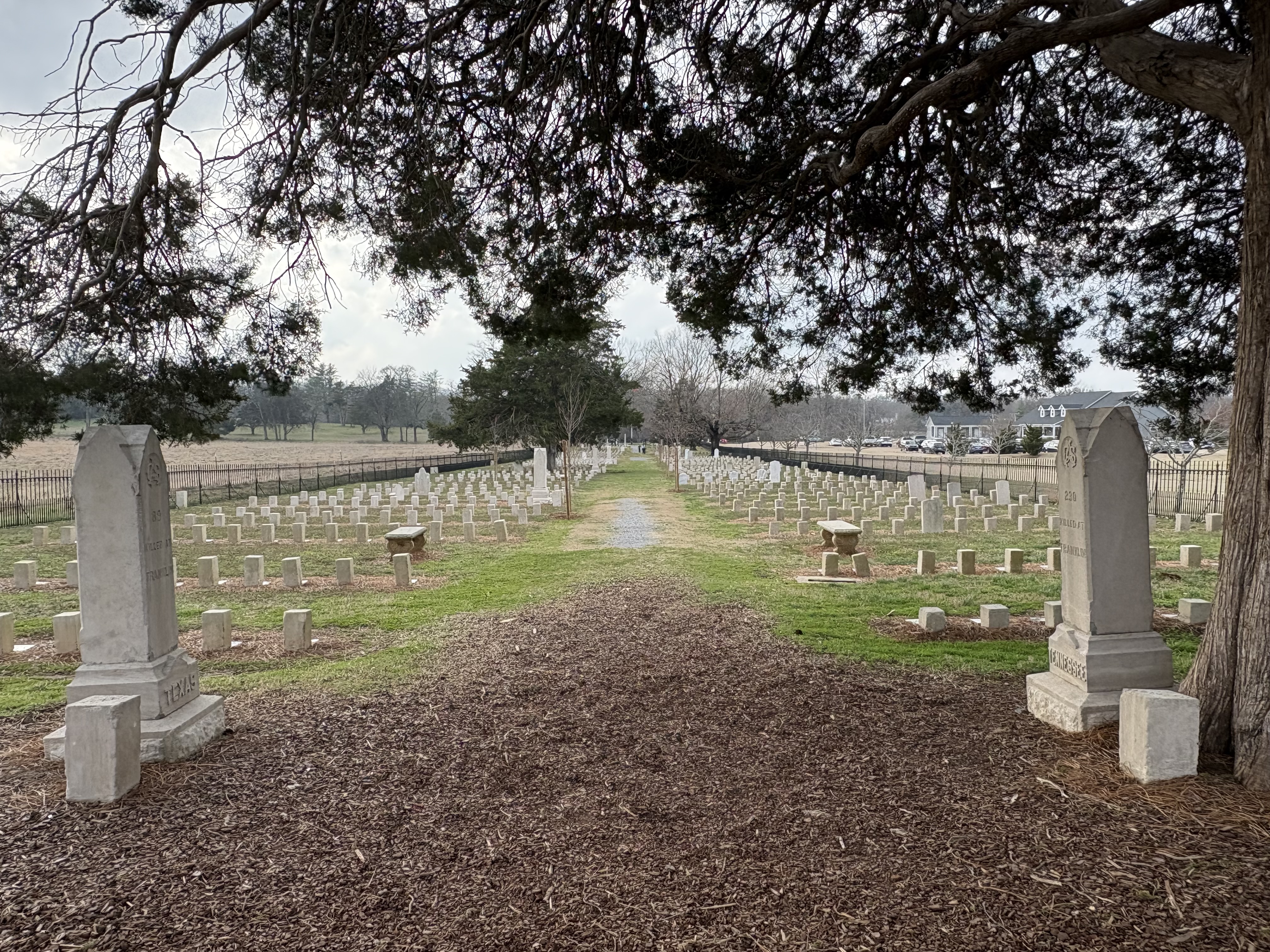 The land for the McGavock Confederate Cemetery was donated by the McGavocks, who also maintained and managed the property. (Deena Bouknight)
Robert Hicks’s 2006 novel, “Widow of the South,” conveyed the remarkable story about how John and Carrie donated two acres of land next to their own family cemetery—and in sight of their mansion—to rebury the bodies of close to 1,500 soldiers who had been hastily buried on the battlefield and in other areas around Franklin. Through all of 1865 and into 1866, and with the assistance of men in Franklin, each fallen soldier was carefully buried in what became the largest private Confederate cemetery in the country. Each soldier’s name (if known) and any other identifying information was logged in a record book, which is now on display inside the mansion.
At each gravesite is the cemetery’s original stone marker with either the soldier’s initials or “unknown” engraved on it, as well as a newer granite marker with the same. The cemetery is divided into zones for each Confederate state.
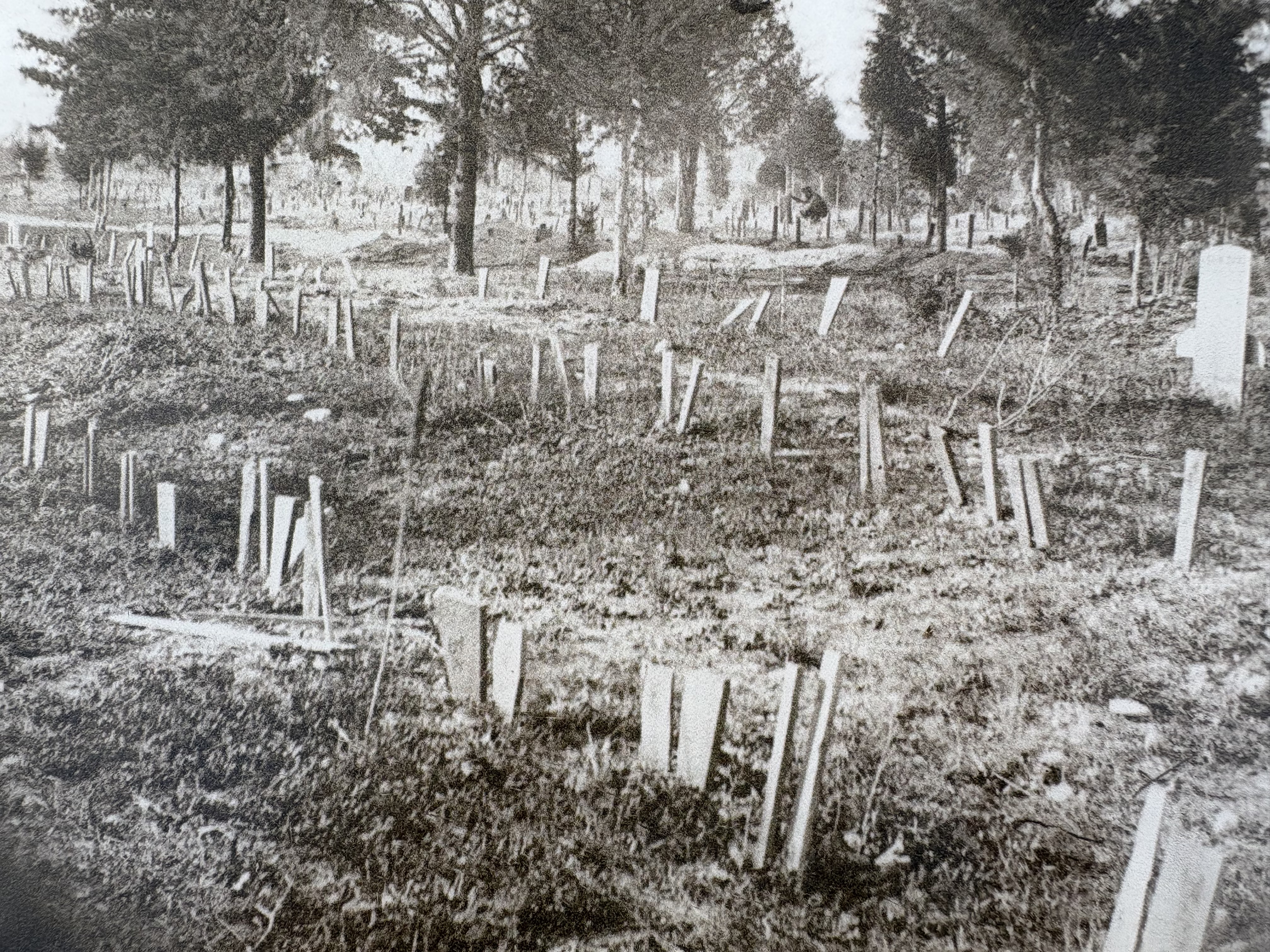 A view of hastily buried Civil War soldiers. (Deena Bouknight)
Despite so much death occurring in their home, the McGavock family continued to live there after the Civil War. John McGavock died in 1893, and Carrie oversaw the cemetery’s maintenance and hosted soldiers’ visiting family members until she passed away in 1905. Winder McGavock and his wife, Susie Lee, inherited the home. It was sold in 1911 to a historic nonprofit organization and eventually restored and listed on the National Register of Historic Places in 1977.
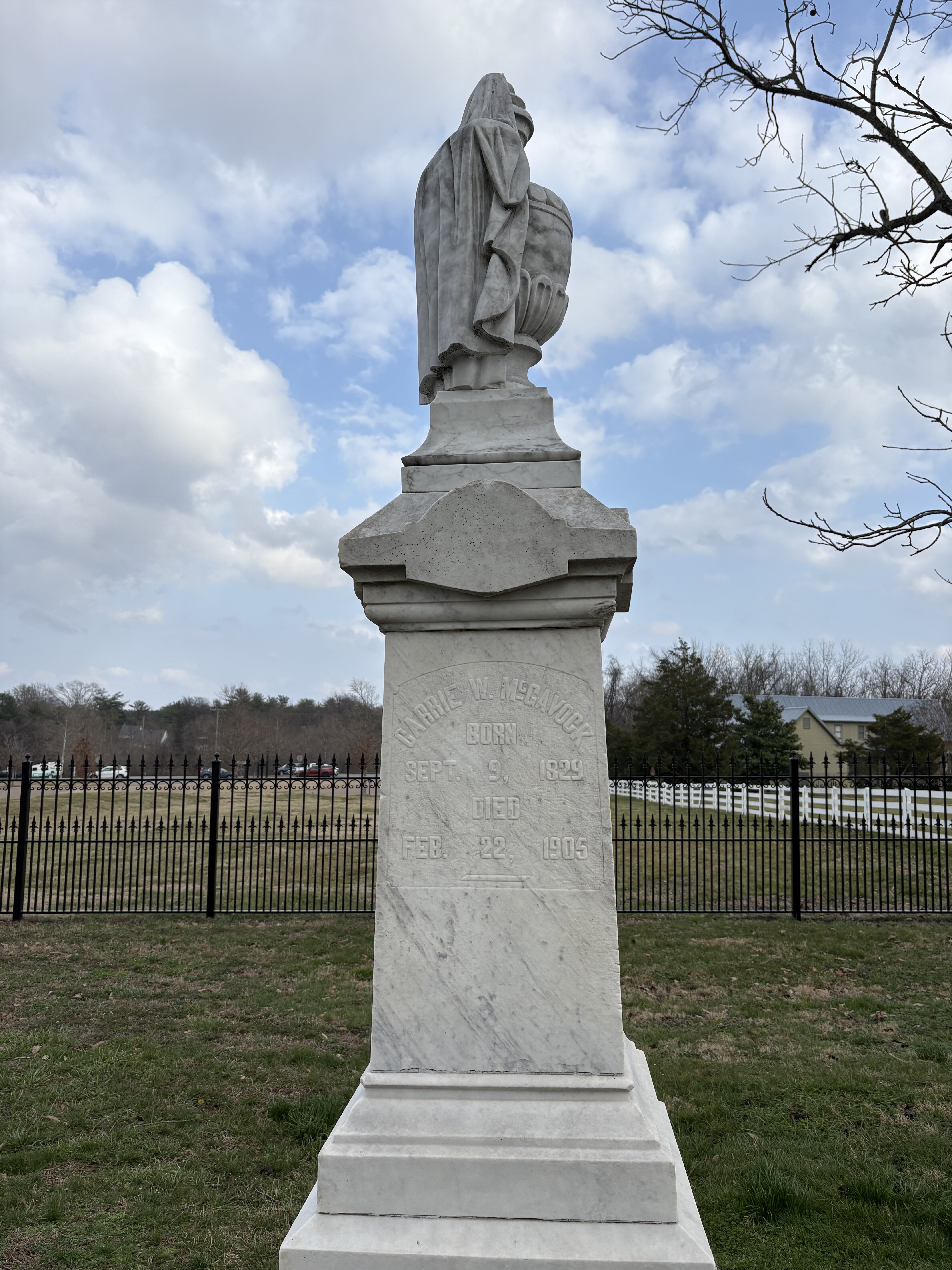 The gravestone of Carrie McGavock is next to her husband’s, also appointed in similar stone. (Deena Bouknight)
The Battle of Franklin Trust’s tour of the Carnton mansion and current 48-acre property, which includes the cemetery, serves as not only living history. It’s also an educational opportunity that gives visitors insight into how one family responded boldly and altruistically to inconceivable circumstances.
What arts and culture topics would you like us to cover? Please email ideas or feedback to features@epochtimes.nyc
