



Springtime delivers a bounty of tender green asparagus spears to the farmer’s market. Not only are they delicious harbingers of the new season, but green asparagus are a powerhouse of nutrients: naturally rich in potassium, folate, and vitamins A, C, E, and K—and they are low in calories to boot.
When choosing asparagus, select rigid (not floppy) stalks with dark, firm tips. To store, trim the ends and refrigerate upright in an inch of water to maintain freshness. When ready to cook, snap off the ends—the woody ends should naturally break off when the stalks are bent at their base. Thinner asparagus are more tender in flavor and require little time to cook—a quick blanch or a few minutes to roast or steam is all that’s needed—whereas the thicker, more fibrous asparagus stalks take more time and are ideal for grilling and roasting, which will coax out their natural nutty sweetness.
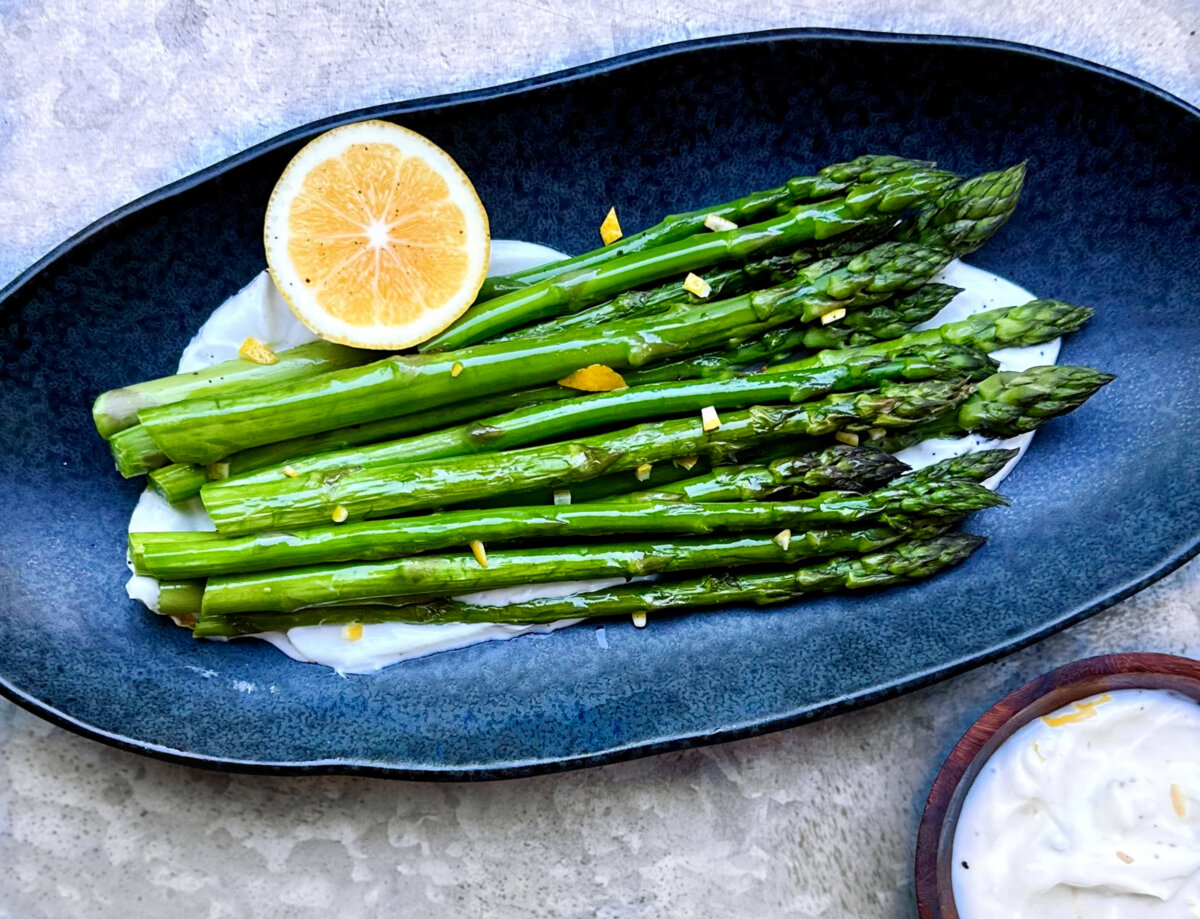
This recipe embraces the simplicity of the asparagus stalk while elevating it with a smear of lemony labneh. Labneh is a soft cheese made from strained cultured dairy products, such as yogurt and kefir. It’s a tangy, creamy Middle Eastern staple, commonly used as a dip and spread, and it’s packed with probiotics and nutrients such as calcium and vitamin A. You can make your own labneh or purchase it in well-stocked supermarkets.
Tips:
Sumac is a tangy, astringent Middle Eastern spice made from crushed flowers. Use as a garnish for hummus, dips, vegetables and for seasoning meat, chicken, and fish.
Za’atar is a blend of oregano, thyme and/or marjoram, with sumac, sesame seeds, and salt. It’s used as a seasoning and a garnish.
Roasted Asparagus With Preserved Lemon Labneh
Active time: 25 minutes
Total time: 25 minutes
Serves 4
- 1 pound asparagus
- 1 tablespoon olive oil
- Sumac
- Kosher salt
- Freshly ground black pepper
Labneh:
- 1 cup prepared labneh (recipe below)
- 1/2 preserved lemon, pulp removed, skin finely diced, divided
- 1 small garlic clove, minced or pushed through a press
- 2 teaspoons preserved lemon juice (or fresh lemon juice)
- 1/2 teaspoon za’atar
Garnishes: Chopped fresh mint, pistachios, finely grated lemon zest
Heat the oven to 400 degrees F.
Spread the asparagus on a rimmed baking sheet lined with parchment paper. Drizzle with the oil and turn to coat. Sprinkle the sumac, salt, and black pepper over and turn again to evenly coat.
Roast asparagus in the oven until bright green, crisp-tender, and slightly charred in spots, about 15 minutes, depending on thickness.
While the asparagus roasts, scoop the labneh into a bowl. Add half of the preserved lemon skin, the garlic, preserved lemon juice, and za’atar and stir to combine.
To serve, smear the labneh on a serving platter or individual serving plates. Arrange the asparagus over the labneh. Garnish with the remaining lemon skin, chopped mint, pistachios, and lemon zest.
Labneh
Active time: 5 minutes
Total time: 24 hours
Makes about 1 cup
- 2 cups whole-milk plain yogurt
- 1/4 teaspoon kosher salt
Mix the yogurt and salt in a bowl. Line a sieve with cheesecloth and place over a second bowl, with space between the bottom of the sieve and the bowl to collect any drained liquid. Place the yogurt in the cheesecloth; cover the bowl and refrigerate for 24 hours. Remove the labneh from the cheesecloth and transfer to a glass container. Store in the refrigerator for up to one week.
