



The great American architect Richard Morris Hunt (1827–1895) will always be associated with our country’s Gilded Age. Known for his grand houses, he designed what’s still the largest house in America: George Vanderbilt’s Biltmore House. The North Carolina mansion was one of Hunt’s last projects and was actually completed a few months after his death.
Wealthy patrons like the Vanderbilts allowed Hunt the opportunity to create beautiful buildings, which established standards of classicism and refinement in a nation still carving itself from a new frontier.
The Newport Preservation Society’s exhibition “Richard Morris Hunt: In a New Light” in Newport, Rhode Island, explored Hunt’s mission to transform the built and cultural landscapes of America. Hunt once stated, “Your goal is to achieve the best results by following their wishes. If they want you to build a house upside down standing on its chimney, it’s up to you to do it!”
The exhibition featured Hunt’s explorations of European culture, as seen in his collected artworks and sketchbooks from his travels. As the first American architect to study at the École des Beaux-Arts in Paris, he insightfully noted the enduring effect of the great arts in creating a national identity. This became his goal for America. To that end, he guided his clients in acquiring collections of great art, helped found great museums such as the Metropolitan Museum of Art, and was instrumental in the creation of the American Institute of Architects.
Hunt’s Incredible Journey
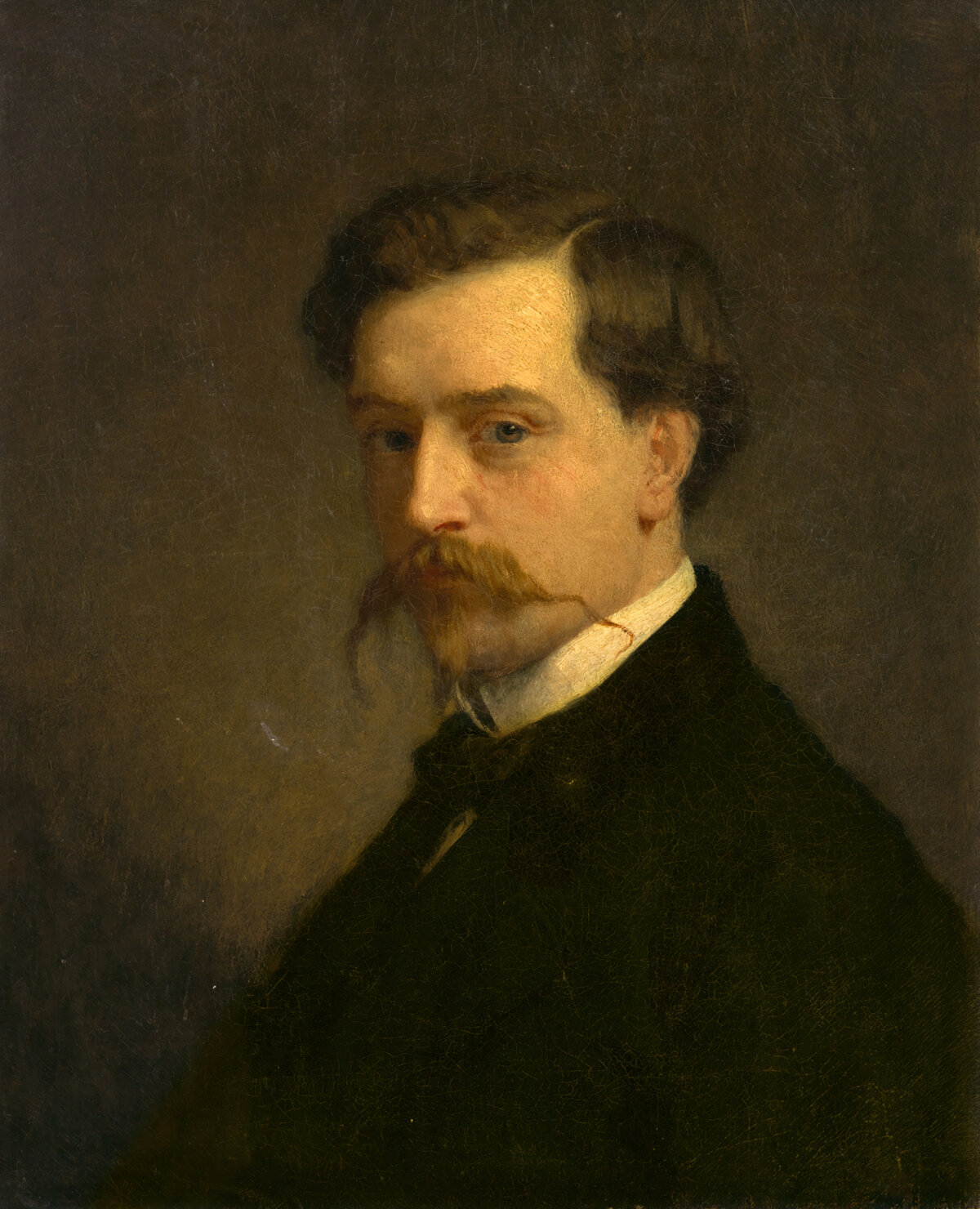
Born on Oct. 31, 1827, in Brattleboro, Vermont, Hunt was a member of one of Vermont’s most prominent families. His father, Jonathan Hunt, served as a United States Congressman. In 1832, when the boys were still very young, their father died. Hunt’s mother moved the family to New Haven, Connecticut, then New York City, and later Boston.
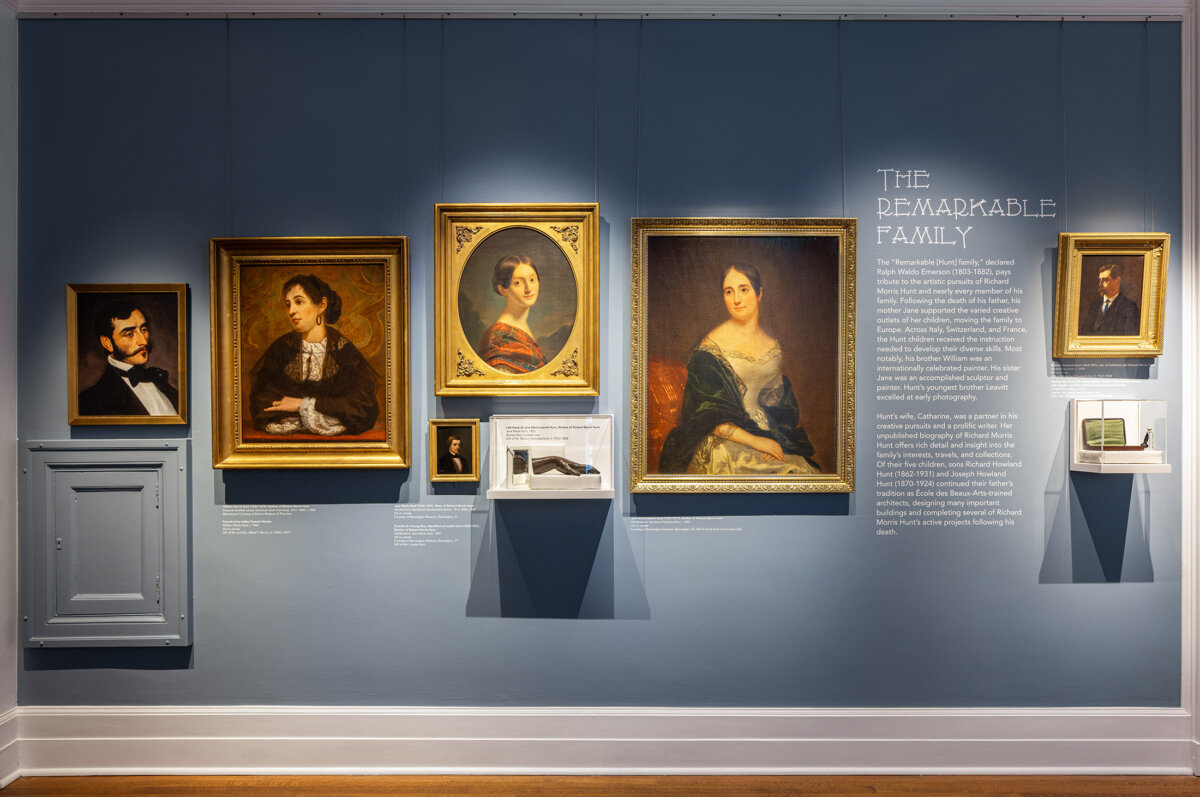
In October of 1943, concerned for his older brother William’s health, Jane Hunt took her sons to Europe, settling in Rome. Richard initially studied art, but it was evident that he had a flair for architecture. He was apprenticed to Samuel Darier in Geneva, and later joined the studio of Hector Lefuel in Paris. There he prepared for the entrance examinations of the École des Beaux-Arts.
Historian David McCullough writes:
“Hunt was the first American to be admitted to the school of architecture at the École des Beaux-Arts—the finest school of architecture in the world—and the subsequent importance of his influence on the architecture of his own country can hardly be overstated.”
The curators of “Richard Morris Hunt: In a New Light” brought together a rich assortment of artifacts that represent the architect’s journey as well as the accomplishments of this influential designer, shining light not only on his great works, but the mark he left on American culture.
The Sketchbooks
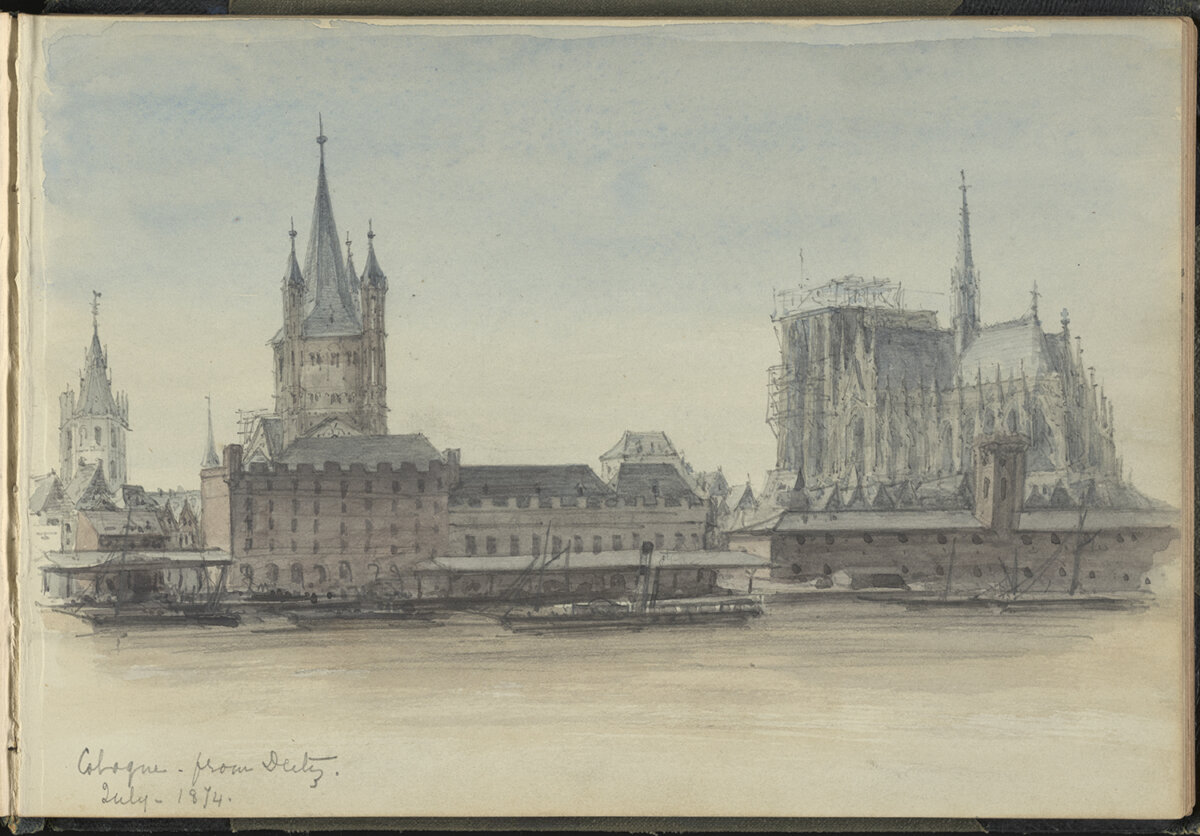
The exhibition featured Hunt’s 1874 sketch of the waterfront in Cologne, Germany. The watercolor showcases boats and the unassuming warehouses of a busy city with Cologne’s Cathedral under construction. The cathedral’s construction began in 1248, but a lack of funding kept the Gothic masterpiece unfinished until the 19th century. Though it languished through the Medieval and Renaissance periods, the cathedral nonetheless became an enduring testimony of the Christian faith and its architectural heritage in Hunt’s time. Its tall twin spires had yet to be constructed, but Hunt captured a work in progress as the building slowly inched towards completion.
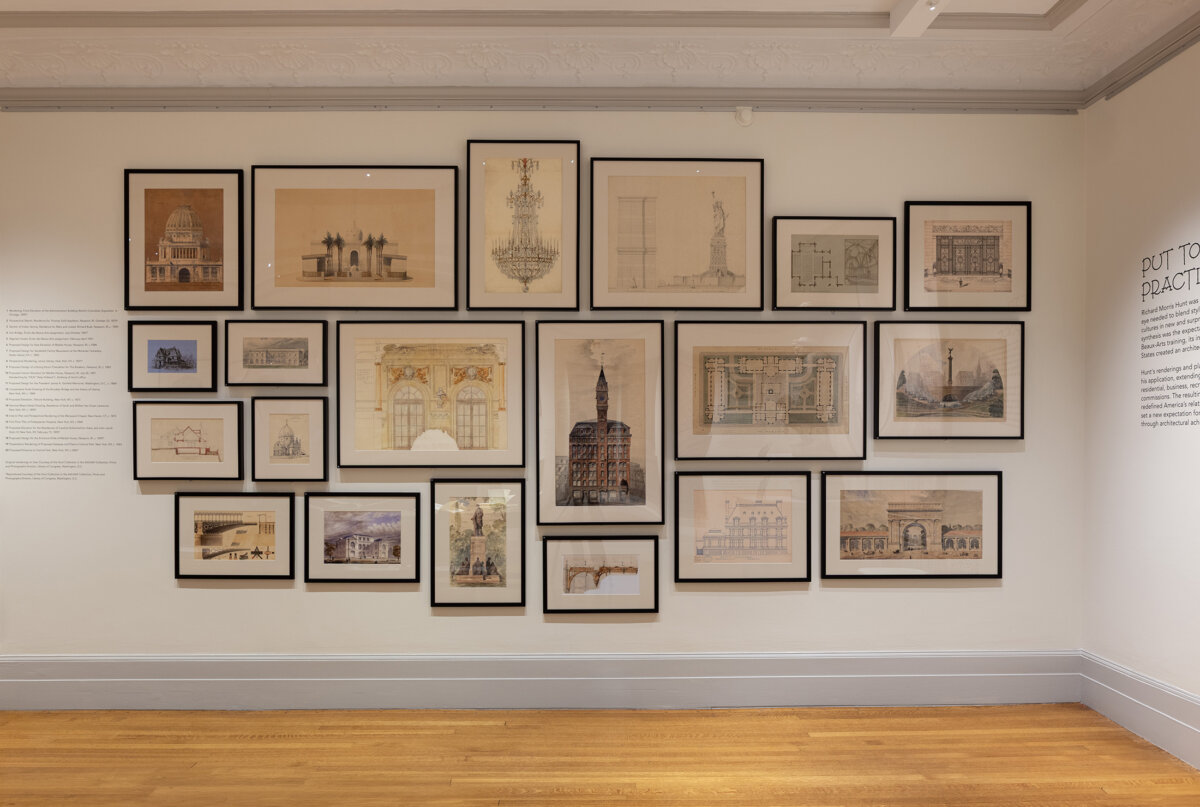
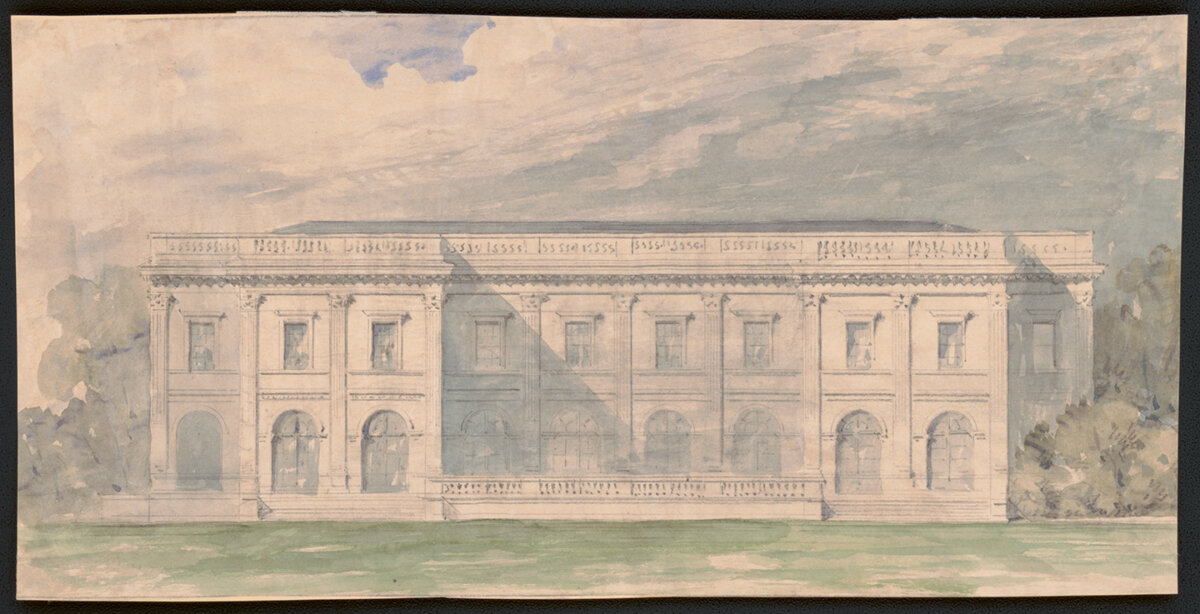
Encouraged by his brother Leavitt, who was an accomplished photographer, Hunt traveled Europe, sketching the beautiful architecture of Venice and Paris. He splashed his observations with watercolor—anticipating he’d need the drawings later to communicate his designs to his patrons. His beautifully rendered elevation of Marble House for William and Alva Vanderbilt is evidence of this. Hunt’s soft hand gives feeling to the fine beaux arts design of the mansion.
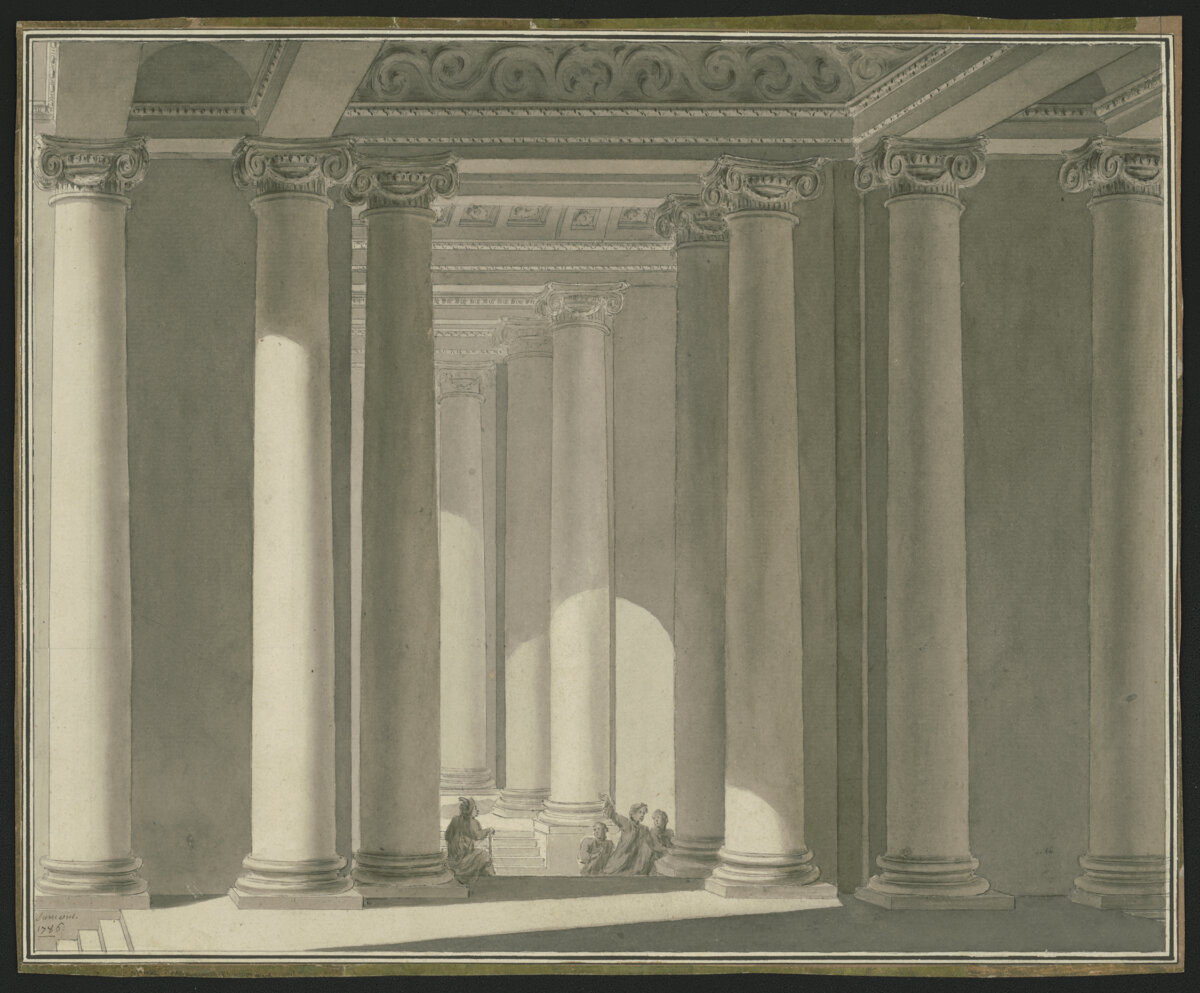
A drawing by the 18th-century French architect Gabriel Pierre Martin Dumont (1720–1791) of a colonnade, which Hunt acquired in his travels, was also featured in the exhibition. Paired with the architect’s library, it was considered an unparalleled resource for teaching architecture in America.
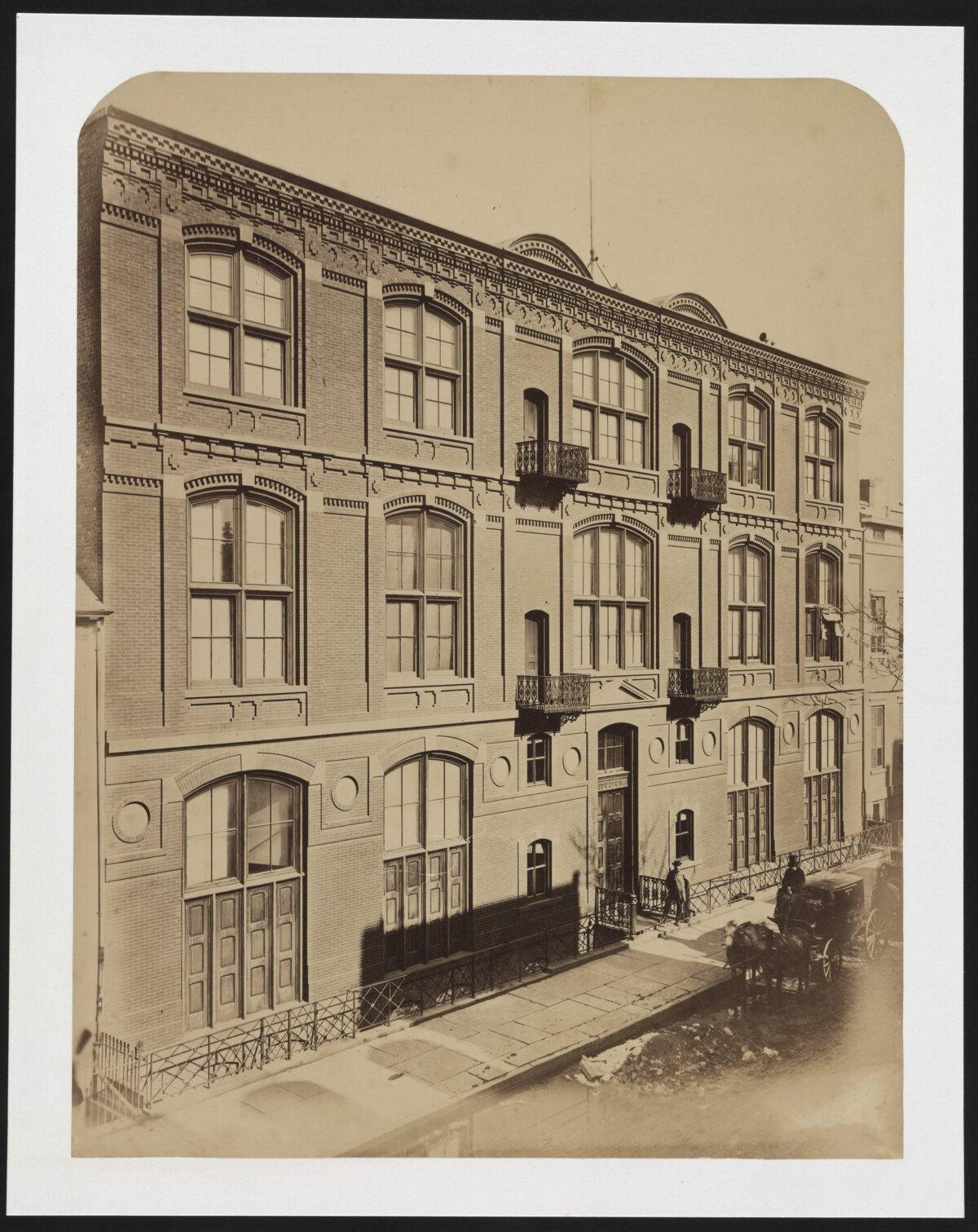
In 1857, Hunt noticed there were no buildings in New York City devoted to artists’ or architects’ studios, and none of the commercial spaces available resembled the studios of Hunt’s Paris days.
Hunt sought to remedy that by constructing the Tenth Street Studio. Partnering with James Boorman Johnston, the founder of New York University, he built the French-style brick studio space with generous windows trimmed in sandstone. The spaces immediately attracted artists like Winslow Homer, William Bradford, John LaFarge, Alexander Calder, W.H. Beard, William Merritt Chase, and Homer D. Martin. The building was truly the forerunner of collaborative spaces, encouraging interaction between the professionals who worked there.
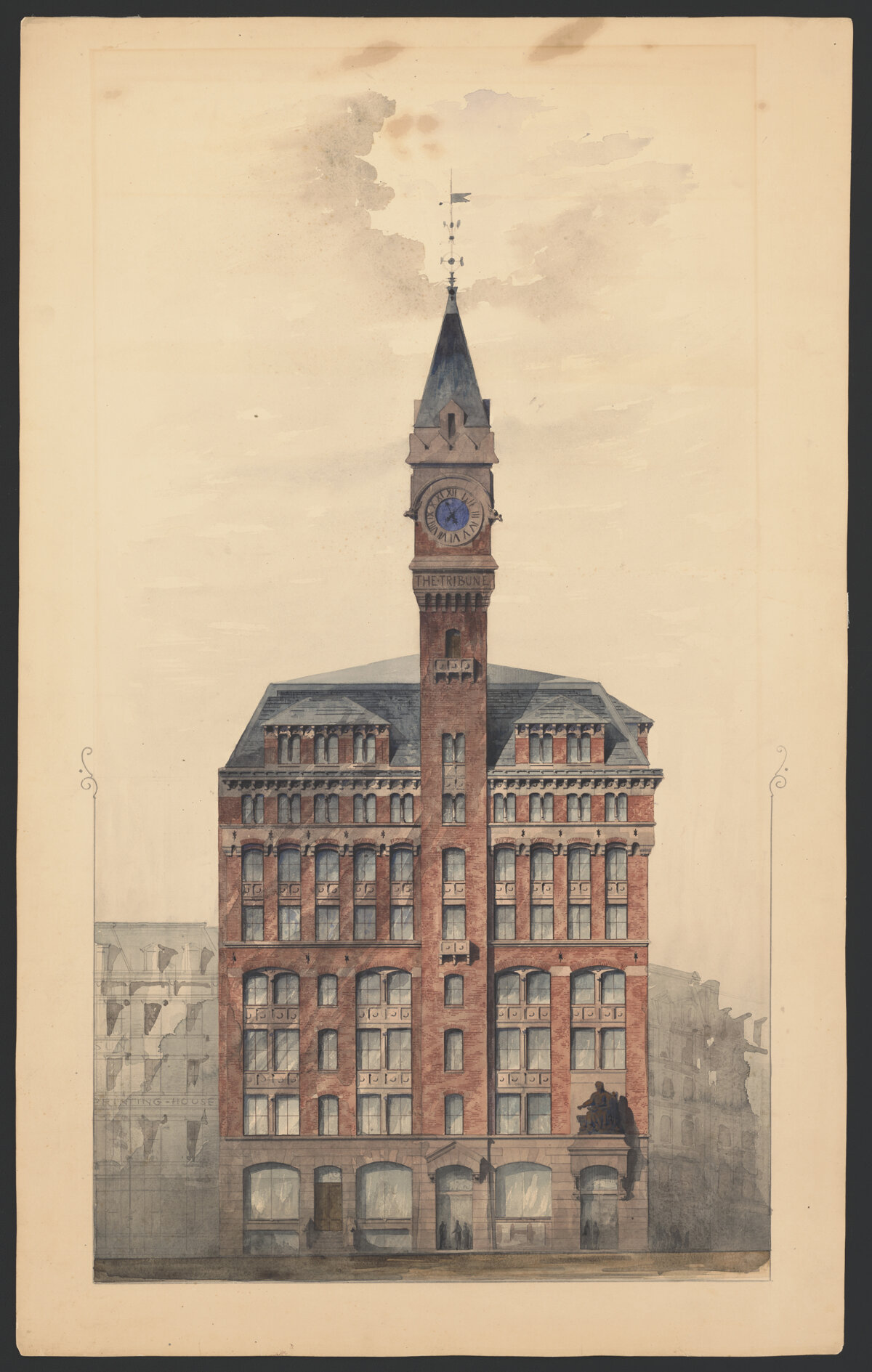
The exhibition also highlighted Hunt’s passion for public design. A colored elevation of his 1875 Tribune Building shows his attention to detail in the newspaper’s headquarters. When the 250-foot-tall building opened, it was the second tallest building in New York and one of the few with elevators.
Richard Morris Hunt deftly blended modern innovation with the classicism learned in his Beaux Arts training. Sadly, the Tribune Building and the Tenth Street Studios are no more, having succumbed to the wrecking ball in the middle of the 20th century. However, the exhibition successfully reminded viewers of their impact on the city’s design.
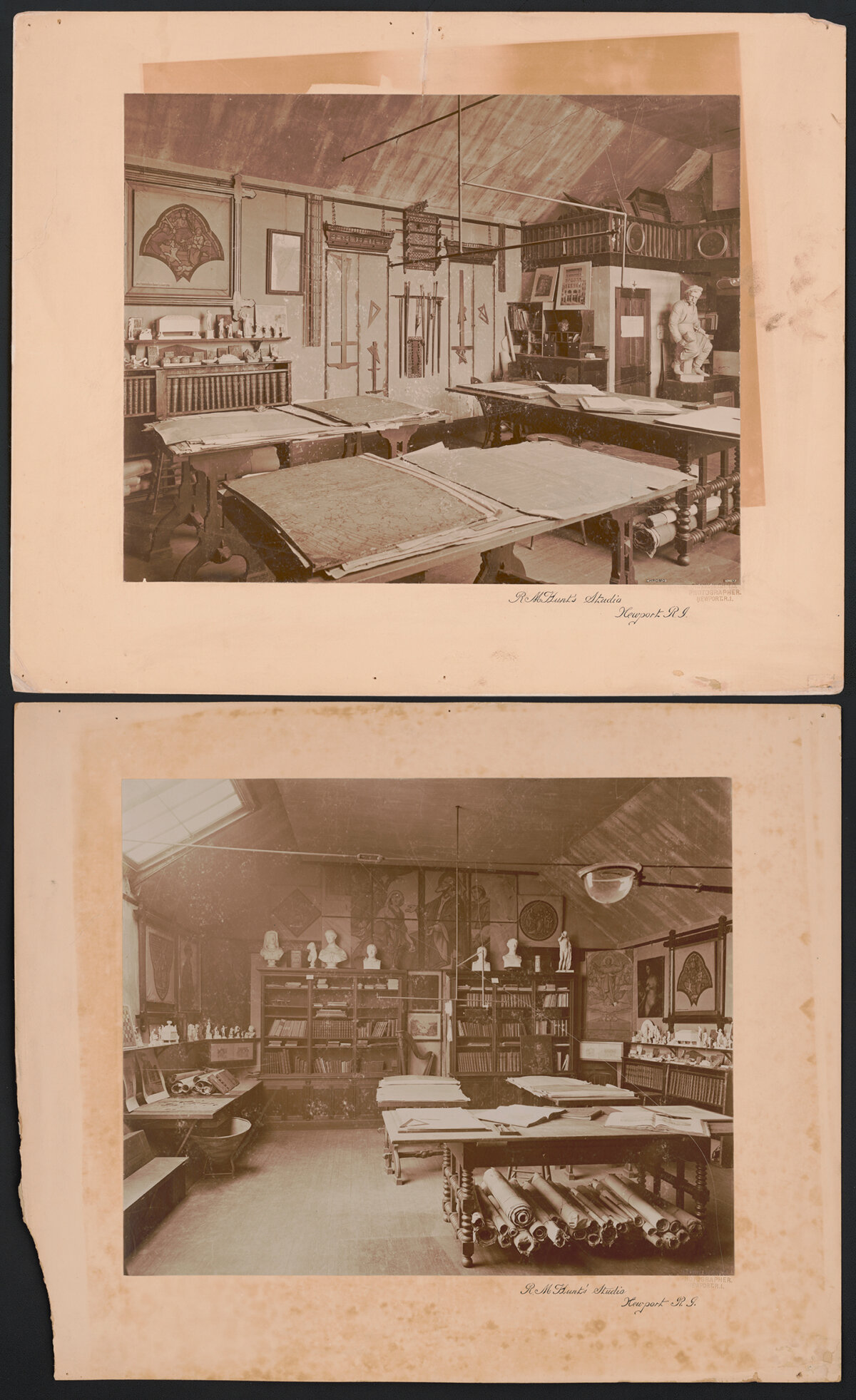
The architect’s own Newport studio was exhibited in a pair of sepia photographs. Displayed along with some of his drawing tools, they provide a window into a time when architecture was indeed an art practiced by a skilled hand.
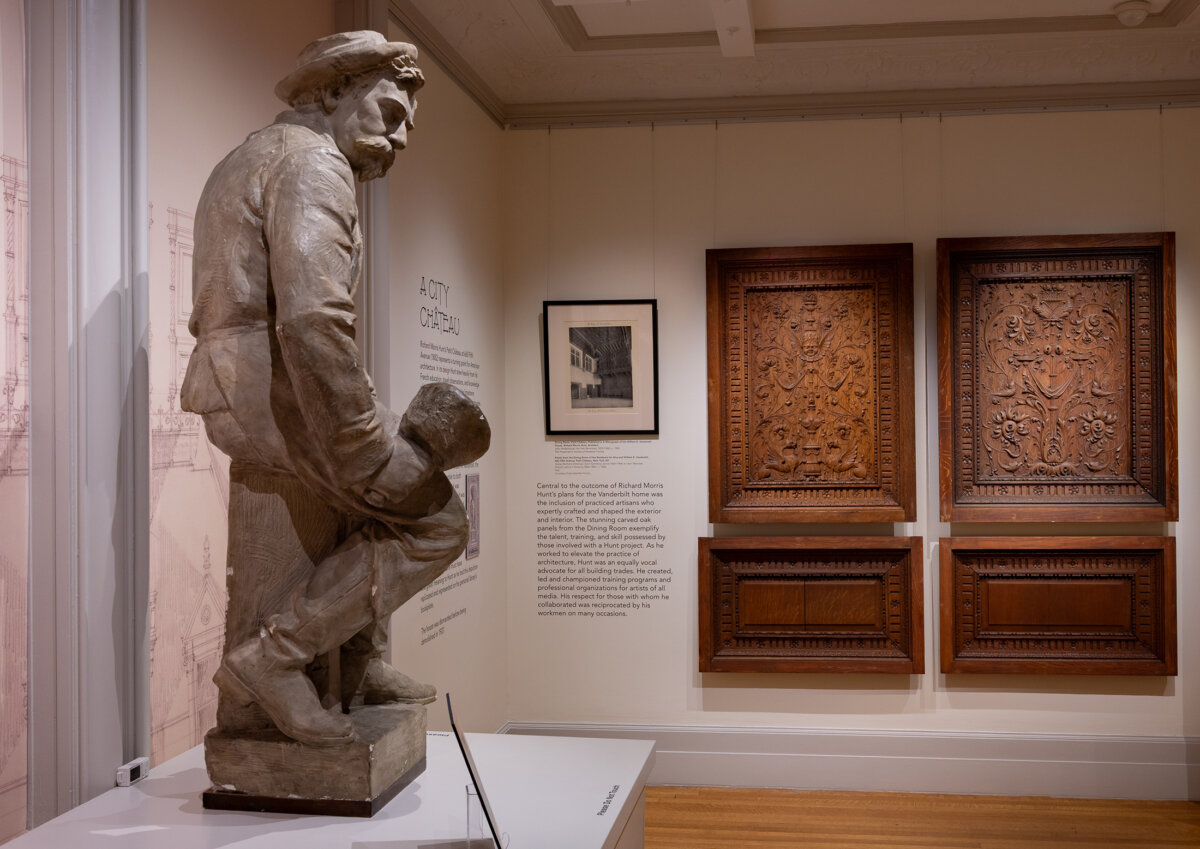
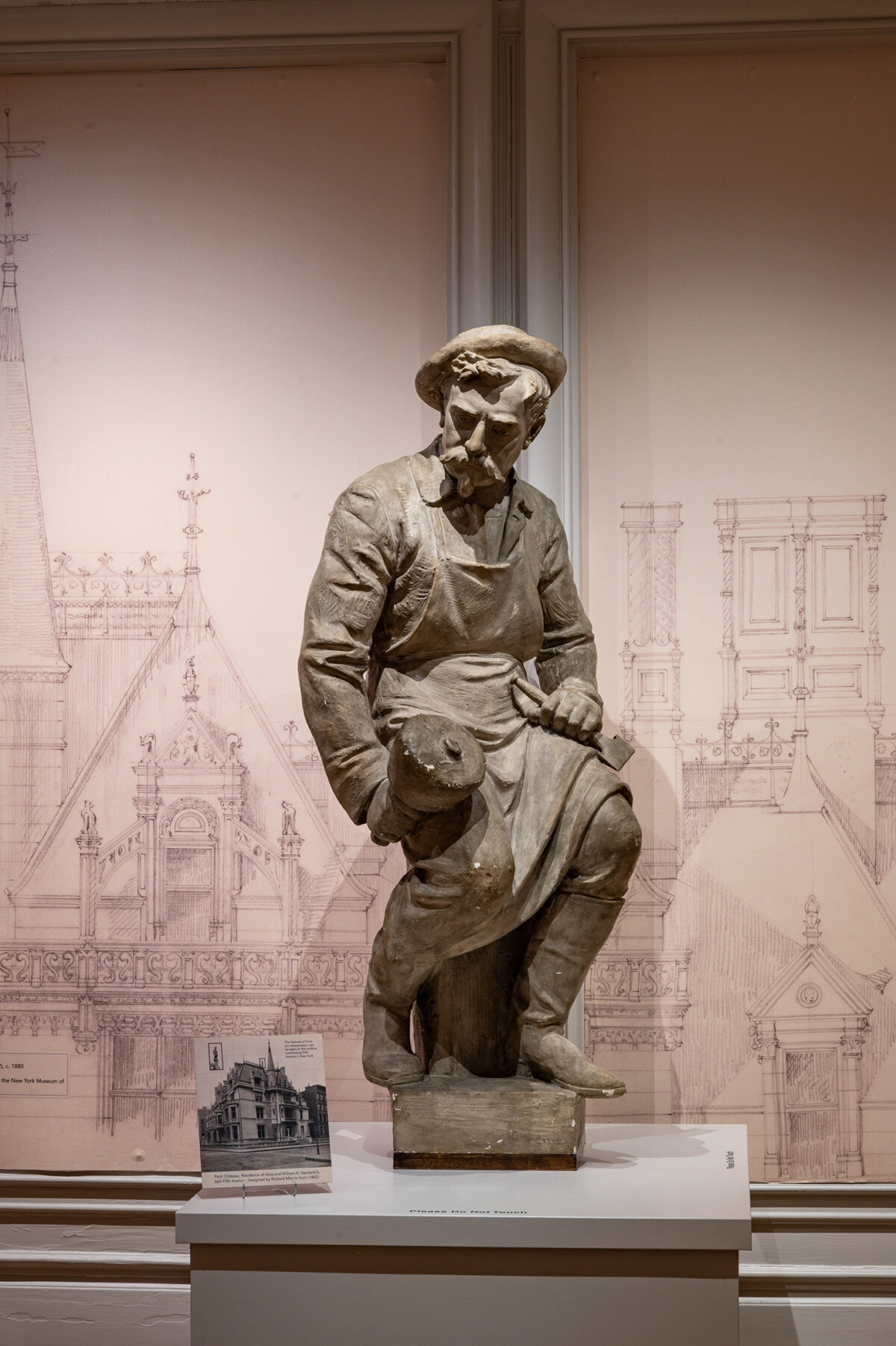
Silently bearing witness to the master architect’s collaboration with other artisans, a plaster cast of a statue stands in the studio. The statue is of Richard Hunt, wearing the clothes of a stonemason. Executed in stone and placed atop Alva Vanderbilt’s Petit Château in New York City, the sculpture celebrates the respect that the many craftsmen who worked with Hunt held for the architect.
Historian Paul Goldberger called Hunt “American architecture’s first, and in many ways its greatest, statesman.” His legacy is celebrated in this exhibition. Fortunately, his sons Richard Howland Hunt and Joseph Howland Hunt continued to bring some of their father’s great visions to light, including the magnificent Fifth Avenue Metropolitan Museum of Art. This building stands today as witness to Richard Morris Hunt’s enduring contributions to the “Cities Beautiful Movement,” which brought great beauty to America’s urban landscape. Most of all, the exhibition reminds us how Hunt used his art to create far more than just buildings, but a celebration of national culture.
“Richard Morris Hunt: In a New Light” exhibition was on view at Rosecliff in Newport, Rhode Island, from May 30, 2025, to Nov. 2, 2025. For more information, please visit NewportMansions.org.
What arts and culture topics would you like us to cover? Please email ideas or feedback to features@epochtimes.nyc
