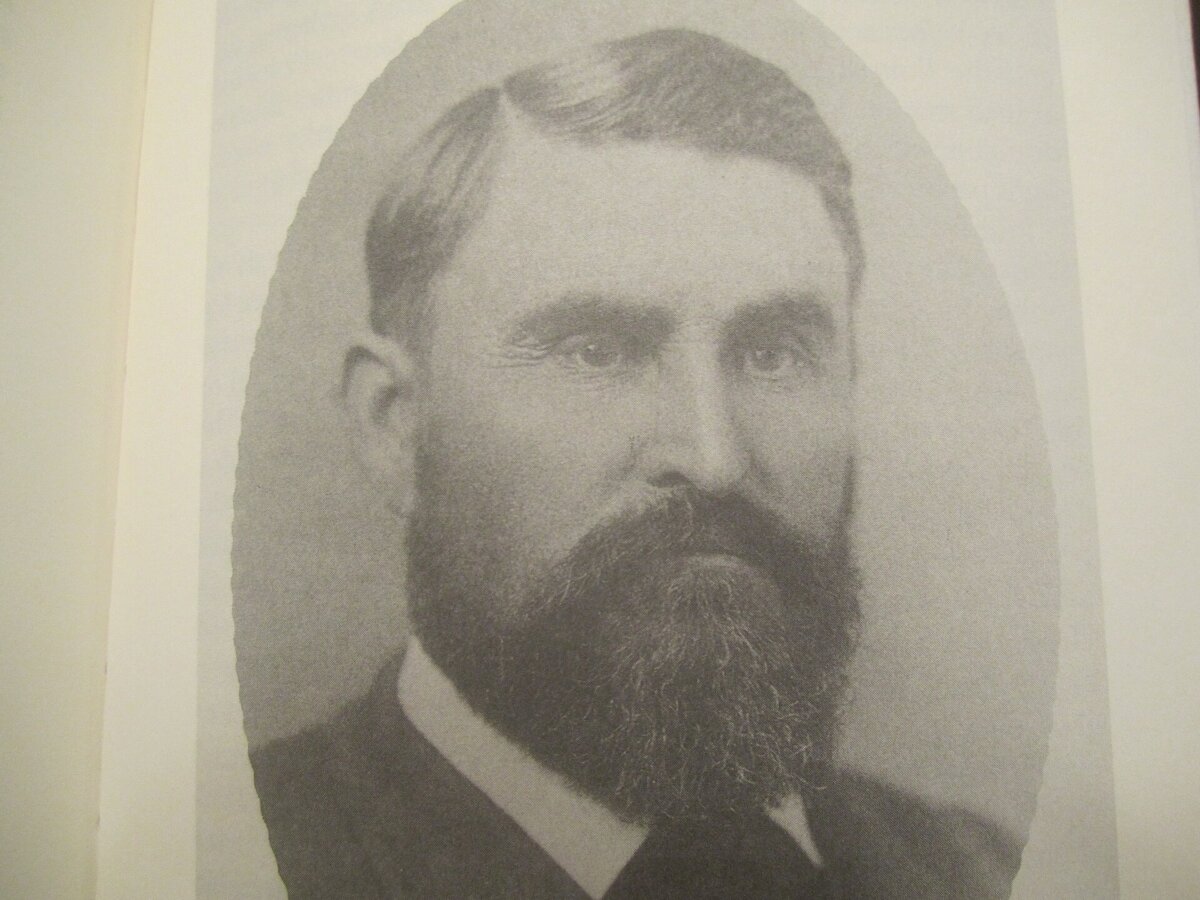
Charles Goodnight came to Texas as a boy and grew into the sort of plainsman who resembled the country itself: lean on schooling, heavy on experience, suspicious of comfort, and long on memory for trails, water holes, cattle, and weather.
Born on March 5, 1836, in Macoupin County, Illinois, Goodnight arrived in Texas with his family in late 1845as a 9-year-old. His formal education amounted to six months, but the prairie supplied another curriculum. By his early 20s, he had the knowledge that would carry him across some of the hardest country in the American West.
During the Civil War, he served as a scout and guide with the Texas Frontier Regiment. His mindmapped the terrain that later became central to his cattle operations, learning the contours of the Llano Estacado and the western plains. After the war, Texas was awash with cattle and short of profitable markets. Goodnight and his friend and fellow cattleman Oliver Loving understood that the hungry military posts and Indian agencies of New Mexico represented an opportunity.
In the spring of 1866, they drove their first herd from the Fort Belknap region toward Horsehead Crossing on the Pecos River and then north to Fort Sumner. Eighteen cowhands made the trip, among them former slave Bose Ikard. The route became known as the Goodnight-Loving Trail. It was a journey measured in miles, blisters, bad water, dust, and cattle’s temperament.
The Chuckwagon Rolls Into History
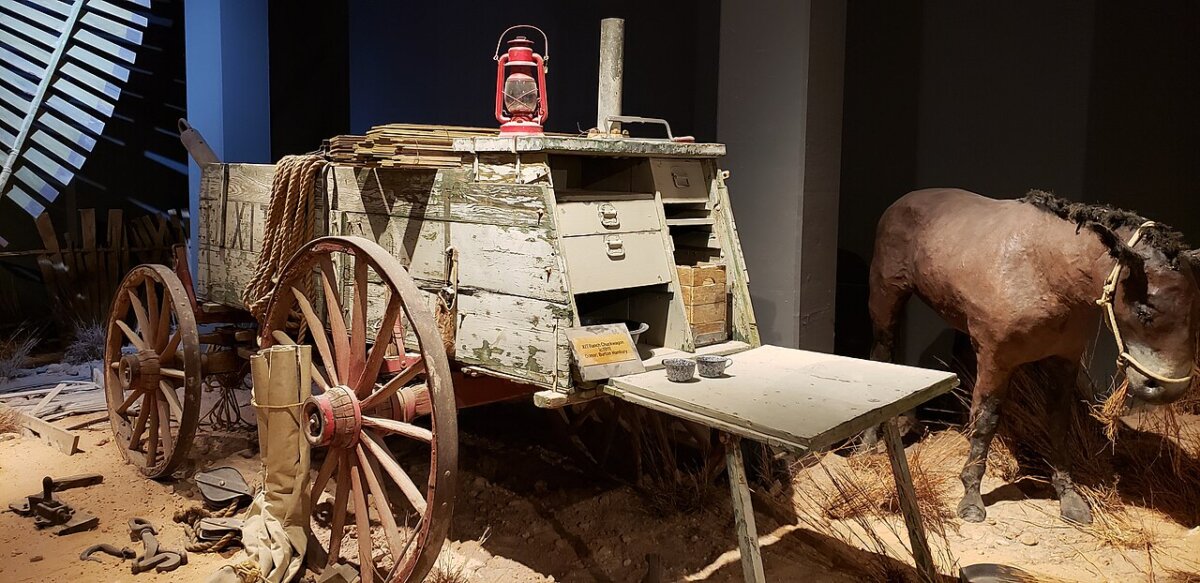
Goodnight’s great practical contribution to the cattle drive was a kitchen. As drives grew longer, cowboys could no longer conveniently carry enough provisions on horseback. Goodnight converted a surplus Army wagon into a mobile kitchen. He fitted a pantry box onto the rear, equipped with shelves and drawers, and made its hinged door serve as a table. A lower compartment, called the boot, held heavier cooking gear such as cast-iron skillets and a Dutch oven. The wagon carried much more than food: tools, supplies, first-aid necessities, firewood, and water.
The chuckwagon became the nerve center of the cattle drive. The cook did not merely fry bacon and boil coffee. He drove the wagon, established camp, maintained supplies, and often became the outfit’s unofficial barber, doctor, dentist, and banker. The three hot meals a day meant that somebody had to make civilization appear on a patch of dirt 50 miles from nowhere.
Beans, beef, biscuits, coffee—plain food, hard food, food built to survive distance. For a few minutes, men who had spent the day watching cattle and the horizon could look at one another instead.
That is why the chuckwagon outlived the cattle drives.
The open range disappeared beneath barbed wire, railroads, farms, and highways, but the mobile kitchen remained. Its descendants survive in ranching demonstrations, Western museums, historical programs, and competitive chuckwagon cooking.
From Cattle Drive to Panhandle Institution
Goodnight’s career extended well beyond the cattle drives. In 1876, he brought about 1,600 head into the Palo Duro country and, the following year, formed the JA Ranch with Irish financier John G. Adair. The ranch became one of the largest cattle operations in the Texas Panhandle, and Goodnight remained associated with it until 1889. He later operated ranches in New Mexico and Texas and continued experimenting with cattle breeding and other agricultural ventures.
He was also an early advocate for preserving the Southern Plains bison. With his wife, Mary Ann, he maintained a herd descended from animals he rescued when commercial hunting had nearly eliminated the wild species. That effort helped preserve a genetic remnant of the Southern Plains bison, and descendants of the Goodnight herd remain at the Charles and Mary Ann Goodnight Ranch State Historic Site near Goodnight, Texas.
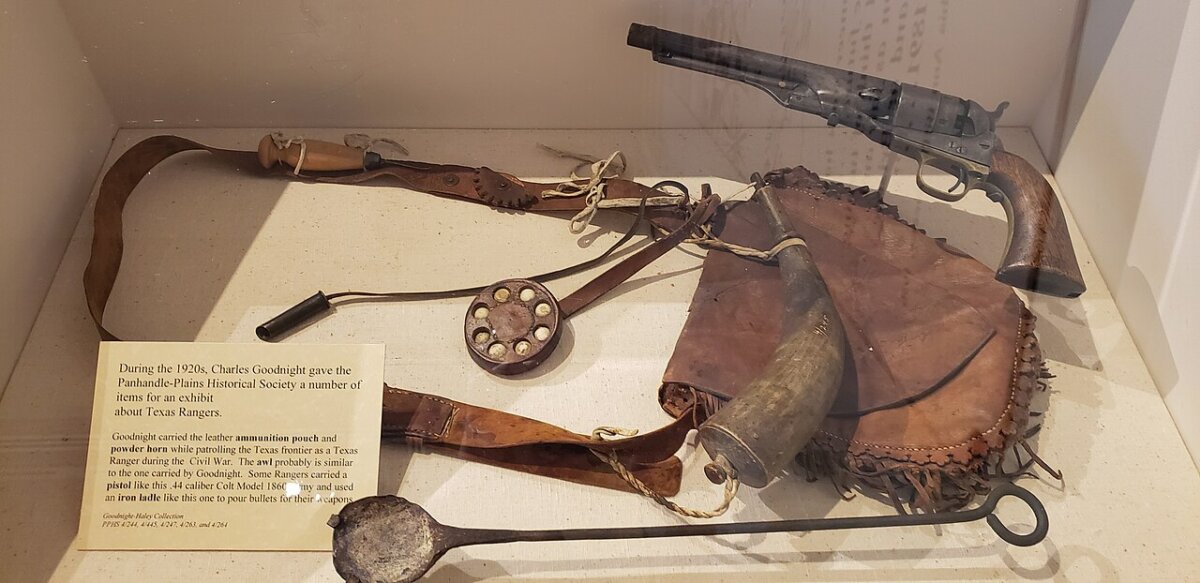
That historic site preserves the Goodnights’ 1887 ranch house and interprets their lives and work. The Panhandle-Plains Historical Museum in Canyon, Texas, holds Goodnight papers and artifacts, while historical markers and the Charles Goodnight Memorial Trail commemorate his connection to the Palo Duro country. A restored dugout near the highway toward Palo Duro Canyon State Park is thought to represent Goodnight’s first quarters after he arrived in the Panhandle.
His name also remains attached to the routes he helped establish. The Goodnight-Loving Trail carried cattle from Texas into New Mexico and Colorado, while the Palo Duro-Dodge City route later carried JA cattle toward the railhead in Kansas. Portions of those historic routes have been absorbed into modern roads and developed country, but markers and historic sites continue to identify their paths.
The chuckwagon, however, may be Goodnight’s most recognizable legacy. In Clarendon, Texas, the annual Col. Charles Goodnight Chuck Wagon Cook Off keeps the tradition alive with restored wagons and period-style cooking. —a reminder that his invention remains a core piece of the mythology and material culture of the American West.
Goodnight died in Phoenix on Dec. 12, 1929, at 92. He was buried beside Mary Ann in the Goodnight community cemetery.
The cattle drives disappeared. The ranches changed. The routes became highways and historical markers.
The chuckwagon stayed.
Indeed, Goodnight’s enduring contribution may be found in those four wheels, a pantry box, and a cooking fire—the machinery that turned a long cattle drive into something that could sustain the people making it.
What arts and culture topics would you like us to cover? Please email ideas or feedback to features@epochtimes.nyc.