Back in the 1880s, when pedestrianism (competitive walking) was a popular sport, Charles Oldrieve decided to take competition to the next level—by walking on water. Toward the end of his career, Oldrieve accomplished his greatest feat, successfully traveling on water from Cincinnati to New Orleans. To this day, his record remains unchallenged; no one has attempted the distance since.
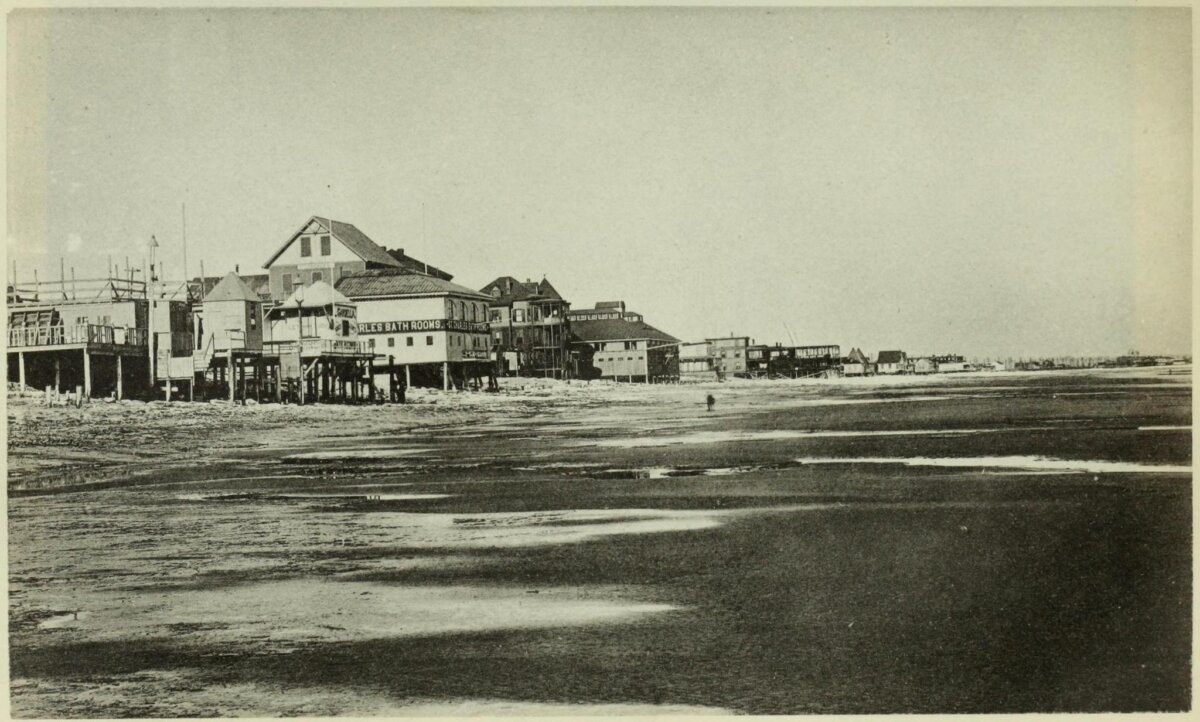
Oldrieve was a high-wire performer (tightrope walker) for a traveling circus based in Boston. One day in the summer of 1888, while at Revere Beach, he decided to attempt walking on water. He originally got the idea from Ned Hanlen, who had copied the trick from someone else.
Engineering the Impossible
However, while Hanlen used boots that were 6 feet long and wide, Oldrieve designed smaller, more functional shoes that were canoe-shaped and made of cedar with copper plating. They were equipped with flaps that stayed up when he lifted his feet and dropped down to grip the water when he stepped, giving him traction to move forward.
Once Oldrieve began practicing the trick, he used his balance as a tightrope walker to move effectively across the water. He staged his first major performance Aug. 24, 1888, walking 7 miles from Ocean Pier to Nahant in three and a half hours.
On Nov. 19, 1888, Oldrieve began his greatest feat yet, attempting to travel more than 150 miles down the Hudson River from Albany to Manhattan. The journey took six days, and the weather was so cold that his shoes froze overnight.
Over the next several years, he staged shows in which he walked across waterfalls, traveled to islands off the Boston coast, and performed stunts while smoking a cigar and setting off fireworks.
The 40-Day River Challenge
Oldrieve became known as “The Human Water Spider” and performed across the country. On several occasions, however, he nearly lost his life. Once, he became lost in the fog and had to be rescued 12 hours later. On another occasion, he was bitten and nearly killed by a shark while performing in Cuba.
By the early 1900s, Oldrieve had perfected his skill, walking both forward and backward. He even learned to spin in a circle after years of practice. His greatest opportunity came when he was reportedly offered $5,000 to travel from Cincinnati to New Orleans along the Ohio and Mississippi rivers within 40 days.
Oldrieve began the journey Jan. 1, 1907, leaving Cincinnati. He was followed by a small gas-powered boat, the Rover, and his wife in a rowboat. Depending on river conditions, he could travel up to 5 mph, though his average speed was closer to 2 mph.
The journey was grueling. Each shoe weighed about 20 pounds, and despite wearing thigh-high rubber boots, he had to stop periodically to empty water from them.
Oldrieve arrived in Henderson, Kentucky, on Jan. 12, two days behind schedule, greeted by thousands along the riverbank.
He regained time upon reaching the Mississippi River at Cairo, Illinois, but soon began to struggle. He complained of back pain caused by rheumatism and a high fever.
Oldrieve reached Baton Rouge, Louisiana on Feb. 6, several hours ahead of schedule. He then faced the most dangerous stretch—heavy traffic and rough waters between Baton Rouge and New Orleans.
As he neared New Orleans, he was almost swept under a barge but was rescued by men aboard. He later became trapped in an eddy near Canal Street and fell into the water; his wife, Caroline, saved him.
A Record and a Dispute
Oldrieve arrived in New Orleans on Feb. 10, about an hour ahead of his 40-day deadline.
“I wouldn’t walk that river again for five times the money I won,” Oldrieve said upon arrival, according to The Times-Democrat.
Although he was to receive $5,000 (about $175,000 today), he reportedly never collected. He claimed his manager swindled him, though some believed the story was a publicity stunt. One of the alleged backers, Edward Williams of Boston, shared a name with Oldrieve’s stepfather.
Tragedy struck later that year. On July 4, fireworks ignited Caroline’s dress during a performance. She died from her injuries days later. Devastated, Oldrieve took his own life soon afterward.
What arts and culture topics would you like us to cover? Please email ideas or feedback to features@epochtimes.nyc