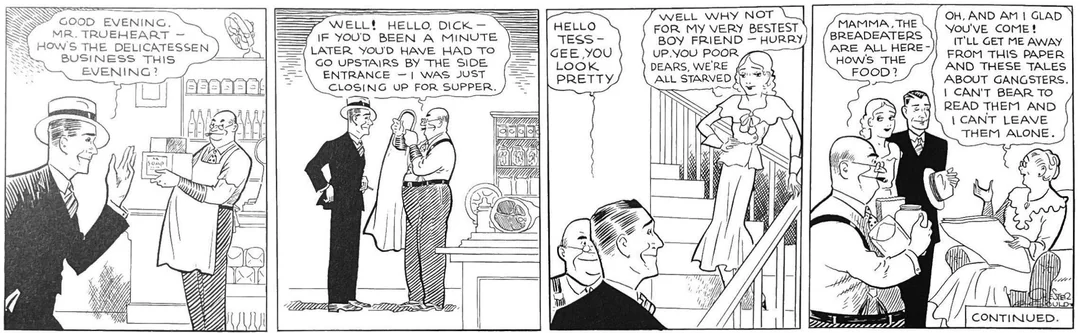
Forty years after his death, the work of Chester Gould still conjures one of America’s most enduring archetypes—Dick Tracy, the square-jawed detective who pursued gangsters with cold logic and clever gadgets.
From 1931 to 1977, Gould’s comic strip chronicled crime and justice with a moral intensity and visual flair that mirrored America’s uneasy relationship with technology, corruption, and heroism.
Chester Gould was born on Nov. 20, 1900, in Pawnee, Oklahoma Territory, the son of Gilbert R. Gould and Alice Maud Gould. His father worked for the Pawnee Courier-Dispatch, a weekly newspaper, which likely influenced Chester’s early interest in storytelling and art.
Growing up in a small frontier town. The hardships of pioneer life instilled in him a strong work ethic and a sense of personal responsibility. At age 7, Gould filled notebooks by copying comic strips and adding his own dialogue. By age 8, he was encouraged to draw politicians. In high-school, he was contributing cartoons to a small Oklahoma newspaper and joining magazine contests. He drew cartoons for the Daily Oklahoman in college and, reportedly, to Texas papers, according to family and regional accounts.
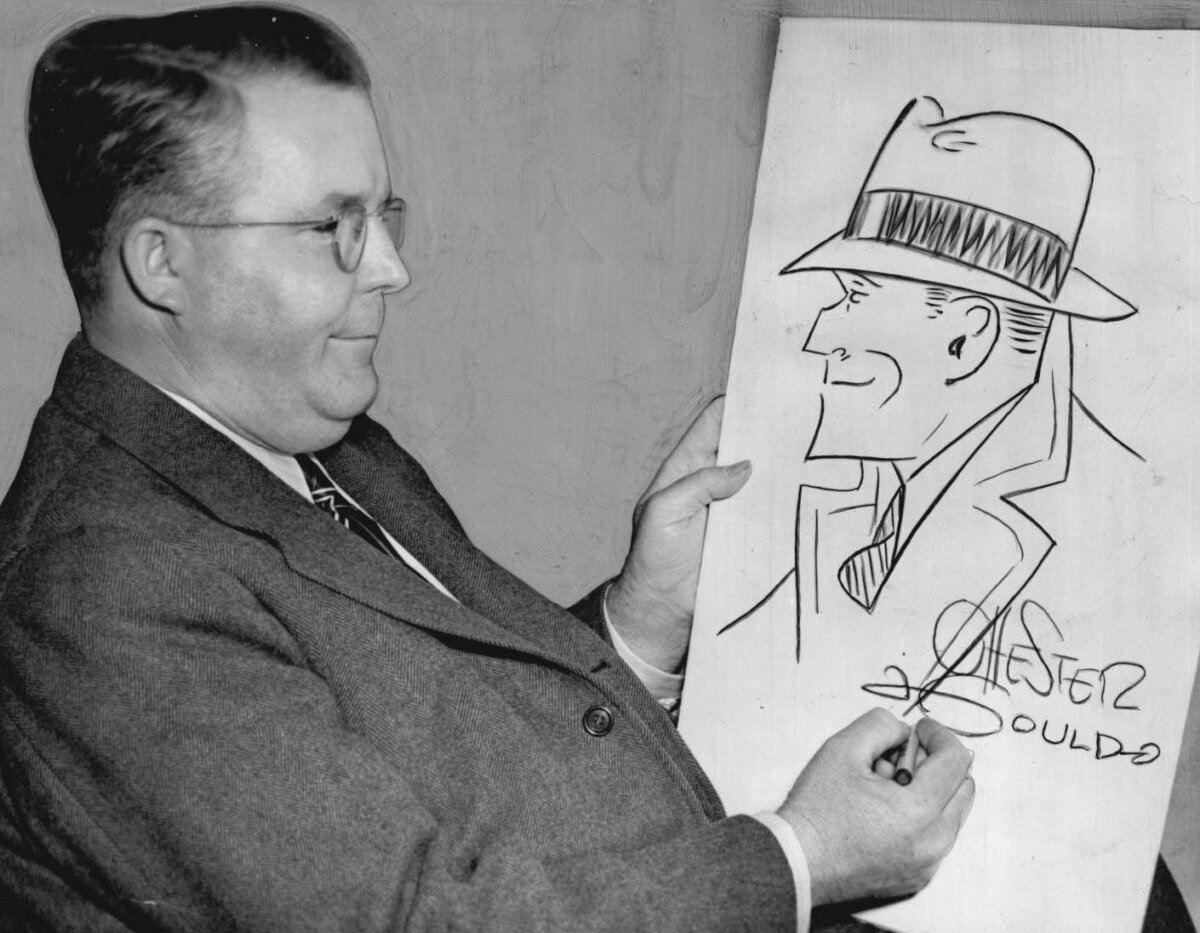
After graduating from Northwestern University in Illinois in 1923, Gould took a series of newsroom and illustration jobs in Chicago. He recalled arriving in the city with little money but an unshakable determination to succeed.
Like a Horatio Alger hero, Gould advanced through persistence and grit. He submitted cartoon ideas repeatedly to the Chicago Tribune-New York News Syndicate, refining his storytelling and artwork each time.
Gould married Edna M. Gauger on Nov. 6, 1926, in Cook County, Illinois. The couple eventually settled in Woodstock, Illinois, where Gould lived and worked from the mid-1930s until his death.
He built a home studio and often rose before dawn to meet his self-imposed deadlines. His success, achieved through discipline rather than luck, resonated with Depression-era Americans. Through his work, Gould sought to show that diligence, courage, and moral clarity could overcome adversity.
Dick Tracy Debuts
On Oct. 4, 1931, Dick Tracy made its first appearance, though some sources cite Oct.12 as the debut date. From its first panel, the strip stood apart. Gould fused tabloid realism and crime reportage. A rogues’ gallery of grotesque villains personified corruption and moral decay: Flattop, Pruneface, and Mumbles.
With clean lines and stark contrasts, his artwork captured the energy and menace of Depression-era America. At its peak, Dick Tracy reached international audiences. According to The Chester Gould/Dick Tracy Museum, the strip appeared in about 27 foreign newspapers and ran for 45 consecutive years on the front page of the New York Daily News, an astonishing record in American comics history.
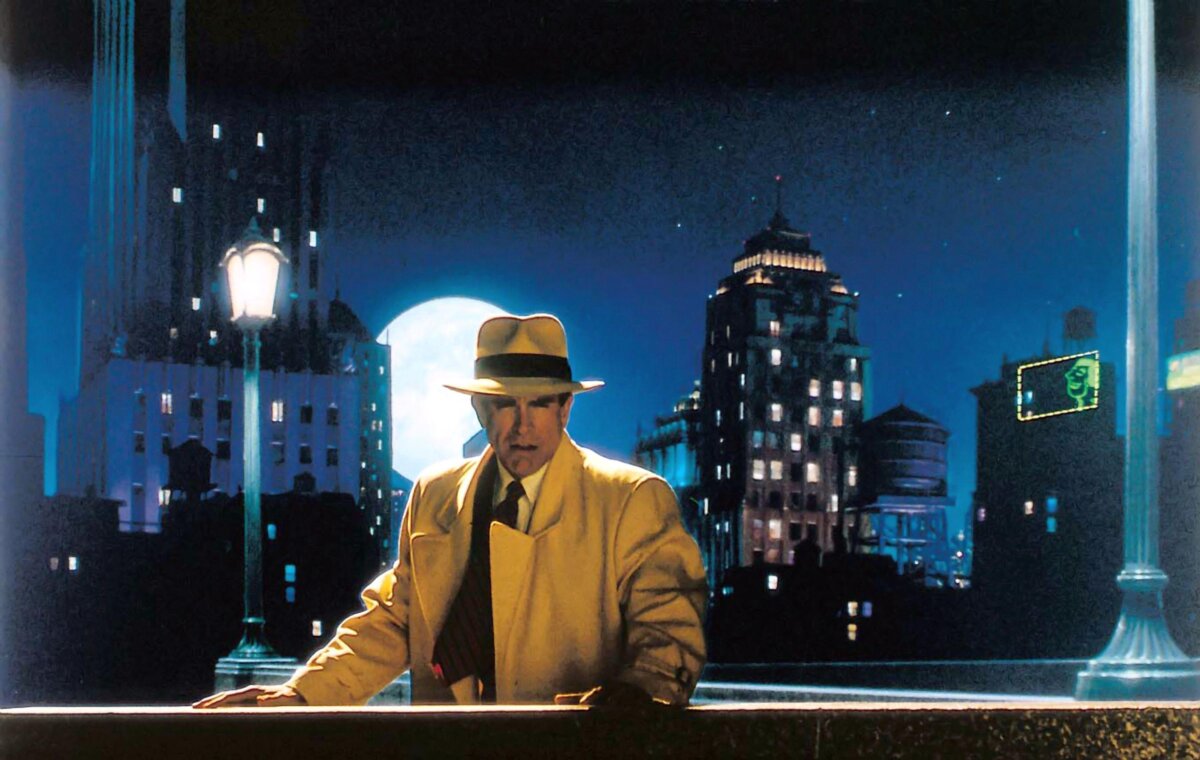
Gould believed in a world where honesty, intelligence, and determination triumphed over crime and chaos. His hero embodied the conviction that good could prevail through courage and integrity, reflecting both Gould’s personal values and the optimism of his generation.
Changing Times
In January 1946, Gould introduced one of the most famous gadgets in comics history: the two-way wrist radio. Decades later, when real-world smartwatches emerged, journalists credited him with envisioning personal communication technology long before Silicon Valley.
As America entered the Cold War, his villains transformed from mobsters in the 1930s to corrupt businessmen and mad scientists in the 1960s, but the underlying principle never changed: justice through persistence.
After 46 years, two months, and 21 days of continuous work, Gould retired on Dec.. 25, 1977, at the age of 77. He had produced more than 16,000 daily and Sunday strips.
Gould spent his final years writing columns, giving talks, and supporting local artists in Woodstock, where he was regarded as both neighbor and legend. He died there on May 11, 1985, at the age of 84.
In 1991, the city of Woodstock opened The Chester Gould/Dick Tracy Museum, which displayed original drawings, correspondence, and memorabilia. The museum closed in 2008, but its spirit continues through the town’s annual Dick Tracy Days, a community celebration of the artist who turned moral conviction into pop mythology.
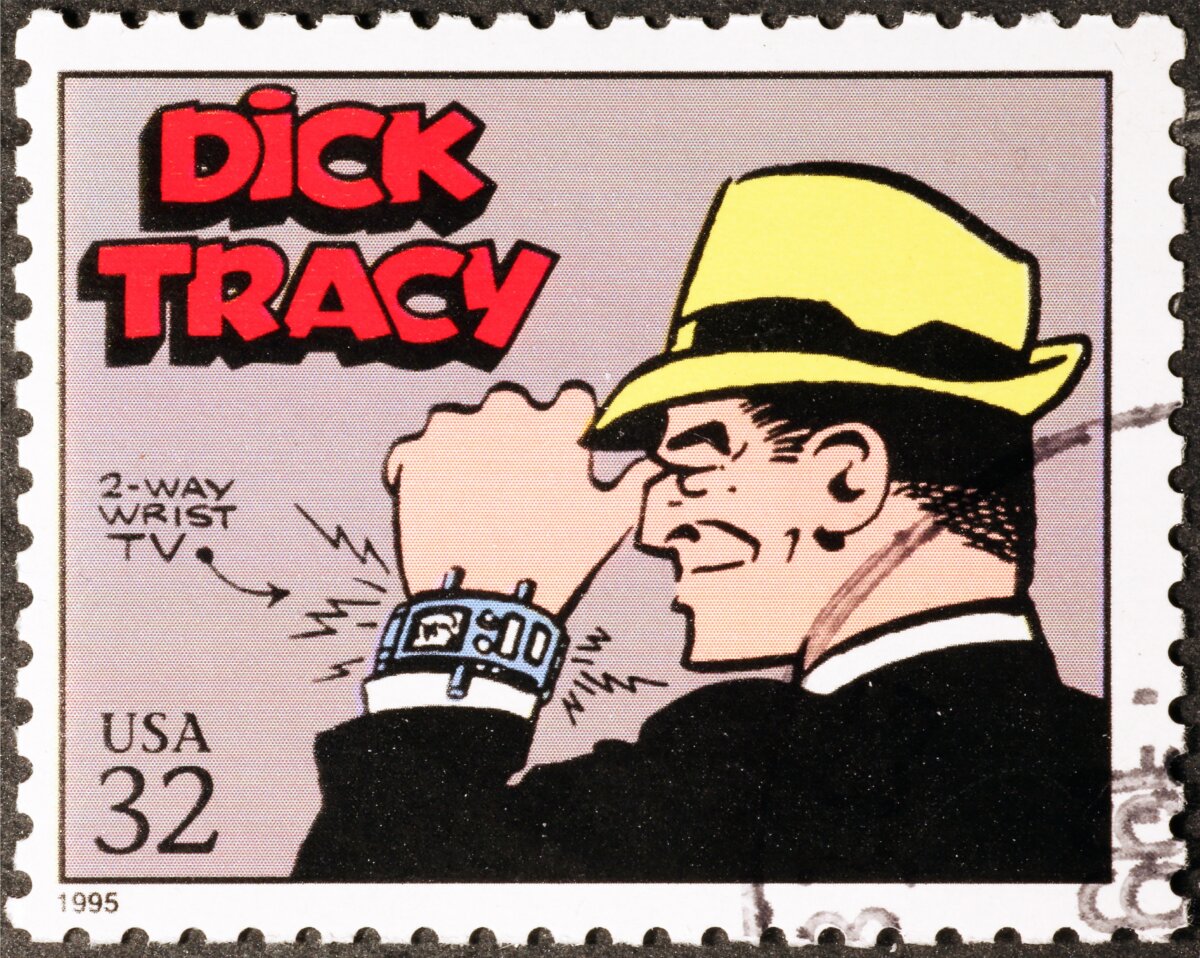
Four decades after Gould’s passing, Dick Tracy still appears in newspapers, carried on by a new generation of writers and illustrators. The strip has inspired radio serials, television programs, a feature film, and video games, along with an unmistakable visual shorthand for American law enforcement.
More than a comic book character, Tracy became an emblem of American optimism—the belief that intellect, integrity, and hard work could triumph over disorder. In the same way that Horatio Alger’s young heroes rose by effort, Gould rose from the plains of Oklahoma to the front pages of the nation’s newspapers.
His detective never aged, never stopped working, and never gave up. In that sense, the comic strip creator remains alive in every panel. This is a testament to the ink-stained dream that, with imagination and perseverance, an ordinary man can create an extraordinary world.
What arts and culture topics would you like us to cover? Please email ideas or feedback to features@epochtimes.nyc